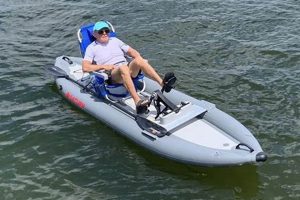
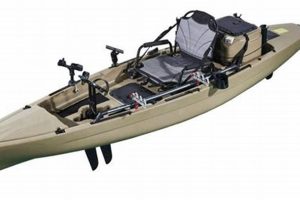
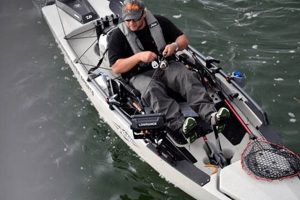
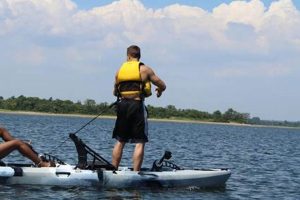
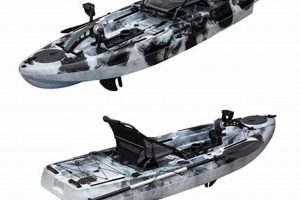
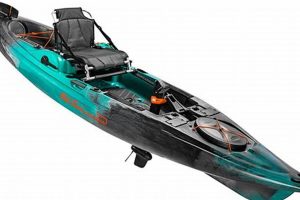
This specific model likely refers to a fishing kayak designed for diverse aquatic environments (“3 waters” suggesting adaptability to various conditions such as rivers, lakes, and oceans). Its features include a pedal-driven propulsion system, potentially offering hands-free fishing and enhanced maneuverability. The “103” likely denotes a specific model number or size designation within the manufacturer’s product line. “Big fish” emphasizes its suitability for angling larger species, indicating a robust construction and potentially higher weight capacity. This combination of attributes suggests a kayak designed for serious anglers seeking efficiency and stability while targeting larger game fish.
Pedal-driven kayaks offer significant advantages over traditional paddle kayaks, including increased speed, endurance, and the ability to fish hands-free. This type of propulsion system allows anglers to cover more water efficiently and focus on fishing rather than paddling. The implied robust design and focus on “big fish” suggests a focus on durability and stability, crucial for handling larger species and potentially challenging water conditions. The ability to navigate diverse water environments expands the potential fishing locations and target species, appealing to a wider range of anglers.
Further exploration of this kayak model could include examining its specific dimensions, weight capacity, construction materials, storage options, and additional features relevant to anglers. An in-depth analysis of these aspects can provide a comprehensive understanding of its suitability for different fishing styles and environments, empowering informed purchasing decisions.
Tips for Pedal Drive Kayak Fishing
Effective use of a pedal-driven fishing kayak requires understanding its capabilities and employing appropriate techniques. The following tips can enhance fishing success and overall experience.
Tip 1: Master Pedal Propulsion: Practice maneuvering the pedal drive system in various water conditions. Understanding its responsiveness and limitations is crucial for efficient navigation and precise boat control, especially when approaching fishing spots or battling strong currents.
Tip 2: Optimize Gear Storage: Distribute weight evenly throughout the kayak for optimal stability. Secure fishing rods, tackle boxes, and other equipment to prevent shifting during movement. Accessibility is key; organize gear for quick retrieval without compromising balance.
Tip 3: Plan Fishing Routes Strategically: Utilize maps and navigational tools to identify promising fishing areas and plan efficient routes. Consider water depth, current patterns, and potential obstacles when charting a course. Maximizing fishing time minimizes unproductive paddling or pedaling.
Tip 4: Employ Appropriate Anchoring Techniques: Select an anchor suitable for the target fishing environment and bottom composition. Practice deploying and retrieving the anchor efficiently, ensuring a secure hold while minimizing disturbance to the fishing area.
Tip 5: Prioritize Safety Precautions: Wear a personal flotation device (PFD) at all times. Carry essential safety equipment, including a whistle, signaling device, and first-aid kit. Check weather conditions before embarking on any fishing trip and inform someone of your planned route and return time.
Tip 6: Respect Aquatic Ecosystems: Practice catch-and-release whenever possible, handling fish carefully to minimize stress. Adhere to local fishing regulations and avoid disturbing natural habitats. Dispose of fishing line and other waste responsibly.
Tip 7: Maintain Kayak Regularly: Rinse the kayak with freshwater after each use, paying particular attention to the pedal drive system. Regularly inspect and lubricate moving parts. Proper maintenance ensures optimal performance and prolongs the lifespan of the kayak.
By implementing these tips, anglers can maximize the advantages of a pedal-driven fishing kayak, enhancing fishing success, safety, and overall enjoyment on the water. These practices contribute to responsible angling and ensure a positive experience for all.
This detailed examination of essential tips provides a foundation for successful and enjoyable pedal kayak fishing experiences. A comprehensive understanding of these techniques allows anglers to confidently navigate diverse waters, target desired species, and appreciate the unique benefits of this specialized fishing platform.
1. Versatility (3 Waters)
The “3 waters” designation within the description of the fishing kayak signifies its adaptability across diverse aquatic environments. This versatility expands fishing opportunities, allowing anglers to target different species in varying conditions. Presumably, “3 waters” encompasses rivers, lakes, and oceans, each presenting unique challenges and requiring specific kayak characteristics. River fishing demands maneuverability and stability in currents, while lake fishing benefits from efficient propulsion and ample storage. Ocean fishing necessitates a robust build capable of handling waves and swells. A kayak designed for “3 waters” must effectively balance these diverse requirements.
For example, the kayak’s hull design might incorporate features that enhance stability in rivers yet maintain tracking efficiency in lakes. A pedal-drive system provides consistent propulsion in open water while allowing precise maneuvering in tight river bends. Ample storage accommodates gear for diverse fishing styles and target species encountered across different environments. This adaptability distinguishes the “3 waters” kayak from specialized models designed solely for a single type of water body. Consider an angler targeting bass in a calm lake one day and then navigating a flowing river for trout the next. A “3 waters” kayak accommodates this flexibility without requiring a separate vessel for each environment.
The practical significance of “3 waters” versatility lies in maximizing fishing opportunities and minimizing equipment limitations. Anglers benefit from a single, adaptable platform rather than investing in multiple specialized kayaks. This versatility, however, may entail design compromises. A “3 waters” kayak might not perform optimally in extreme conditions specific to a single environment. Understanding these potential trade-offs is crucial for informed purchasing decisions. Anglers must evaluate their primary fishing locations and target species to determine if the versatility of a “3 waters” kayak outweighs the potential performance benefits of a specialized model.
2. Target Species (Big Fish)

The “big fish” designation within the “3 waters big fish 103 pedal drive fishing kayak” description signals its intended use for targeting larger game species. This focus influences design considerations, impacting stability, durability, and overall performance. Understanding the implications of targeting larger fish is crucial for evaluating the kayak’s suitability for specific angling pursuits.
- Stability and Tracking
Larger fish exert significant force during a fight, requiring a stable kayak platform. A wider hull and potentially outriggers might be incorporated to minimize tipping. Maintaining a steady track during the fight prevents the fish from gaining leverage and potentially breaking free. Consider a scenario involving a large saltwater species like a tarpon. Its powerful runs and acrobatic leaps demand exceptional stability and tracking to prevent capsizing or line breakage.
- Durability and Construction
The kayak’s construction must withstand the stress of battling large, powerful fish. Reinforced hulls, robust hardware, and high-quality materials are essential. Repeated exposure to saltwater environments necessitates corrosion-resistant components. For instance, landing a large halibut requires substantial lifting force, potentially stressing the kayak’s structure. Durable construction ensures long-term performance under these demanding conditions.
- Gear Capacity and Storage
Targeting larger species often requires specialized gear, including heavier tackle, larger lures, and potentially specialized fishing rods. Ample storage space within the kayak is essential to accommodate this equipment securely and accessibly. Consider a deep-sea fishing expedition targeting marlin; the required rods, reels, and tackle necessitate significant storage capacity within the kayak.
- Propulsion and Maneuverability
The kayak’s propulsion system must provide sufficient power and control to effectively manage larger fish. A pedal-drive system offers advantages over traditional paddles, enabling hands-free fishing and precise maneuverability during a fight. Imagine battling a strong, fast-running tuna; a pedal drive provides the necessary control and power to maintain tension and successfully land the fish.
These facets, collectively, underscore the significance of “big fish” within the kayak’s description. It signifies more than just an intended target; it dictates design choices impacting stability, durability, gear capacity, and propulsion. A kayak designed for “big fish” represents a specialized platform engineered for demanding angling pursuits, distinct from recreational models intended for smaller species or calmer waters. Evaluating these design considerations in relation to personal fishing goals is crucial for informed purchasing decisions and ensuring optimal performance on the water.
3. Model designation (103)
The “103” designation within the “3 waters big fish 103 pedal drive fishing kayak” description likely represents a specific model number or size variant within the manufacturer’s product line. Deciphering its meaning provides crucial context for understanding the kayak’s intended use, features, and overall capabilities. This numerical identifier often signifies specific dimensions, weight capacity, features, or a combination thereof, differentiating it from other models within the same series.
- Dimensions and Capacity
The “103” could indicate specific length and width dimensions, impacting stability, maneuverability, and storage capacity. A longer kayak might track better in open water, while a wider design enhances stability for stand-up fishing. The number could also relate to weight capacity, influencing the amount of gear and anglers the kayak can safely accommodate. For example, “103” might represent a 10-foot, 3-inch kayak designed for a single angler and a specified weight limit, distinct from a “126” model representing a 12-foot, 6-inch kayak designed for two anglers and a higher weight capacity.
- Feature Set and Accessories
The model number can also signify specific features or included accessories. “103” might denote a base model with standard features, while a “103 Pro” could include additional features like upgraded seating, rod holders, or a fish finder mount. For instance, the “103” might offer standard molded-in rod holders, while the “103 Angler” package includes additional adjustable rod holders, a tackle storage compartment, and an anchor trolley system. Understanding these distinctions is crucial for evaluating value and selecting the model best suited to individual needs.
- Performance Characteristics
While not directly indicated by the number itself, different model designations often correlate with varying performance characteristics. “103” might represent a model optimized for maneuverability in rivers and creeks, while a “103 Offshore” could denote a design prioritizing stability and tracking in open ocean conditions. These distinctions often involve subtle hull design modifications or variations in features like rudder systems or keel configurations. Researching the manufacturer’s specifications for each model number clarifies these performance nuances.
- Pricing and Positioning
Model numbers frequently play a role in product pricing and market positioning. “103” might represent an entry-level model offering essential features at a competitive price point, while higher-numbered models introduce progressively more advanced features, premium materials, and consequently, higher price tags. Understanding this tiered structure enables informed comparisons within the product line and facilitates selection based on budget and desired features.
Understanding the significance of the “103” model designation within the “3 waters big fish 103 pedal drive fishing kayak” description provides a crucial starting point for comprehensive evaluation. This numerical identifier often reveals essential information regarding dimensions, features, performance characteristics, and price point, allowing potential buyers to align their selection with specific fishing needs, preferences, and budget constraints. Further research into the manufacturer’s specifications for the “103” model clarifies these details and facilitates informed purchasing decisions within the context of “3 waters big fish” capabilities.
4. Propulsion (pedal drive)
The “pedal drive” component of the “3 waters big fish 103 pedal drive fishing kayak” represents a crucial distinction from traditional paddle-powered kayaks. This propulsion system directly impacts fishing effectiveness, maneuverability, and overall experience, particularly within the context of “3 waters” and “big fish” capabilities. Pedal drives offer distinct advantages in diverse environments, enabling hands-free fishing and precise boat control.
Consider the scenario of fishing in a river current. A paddle kayak requires constant effort to maintain position and control, diverting attention from fishing. A pedal drive allows anglers to maintain position effortlessly, facing upstream or downstream, while focusing on casting and retrieving. This advantage extends to trolling in open water, covering more ground efficiently without the repetitive motion of paddling. When targeting larger fish, the hands-free nature of a pedal drive is crucial for managing the rod and reel during a fight. Landing a powerful fish demands both hands; a paddle-driven kayak necessitates awkward transitions between paddling and reeling, potentially jeopardizing the catch. The pedal drive’s continuous propulsion allows immediate adjustments to boat position, maintaining optimal line tension and angler control during critical moments. In shallow waters or areas with submerged obstacles, precise maneuverability is essential. Pedal drives offer nuanced control, enabling subtle adjustments to avoid grounding or entanglement. This precision proves invaluable when navigating complex shorelines, tight river bends, or areas with dense vegetation.
The practical significance of a pedal drive system within the context of a “3 waters big fish” kayak lies in its ability to enhance fishing effectiveness and overall experience. The hands-free operation, continuous propulsion, and precise maneuverability directly address the challenges posed by diverse aquatic environments and the demands of targeting larger species. While pedal drives add complexity and cost compared to traditional paddles, their benefits often outweigh these considerations for anglers prioritizing efficiency, control, and the ability to focus on fishing rather than propulsion.
5. Activity (Fishing)

The core activity, fishing, dictates the design and features of the “3 waters big fish 103 pedal drive fishing kayak.” Every aspect, from propulsion to storage, caters to the specific demands of angling. Understanding this central focus clarifies the kayak’s intended purpose and its suitability for various fishing styles and environments. The following facets highlight how “fishing” influences the kayak’s overall design and functionality.
- Casting and Retrieving
The kayak’s stability and layout prioritize casting and retrieving lines effectively. A stable platform, especially important when standing, allows accurate casts and controlled retrieves. Consider sight fishing in shallow flats; a stable kayak enables anglers to stand and cast accurately to spotted fish without compromising balance. The pedal drive system facilitates hands-free operation, crucial for managing the rod and reel during retrieves.
- Gear Storage and Accessibility
Fishing necessitates specialized equipment, from rods and reels to tackle boxes and lures. The kayak’s design must incorporate ample and accessible storage. Imagine trolling for offshore species; multiple rods and reels, along with associated tackle, require organized storage for efficient retrieval and deployment. Dedicated compartments and strategically placed rod holders ensure essential gear remains readily available without hindering movement or compromising stability.
- Fish Handling and Landing
Successfully landing a fish requires dedicated features and design considerations. The kayak might incorporate a designated area for landing larger fish, along with integrated tools like measuring boards or grippers. Consider landing a large salmon; a stable platform and dedicated handling area are essential for safely securing and releasing the fish without compromising angler safety or damaging the kayak.
- Adaptability to Diverse Fishing Techniques
Different fishing styles, from fly fishing to bottom fishing, demand specific kayak features. The “3 waters big fish 103 pedal drive fishing kayak” likely incorporates design elements accommodating diverse techniques. Consider fly fishing in a flowing river; the kayak’s stability and maneuverability, coupled with strategically placed rod holders, are crucial for accurate casting and effective line management. Alternatively, bottom fishing in deeper waters necessitates ample storage for weights, rigs, and bait, along with a stable platform for anchoring and retrieving heavy tackle.
These facets highlight the integral role of “fishing” within the context of the “3 waters big fish 103 pedal drive fishing kayak.” Each design element, from stability and propulsion to storage and fish handling features, caters specifically to the demands of angling. This specialized design distinguishes the kayak from recreational models, optimizing its performance for serious anglers seeking efficiency, versatility, and success across diverse fishing environments and targeting larger species. The kayak effectively functions as a dedicated fishing platform, engineered to enhance every aspect of the angling experience from casting and retrieving to landing and releasing the targeted catch.
Frequently Asked Questions
Addressing common inquiries regarding kayaks designed for diverse aquatic environments, targeting larger fish species, and utilizing pedal-drive propulsion systems provides clarity for potential users. The following questions and answers offer valuable insights into key features, functionality, and considerations relevant to informed purchasing decisions.
Question 1: What specific types of water bodies are encompassed within the “3 waters” designation?
The “3 waters” typically refers to rivers, lakes, and oceans, encompassing a wide range of fishing environments. However, specific model suitability within these broad categories may vary; manufacturer specifications should be consulted for detailed information regarding intended use.
Question 2: What size fish can realistically be targeted with a “big fish” kayak?
While “big fish” emphasizes suitability for larger species, specific weight limits and target species vary depending on the kayak model and angler experience. Manufacturer specifications provide weight capacity information crucial for safe operation. Angler skill and appropriate tackle also significantly influence successful targeting of larger species.
Question 3: What advantages does a pedal drive system offer over traditional paddle propulsion?
Pedal drives provide continuous propulsion, enabling hands-free fishing and increased maneuverability. These advantages prove particularly beneficial when trolling, fighting larger fish, or navigating challenging water conditions. Hands-free operation allows anglers to focus on fishing techniques rather than paddling, enhancing efficiency and overall experience.
Question 4: How does the “103” model designation differentiate itself from other models within the product line?
Specific model numbers often signify variations in dimensions, features, and intended use. Consulting manufacturer specifications clarifies the distinctions between models, enabling informed choices based on angler preferences, target species, and fishing environment. These distinctions may include hull design, storage capacity, weight limits, and included accessories.
Question 5: What maintenance requirements are associated with a pedal-drive fishing kayak?
Regular rinsing with freshwater, especially after saltwater use, is essential. Periodic lubrication of moving parts and inspection for wear or damage ensures optimal performance and prolongs the lifespan of the pedal-drive system. Manufacturer guidelines provide detailed maintenance recommendations specific to each model.
Question 6: Are there specific safety considerations associated with fishing from a pedal-drive kayak?
Wearing a personal flotation device (PFD) at all times is paramount. Carrying essential safety equipment, including a whistle, signaling device, and first-aid kit, is highly recommended. Checking weather conditions before embarking and informing someone of planned routes and return times enhances safety precautions. Adhering to local fishing regulations and practicing responsible angling further ensures a safe and enjoyable experience.
Careful consideration of these frequently asked questions empowers informed decision-making regarding kayak selection, safe operation, and effective utilization in pursuit of angling success. Understanding the interplay between design features, intended use, and individual fishing preferences optimizes the overall experience and contributes to responsible enjoyment of aquatic environments.
Further exploration of specific model specifications and user reviews provides additional insights and facilitates confident selection of the ideal fishing kayak.
Conclusion
Exploration of the hypothetical “3 waters big fish 103 pedal drive fishing kayak” reveals a potential design philosophy prioritizing versatility, stability, and specialized functionality. The “3 waters” designation suggests adaptability to diverse environments, while “big fish” implies robust construction suitable for targeting larger species. The “103” likely denotes a specific model within a broader product line, differentiated by size, features, or intended use. The pedal-drive system offers efficiency and hands-free operation, crucial for anglers seeking enhanced maneuverability and control. Collectively, these attributes suggest a kayak designed for serious anglers prioritizing performance and adaptability across various fishing scenarios.
Careful consideration of individual fishing styles, target species, and preferred environments remains essential for informed purchasing decisions. Thorough research into specific model specifications, user reviews, and comparisons with alternative options ensures optimal alignment between angler needs and kayak capabilities. The potential benefits of a versatile, stable, and efficiently propelled fishing platform warrant thoughtful evaluation within the context of individual angling pursuits.