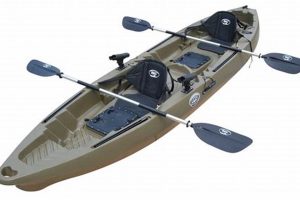
Pre-owned Hobie kayaks designed for angling represent a significant segment of the fishing kayak market. These watercraft are typically equipped with specialized features such as pedal drives, rudder systems, and built-in rod holders, making them popular among anglers. A prospective buyer might find a well-maintained pre-owned model offering comparable functionality to a new kayak at a reduced cost.
Acquiring a pre-owned fishing kayak from this reputable brand often provides anglers with access to high-quality, durable vessels at a more accessible price point. This allows more individuals to experience the benefits of kayak fishing, including improved maneuverability in shallow waters, stealthy approach to fish, and the ability to reach areas inaccessible to larger boats. The brand’s established history in the watersports industry contributes to the sustained demand and value retention of these specialized kayaks.
This article will delve deeper into key aspects of purchasing pre-owned Hobie fishing kayaks, including factors to consider before buying, evaluating condition, assessing fair market value, and navigating the buying process.
Tips for Purchasing Pre-owned Hobie Fishing Kayaks
Acquiring a pre-owned Hobie fishing kayak can be a cost-effective way to enjoy this popular watersport. However, careful consideration is essential to ensure a satisfactory purchase. The following tips offer guidance for navigating the process.
Tip 1: Research Specific Models: Different models cater to various fishing styles and needs. Researching specific models beforehand helps narrow the search and identify desirable features.
Tip 2: Inspect Thoroughly: A comprehensive inspection is crucial. Look for signs of wear and tear, including cracks, scratches, and damage to the hull, pedal drive, and rudder system.
Tip 3: Evaluate the Pedal Drive: The pedal drive system is a key component. Test its functionality thoroughly, checking for smooth operation and any unusual noises or resistance.
Tip 4: Assess Seat Condition: Comfort is paramount during long fishing trips. Examine the seat for wear, damage, and adjustability.
Tip 5: Check for Accessories: Consider included accessories, such as paddles, rod holders, and storage compartments. These can add value and convenience.
Tip 6: Inquire About Maintenance History: Understanding the kayak’s maintenance history can provide insights into its overall condition and potential future maintenance needs.
Tip 7: Compare Prices: Research current market prices for similar models to ensure a fair purchase price. Consider factors like condition, age, and included accessories.
Tip 8: Secure Proper Documentation: Ensure all necessary paperwork, including proof of ownership and any warranty information, is provided.
By following these tips, prospective buyers can increase the likelihood of finding a well-maintained, reliable pre-owned Hobie fishing kayak that meets their specific fishing needs and budget. A thorough evaluation empowers informed decision-making and contributes to a positive ownership experience.
This information provides a foundation for making an informed decision about purchasing a pre-owned Hobie fishing kayak. The subsequent conclusion will summarize the key takeaways and reiterate the importance of careful consideration during the buying process.
1. Hull Condition

The hull condition of a used Hobie fishing kayak is a critical factor determining its seaworthiness, longevity, and overall value. A thorough assessment of the hull is essential before purchase to avoid costly repairs or safety issues on the water. Understanding potential issues and how they impact performance is paramount for informed decision-making.
- Scratches and Abrasions:
Superficial scratches and abrasions are common on used kayaks, often resulting from normal use and storage. While minor cosmetic imperfections rarely affect performance, deeper scratches warrant closer inspection. Deep scratches can compromise the hull’s structural integrity and should be assessed for potential leaks or weaknesses.
- Cracks and Gouges:
Cracks and gouges represent more significant damage, potentially indicating impact or stress fractures. Their location and depth determine the severity. Cracks near stress points, such as the keel or seat area, are particularly concerning. Professional repair might be necessary, adding to the overall cost. Careful examination, potentially including water testing, is crucial to evaluate the extent of the damage.
- UV Degradation and Fading:
Prolonged exposure to sunlight degrades plastics, causing fading and weakening of the hull. While fading is primarily cosmetic, severe UV damage can make the hull brittle and susceptible to cracking. Examining the kayak’s overall color consistency and checking for signs of brittleness, such as chalkiness or surface cracking, helps assess UV degradation.
- Repairs and Modifications:
Previous repairs or modifications require careful scrutiny. Properly executed repairs by qualified technicians may not pose significant issues. However, poorly executed repairs can compromise structural integrity and create future problems. Inquiring about the nature of any repairs and modifications, and examining the quality of the workmanship, helps assess their potential impact.
A comprehensive evaluation of the hull, considering these factors, plays a vital role in determining the suitability and value of a used Hobie fishing kayak. Neglecting this critical assessment can lead to unforeseen expenses and safety risks. A well-maintained hull contributes significantly to the kayak’s performance, longevity, and overall enjoyment on the water.
2. Drive Functionality

Drive functionality is a defining characteristic of Hobie fishing kayaks, distinguishing them from traditional paddle kayaks. The MirageDrive system, with its pedal-powered fins, offers distinct advantages in maneuverability, speed, and hands-free fishing. Evaluating the drive system’s condition and performance is crucial when considering a pre-owned Hobie. A malfunctioning drive can significantly impact the kayak’s usability and necessitate costly repairs or replacements.
- Fin Condition and Operation:
The fins are the heart of the MirageDrive system. Damaged, bent, or worn fins compromise propulsion efficiency and tracking. Inspect fins for cracks, chips, and excessive wear. Verify smooth deployment and retraction, ensuring they lock securely in both positions. Worn fins can lead to reduced speed and increased effort required for pedaling.
- Drive System Smoothness and Noise:
A well-maintained MirageDrive operates smoothly and quietly. Grinding, clicking, or other unusual noises during pedaling often indicate internal wear or damage to gears, bearings, or other components. Test the drive in both forward and reverse, paying attention to any resistance or unusual sounds. A noisy or resistant drive may require lubrication, adjustment, or replacement of worn parts.
- Turbo Fins and Upgrade Considerations:
Some Hobie models offer Turbo Fin upgrades, providing increased speed and power. If the pre-owned kayak includes Turbo Fins, verify their authenticity and condition. Consider the potential benefits of upgrading to Turbo Fins if the kayak has standard fins. Upgraded fins can enhance performance but should be factored into the overall purchase evaluation.
- Maintenance History and Parts Availability:
Inquire about the drive system’s maintenance history, including any repairs or replacements. Understanding past maintenance provides insights into the drive’s reliability. Confirm the availability of replacement parts for the specific MirageDrive model. Older or discontinued models might have limited parts availability, potentially complicating future repairs.
The MirageDrive system significantly influences the performance and value of a used Hobie fishing kayak. A thorough assessment of its functionality, considering these key aspects, helps ensure a satisfying and reliable purchase. A properly functioning drive enhances the fishing experience, providing efficient propulsion, maneuverability, and hands-free operation, ultimately contributing to a more enjoyable time on the water.
3. Model Year
The model year of a used Hobie fishing kayak provides crucial context for evaluating its features, technology, and overall value. Understanding the evolution of Hobie kayaks and the innovations introduced over time allows prospective buyers to make informed decisions aligned with their specific needs and budget. Model year considerations influence everything from hull design and drive systems to seating comfort and accessory integration.
- Technological Advancements:
Hobie has consistently introduced technological advancements in its fishing kayaks. Newer models often incorporate improved drive systems, such as updated MirageDrives with enhanced efficiency and smoother operation. Technological advancements also extend to features like steering systems, seating designs, and integrated electronics. Understanding the technological advancements associated with specific model years helps buyers assess performance capabilities and potential advantages.
- Design and Construction:
Hull designs and construction materials have evolved over time, influencing stability, speed, and durability. Newer models may feature redesigned hulls optimized for specific fishing styles or water conditions. Changes in construction materials can impact weight, durability, and resistance to UV degradation. Evaluating design and construction changes across model years allows buyers to select a kayak best suited to their intended use and environment.
- Features and Accessories:
Hobie kayaks often include various features and accessories designed to enhance the fishing experience. Model year considerations influence the availability and type of features, such as rod holders, storage compartments, and mounting options for fish finders or other electronics. Newer models may incorporate innovative features not available in older versions. Evaluating the features and accessories associated with different model years allows buyers to prioritize essential components and customize their fishing setup.
- Depreciation and Value Retention:
Model year significantly impacts depreciation and resale value. Newer models typically command higher prices than older models, reflecting the incorporation of newer technologies and features. However, well-maintained older models can still offer excellent value, especially for buyers on a budget. Understanding depreciation trends and value retention across different model years helps buyers make informed decisions about pricing and long-term investment potential.
Considering the model year in the context of these factors provides valuable insights into the capabilities and value of a used Hobie fishing kayak. Evaluating technological advancements, design changes, features, and depreciation trends empowers buyers to select a kayak that aligns with their individual fishing needs, budget, and long-term ownership goals. A thorough understanding of model year implications contributes to a more informed and satisfying purchase decision.
4. Included Accessories

Included accessories significantly influence the value and utility of used Hobie fishing kayaks. These additions can enhance the fishing experience, providing practical advantages and customization options. Evaluating included accessories allows prospective buyers to assess the overall package and its suitability for individual fishing needs. A comprehensive understanding of these additions empowers informed decision-making and contributes to a more satisfying purchase.
- Paddles:
While Hobie kayaks are renowned for their pedal-driven propulsion, paddles serve as essential backup for navigating shallow water, maneuvering in tight spaces, or dealing with unexpected drive system issues. Included paddles can vary in quality, material, and length. A high-quality paddle enhances versatility and provides a reliable backup for propulsion.
- Rod Holders:
Rod holders are fundamental accessories for kayak fishing, providing secure storage and convenient access to fishing rods. Different Hobie models offer various rod holder configurations. Evaluating the number, type, and placement of included rod holders allows anglers to optimize their fishing setup and accommodate specific rod lengths and fishing styles.
- Storage Compartments:
Storage compartments are essential for organizing tackle, gear, and personal items. Hobie kayaks offer various storage options, including hatches, tank wells, and under-seat compartments. Assessing the size, accessibility, and condition of included storage compartments helps anglers determine their capacity for carrying essential equipment and maintaining an organized cockpit.
- Fish Finders and Electronics:
Some used Hobie kayaks may come equipped with fish finders, GPS units, or other electronic accessories. These additions can enhance fishing success by providing real-time information about water depth, fish location, and navigation. Evaluating the functionality, condition, and compatibility of included electronics contributes to a more informed purchase decision.
The inclusion of these accessories impacts the overall value proposition of a used Hobie fishing kayak. A well-equipped kayak with high-quality accessories can significantly enhance the fishing experience and potentially justify a higher purchase price. Carefully considering included accessories ensures alignment with individual fishing needs and contributes to a more informed and satisfying purchase decision. Understanding the functionality and value of these additions empowers buyers to make informed choices and maximize their investment in a used Hobie fishing kayak.
5. Market Price

Market price plays a crucial role in the landscape of used Hobie fishing kayaks, reflecting a complex interplay of supply, demand, condition, and market trends. Understanding these factors empowers both buyers and sellers to navigate the market effectively and make informed decisions. Market price represents the current value assigned to a specific kayak model in its present condition, considering factors such as age, features, and included accessories.
Several factors influence market price fluctuations. Seasonal demand often drives prices higher during peak fishing seasons. The availability of specific models, particularly discontinued or sought-after versions, can significantly impact pricing. Condition, including hull integrity, drive system functionality, and overall wear and tear, plays a pivotal role in determining market value. Included accessories, such as paddles, rod holders, and fish finders, contribute to the overall package and influence the final price. Geographic location also influences market dynamics, as prices may vary based on regional demand and availability. For example, a well-maintained Hobie Outback in a popular fishing region during peak season might command a premium price compared to the same model in a less popular area during the off-season.
Accurately assessing market price requires diligent research. Online marketplaces, classified ads, and dealer inventories provide valuable data points. Comparing similar models with comparable condition and features helps establish a reasonable price range. Understanding market trends and seasonal fluctuations empowers buyers to identify potential bargains and avoid overpaying. For sellers, accurate market pricing ensures competitive positioning and facilitates a timely sale. A realistic understanding of market dynamics benefits both buyers and sellers, contributing to a fair and efficient marketplace for used Hobie fishing kayaks. This understanding empowers informed decision-making and facilitates successful transactions for all parties involved.
6. Seller Reputation
Seller reputation holds significant weight when purchasing a pre-owned Hobie fishing kayak. A reputable seller fosters trust and provides a degree of assurance regarding the kayak’s condition, history, and the overall transaction process. Conversely, an unknown or poorly-rated seller introduces potential risks, ranging from misrepresented product information to difficulties with post-sale support. Evaluating seller reputation is a crucial step in mitigating these risks and ensuring a positive buying experience. A thorough assessment of seller reputation provides valuable insights and contributes significantly to a secure and satisfactory purchase.
- Online Reviews and Ratings:
Online reviews and ratings offer valuable insights into a seller’s track record. Platforms like eBay, Craigslist, and specialized kayak forums often feature seller feedback and ratings. Positive reviews consistently highlighting accurate product descriptions, prompt communication, and reliable shipping practices indicate a reputable seller. Conversely, negative reviews mentioning discrepancies in product condition, slow responses, or shipping issues warrant caution. Careful examination of online reviews provides valuable context for evaluating seller trustworthiness. For example, a seller with consistently high ratings and positive feedback across multiple platforms signals a reliable track record.
- Dealer Reputation and Certifications:
Established kayak dealers often possess a reputation built over time. Authorized Hobie dealers typically adhere to specific standards regarding product knowledge, customer service, and warranty support. Certifications, such as membership in professional organizations or affiliations with reputable industry bodies, further enhance a dealer’s credibility. Purchasing from an authorized dealer offers advantages in terms of warranty coverage, access to certified technicians, and potential trade-in options. This can provide greater peace of mind compared to purchasing from a private seller with limited recourse for post-sale issues.
- Communication and Responsiveness:
A seller’s communication style and responsiveness reflect professionalism and commitment to customer service. Prompt and clear responses to inquiries, transparent communication regarding product details, and proactive updates throughout the transaction process demonstrate a seller’s commitment to a positive customer experience. Conversely, slow responses, evasiveness, or inconsistencies in communication can indicate potential issues or a lack of professionalism. Effective communication is essential for building trust and establishing a smooth transaction process.
- Return Policy and Warranty Information:
A clear and comprehensive return policy provides buyer protection and demonstrates a seller’s confidence in the product’s quality. Understanding the terms and conditions of the return policy, including eligibility criteria and associated costs, protects the buyer in case of unforeseen issues or discrepancies. Warranty information, especially for pre-owned kayaks, further strengthens buyer protection. A reputable seller will provide accurate and complete warranty details, outlining coverage terms and any limitations. This transparency builds trust and safeguards the buyer’s investment.
Evaluating seller reputation, considering these key facets, mitigates risks associated with purchasing a used Hobie fishing kayak. A reputable seller provides peace of mind, ensures a smoother transaction process, and increases the likelihood of acquiring a kayak in the described condition. By prioritizing seller reputation, buyers can make informed decisions and confidently navigate the complexities of the used kayak market. This due diligence contributes significantly to a positive and satisfying purchase experience.
Frequently Asked Questions about Pre-owned Hobie Fishing Kayaks
This FAQ section addresses common inquiries regarding the acquisition of pre-owned Hobie fishing kayaks. Clear and concise answers aim to provide prospective buyers with the information necessary to navigate the pre-owned market effectively.
Question 1: What are the primary advantages of purchasing a pre-owned Hobie fishing kayak?
The primary advantage lies in potential cost savings compared to new models. Pre-owned kayaks offer an opportunity to acquire a high-quality fishing platform at a reduced price point, allowing budget-conscious individuals access to Hobie’s renowned features and performance.
Question 2: What are key considerations when inspecting a used Hobie kayak?
Thorough inspection is paramount. Focus on hull condition, checking for cracks, deep scratches, or repairs. Evaluate the MirageDrive system’s functionality, ensuring smooth operation and absence of unusual noises. Assess seat condition, and inspect included accessories.
Question 3: How does one determine a fair price for a pre-owned Hobie?
Research comparable models on online marketplaces, classified ads, and dealer websites. Consider the kayak’s model year, condition, included accessories, and overall market trends. Consulting with experienced Hobie kayak owners or dealers can provide valuable insights.
Question 4: Are there risks associated with buying from a private seller versus an authorized dealer?
Purchasing from a private seller may offer lower prices, but typically carries greater risk regarding warranty coverage and recourse for potential defects. Authorized dealers often offer certified pre-owned kayaks with limited warranties and post-sale support, providing added peace of mind.
Question 5: How does model year impact performance and features in Hobie fishing kayaks?
Hobie regularly introduces design and technological improvements. Newer models may feature updated hull designs, more efficient drive systems, and advanced features like integrated electronics. Research specific model years to understand performance differences and available features.
Question 6: What essential accessories should one look for in a pre-owned Hobie fishing kayak package?
Essential accessories include a high-quality paddle, appropriate rod holders for intended fishing styles, ample storage compartments for gear and tackle, and potentially a fish finder or GPS unit. Consider individual fishing needs and preferences when evaluating included accessories.
By addressing these frequently asked questions, prospective buyers can gain a comprehensive understanding of the pre-owned Hobie fishing kayak market. This knowledge empowers informed decision-making and facilitates a successful purchase experience.
The following conclusion summarizes key takeaways and provides final recommendations for navigating the pre-owned Hobie kayak market.
Conclusion
Acquiring a pre-owned Hobie kayak designed for fishing presents a compelling opportunity for anglers seeking a balance of performance, features, and affordability. Careful consideration of factors such as hull condition, drive functionality, model year, included accessories, market price, and seller reputation is essential for a successful purchase. Thorough research and inspection mitigate potential risks and empower informed decision-making. Understanding the nuances of each aspect contributes significantly to a satisfying long-term ownership experience. A well-maintained pre-owned Hobie fishing kayak offers access to the brand’s renowned quality and innovation, enabling anglers to explore diverse waterways and pursue their passion with confidence.
The pre-owned market offers a dynamic landscape shaped by evolving technologies, fluctuating demand, and individual seller practices. Diligent research and a comprehensive understanding of key evaluation criteria empower informed choices and contribute to a positive ownership experience. A well-chosen pre-owned Hobie fishing kayak provides years of reliable performance and on-the-water enjoyment, making it a worthwhile investment for discerning anglers.