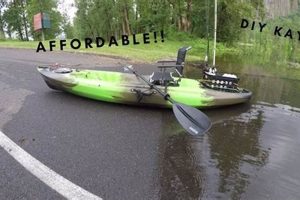
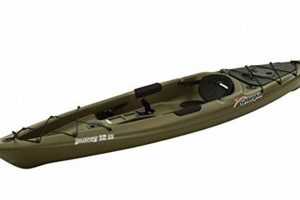
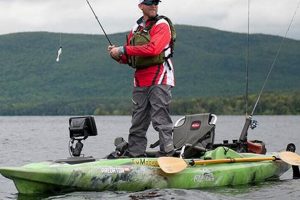
A two-person kayak configured for angling provides a stable and efficient platform for shared fishing experiences. This configuration typically involves specialized seating, rod holders, and often additional storage for tackle and gear, strategically positioned to maximize space and accessibility for both anglers. An example might include a kayak with adjustable footrests for both participants, recessed rod holders behind the seats, and a central hatch for storing a tackle box.
Shared angling from a two-person watercraft offers several advantages. The increased stability compared to a solo vessel allows anglers to focus on fishing rather than balance, particularly beneficial in challenging conditions or when fighting larger fish. The collaborative nature allows for shared effort in paddling, navigating, and landing fish, enhancing the overall experience. Furthermore, dividing gear and responsibilities can reduce the individual load and potentially the overall cost. While the concept of fishing from human-powered watercraft is ancient, the development of purpose-built, stable, and efficient two-person kayaks designed specifically for angling is a relatively recent innovation driven by the increasing popularity of the sport.
This article will explore the key elements of optimizing a two-person kayak for fishing, including choosing the right vessel, essential equipment, effective techniques, and important safety considerations.
Tips for Optimizing a Two-Person Kayak Fishing Experience
Careful planning and proper equipment selection significantly enhance fishing success and overall enjoyment when using a two-person kayak. The following tips offer guidance for optimizing the experience.
Tip 1: Weight Distribution is Crucial: Proper weight distribution is essential for stability and efficient paddling. Heavier items should be placed low and centered in the kayak. Anglers should coordinate seating positions to balance the vessel effectively.
Tip 2: Choose Appropriate Paddles: Paddle length and blade shape influence paddling efficiency. Selecting paddles appropriate for individual height and paddling style contributes to a more comfortable and less tiring experience.
Tip 3: Secure Gear Effectively: All fishing gear, including rods, reels, tackle boxes, and safety equipment, must be securely fastened to the kayak to prevent loss in case of capsizing. Utilizing leashes and appropriate storage compartments is highly recommended.
Tip 4: Practice Essential Safety Procedures: Wearing personal flotation devices (PFDs) is paramount. Carrying a communication device (e.g., VHF radio, mobile phone in a waterproof case) and a first-aid kit is also crucial for safety. Practicing self-rescue and assisted rescue techniques is highly advisable before venturing onto the water.
Tip 5: Plan Fishing Locations Strategically: Researching fishing locations beforehand, considering factors such as water depth, currents, and potential hazards, enhances the likelihood of a successful and safe fishing trip. Checking weather forecasts and tide charts is also essential.
Tip 6: Communicate Effectively: Clear and concise communication between anglers is crucial, especially when navigating challenging waters or landing fish. Establishing hand signals or utilizing a whisper-light communication system can prove invaluable.
Tip 7: Respect Wildlife and the Environment: Practicing catch-and-release whenever possible helps preserve fish populations. Adhering to “Leave No Trace” principles by properly disposing of waste and minimizing environmental impact contributes to the long-term health of aquatic ecosystems.
By following these guidelines, anglers can maximize their enjoyment and success while promoting safety and responsible use of natural resources. A well-planned and executed approach to this activity ensures a memorable and rewarding experience.
This article concludes with a comprehensive summary of best practices and essential considerations for optimizing the tandem kayak fishing experience, emphasizing safety and environmental stewardship.
1. Kayak Selection

Kayak selection represents a critical foundational element within the broader context of a tandem kayak fishing setup. The chosen vessel directly influences stability, storage capacity, and overall fishing effectiveness. Cause and effect relationships are clearly evident: an improperly selected kayak can lead to instability, insufficient storage for gear, and a compromised fishing experience. Conversely, a well-chosen kayak provides a stable platform, ample storage, and enhances the potential for a successful outing. Consider, for instance, a long, narrow kayak designed for speed; while suitable for touring, its lower stability might prove detrimental when two anglers are casting and reeling in fish. A wider, more stable hull design, specifically intended for fishing, would be a more appropriate choice in such circumstances. Another example lies in considering the intended fishing environment; a shorter kayak might be maneuverable in tight rivers and creeks, whereas a longer kayak offers advantages in tracking and speed on open water, such as large lakes or bays.
The practical significance of understanding this connection cannot be overstated. Choosing the right kayak directly impacts not only comfort and efficiency but also safety. A kayak with insufficient weight capacity or poor stability can create hazardous situations, especially in challenging conditions. Furthermore, specialized features integral to fishing kayaks, such as rod holders, tackle storage, and anchor systems, influence the overall functionality and effectiveness of the fishing setup. For example, integrated rod holders allow hands-free fishing and trolling, while dedicated tackle storage compartments maintain organization and accessibility. Evaluating these features during the selection process streamlines the overall setup and contributes to a more efficient and enjoyable fishing experience.
In summary, kayak selection serves as a cornerstone of a successful tandem kayak fishing setup. Careful consideration of factors like stability, storage, and specialized features is paramount. A well-chosen kayak provides a secure and efficient platform, maximizing both safety and the likelihood of a rewarding fishing experience. Failure to appreciate the importance of kayak selection can negatively impact performance, comfort, and safety, highlighting the crucial link between vessel choice and overall fishing effectiveness within the tandem kayak configuration. This careful selection process lays the groundwork for all subsequent setup decisions, directly influencing the optimization and success of the overall fishing experience.
2. Seating Arrangement

Seating arrangement within a tandem kayak significantly influences fishing effectiveness and overall comfort. Proper configuration maximizes casting space, minimizes interference between anglers, and contributes to balanced weight distribution, a critical factor for stability. Understanding the nuances of seating arrangement is essential for optimizing the tandem kayak fishing experience.
- Angler Positioning:
Traditional tandem kayaks position anglers one behind the other. This arrangement often designates the rear angler as the primary paddler, while the front angler focuses on fishing. However, some modern tandem kayaks offer adjustable seating systems, allowing for side-by-side or staggered positioning. Side-by-side seating enhances communication and shared viewing, while staggered configurations can improve weight distribution and individual casting angles. The optimal positioning depends on the fishing style, target species, and water conditions. For example, trolling may benefit from a traditional tandem setup, while sight casting might favor a staggered configuration.
- Seat Adjustability:
Adjustable seats allow anglers to customize their position for optimal comfort and fishing efficiency. Features such as adjustable backrests, foot braces, and sliding tracks contribute to individualized comfort and support. Proper seat adjustment also influences paddling posture and power transfer, crucial for efficient movement through the water. For instance, an angler with longer legs may require a seat positioned further back to achieve comfortable leg extension and effective paddling leverage.
- Casting Space Optimization:
Maximizing casting space is paramount in a tandem kayak fishing setup. Seating arrangement directly impacts the available area for casting without interference between anglers or entanglement of lines. Staggered seating, for example, can provide more clearance for backcasts compared to a traditional tandem configuration. Similarly, adjustable seating allows anglers to fine-tune their positions to optimize casting angles and avoid obstructions. This is particularly important when fly fishing or using longer rods.
- Weight Distribution and Stability:
Balanced weight distribution is crucial for kayak stability, especially in tandem configurations. Seating arrangement plays a vital role in achieving this balance. Positioning anglers and gear strategically helps maintain an even keel and prevent tipping. For example, if one angler is significantly heavier than the other, adjusting seating positions or distributing gear accordingly can compensate for the weight difference and maintain stability. This careful consideration of weight distribution becomes even more critical when navigating rough water or fighting larger fish.
Effective seating arrangement in a tandem kayak directly impacts fishing success and overall enjoyment. Careful consideration of angler positioning, seat adjustability, casting space, and weight distribution contributes to a stable, efficient, and comfortable fishing platform. Optimizing these elements enhances not only the fishing experience but also promotes safety and efficient paddling, demonstrating the integral role of seating configuration within the broader context of a well-planned tandem kayak fishing setup. Ignoring these factors can lead to discomfort, reduced fishing effectiveness, and potentially compromised stability, highlighting the critical connection between seating arrangement and overall success in a tandem kayak fishing scenario.
3. Rod Holder Placement
Rod holder placement constitutes a critical element within the overall framework of a tandem kayak fishing setup. Strategic positioning directly influences fishing efficiency, line management, and overall angler comfort. Optimal placement maximizes access while minimizing interference between anglers and preventing rod entanglement. Understanding the nuances of rod holder placement is essential for a successful and enjoyable tandem kayak fishing experience. Improper placement can lead to tangled lines, reduced casting efficiency, and potential damage to rods and reels.
- Accessibility and Reach:
Rod holders should be positioned within easy reach of both anglers. This allows for effortless retrieval and stowage of rods without requiring excessive stretching or awkward movements. Accessibility also contributes to quick reactions when a fish strikes, minimizing lost opportunities. Positioning holders too far forward or behind the seating area can create challenges in retrieving rods quickly, potentially leading to missed strikes or difficulty in managing a hooked fish. Conversely, well-placed holders allow for seamless transitions between paddling and fishing, enhancing overall efficiency on the water.
- Casting Angles and Interference:
Rod holder placement should facilitate optimal casting angles without causing interference between anglers or entanglement of lines. Staggered placement, for example, can provide more clearance for backcasts compared to holders positioned directly beside each other. Consideration of the dominant casting arm of each angler is crucial in optimizing placement to minimize interference. Poorly placed holders can restrict casting motions, leading to inaccurate casts or tangled lines, especially when both anglers are casting simultaneously. Proper placement ensures clear casting lanes and reduces the risk of lines crossing, a common issue that can disrupt fishing and lead to frustration.
- Rod Security and Stability:
Securely mounted rod holders are essential to prevent rod loss or damage during transport or when battling larger fish. Holders should be firmly attached to the kayak and capable of withstanding the forces exerted by a hooked fish. Furthermore, the angle of the rod holders influences the stability of the rods when stored. Holders angled slightly outward can improve stability and reduce the risk of rods tipping overboard, particularly in rough water. Inadequate rod holder security can result in lost or damaged equipment, especially in challenging conditions. Strong, well-secured holders protect valuable fishing gear and provide peace of mind on the water.
- Integration with Other Gear:
Rod holder placement should be considered in conjunction with the positioning of other fishing accessories, such as tackle boxes, fish finders, and anchor trolleys. Strategic placement minimizes interference between equipment and optimizes workflow. For example, positioning rod holders near a tackle storage area allows for easy access to lures and other fishing essentials. Careful integration of all equipment contributes to a streamlined and efficient fishing setup. Failure to consider the placement of other gear can lead to a cluttered and inefficient cockpit, hindering movement and access to essential equipment. A well-integrated setup maximizes space utilization and promotes a more organized and productive fishing experience.
In summary, strategic rod holder placement is integral to an effective tandem kayak fishing setup. Careful consideration of accessibility, casting angles, rod security, and integration with other gear contributes to a more organized, efficient, and enjoyable fishing experience. Well-placed rod holders maximize fishing opportunities, minimize interference, and protect valuable equipment. Conversely, inadequate planning in this area can negatively impact fishing success, leading to frustration and potentially hazardous situations on the water. This emphasizes the direct connection between rod holder placement and the overall effectiveness and enjoyment of the tandem kayak fishing experience.
4. Gear Storage Solutions
Gear storage solutions represent a crucial aspect of a tandem kayak fishing setup, directly impacting organization, efficiency, and safety. A well-organized kayak maximizes fishing time and minimizes frustration by providing readily accessible tackle and equipment. Conversely, inadequate storage solutions contribute to clutter, tangled lines, and potential loss of gear, compromising both efficiency and safety. Effective storage facilitates quick retrieval of essential items, allowing anglers to adapt to changing conditions or fishing opportunities without disrupting the flow of the experience. For example, readily available spare lures, hooks, or leaders enable swift adjustments to tackle without rummaging through a disorganized storage area. This efficient access maximizes fishing time and responsiveness, crucial elements in successful angling. Conversely, inadequate storage necessitates time-consuming searches for essential gear, disrupting the fishing process and potentially leading to missed opportunities.
Several factors influence the effectiveness of gear storage solutions in a tandem kayak. Kayak design plays a significant role; some models offer built-in storage compartments, while others require aftermarket additions. The type of fishing pursued also dictates storage needs; fly fishing necessitates different storage solutions compared to baitcasting or trolling. Furthermore, the duration of fishing trips influences the volume of gear requiring storage. Consider a scenario involving two anglers targeting different species; one focusing on fly fishing for trout, the other using lures for bass. This scenario demands distinct storage solutions accommodating diverse tackle and equipment, such as fly boxes, leader spools, lure trays, and extra reels. A well-designed system segregates and organizes these items, maximizing efficiency and minimizing interference between the anglers’ respective setups. Conversely, a poorly planned approach could result in tangled lines, misplaced gear, and ultimately, a compromised fishing experience.
In conclusion, effective gear storage solutions are integral to a well-optimized tandem kayak fishing setup. Strategic planning and utilization of appropriate storage options contribute directly to an organized, efficient, and safe fishing experience. Adequate storage maximizes fishing time, minimizes frustration, and promotes safety by preventing clutter and ensuring readily accessible equipment. Conversely, inadequate storage compromises efficiency, increases the risk of gear loss, and can negatively impact the overall enjoyment of the fishing trip. Careful consideration of storage needs, based on kayak design, fishing style, and trip duration, is paramount in developing a functional and efficient tandem kayak fishing platform.
5. Safety Equipment Integration

Safety equipment integration represents a non-negotiable aspect of responsible tandem kayak fishing setups. Prioritizing safety ensures not only a more enjoyable experience but also mitigates potential risks inherent in the activity. Integrating safety equipment seamlessly into the setup, rather than treating it as an afterthought, allows for immediate access and deployment when needed, maximizing its effectiveness in critical situations. This proactive approach transforms potential emergencies into manageable situations, ensuring the well-being of all participants.
- Personal Flotation Devices (PFDs):
PFDs are paramount for all on-water activities, including tandem kayak fishing. Selecting appropriately sized and comfortable PFDs, and wearing them consistently throughout the trip, significantly increases survival chances in the event of capsizing. Integrating PFDs into the setup might involve designating specific storage locations within the kayak for easy access or attaching them to readily accessible points using carabiners or clips. Consider a scenario where the kayak capsizes unexpectedly; readily available PFDs can prevent tragedy, particularly in cold water or strong currents where the risk of hypothermia or drowning increases significantly. PFD selection should consider factors such as intended water conditions and individual body weight to ensure optimal fit and buoyancy.
- Communication Devices:
Maintaining communication capabilities is crucial in emergency situations. Integrating a waterproof VHF radio or a mobile phone sealed in a waterproof case allows for contacting emergency services or other boaters if assistance is needed. Pre-programming essential contact numbers into the device streamlines communication in critical situations, minimizing delays. Visual signaling devices, such as flares or a signal mirror, also provide backup communication options, particularly in situations where electronic devices malfunction or lose power. Imagine a scenario where an angler suffers an injury far from shore; a reliable communication device becomes essential for summoning medical assistance, highlighting the critical role of communication integration in tandem kayak fishing safety.
- First-Aid Kit and Emergency Supplies:
A comprehensive first-aid kit, tailored to address common kayaking and fishing injuries, is essential. This kit should include supplies for treating cuts, scrapes, burns, sprains, and other potential ailments. Integrating the kit into the setup might involve storing it in a waterproof bag within easy reach. Additional emergency supplies, such as a whistle, a knife, and a small repair kit for the kayak, further enhance preparedness. Consider a scenario where an angler hooks themselves with a fishing lure; a readily accessible first-aid kit allows for prompt treatment, preventing infection and minimizing discomfort. The kit’s contents should be regularly inspected and replenished to ensure its effectiveness in emergency situations.
- Navigation and Lighting:
Navigation tools, such as a compass, GPS device, or nautical charts, enhance safety, especially in unfamiliar waters or during low-light conditions. Integrating these tools into the setup might involve mounting a GPS unit on the kayak’s dashboard or storing charts in a waterproof map case. Furthermore, carrying a headlamp or attaching navigation lights to the kayak enhances visibility during nighttime excursions or in conditions of reduced visibility, such as fog. Consider a scenario where anglers become disoriented in dense fog; a compass or GPS device can provide crucial directional guidance, ensuring a safe return to shore. Similarly, navigation lights enhance visibility to other boaters, minimizing the risk of collisions.
In conclusion, comprehensive safety equipment integration forms a cornerstone of a responsible tandem kayak fishing setup. Seamless integration ensures accessibility and enhances the effectiveness of safety measures in critical situations. Each element, from PFDs to navigation tools, plays a crucial role in mitigating potential risks and ensuring a safe and enjoyable experience. Prioritizing safety enhances not only the well-being of the participants but also contributes to a more confident and rewarding fishing adventure. Failure to integrate safety equipment adequately can transform manageable incidents into life-threatening situations, underscoring the critical link between safety preparedness and overall success in tandem kayak fishing.
Frequently Asked Questions about Tandem Kayak Fishing Setups
This section addresses common inquiries regarding tandem kayak fishing setups, providing concise and informative responses to facilitate informed decision-making and enhance the overall fishing experience.
Question 1: What are the primary advantages of using a tandem kayak for fishing?
Tandem kayaks offer increased stability compared to solo kayaks, particularly beneficial when casting, reeling, or landing fish. They also allow for shared paddling responsibilities, reducing individual exertion and enabling longer trips. The collaborative nature of tandem kayaking enhances the social aspect of fishing.
Question 2: How does one choose the right tandem kayak for fishing?
Selecting an appropriate tandem fishing kayak involves considering factors such as weight capacity, hull design (stability vs. speed), storage space for gear, and integrated features like rod holders and anchor systems. The intended fishing environment (calm lakes vs. flowing rivers) and target species also influence kayak selection.
Question 3: What essential safety equipment should be included in a tandem kayak fishing setup?
Essential safety equipment includes appropriately sized personal flotation devices (PFDs) for each angler, a waterproof communication device (VHF radio or mobile phone in a waterproof case), a comprehensive first-aid kit, and signaling devices (whistle, flares, signal mirror). Navigation tools (compass, GPS) and lighting (headlamps, navigation lights) further enhance safety.
Question 4: How does one optimize gear storage in a tandem kayak fishing setup?
Optimizing gear storage involves utilizing waterproof bags, dry boxes, and specialized tackle storage solutions designed for kayaks. Distributing weight evenly within the kayak maintains balance and stability. Securing gear with straps or bungee cords prevents loss in case of capsizing.
Question 5: What are the key considerations for seating arrangements in a tandem kayak for fishing?
Seating arrangements should maximize both angler comfort and casting space. Adjustable seating systems offer flexibility in positioning, allowing for optimized weight distribution and minimized interference between anglers. Consider the fishing style (trolling vs. casting) and target species when determining optimal seating configurations.
Question 6: How does rod holder placement impact fishing efficiency in a tandem kayak?
Strategic rod holder placement facilitates easy access and minimizes interference between anglers. Positioning holders within comfortable reach allows for quick retrieval and storage of rods. Angles of placement should optimize casting angles and prevent rod entanglement. Secure mounting ensures rod safety during transport and when fighting fish.
Careful consideration of these frequently asked questions facilitates a well-informed approach to tandem kayak fishing setups, enhancing both safety and enjoyment on the water.
This concludes the FAQ section. Subsequent articles will delve into specific aspects of tandem kayak fishing techniques and strategies.
Tandem Kayak Fishing Setup
Effective configuration for angling from a two-person kayak necessitates a holistic approach encompassing vessel selection, seating arrangement, rod holder placement, gear storage solutions, and safety equipment integration. Each component contributes significantly to the overall effectiveness, efficiency, and safety of the fishing experience. Careful consideration of these elements optimizes performance, minimizes potential challenges, and maximizes enjoyment on the water. A well-planned approach transforms the tandem kayak into a versatile and effective fishing platform, enhancing the potential for a successful and rewarding outing.
Mastery of these fundamental principles allows anglers to fully exploit the advantages offered by this specialized fishing platform. Further exploration of advanced techniques and specialized equipment promises to unlock the full potential of the tandem kayak fishing experience, contributing to continued growth and innovation within this exciting realm of angling. The future of tandem kayak fishing hinges on the continued development of innovative equipment and the sharing of knowledge within the angling community. Embracing these advancements promises to further refine the tandem kayak fishing setup, enhancing its effectiveness and accessibility for anglers of all skill levels.