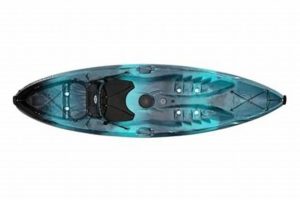
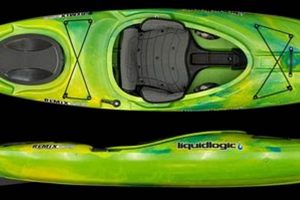
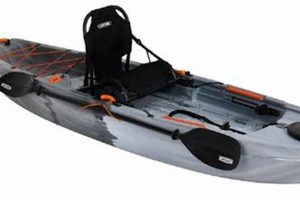
A specialized chair designed for angler comfort and stability in a kayak provides an improved angling experience. These chairs often feature elevated seating, adjustable backrests, and breathable, quick-drying materials. Some models even incorporate swivel functionality and accessory mounts. A typical example might include a padded, high-back design with adjustable straps for secure mounting to the kayak’s hull.
Enhanced comfort and stability translate to longer, more productive fishing trips. An appropriate chair reduces fatigue and back strain, allowing anglers to focus on the task at hand. Historically, kayak anglers often utilized basic seating or improvised cushions. The development of purpose-built seating demonstrates a significant advancement in kayak angling ergonomics and efficiency. This evolution reflects the growing popularity of kayak fishing and the demand for specialized equipment.
This discussion will further explore various seating options, considering factors like materials, design, adjustability, and compatibility with different kayak types. Subsequent sections will delve into proper installation techniques, maintenance recommendations, and the impact of seating choice on overall angling performance.
Tips for Selecting Kayak Fishing Seats
Choosing appropriate seating is crucial for comfort and performance in kayak angling. Careful consideration of several factors ensures optimal selection.
Tip 1: Prioritize Stability: A stable base is paramount. Look for seating with a broad base and secure mounting points. Wider bases minimize rocking and maximize stability, especially important when casting or reeling in fish.
Tip 2: Consider Adjustability: Adjustable backrests and seat heights accommodate individual preferences and physical differences. Adjustable features enhance long-term comfort and reduce strain during extended fishing trips.
Tip 3: Evaluate Materials: Durable, weather-resistant materials are essential. Marine-grade fabrics and corrosion-resistant hardware ensure longevity and withstand harsh aquatic environments. Look for UV-resistant materials to prevent fading and deterioration from sun exposure.
Tip 4: Assess Compatibility: Verify compatibility with the specific kayak model. Mounting systems vary, so ensure the chosen seat integrates seamlessly with the kayak’s design and layout.
Tip 5: Check Weight Capacity: Respect weight limits. Choose seating rated for the angler’s weight, including gear and equipment, to ensure safe and stable performance.
Tip 6: Think About Portability: Consider weight and bulk, especially for transport and storage. Lightweight, foldable options offer convenient portability.
Tip 7: Explore Additional Features: Features such as accessory mounts, rod holders, and storage compartments can enhance functionality and organization.
Proper seat selection significantly improves comfort, stability, and overall fishing experience. By considering these factors, anglers can select appropriate seating that maximizes performance on the water.
These tips offer valuable guidance in navigating the selection process. The following section will provide concluding remarks on the significance of informed decision-making in choosing kayak fishing seating.
1. Comfort

Comfort plays a pivotal role in successful kayak angling. An uncomfortable angler experiences reduced focus, decreased endurance, and ultimately, diminished fishing success. Proper seating directly addresses this critical aspect, transforming a potentially tedious experience into an enjoyable and productive outing.
- Back Support
Adequate back support is essential, particularly during prolonged fishing trips. Lumbar support and adjustable backrests alleviate strain and promote proper posture. Consider a high-back seat with adjustable lumbar support for optimal spinal alignment and reduced fatigue. This can mean the difference between a full day of casting and cutting the trip short due to back pain.
- Cushioning
Effective cushioning minimizes pressure points and enhances comfort. Materials like high-density foam and inflatable bladders provide varying levels of support and adaptability. Closed-cell foam, for example, resists water absorption and maintains its cushioning properties even when wet. Ample padding contributes to a more pleasant experience, allowing anglers to focus on fishing rather than discomfort.
- Breathability
Breathable materials promote airflow and prevent overheating, especially in warm climates. Moisture-wicking fabrics enhance comfort by keeping the angler cool and dry. Mesh panels and ventilated designs facilitate air circulation, reducing perspiration and discomfort during long hours on the water.
- Stability
While not strictly a comfort feature, stability contributes significantly to overall comfort by minimizing rocking and swaying. A stable seating platform allows for more relaxed and controlled movement, reducing the need for constant adjustments and promoting a more comfortable fishing experience. A secure and stable base allows the angler to focus on the fishing, rather than maintaining balance.
These interconnected facets of comfort collectively contribute to a more enjoyable and productive kayak fishing experience. By prioritizing comfort, anglers can maximize their time on the water and enhance their overall success.
2. Stability
Stability forms the bedrock of effective kayak fishing. A stable platform is essential for casting accuracy, fish fighting, and overall safety. Specialized seating plays a crucial role in enhancing stability, directly impacting angling performance and enjoyment.
- Base Design
The base of the seat significantly influences stability. A wider base provides greater stability compared to a narrow design. Consider, for example, the difference between a stool and a bucket; the broader base of the bucket offers inherently greater stability. In kayak fishing, a wider seat base minimizes rocking and tipping, allowing for more confident and controlled movements. This is particularly crucial when casting, reeling, or landing fish.
- Mounting System
Secure mounting to the kayak is paramount for stability. Multiple attachment points and robust straps distribute the angler’s weight effectively, minimizing movement and enhancing overall stability. A well-designed mounting system prevents shifting and sliding, ensuring a secure and predictable platform. Compare, for instance, a loosely attached seat versus one firmly secured; the latter provides significantly greater stability.
- Center of Gravity
Seat height influences the kayak’s center of gravity. Lower seating generally promotes greater stability, particularly in challenging conditions. Imagine a tall stack of blocks versus a shorter, wider arrangement; the lower configuration offers greater stability. Similarly, lower kayak seating lowers the overall center of gravity, reducing the likelihood of capsizing and enhancing stability.
- Material and Construction
Rigid, high-quality materials contribute to overall stability. A sturdy seat base minimizes flex and deformation, providing a more consistent and predictable platform. Compare, for example, a seat constructed from flimsy plastic versus one made from robust, reinforced materials. The latter offers superior stability and resistance to flexing under pressure, contributing to a more secure and controlled fishing experience.
These interconnected elements collectively influence stability in kayak fishing. Choosing seating that prioritizes these factors enhances on-the-water performance, safety, and overall enjoyment. A stable platform provides the foundation for accurate casting, effective fish fighting, and a more confident and comfortable angling experience.
3. Durability
Durability represents a critical factor in the selection of a fishing seat for a kayak. Exposure to harsh environmental conditions, including UV radiation, saltwater, and abrasion, necessitates robust construction. A durable seat ensures longevity, minimizing replacement costs and maintaining performance over extended use.
- Material Selection
Material choice significantly influences seat lifespan. Marine-grade fabrics, such as UV-resistant polyester and solution-dyed acrylic, exhibit superior resistance to fading, mildew, and abrasion. Similarly, corrosion-resistant hardware, typically stainless steel or anodized aluminum, withstands saltwater exposure, preventing rust and degradation. Comparing a standard fabric to a marine-grade equivalent reveals the substantial difference in longevity and resistance to environmental factors.
- Construction Quality
Robust stitching, reinforced seams, and high-quality bonding techniques contribute to overall durability. Double-stitched seams, for example, offer greater resistance to tearing compared to single-stitched counterparts. Similarly, reinforced stress points, particularly in areas subject to high loads, enhance longevity. Examining the construction details of various seats reveals the differences in quality and potential lifespan.
- Frame Construction
The frame, if present, constitutes a key structural element. Durable frame materials, such as aluminum alloys or high-impact plastics, provide a stable foundation and resist bending or breakage. Comparing an aluminum frame to a less robust plastic alternative highlights the difference in structural integrity and resistance to damage. A durable frame ensures consistent performance and extends the overall lifespan of the seat.
- Maintenance Requirements
While not directly related to construction, ease of maintenance contributes to long-term durability. Seats with removable and washable components simplify cleaning and maintenance, preventing the buildup of dirt, grime, and mildew. This, in turn, contributes to a longer lifespan and sustained performance. Consider, for example, a seat with removable cushions versus a non-removable alternative; the former allows for easier cleaning and maintenance, contributing to long-term hygiene and durability.
These interconnected aspects of durability collectively contribute to the longevity and sustained performance of a kayak fishing seat. Prioritizing durability ensures a reliable and comfortable seating solution, minimizing replacement costs and maximizing time on the water.
4. Adjustability
Adjustability in a kayak fishing seat directly impacts comfort, stability, and overall angling effectiveness. A customizable seating system accommodates diverse body types, fishing styles, and on-the-water conditions. Adaptable features enhance ergonomic support, reduce fatigue, and optimize casting and reeling mechanics. This section explores key facets of adjustability in kayak fishing seats.
- Backrest Angle
Adjustable backrests allow anglers to fine-tune their posture, transitioning seamlessly between active casting and relaxed observation. Reclining options provide respite during lulls in activity, while upright positions optimize engagement during active fishing. Consider the difference between sitting upright for sight casting versus a reclined position for trolling. An adjustable backrest accommodates these varied needs, promoting comfort and reducing strain throughout the fishing trip.
- Seat Height
Adjustable seat height impacts both comfort and stability. Higher seating positions provide greater visibility and easier casting, while lower positions enhance stability, particularly in rough conditions. Think of the difference between sitting on a high stool versus a low chair. A kayak seat with adjustable height offers similar versatility, allowing anglers to adapt to changing conditions and preferences. This adaptability proves crucial in maximizing both comfort and performance.
- Lumbar Support
Adjustable lumbar support provides crucial lower back support, reducing fatigue and enhancing comfort during extended fishing sessions. Customized lumbar support accommodates individual spinal curvatures, minimizing strain and promoting proper posture. Compare a chair with robust lumbar support to one without; the former offers significantly greater comfort and support, especially during prolonged use. In kayak fishing, adjustable lumbar support translates to reduced back pain and enhanced endurance.
- Swivel Functionality
Swivel capabilities enhance casting range and facilitate effortless transitions between fishing targets. Rotating the seat minimizes twisting and strain, particularly beneficial for anglers targeting fish in various directions. Imagine the difference between having to turn one’s entire body versus simply rotating the seat. Swivel functionality provides this convenience, improving casting efficiency and reducing physical strain.
These adjustable features collectively contribute to a more customized and comfortable fishing experience. An adaptable seating system maximizes ergonomic support, reduces fatigue, and optimizes angling performance. By prioritizing adjustability, anglers can tailor their seating configuration to their individual needs and preferences, enhancing both comfort and effectiveness on the water.
5. Installation

Proper installation is crucial for maximizing the benefits of a kayak fishing seat. Incorrect installation can compromise stability, comfort, and even safety. A secure and correctly positioned seat ensures the angler maintains a stable platform, promoting efficient casting, effective fish fighting, and overall comfort. Conversely, a poorly installed seat can lead to instability, discomfort, and potentially dangerous situations, especially in challenging conditions. Consider, for example, a loose seat shifting unexpectedly during a hookset; this can disrupt balance and potentially lead to capsizing. Therefore, meticulous attention to installation procedures is paramount.
Installation methods vary depending on the specific seat and kayak model. Some seats utilize track systems integrated into the kayak’s hull, allowing for adjustable positioning along the track. Others employ straps and buckles for secure attachment to designated mounting points. Consulting the manufacturer’s instructions is crucial for ensuring correct installation. These instructions typically provide detailed diagrams and step-by-step guidance specific to the seat and kayak model. Following these guidelines meticulously minimizes the risk of improper installation and maximizes the seat’s performance and longevity. For instance, over-tightening straps can damage the kayak hull or the seat itself, while under-tightening can compromise stability. Therefore, careful adherence to recommended torque specifications, if provided, is essential.
Correct installation forms the foundation for a safe, comfortable, and productive kayak fishing experience. A securely mounted seat ensures stability, enhances comfort, and allows anglers to focus on fishing rather than equipment concerns. Understanding the specific installation requirements of the chosen seat and kayak model, coupled with meticulous adherence to manufacturer guidelines, is essential for maximizing the benefits of specialized kayak fishing seating. Neglecting proper installation can negate the advantages of a high-quality seat, compromising stability, comfort, and overall angling effectiveness. Therefore, prioritizing correct installation is paramount for optimizing the kayak fishing experience.
6. Compatibility
Compatibility between kayak and fishing seat is paramount for optimal performance, safety, and comfort. An incompatible seat compromises stability, reduces effectiveness, and may even damage the kayak. Careful consideration of compatibility factors ensures a secure, functional, and comfortable angling experience.
- Kayak Design and Dimensions
Kayak design, including hull shape, width, and seating well dimensions, dictates seat compatibility. Sit-on-top kayaks, for example, generally offer greater flexibility in seat choice compared to sit-inside models. Similarly, kayak width influences seat size and mounting options. Matching seat dimensions to the kayak’s seating well ensures a secure and stable fit. Attempting to install an oversized seat in a narrow kayak, for instance, can lead to instability and discomfort.
- Mounting System
Kayaks employ various mounting systems for seats, including tracks, inserts, and straps. Seats designed for specific mounting systems ensure secure attachment and proper weight distribution. Using a seat incompatible with the kayak’s mounting system compromises stability and may damage the kayak. For example, attempting to attach a track-mounted seat to a kayak without tracks necessitates modifications that could weaken the hull. Matching the seat’s mounting system to the kayak’s design is essential.
- Material Compatibility
Material compatibility between the seat and kayak prevents damage and ensures longevity. Certain seat materials may react negatively with specific kayak hull materials, leading to discoloration or degradation. For instance, some plastics can react with certain types of rubber, causing deterioration. Considering material compatibility ensures the seat does not damage the kayak and maintains its own integrity over time.
- Weight Capacity
Kayaks possess specific weight capacities, including the combined weight of the angler, gear, and the seat itself. Exceeding the weight capacity compromises stability and can lead to capsizing. Selecting a lightweight seat, particularly for smaller kayaks, helps maximize the available weight capacity for gear and equipment. Choosing a seat that, when combined with the angler’s weight and gear, exceeds the kayak’s capacity creates a dangerous situation. Therefore, factoring in seat weight within the overall weight capacity calculation is crucial.
These compatibility factors collectively influence the safety, performance, and longevity of both the kayak and the fishing seat. A compatible seat ensures a secure, stable, and comfortable platform for angling, while an incompatible seat compromises these crucial elements. Prioritizing compatibility through careful consideration of kayak design, mounting systems, material interactions, and weight capacities maximizes angling effectiveness and ensures a safe and enjoyable experience on the water. Neglecting compatibility can lead to instability, discomfort, equipment damage, and potentially dangerous situations. Therefore, thorough assessment of compatibility is paramount in selecting an appropriate fishing seat for a kayak.
Frequently Asked Questions
This section addresses common inquiries regarding kayak fishing seats, providing concise and informative responses to facilitate informed decision-making.
Question 1: How does seat selection impact long-term comfort during kayak fishing trips?
Appropriate seating significantly impacts long-term comfort. Ergonomic design, including lumbar support and adjustable features, minimizes fatigue and strain, promoting sustained comfort during extended outings. Conversely, ill-fitting or poorly designed seating can lead to discomfort, back pain, and a shortened fishing experience.
Question 2: What are the key considerations for ensuring seat stability in a kayak?
Key stability considerations include a wide, stable base, secure mounting points, and appropriate seat height. A lower center of gravity enhances stability, particularly in challenging conditions. Proper weight distribution and secure attachment minimize rocking and maximize on-the-water stability.
Question 3: Which materials offer the greatest durability in kayak fishing seats?
Marine-grade materials, such as UV-resistant polyester, solution-dyed acrylic, and corrosion-resistant hardware (stainless steel or anodized aluminum), offer superior durability. These materials withstand harsh marine environments, including sun exposure, saltwater, and abrasion, ensuring longevity.
Question 4: Can any fishing seat be used with any kayak? How does one determine compatibility?
Compatibility depends on several factors, including kayak design, mounting system, and seat dimensions. Consulting manufacturer specifications for both the kayak and the seat is crucial. Matching mounting systems, ensuring dimensional compatibility, and respecting weight limits ensure proper fit and function.
Question 5: How does one install a kayak fishing seat correctly?
Correct installation varies depending on the specific seat and kayak model. Consulting manufacturer instructions is essential. These instructions typically provide detailed diagrams and step-by-step guidance for secure and proper installation, maximizing stability and performance.
Question 6: How does seat adjustability contribute to fishing effectiveness?
Adjustability allows customization for individual preferences and fishing styles. Adjustable backrests, seat height, and lumbar support enhance comfort and reduce fatigue. Features like swivel functionality improve casting range and facilitate targeting fish in various directions, optimizing angling effectiveness.
Careful consideration of these frequently asked questions empowers informed decisions regarding kayak fishing seat selection, installation, and utilization. Understanding these aspects contributes to a more comfortable, stable, and ultimately, more successful fishing experience.
The subsequent section delves further into advanced techniques for maximizing comfort and stability while kayak fishing, building upon the foundational knowledge presented here.
Fishing Seat for Kayak
Careful selection of a fishing seat for a kayak demonstrably enhances angling performance, comfort, and safety. This exploration has highlighted crucial factors including stability derived from appropriate base design and secure mounting systems, comfort facilitated by ergonomic features and breathable materials, and durability ensured through robust construction and marine-grade materials. Furthermore, the importance of compatibility between kayak and seat, considering mounting systems and weight capacities, has been underscored. Proper installation, following manufacturer guidelines, ensures realization of the seat’s full potential, maximizing stability and comfort. Adjustability features, such as backrest angle and lumbar support, further personalize the angling experience, accommodating individual preferences and fishing styles. Investing in appropriate seating transforms the kayak fishing experience, promoting longer, more productive, and ultimately, more enjoyable outings.
Ultimately, the choice of a fishing seat for a kayak represents a pivotal decision for any serious angler. Informed selection, considering the factors discussed herein, empowers anglers to optimize their on-the-water experience. This investment translates directly to enhanced comfort, improved stability, and increased angling effectiveness. A properly chosen and installed fishing seat becomes an indispensable component of the kayak angling system, contributing significantly to both enjoyment and success on the water. Prioritizing thoughtful selection ensures long-term satisfaction and maximizes the potential of every kayak fishing adventure.