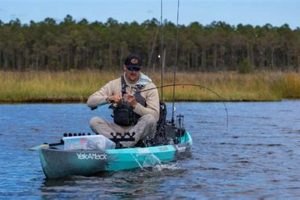
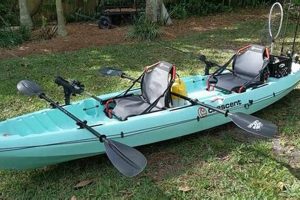
This style of kayak features a sit-on-top design with a wide, unobstructed hull, resembling a small boat more than a traditional enclosed kayak. This open layout typically incorporates molded-in features like footwells, rod holders, and storage compartments designed specifically for anglers. Imagine a stable platform crafted for casting, reeling, and landing fish, offering easy access to gear and equipment.
The spacious, accessible design prioritizes stability and ease of movement, essential for anglers. This configuration allows for effortless casting, fighting fish, and maneuvering in various water conditions. Historically, fishing kayaks evolved from simpler designs, gradually incorporating features tailored to the angler’s needs. The development of durable, lightweight materials, alongside innovative hull designs, has led to the highly specialized vessels available today. These crafts enhance fishing experiences by providing improved stability, comfort, and access to essential equipment.
Further exploration will delve into specific design considerations, material choices, and feature comparisons, offering a comprehensive understanding of this specialized watercraft and its role in modern angling.
Tips for Utilizing Sit-On-Top Fishing Kayaks
Optimizing the use of a sit-on-top fishing kayak requires careful consideration of various factors, from equipment choices to safety precautions. These tips offer guidance for maximizing efficiency and enjoyment on the water.
Tip 1: Prioritize Stability: Consider hull design and width. Wider hulls offer greater initial stability, beneficial for beginners or those fishing in rough conditions. Longer, narrower designs provide better tracking and speed but may feel less stable initially.
Tip 2: Gear Organization is Key: Utilize built-in storage compartments and consider aftermarket accessories like tackle crates and rod holders. Proper organization minimizes clutter and ensures essential gear remains within easy reach.
Tip 3: Dress for Immersion: Regardless of weather conditions, dress assuming immersion. Quick-drying fabrics and layers are recommended. A personal flotation device (PFD) should always be worn.
Tip 4: Plan Your Route and Check Conditions: Research potential fishing spots, water currents, and weather forecasts. Inform someone of your planned route and estimated return time.
Tip 5: Practice Essential Techniques: Before venturing into open water, practice paddling, casting, and retrieving in a controlled environment. Familiarize oneself with self-rescue techniques.
Tip 6: Respect Wildlife and the Environment: Adhere to local fishing regulations and practice catch-and-release whenever possible. Dispose of waste responsibly and minimize disturbance to natural habitats.
Tip 7: Regular Maintenance: Rinse the kayak with fresh water after each use, especially after exposure to saltwater. Inspect for damage and address any necessary repairs promptly. Proper care ensures longevity and optimal performance.
By adhering to these guidelines, anglers can significantly enhance their on-the-water experience, ensuring both safety and success while utilizing this specialized vessel.
This foundation of knowledge paves the way for a deeper exploration of specific features and advanced techniques, further refining one’s approach to kayak fishing.
1. Sit-on-top Design

The sit-on-top design is fundamental to the open deck fishing kayak, differentiating it from traditional closed-cockpit kayaks. This structural characteristic directly influences stability, accessibility, and overall fishing functionality.
- Enhanced Stability:
The wider, flatter hull inherent in sit-on-top designs provides increased primary stability, reducing the likelihood of capsizing, especially important for anglers engaged in casting and retrieving. This stability is further enhanced by the higher center of gravity compared to sit-inside kayaks.
- Self-Bailing System:
Scupper holes, integral to sit-on-top designs, allow water to drain off the deck, preventing accumulation and maintaining buoyancy. This self-bailing feature is crucial in fishing scenarios where water may splash onto the deck during casting or landing fish.
- Ease of Entry and Exit:
The open deck allows anglers to easily enter and exit the kayak, both on land and in the water. This is advantageous for situations requiring quick maneuvering, re-entry after an accidental swim, or accessing shallow fishing spots.
- Gear Accessibility:
The unobstructed deck provides easy access to fishing gear and equipment. Anglers can readily reach rods, tackle boxes, and other necessities without the confines of a closed cockpit. This accessibility contributes significantly to efficient fishing practices.
These facets of the sit-on-top design collectively contribute to the open deck fishing kayak’s specialized functionality. This design promotes ease of use, stability, and efficient gear management, making it ideally suited for the demands of angling. The inherent advantages of this design have contributed to its widespread adoption among fishing kayak enthusiasts.
2. Enhanced Stability
Enhanced stability represents a cornerstone of open deck fishing kayak design. This characteristic stems from a combination of factors directly related to the open deck configuration. The wider beam (width) inherent in these kayaks contributes significantly to primary stability resistance to initial tipping. The higher center of gravity, a consequence of the angler sitting atop the hull rather than inside it, further enhances secondary stability the ability to recover from a tipped position. This inherent stability proves crucial for anglers engaged in activities that shift weight distribution, such as casting, reeling, and landing fish. Consider the scenario of an angler battling a strong fish; the inherent stability of the open deck design minimizes the risk of capsize during the fight.
Furthermore, the self-bailing system, characteristic of open deck designs, plays a role in overall stability. Scupper holes allow water that splashes onto the deck to drain away, preventing weight buildup and maintaining buoyancy. This is particularly relevant in rough water conditions or when landing larger fish. For instance, navigating through choppy water or landing a sizable fish can introduce significant amounts of water onto the deck. The self-bailing system efficiently sheds this water, preserving stability and preventing potential submersion. This combination of design elements prioritizes stability, fostering angler confidence and enabling safe, effective fishing practices.
In summary, enhanced stability stands as a defining feature of open deck fishing kayaks. This crucial attribute derives from the wider hull, higher center of gravity, and self-bailing system inherent in the open deck design. The practical significance of this stability is undeniable, enabling anglers to confidently navigate various water conditions and engage in demanding fishing activities while minimizing the risk of capsize. Understanding this connection between design and stability empowers informed decision-making when selecting a fishing kayak tailored to specific needs and preferences.
3. Unrestricted Movement

Unrestricted movement is a defining advantage of open deck fishing kayaks, directly influencing angling effectiveness and overall experience. The open cockpit design eliminates the confines of a traditional kayak, providing anglers with significantly greater freedom of motion. This enhanced mobility is critical for various fishing activities, from casting and retrieving to landing fish and adjusting gear.
- Casting and Retrieving:
The open deck permits a full range of motion for casting, allowing anglers to employ various techniques without obstruction. Whether executing a powerful overhead cast or a precise sidearm flick, the open design accommodates the necessary body mechanics. Similarly, retrieving lines and maneuvering lures benefit from the unrestricted movement, facilitating precise control and responsiveness.
- Fighting and Landing Fish:
Battling a strong fish often requires dynamic body movements and quick adjustments. The open deck allows anglers to shift weight, lean, and react effectively to the fish’s movements without the constraints of a closed cockpit. This freedom is crucial for maintaining balance and control during the fight, ultimately increasing the chances of a successful landing.
- Gear Management and Accessibility:
The open design facilitates easy access to gear and equipment stored on deck. Anglers can quickly reach rods, tackle boxes, and other essentials without contorting within a confined space. This ease of access streamlines the fishing process, minimizing disruption and maximizing efficiency.
- Comfort and Adaptability:
The unrestricted movement afforded by the open deck promotes comfort, particularly during long fishing trips. Anglers can easily change positions, stretch, and adjust their posture, reducing fatigue and discomfort. This adaptability is particularly beneficial in varying weather conditions, allowing for adjustments in clothing and gear without restriction.
The unrestricted movement inherent in open deck fishing kayaks significantly enhances the angling experience. This freedom of motion translates to improved casting and retrieving, more effective fish fighting, efficient gear management, and increased comfort. By removing the limitations of a traditional cockpit, the open deck design optimizes angler performance and enjoyment on the water. This advantage reinforces the open deck kayak’s position as a specialized tool designed specifically for the demands of angling.
4. Specialized Storage

Specialized storage solutions represent a critical design element in open deck fishing kayaks, directly influencing angling efficiency and overall functionality. These integrated storage options cater specifically to the needs of anglers, providing designated spaces for rods, tackle, and other essential equipment. This dedicated storage contrasts sharply with the limited storage capacity of traditional kayaks, underscoring the open deck kayak’s purpose-built design for fishing.
- Rod Holders:
Integrated rod holders, strategically positioned throughout the deck, secure rods while not in use, freeing the angler’s hands for paddling, maneuvering, and other tasks. Flush-mounted rod holders minimize interference with casting, while adjustable rod holders offer flexibility for different fishing techniques. This dedicated storage prevents rods from rolling around the deck, minimizing the risk of damage and entanglement.
- Tackle Storage:
Dedicated compartments for tackle boxes, often located within easy reach of the angler, keep lures, hooks, and other small items organized and readily accessible. Some models incorporate waterproof compartments for sensitive electronics or valuables. This organized storage system streamlines the fishing process, allowing anglers to quickly locate and select the necessary tackle without disrupting their flow.
- Dry Storage:
Waterproof hatches and compartments safeguard essential items from water damage, preserving electronics, phones, and other valuables. These dry storage areas provide peace of mind in wet conditions or during accidental submersion. The inclusion of dry storage enhances the versatility of the open deck kayak, allowing for safe transport of sensitive equipment in diverse environments.
- Tank Wells:
Recessed areas designed to accommodate live bait tanks or coolers provide dedicated storage for live bait or refreshments. These wells often feature secure tie-down points to prevent shifting during movement. The inclusion of tank wells highlights the open deck kayak’s specialization for fishing, offering convenient solutions for maintaining live bait or keeping food and drinks readily available.
These specialized storage solutions contribute significantly to the open deck fishing kayak’s efficacy as a dedicated angling platform. By providing secure and organized storage for rods, tackle, and other essentials, these features enhance efficiency, minimize clutter, and maximize on-the-water performance. The thoughtful integration of specialized storage distinguishes open deck fishing kayaks from their recreational counterparts, solidifying their position as purpose-built vessels designed to meet the specific demands of angling.
5. Customizable Rigging
Customizable rigging stands as a hallmark of open deck fishing kayaks, offering anglers the ability to tailor their vessels to individual needs and preferences. This adaptability stems directly from the unobstructed deck layout, which provides ample space and mounting points for a wide array of accessories. This inherent flexibility distinguishes open deck kayaks from traditional closed-cockpit designs, where rigging options are often limited. The ability to personalize rigging configurations significantly impacts fishing effectiveness and overall on-the-water experience. Consider the example of an angler specializing in trolling; they might configure their rigging with multiple rod holders, downrigger mounts, and fish finder transducers. Conversely, an angler focused on fly fishing might prioritize a minimalist setup, emphasizing unobstructed casting space and strategically placed fly rod holders. This adaptability underscores the versatility of the open deck platform.
The practical implications of customizable rigging extend beyond simply accommodating different fishing styles. Consider the integration of GPS units, fish finders, and VHF radios; these electronic devices enhance navigational capabilities, improve fish-finding success, and ensure communication in emergencies. Furthermore, rigging customization facilitates the addition of safety equipment such as anchor trolleys, bilge pumps, and lighting systems, contributing to a safer and more prepared on-the-water experience. The ability to tailor rigging to specific environments is equally crucial. Anglers fishing in shallow, weed-choked waters might opt for shallow-water anchors and weedless propellers, while those navigating open ocean environments might prioritize high-visibility navigation lights and robust communication systems. These real-world examples illustrate the practical significance of customizable rigging in optimizing kayak performance and safety across diverse fishing scenarios.
In summary, customizable rigging represents a defining feature of open deck fishing kayaks. This inherent adaptability, facilitated by the open deck layout, empowers anglers to personalize their vessels to specific fishing styles, electronic needs, safety requirements, and environmental conditions. The practical implications of this customization are substantial, directly impacting fishing effectiveness, safety, and overall enjoyment on the water. Understanding the significance of customizable rigging is essential for informed decision-making, allowing anglers to select and configure a kayak that precisely aligns with individual needs and aspirations within the broader context of kayak fishing. This focus on customization underscores the open deck fishing kayak’s evolution as a specialized tool designed to maximize angler performance and enjoyment.
6. Elevated Fishing Access

Elevated fishing access represents a significant advantage conferred by the open deck fishing kayak’s design. The angler’s seated position, atop the hull rather than within it, provides a higher vantage point compared to traditional sit-inside kayaks. This elevated perspective offers several distinct advantages directly impacting fishing effectiveness and overall experience. Improved sight fishing, enhanced casting angles, and easier maneuvering in shallow water all stem from this elevated position. Consider the scenario of an angler targeting bonefish in shallow flats; the elevated perspective allows for easier spotting of these elusive fish, significantly increasing the chances of a successful presentation. Similarly, when navigating shallow, obstacle-filled waters, the higher vantage point affords better visibility, enabling more effective maneuvering and reducing the risk of grounding or collision.
The elevated position inherent in open deck kayaks also influences casting dynamics. The higher vantage point often translates to improved casting angles, particularly beneficial in situations requiring precise presentations or when obstacles obstruct lower casting trajectories. Imagine an angler targeting redfish beneath overhanging mangrove branches; the elevated casting angle afforded by the open deck kayak allows for accurate lure placement beneath the branches, a feat often challenging from a lower seated position. Furthermore, the elevated perspective enhances situational awareness, allowing anglers to better assess water conditions, identify potential fishing hotspots, and observe wildlife activity. This improved awareness contributes to a more informed and engaging fishing experience.
In summary, elevated fishing access constitutes a key advantage of open deck fishing kayaks. This inherent feature, a direct consequence of the sit-on-top design, enhances sight fishing capabilities, improves casting angles, and facilitates navigation in shallow water. The practical significance of this elevated perspective is evident in various fishing scenarios, from targeting shallow-water species to navigating complex environments. Understanding the relationship between elevated fishing access and the open deck design empowers anglers to fully leverage this advantage, maximizing their fishing effectiveness and overall enjoyment on the water. This advantage solidifies the open deck fishing kayak’s position as a specialized craft meticulously designed for the unique demands of angling.
Frequently Asked Questions
This section addresses common inquiries regarding open deck fishing kayaks, providing concise and informative responses to facilitate informed decision-making.
Question 1: What are the primary advantages of an open deck fishing kayak compared to a traditional sit-inside kayak?
Open deck kayaks offer superior stability, enhanced maneuverability, and greater accessibility to gear and equipment. The sit-on-top design facilitates easier entry and exit, particularly beneficial for anglers. The self-bailing system efficiently sheds water, contributing to stability and safety.
Question 2: Are open deck kayaks suitable for all skill levels?
Generally, yes. The inherent stability of open deck kayaks makes them suitable for beginners. However, specific models cater to different skill levels. Beginners might prefer wider, more stable hulls, while experienced anglers may opt for longer, faster designs. Careful consideration of individual needs and experience is recommended.
Question 3: What factors should be considered when choosing an open deck fishing kayak?
Key considerations include hull design (length, width, and shape), weight capacity, storage options, and intended fishing environment. Anglers should also consider factors such as comfort, portability, and budget.
Question 4: How does one maintain an open deck fishing kayak?
Regular rinsing with fresh water, especially after saltwater exposure, is essential. Periodic inspection for damage and prompt repairs are crucial for longevity. Proper storage, protected from direct sunlight and extreme temperatures, also contributes to the kayak’s lifespan.
Question 5: What safety precautions should be taken when using an open deck fishing kayak?
Always wear a personal flotation device (PFD). Check weather conditions and inform someone of the planned route and estimated return time. Carry essential safety equipment, including a whistle, signaling device, and first-aid kit. Familiarization with self-rescue techniques is highly recommended.
Question 6: Are open deck fishing kayaks suitable for use in different water conditions?
Open deck kayaks can be used in various water conditions, but specific hull designs perform better in certain environments. Wider, more stable hulls are generally preferred for calmer waters or rough conditions. Longer, narrower hulls are better suited for open water and covering longer distances. Careful consideration of the intended fishing environment is essential when selecting a kayak.
Understanding these key aspects of open deck fishing kayaks empowers informed purchasing decisions and contributes to safe and enjoyable on-the-water experiences.
This concludes the frequently asked questions section. Further exploration may delve into specific model comparisons, advanced fishing techniques from a kayak, or specific rigging options tailored to different fishing styles.
Open Deck Fishing Kayaks
This exploration has highlighted the distinct advantages offered by open deck fishing kayaks. From enhanced stability and unrestricted movement to specialized storage and customizable rigging, these vessels represent a significant advancement in angling technology. The sit-on-top design, coupled with a focus on angler-specific features, positions these kayaks as purpose-built platforms for optimizing fishing success and overall on-the-water experience. The examination of core elements, such as elevated fishing access and specialized storage solutions, underscores the thoughtful design considerations inherent in these specialized watercraft.
The evolution of open deck fishing kayaks reflects a growing understanding of angler needs and a commitment to innovation within the kayaking industry. As technology continues to advance and design refinements emerge, the potential for further enhancements in performance, comfort, and safety remains substantial. The informed selection and effective utilization of these specialized vessels empower anglers to explore new waters, refine techniques, and ultimately deepen their connection with the sport of fishing.