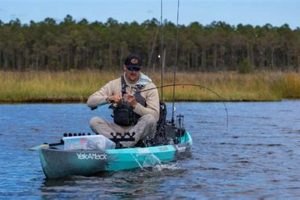
Angling from a small, human-powered watercraft presents unique challenges and rewards. Factors such as kayak stability, water conditions, and fishing technique influence the experience. For example, a wider, more stable kayak is generally easier to manage than a narrow, performance-oriented one, especially for beginners. Similarly, calm lakes or slow-moving rivers offer a more manageable setting compared to open ocean or fast currents.
Mastering this specific fishing style offers significant advantages. It allows access to shallow waters and secluded fishing spots often unreachable by larger boats, potentially leading to greater catches and a more intimate connection with nature. Historically, kayaks and similar small craft played a crucial role in subsistence fishing in various cultures, highlighting their practicality and efficiency.
The following sections will delve into specific aspects of this fishing method, covering equipment selection, paddling and casting techniques, safety considerations, and best practices for a successful and enjoyable experience.
Tips for Kayak Fishing
Successful kayak angling requires preparation and adherence to best practices. The following tips offer guidance for a safe and productive experience.
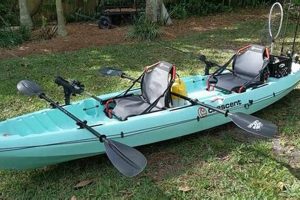
Tip 1: Choose the Right Kayak: Kayak selection significantly impacts stability and maneuverability. Wider, sit-on-top kayaks are generally recommended for beginners due to their inherent stability. Experienced anglers might prefer narrower, sit-inside kayaks for speed and efficiency.
Tip 2: Practice Paddling and Casting: Develop proficiency in paddling and casting from a seated position before venturing onto the water. This practice enhances control and minimizes the risk of capsizing.
Tip 3: Prioritize Safety Equipment: Always wear a personal flotation device (PFD). Carry essential safety gear, including a whistle, signaling device, and first-aid kit.
Tip 4: Understand Water Conditions: Check weather forecasts and water conditions before embarking. Avoid strong winds, currents, and areas with heavy boat traffic.
Tip 5: Plan Your Fishing Approach: Research potential fishing spots and target species. Pack appropriate tackle and bait based on the intended catch.
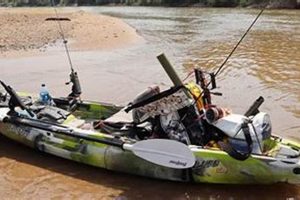
Tip 6: Organize Gear Effectively: Utilize kayak-specific storage solutions to keep gear organized and accessible. This prevents clutter and facilitates efficient retrieval of items.
Tip 7: Respect Wildlife and the Environment: Practice catch-and-release whenever possible. Adhere to local fishing regulations and minimize environmental impact.
By following these guidelines, anglers can significantly enhance their kayak fishing experience while ensuring safety and promoting responsible angling practices.
This foundational knowledge prepares anglers to embark on their kayak fishing journeys with confidence and competence. The subsequent conclusion will summarize key takeaways and offer further resources for continued learning.
1. Stability

Stability plays a crucial role in determining the difficulty of kayak fishing. A stable platform is essential for casting, reeling, and landing fish effectively. Lack of stability can lead to difficulties in maintaining balance, hindering accurate casts and increasing the risk of capsizing, particularly when battling larger fish or navigating challenging water conditions. For example, a narrow kayak in windy conditions or choppy water can be significantly more difficult to control than a wider, more stable model, directly impacting the angler’s ability to fish effectively. Conversely, a stable kayak allows for greater freedom of movement and reduces the cognitive load associated with maintaining balance, enabling the angler to focus on fishing techniques and strategy.
The importance of stability becomes even more pronounced when considering additional factors such as the angler’s experience level and the type of fishing being pursued. Beginners often require a more stable platform to build confidence and develop fundamental skills. Similarly, techniques that involve standing up in the kayak, such as fly fishing or sight casting, demand exceptional stability. Consider the scenario of an angler attempting to land a large fish while simultaneously maintaining balance in a rocking kayak; this illustrates the practical significance of stability in ensuring a successful and safe fishing experience. Furthermore, different hull designs offer varying degrees of stability, impacting performance and suitability for specific fishing environments.
In summary, stability is a fundamental aspect of kayak fishing, directly influencing its difficulty and overall success. Understanding the factors that contribute to stability, including kayak design, water conditions, and angler experience, is essential for selecting appropriate equipment and developing effective fishing techniques. Prioritizing stability enhances safety, improves fishing performance, and contributes to a more enjoyable and productive experience on the water. This understanding forms the foundation for informed decisions regarding kayak selection, fishing location, and angling techniques.
2. Maneuverability

Maneuverability is a critical factor influencing the ease and effectiveness of kayak fishing. The ability to precisely position and control the kayak directly impacts access to fishing spots, presentation of lures, and the overall fishing experience. Restricted maneuverability can limit access to shallow waters, tight corners, and areas with complex underwater structures, hindering the angler’s ability to target specific species or effectively explore promising fishing grounds.
- Tracking and Turning
Tracking refers to the kayak’s ability to maintain a straight course, while turning refers to its responsiveness to paddle strokes for changing direction. A kayak with excellent tracking requires fewer corrective strokes, conserving energy and allowing the angler to focus on fishing. Responsive turning is crucial for navigating obstacles, maneuvering in tight spaces, and quickly repositioning to follow fish or adjust to changing currents. For example, a kayak with poor tracking might drift off course in windy conditions, requiring constant adjustments and hindering the angler’s ability to maintain an ideal fishing position. Similarly, a kayak that turns sluggishly can be challenging to maneuver in confined areas like narrow creeks or around dense vegetation.
- Influence of Hull Design
Hull design significantly impacts maneuverability. Longer, narrower kayaks generally track better and offer greater speed, while shorter, wider kayaks provide enhanced stability but may sacrifice tracking and turning performance. The specific hull design, including features like keels or rudders, influences how the kayak responds to paddle strokes and external forces like wind and current. For instance, a kayak with a pronounced keel will track exceptionally well but might require more effort to turn, whereas a flat-bottomed kayak will turn easily but might be more susceptible to wind drift. Understanding the trade-offs between stability, tracking, and turning performance is crucial for selecting a kayak suitable for specific fishing environments and techniques.
- Impact of Water Conditions
Water conditions, such as wind, current, and waves, can significantly affect kayak maneuverability. Strong winds can push a kayak off course, requiring constant correction. Currents can create challenges in maintaining position and navigating upstream or downstream. Waves can impact stability and make precise maneuvering more difficult. For example, fishing in a fast-flowing river demands a kayak with excellent maneuverability to maintain position and avoid obstacles, while fishing in calm lake conditions allows for greater flexibility in kayak selection. Adapting paddling techniques and utilizing features like rudders or drift socks can enhance maneuverability in challenging conditions.
- Relationship with Fishing Technique
The chosen fishing technique also influences the importance of maneuverability. Trolling requires a kayak that tracks well, allowing the lures to be presented effectively. Casting and retrieving necessitate precise boat control to position the kayak optimally for targeting specific areas. Techniques like fly fishing often require quick turns and adjustments to follow fish or present the fly accurately. For instance, a kayak angler targeting fish in shallow, structure-rich environments requires a highly maneuverable kayak to navigate tight spaces and accurately position casts near cover, while trolling in open water prioritizes tracking and stability over rapid turning.
In conclusion, maneuverability significantly contributes to the overall difficulty and effectiveness of kayak fishing. The interplay of hull design, water conditions, and fishing technique dictates the level of maneuverability required for a successful outing. Choosing a kayak with appropriate maneuverability characteristics for the intended fishing environment and technique enhances angling efficiency, expands access to fishing spots, and contributes to a more enjoyable and productive experience on the water. Understanding these factors empowers anglers to make informed decisions and optimize their kayak fishing approach.
3. Casting Techniques
Casting techniques significantly influence the difficulty and effectiveness of kayak fishing. The confined space and inherent instability of a kayak present unique challenges compared to casting from shore or a larger boat. Mastering specialized casting methods is essential for accurate lure placement, efficient line management, and minimizing the risk of tangles or snags, ultimately impacting fishing success. An angler’s ability to adapt casting techniques to the kayak’s limitations and the prevailing conditions plays a crucial role in determining overall fishing proficiency.
- Overhead Cast
The overhead cast, a fundamental technique in many fishing disciplines, requires modification for kayak fishing. The limited space and lower casting angle necessitate a more compact casting stroke, emphasizing wrist action and timing over a full-arm motion. Maintaining balance while executing the cast is crucial, especially in challenging conditions such as wind or current. For example, an angler attempting a full overhead cast in a narrow kayak risks losing balance or striking the paddle, highlighting the need for adaptation. Practicing a modified overhead cast on land before attempting it on the water can significantly improve accuracy and control.
- Sidearm Cast
The sidearm cast offers advantages in kayak fishing by reducing the risk of overhead obstructions and maintaining a lower center of gravity, enhancing stability. This technique is particularly useful when fishing in close proximity to overhanging branches, bridges, or other obstacles. The sidearm cast requires a sweeping motion parallel to the water, relying on wrist and forearm movement to generate line speed and accuracy. For instance, when fishing in narrow creeks or mangrove tunnels, a sidearm cast allows for precise lure placement under low-hanging branches, maximizing fishing opportunities.
- Underhand Cast
The underhand cast, often employed in tight spaces or when fishing with heavier lures, proves valuable in kayak fishing. This technique minimizes the vertical motion of the rod, reducing the risk of snagging on overhead obstacles or disturbing the water surface excessively. The underhand cast involves a pendulum-like motion, releasing the line low to the water. For example, when fishing near docks or piers, the underhand cast allows for accurate lure presentation without the risk of snagging on the structure above. It’s particularly effective when fishing in windy conditions by keeping the line closer to the water.
- Pitching and Flipping
Pitching and flipping techniques, commonly used in bass fishing, offer precise lure placement in close-quarters situations. These techniques involve accurately propelling the lure short distances with a controlled underhand motion, ideal for targeting specific pockets of cover or structure. In kayak fishing, pitching and flipping excel in scenarios requiring pinpoint accuracy, such as presenting lures near submerged logs, weed beds, or undercut banks. These techniques require specialized rods and reels and a nuanced understanding of lure trajectory and water resistance. Mastering these techniques allows anglers to effectively target fish in cover without spooking them.
Mastery of these adapted casting techniques directly contributes to successful kayak fishing. The ability to accurately and efficiently present lures in a variety of situations, while maintaining balance and minimizing the risk of tangles, significantly enhances fishing productivity. Proficiency in these techniques reduces the inherent challenges of fishing from a kayak, ultimately transforming potential difficulties into opportunities for a more rewarding and enjoyable angling experience.
4. Water Conditions
Water conditions significantly influence the difficulty and safety of kayak fishing. Calm, sheltered waters present a vastly different experience compared to open water exposed to wind, waves, and currents. Understanding how these conditions impact kayak stability, maneuverability, and fishing effectiveness is crucial for planning successful and safe outings. An accurate assessment of water conditions allows anglers to make informed decisions regarding location selection, kayak choice, and fishing strategies, mitigating potential challenges and maximizing opportunities for a productive and enjoyable experience.
- Current
Current strength and direction significantly impact kayak control and fishing techniques. Strong currents can make paddling upstream challenging and require specialized anchoring techniques or drift fishing methods. Downstream drifts necessitate careful navigation and awareness of potential hazards. For example, fishing in a tidal river requires precise timing and understanding of current changes to effectively target specific areas. Similarly, fishing in a fast-flowing river demands a kayak with excellent tracking and maneuverability to maintain position and avoid obstacles.
- Wind
Wind strength and direction significantly influence kayak stability and drift, especially in open water or larger bodies of water. Strong winds can create challenging paddling conditions, making it difficult to maintain position or reach desired fishing spots. Wind also generates waves, further impacting stability and requiring increased angler effort to maintain balance and control. For instance, a headwind can significantly impede progress and necessitate adjustments in paddling technique, while a crosswind can push the kayak off course, requiring constant correction. Understanding wind patterns and utilizing drift socks or anchors can mitigate the challenges posed by windy conditions.
- Waves
Wave height and frequency directly impact kayak stability and angler comfort. Larger waves can easily capsize a kayak, especially if approached from the side (broadside). Choppy water conditions make casting and retrieving more challenging and can lead to seasickness or discomfort. For example, fishing in exposed coastal areas requires careful attention to wave forecasts and an understanding of how to navigate through waves safely. Choosing a kayak with enhanced stability and utilizing appropriate paddling techniques are crucial for mitigating the challenges posed by wave action.
- Visibility
Water clarity and visibility affect fishing techniques and species targeting. Clear water allows for sight fishing and the use of specific lures or techniques that rely on visual cues. Murky or turbid water necessitates adjustments in lure selection, retrieval speed, and overall fishing strategy. For example, fishing in clear mountain lakes allows for sight casting to individual fish, while fishing in muddy rivers requires reliance on scent-based baits and tactile feedback. Understanding how water visibility impacts fish behavior and adjusting fishing techniques accordingly is crucial for maximizing success in different water conditions.
Careful consideration of these water conditions is essential for determining the feasibility and safety of kayak fishing trips. Matching kayak selection, fishing techniques, and safety precautions to the prevailing conditions significantly impacts the overall experience. Ignoring these factors can lead to challenging, unproductive, and potentially dangerous situations. A thorough assessment of water conditions empowers anglers to make informed decisions, enhancing their chances of a successful and enjoyable outing on the water, transforming potential difficulties into manageable challenges. This preparedness transforms potential difficulties into manageable challenges and contributes to a more rewarding experience.
5. Equipment Management

Effective equipment management significantly impacts the difficulty and enjoyment of kayak fishing. The limited space and inherent instability of a kayak necessitate careful organization and accessibility of essential gear. Inefficient equipment management can lead to frustration, wasted time, and potentially dangerous situations, especially in challenging conditions. A well-organized kayak allows anglers to focus on fishing, maximizing efficiency and enhancing the overall experience. Understanding the principles of efficient equipment management is crucial for transforming potential difficulties into manageable challenges.
- Organization and Accessibility
Organizing tackle, rods, and other essential gear within easy reach is paramount. Utilizing specialized kayak storage solutions, such as tackle crates, rod holders, and dry bags, maximizes space utilization and prevents clutter. Easy access to essential items minimizes distractions and allows for quick adjustments to changing fishing conditions. For example, having lures and tools readily available streamlines the process of changing rigs or addressing line tangles, while a cluttered kayak can lead to frustration and lost fishing time. Proper organization enhances efficiency and contributes to a more focused and enjoyable fishing experience. Locating frequently used items within arm’s reach minimizes movement and maintains stability, crucial in challenging conditions.
- Space Management
Kayaks offer limited storage, requiring strategic packing and prioritization of essential gear. Careful consideration of what equipment to bring and how to stow it effectively maximizes available space and minimizes clutter. Bulky items should be secured to prevent shifting during paddling or maneuvering. For example, bringing only essential tackle and leaving unnecessary gear behind reduces clutter and improves overall kayak stability. Distributing weight evenly within the kayak enhances balance and maneuverability, contributing to a safer and more efficient fishing experience. Proper space management minimizes distractions caused by shifting gear and allows for greater freedom of movement within the kayak.
- Safety Equipment Accessibility
Essential safety equipment, such as a personal flotation device (PFD), whistle, and signaling device, must be readily accessible in case of emergencies. Storing these items in designated locations and ensuring they are in good working order is crucial for angler safety. For instance, a PFD stored under a pile of gear becomes useless in a capsize situation, emphasizing the importance of immediate accessibility. Similarly, a signaling device should be within easy reach for quick deployment in the event of an emergency. Prioritizing safety equipment accessibility contributes to a safer and more responsible fishing experience. Regularly inspecting and maintaining safety equipment ensures its effectiveness when needed.
- Weather Protection
Protecting equipment from the elements, especially in adverse weather conditions, is crucial for maintaining its functionality and longevity. Utilizing waterproof bags and containers safeguards sensitive electronics, tackle, and other essential gear from rain, spray, and submersion. For example, storing electronic devices like fish finders or GPS units in waterproof cases protects them from damage, while keeping tackle dry prevents rust and corrosion. Adequate weather protection ensures that equipment remains functional throughout the fishing trip, minimizing disruptions and maximizing enjoyment. This preparedness allows anglers to focus on fishing without worrying about equipment damage.
Proficient equipment management directly contributes to a more successful and enjoyable kayak fishing experience. By optimizing organization, prioritizing essential gear, and ensuring accessibility, anglers can minimize distractions, maximize efficiency, and enhance safety. Effective equipment management mitigates the challenges inherent in the limited space of a kayak, allowing anglers to focus on the task at hand catching fish. This preparedness transforms potential difficulties into manageable aspects of the experience, contributing to a more rewarding time on the water.
6. Safety Considerations

Safety considerations are paramount when evaluating the challenges of kayak fishing. The inherent risks associated with on-water activities are amplified by the small size and relative instability of a kayak. These risks directly contribute to the perceived difficulty of kayak fishing, impacting angler confidence and decision-making. Neglecting safety precautions can transform manageable challenges into hazardous situations, highlighting the crucial link between safety awareness and successful kayak angling. For instance, an angler unfamiliar with self-rescue techniques might find a capsize significantly more challenging and distressing than an experienced kayaker prepared for such an event. Similarly, venturing into unfamiliar waters without proper safety equipment or knowledge of local conditions can escalate the difficulty and risk involved.
Several key safety considerations directly influence the complexity of kayak fishing. Personal flotation devices (PFDs) are essential for mitigating the risk of drowning in the event of a capsize. Carrying a communication device, such as a VHF radio or a waterproof cell phone, enables summoning assistance in emergencies. Understanding weather forecasts and water conditions is crucial for avoiding hazardous situations. Knowledge of self-rescue techniques and basic first aid empowers anglers to handle unexpected events. For example, an angler equipped with a VHF radio can quickly call for help if caught in unexpected adverse weather, while an angler without communication capabilities faces a significantly more challenging and potentially dangerous situation. Similarly, understanding how to re-enter a kayak after a capsize reduces the difficulty and stress associated with such an event.
A comprehensive understanding of safety considerations significantly reduces the perceived difficulty and inherent risks of kayak fishing. This knowledge fosters confidence, enhances decision-making, and allows anglers to focus on the enjoyment and productivity of the experience. Prioritizing safety transforms potential difficulties into manageable challenges, contributing to a more rewarding and responsible approach to kayak angling. This preparedness empowers anglers to enjoy the sport safely and responsibly, transforming perceived limitations into opportunities for growth and skill development.
7. Experience Level
Angler experience significantly influences the perceived difficulty of kayak fishing. A novice angler faces different challenges compared to a seasoned veteran. Understanding the role of experience in navigating the complexities of kayak fishing provides valuable insights for anglers of all skill levels. This exploration examines how increasing experience mitigates perceived difficulties and contributes to a more successful and enjoyable angling experience.
- Initial Challenges
Beginners often find kayak fishing challenging due to the simultaneous demands of managing the kayak and fishing effectively. Maintaining balance, paddling efficiently, and casting accurately while seated require practice and coordination. Initial outings might involve struggles with kayak stability, especially in windy or choppy conditions. Difficulties with casting accuracy and line management are also common. For example, a novice angler might struggle to maintain a desired position while casting, leading to inaccurate lure placement or tangles. Similarly, managing the kayak’s movement while fighting a fish can prove challenging for beginners.
- Developing Proficiency
As experience grows, anglers develop improved kayak control, casting proficiency, and overall fishing effectiveness. Increased comfort and confidence in handling the kayak allow for greater focus on fishing techniques and strategy. Improved balance and paddling efficiency translate to more precise boat positioning and access to desirable fishing spots. For example, an experienced angler can confidently maneuver a kayak in moderate currents or wind, focusing on fish behavior and lure presentation rather than simply maintaining balance. Similarly, practiced casting techniques improve accuracy and efficiency, maximizing fishing opportunities.
- Advanced Techniques
Experienced kayak anglers often explore advanced techniques, such as stand-up fishing, anchor trolling, and specialized casting methods tailored to specific species or environments. These techniques require a high level of kayak control, balance, and situational awareness. For instance, standing up in a kayak to sight cast for bonefish demands exceptional balance and stability, a skill honed through experience. Similarly, effectively managing multiple rods and lines while trolling from a kayak requires practiced coordination and equipment management. These advanced techniques further expand the possibilities of kayak fishing, showcasing the potential of experience to enhance both challenge and reward.
- Adaptability and Problem-Solving
Experienced anglers develop adaptability and problem-solving skills crucial for navigating the unpredictable nature of kayak fishing. They anticipate and effectively respond to changing weather conditions, equipment malfunctions, and unexpected encounters with wildlife. For example, an experienced angler can quickly adapt to shifting winds by adjusting paddling technique, deploying a drift sock, or seeking sheltered waters. Similarly, encountering a sudden squall or unexpected equipment failure becomes a manageable challenge rather than a crisis. This adaptability stems from experience and contributes significantly to both safety and fishing success. This preparedness enhances safety and maximizes fishing opportunities.
Experience significantly shapes the perception and reality of kayak fishing’s difficulty. While beginners face inherent challenges, the development of skills and knowledge progressively transforms these challenges into manageable aspects of the experience. Increased proficiency, mastery of advanced techniques, and enhanced adaptability contribute to a more rewarding and enjoyable pursuit. The journey from novice to expert highlights the transformative power of experience, turning initial difficulties into opportunities for growth and mastery.
Frequently Asked Questions
This section addresses common inquiries regarding the challenges and rewards of kayak fishing, providing concise and informative responses to facilitate a deeper understanding of this popular angling method.
Question 1: What are the primary challenges associated with fishing from a kayak?
Primary challenges include maintaining balance, maneuvering in various water conditions, casting accurately from a seated position, and managing equipment effectively within a limited space. Experience and proper preparation significantly mitigate these challenges.
Question 2: Are specialized kayaks required for fishing?
While specialized fishing kayaks offer enhanced features like rod holders, tackle storage, and improved stability, any kayak can be adapted for fishing. Kayak selection depends on individual preferences, fishing style, and target waters.
Question 3: How does one maintain stability while fishing from a kayak?
Maintaining a low center of gravity, distributing weight evenly, and using appropriate paddling techniques enhance stability. Wider kayaks offer greater inherent stability, particularly beneficial for beginners.
Question 4: What safety precautions are essential for kayak fishing?
Essential safety precautions include wearing a personal flotation device (PFD), carrying a communication device, checking weather forecasts before embarking, informing someone of the planned fishing location, and possessing knowledge of self-rescue techniques.
Question 5: Is kayak fishing suitable for all skill levels?
Kayak fishing accommodates various skill levels. Beginners should start in calm, sheltered waters and progressively venture into more challenging environments as experience grows. Professional guidance or instruction can significantly enhance skill development.
Question 6: What essential equipment is recommended for kayak fishing?
Essential equipment includes a properly fitted PFD, paddle, appropriate fishing rods and reels, tackle suited to the target species, and basic safety gear like a whistle, signaling device, and first-aid kit. Specialized kayak fishing accessories, such as rod holders and anchor trolleys, enhance convenience and efficiency.
Addressing these common inquiries provides a foundation for a more informed approach to kayak fishing. A comprehensive understanding of the challenges and opportunities inherent in this angling method empowers individuals to make responsible decisions and enhance their enjoyment on the water.
The subsequent conclusion will summarize the key takeaways and offer further resources for continued exploration of this dynamic and rewarding fishing style.
Conclusion
The inherent difficulty of fishing from a kayak stems from the interplay of several factors. Maintaining balance, maneuvering effectively, casting accurately from a seated position, and managing equipment within limited space present unique challenges. Water conditions, including wind, waves, and currents, significantly impact stability and control, further influencing the perceived difficulty. Experience plays a crucial role; novice anglers face a steeper learning curve than seasoned veterans accustomed to the demands of kayak angling. Prioritizing safety considerations, including the use of personal flotation devices and adherence to weather advisories, is paramount for mitigating risks and ensuring a positive experience. A comprehensive understanding of these elementsstability, maneuverability, casting techniques, water conditions, equipment management, safety considerations, and experience levelprovides a framework for assessing and addressing the complexities inherent in this rewarding angling method. Proper preparation and adherence to best practices transform potential difficulties into manageable challenges.
Kayak fishing offers a unique blend of challenge and reward. The demanding nature of this pursuit fosters a deeper connection with the aquatic environment and enhances the sense of accomplishment derived from a successful outing. As angler experience grows, perceived difficulties diminish, replaced by increased confidence, refined techniques, and a greater appreciation for the nuances of this specialized angling discipline. The continuous pursuit of mastery transforms initial challenges into opportunities for growth, fostering a rewarding and enriching experience for those willing to embrace the demanding yet fulfilling nature of kayak fishing. This pursuit offers a pathway to a more intimate and rewarding connection with the natural world.