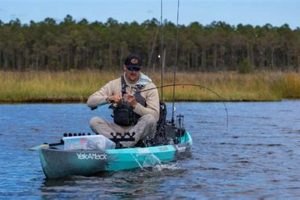
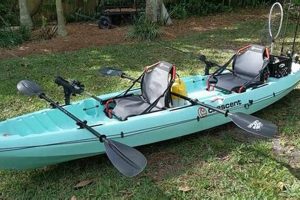
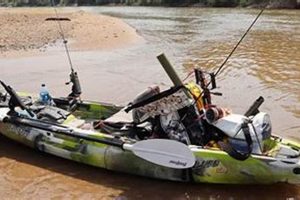
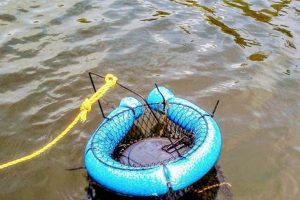
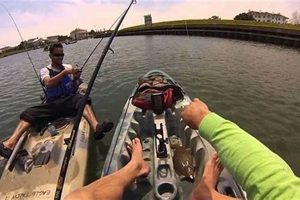
Customizing a kayak for fishing involves strategically mounting and arranging equipment to optimize angling performance. This might include rod holders, fish finders, anchors, crates, and other specialized gear tailored to the angler’s needs and the target species. For example, a kayak angler pursuing large saltwater fish might prioritize heavy-duty rod holders and a robust anchor system, while a freshwater angler targeting bass might opt for lighter gear and a more versatile setup.
Effective customization enhances fishing success and safety. A well-organized kayak allows for efficient retrieval of tackle, reducing wasted time and increasing the chances of landing a fish. Proper placement of safety equipment, such as a bilge pump or paddle leash, is crucial for handling unforeseen circumstances. Historically, kayak fishing relied on rudimentary adaptations of existing kayaks. Today’s specialized equipment and techniques reflect a dedicated evolution of the sport, driven by angler innovation and a growing understanding of kayak fishing’s unique demands.
This exploration delves into various approaches for outfitting a fishing kayak, considering factors such as target species, fishing environment, and personal preferences. Topics covered will include choosing appropriate rod holders, selecting and positioning fish finders, implementing effective anchor systems, and optimizing storage solutions for tackle and gear.
Kayak Fishing Rigging Tips
Optimizing a kayak for fishing requires careful consideration of equipment placement and functionality. These tips offer guidance for creating a safe and effective fishing platform.
Tip 1: Prioritize Stability: Maintaining balance is paramount. Distribute weight evenly throughout the kayak, avoiding excessive weight at either end. Low-profile equipment placement enhances stability.
Tip 2: Choose Appropriate Rod Holders: Rod holders should secure rods effectively while allowing for quick access. Consider flush-mount, adjustable, and rotating options based on fishing style and target species.
Tip 3: Strategic Fish Finder Placement: Position fish finders within easy view and reach for optimal use. Consider transducer placement to minimize interference and maximize sonar performance.
Tip 4: Secure Gear Effectively: Utilize bungee cords, straps, and storage compartments to prevent gear from shifting or falling overboard, especially in rough conditions. Waterproof storage protects electronics and other sensitive items.
Tip 5: Plan Your Anchor System: Choose an anchor appropriate for the fishing environment and kayak size. Consider anchor trolleys and quick-release mechanisms for efficient deployment and retrieval.
Tip 6: Optimize Paddle Storage: Secure paddles to the kayak when not in use to prevent loss. Consider paddle leashes or dedicated paddle clips for easy access.
Tip 7: Consider a Safety Flag: Enhance visibility to other boaters with a brightly colored safety flag, especially in areas with significant boat traffic.
Implementing these strategies promotes efficiency and safety, enabling anglers to focus on the task at hand: catching fish. A well-rigged kayak provides a significant advantage, maximizing enjoyment and success on the water.
By following these rigging suggestions, anglers can transform their kayaks into effective fishing platforms tailored to their specific needs and preferences.
1. Rod Holders

Rod holders are integral to kayak fishing rigging, impacting both angling efficiency and safety. They provide secure storage for rods when not in use, preventing loss or damage, and offer quick access when a fish strikes. Selecting and positioning rod holders strategically is crucial for a streamlined and productive fishing experience.
- Types of Rod Holders
Various rod holder types cater to diverse fishing styles and kayak setups. Flush-mount rod holders offer a low profile, minimizing interference with paddling. Adjustable rod holders allow anglers to change rod angles, accommodating different fishing techniques. Rotating rod holders facilitate trolling and maneuvering fish. Selecting the appropriate type depends on target species and fishing environment.
- Placement Considerations
Strategic placement maximizes accessibility and minimizes interference. Positioning rod holders within easy reach allows for swift reactions to bites. Avoiding placement near paddles or other frequently used equipment prevents tangling and improves efficiency. The angler’s casting style and dominant hand should also inform placement decisions.
- Installation Methods
Rod holders can be installed using various methods, including track systems, star mounts, and direct mounting to the kayak hull. Track systems offer flexibility in positioning, while star mounts provide a secure base for adjustable rod holders. Direct mounting is a permanent solution requiring careful consideration of placement. Each method presents unique benefits and considerations based on kayak design and angler preference.
- Material and Durability
Rod holders are typically constructed from durable materials like plastic, aluminum, or stainless steel. Plastic offers affordability and corrosion resistance, while aluminum and stainless steel provide greater strength. Selecting robust, corrosion-resistant materials ensures longevity and reliable performance in harsh marine environments. The chosen material should align with the intended fishing environment and budget.
Appropriate rod holder selection and placement significantly enhances kayak fishing effectiveness. By considering factors such as rod holder type, placement, installation method, and material, anglers can optimize their kayak setup for a more productive and enjoyable fishing experience. A well-planned rod holder system contributes directly to a streamlined and successful outing on the water.
2. Fish Finder Mounts

Effective fish finder mounting is a crucial aspect of kayak fishing rigging. Optimal transducer placement and display visibility significantly influence angling success. A well-integrated fish finder provides real-time underwater intelligence, enabling anglers to locate fish, identify structures, and navigate effectively. Strategic mounting ensures this valuable data is readily accessible without compromising kayak stability or angler maneuverability.
- Mount Types and Placement
Various mounting options exist, including track-mounted, RAM mounts, and transducer arm mounts. Track-mounted systems offer flexibility in positioning, while RAM mounts provide robust adjustability. Transducer arm mounts extend from the kayak, optimizing sonar performance. Placement should prioritize transducer depth and minimize interference from the kayak’s hull or other equipment. Proper placement ensures accurate readings and efficient use of the fish finder.
- Display Visibility and Ergonomics
Display placement influences angler comfort and efficiency. Positioning the display within easy view and reach minimizes strain and distraction. Adjustable mounts allow for customized viewing angles, catering to individual preferences. Clear visibility and ergonomic positioning contribute to a more focused and productive fishing experience.
- Cable Management and Power Supply
Effective cable management prevents tangling and interference with other equipment. Securing cables with clips or ties maintains a clean and organized kayak. Power supply considerations include battery type, capacity, and connection methods. Proper cable routing and a reliable power source ensure uninterrupted fish finder operation throughout the fishing trip.
- Integration with Other Electronics
Modern fish finders often integrate with other electronic devices, such as GPS units and chartplotters. Seamless integration enhances navigational capabilities and provides a comprehensive view of the underwater environment. Networked systems allow for data sharing and streamlined operation, maximizing the effectiveness of onboard electronics.
Strategic fish finder mounting optimizes performance and enhances the overall kayak fishing experience. Careful consideration of mount type, display placement, cable management, and integration with other electronics contributes significantly to angling success. A well-integrated fish finder empowers anglers with the information needed to locate fish effectively and navigate their environment with confidence.
3. Anchor Systems

Anchor systems play a vital role in kayak fishing rigging, enabling anglers to maintain position in desired fishing locations. Current, wind, and other environmental factors can make precise boat control challenging. An effective anchor system provides stability, allowing anglers to focus on fishing rather than constantly correcting drift. This is particularly crucial when fishing specific structures, such as drop-offs, weed beds, or submerged debris. For instance, when fishing a river channel, a well-placed anchor prevents drift and allows for consistent presentation of bait or lures in the target zone. Conversely, an inadequate anchor system can lead to frustration, wasted time, and missed opportunities.
Several anchor types and deployment methods suit kayak fishing. Lightweight folding anchors and grapple anchors are popular choices due to their portability and ease of storage. Anchor trolleys allow for controlled positioning of the anchor point, facilitating adjustments to changing wind or current conditions. Deploying an anchor from the bow or stern allows anglers to position the kayak facing into or away from the current or wind, optimizing fishing presentation and boat stability. For example, in a windy environment, anchoring from the bow minimizes wind resistance and improves stability. Understanding these nuances allows anglers to tailor their anchor system to specific fishing scenarios.
Effective anchor deployment and retrieval techniques are essential for safe and efficient kayak fishing. Deploying the anchor smoothly prevents tangling and ensures proper setting on the bottom. Retrieving the anchor efficiently minimizes disruption to the fishing process and reduces the risk of entanglement. Challenges can arise in areas with heavy vegetation or rocky bottoms, highlighting the importance of selecting appropriate anchor types and retrieval methods. A comprehensive understanding of anchor systems empowers anglers to maximize their effectiveness on the water, contributing directly to a more productive and enjoyable fishing experience.
4. Tackle storage solutions

Efficient tackle storage is integral to effective kayak fishing rigging. Limited space necessitates organized and accessible storage solutions. A well-designed system maximizes fishing time by minimizing the search for essential gear. Improperly stored tackle can shift during paddling or maneuvering, impacting kayak stability and potentially creating safety hazards. For example, loose hooks or lures present entanglement risks, while shifting tackle boxes can compromise balance. Conversely, readily accessible pliers, line cutters, and extra lures streamline the fishing process, allowing anglers to react quickly to changing conditions or fish activity. Strategic tackle storage contributes directly to a more focused and productive fishing experience.
Various tackle storage options cater to diverse kayak fishing needs. Waterproof boxes protect sensitive electronics and tackle from moisture. Dedicated lure boxes organize lures by type and size, facilitating quick selection. Milk crates and other modular storage systems offer customizable configurations for various gear types. Many kayaks offer built-in storage compartments, but aftermarket accessories such as tackle bags and storage crates further expand capacity. Selecting the right storage solutions depends on the type of fishing pursued, the quantity of gear carried, and individual organizational preferences. Anglers targeting specific species might prioritize specialized storage for flies, soft plastics, or terminal tackle. Balancing storage capacity with kayak space and weight distribution is key to maintaining optimal stability and maneuverability.
Effective tackle storage directly impacts angling success and overall enjoyment. A well-organized system reduces wasted time and frustration, allowing anglers to focus on fishing. Proper storage also safeguards gear from damage and loss, minimizing costs and inconvenience. Prioritizing tackle storage during the rigging process contributes significantly to a more streamlined, efficient, and ultimately, more rewarding kayak fishing experience. The ability to quickly locate and deploy the right tackle at the right moment can be the difference between landing a trophy fish and returning empty-handed.
5. Safety Equipment Integration
Safety equipment integration is paramount when considering kayak fishing rigging ideas. A safe and enjoyable experience hinges on seamlessly incorporating essential safety gear into the kayak setup. Overlooking safety aspects can transform a relaxing fishing trip into a hazardous situation. Rigging should prioritize not only fishing effectiveness but also angler well-being and preparedness for unforeseen circumstances.
- Personal Flotation Device (PFD)
A properly fitted PFD is non-negotiable. It should be worn at all times while on the water, regardless of perceived swimming ability or water conditions. Integrating a PFD into the rigging process involves selecting a comfortable, well-fitting model that doesn’t interfere with paddling or casting. Bright colors and reflective elements enhance visibility. A PFD is the single most important piece of safety equipment and should be considered an integral part of any kayak fishing setup. For example, automatically inflatable PFDs offer greater comfort and freedom of movement compared to traditional life vests, encouraging consistent wear.
- Whistle or Air Horn
A whistle or air horn provides a crucial signaling device in emergencies. Attaching it to the PFD ensures accessibility in critical situations. A loud, clear signal can attract attention from a considerable distance, increasing the chances of rescue. In foggy conditions or areas with significant boat traffic, a sound-producing device can alert others to the kayak’s presence, preventing collisions. Regularly testing the device ensures functionality when needed.
- Bilge Pump and Paddle Leash
A bilge pump quickly removes water from the kayak in the event of capsizing or heavy waves. Integrating a bilge pump into the rigging process involves securing it within easy reach for rapid deployment. A paddle leash prevents paddle loss in rough conditions or after a capsize. Securing the paddle to the kayak ensures it remains accessible for maneuvering or self-rescue. These seemingly small additions can significantly impact safety and self-sufficiency on the water.
- Communication Device
A waterproof cell phone or VHF radio provides a vital communication link in emergencies. Storing the device in a waterproof case or compartment ensures functionality even if submerged. Communicating location and situation to emergency services or nearby boaters can expedite rescue efforts. Familiarization with proper radio procedures and local emergency channels is crucial for effective communication.
Integrating these safety elements into kayak fishing rigging enhances preparedness and mitigates risks. Prioritizing safety alongside fishing functionality ensures a more responsible and enjoyable experience. A well-rigged kayak, equipped with essential safety gear, empowers anglers to confidently explore the water while minimizing potential hazards. These safety measures are not merely accessories but fundamental components of a responsible kayak fishing setup.
Frequently Asked Questions about Kayak Fishing Rigging
Addressing common queries regarding kayak fishing rigging clarifies key considerations for optimizing setups and enhancing on-the-water experiences.
Question 1: What are the most important factors to consider when planning a kayak fishing setup?
Stability, accessibility of gear, and safety should guide rigging decisions. Target species and fishing environment influence equipment choices and placement.
Question 2: How can kayak stability be improved through rigging choices?
Distributing weight evenly and keeping a low center of gravity are crucial. Avoiding excessive weight at either end and opting for low-profile equipment enhance stability.
Question 3: What are the advantages and disadvantages of different rod holder types?
Flush-mount rod holders offer a streamlined profile but limited adjustability. Adjustable rod holders provide versatility but may require more mounting space. Rotating rod holders facilitate trolling but can be more complex to install.
Question 4: How does transducer placement affect fish finder performance?
Optimal transducer placement minimizes interference from the kayak hull and maximizes sonar cone coverage. Depth and mounting angle influence accuracy and effectiveness.
Question 5: What safety equipment is essential for kayak fishing?
A personal flotation device (PFD), whistle or air horn, bilge pump, and paddle leash are crucial safety items. A communication device, such as a waterproof cell phone or VHF radio, further enhances safety.
Question 6: How can tackle storage be optimized in a limited kayak space?
Utilizing waterproof boxes, dedicated lure organizers, and modular storage systems maximizes space efficiency. Prioritizing frequently used items and securing loose gear prevents shifting and maintains stability.
Careful consideration of these frequently asked questions facilitates informed decisions about kayak fishing rigging, leading to safer and more productive fishing experiences. Addressing these common concerns optimizes equipment choices and enhances on-the-water performance.
Further exploration of specific rigging techniques and equipment options provides additional insights for customizing kayak setups. The following sections delve into these areas in greater detail, offering practical guidance for enhancing fishing effectiveness and safety.
Kayak Fishing Rigging Ideas
Strategic customization through thoughtful kayak fishing rigging ideas significantly enhances angling opportunities. From rod holder selection and fish finder mounting to anchor systems and tackle storage, each element contributes to a more effective and enjoyable experience. Prioritizing safety equipment integration ensures responsible enjoyment of the sport. Careful consideration of these factors empowers anglers to transform their kayaks into efficient and personalized fishing platforms.
Effective rigging unlocks the full potential of kayak fishing. Adapting setups to specific environments, target species, and personal preferences maximizes success on the water. Continuous exploration of new rigging techniques and equipment advancements promises further evolution of this dynamic and rewarding pursuit. The thoughtful application of kayak fishing rigging ideas elevates the sport beyond mere recreation, transforming it into a personalized and productive angling experience.