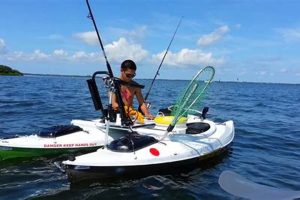
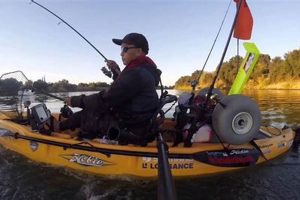
Navigating kayaks in turbulent conditions while angling presents unique challenges and rewards. This specialized form of fishing involves venturing into areas with choppy waves, strong currents, and potentially unpredictable weather, requiring specialized equipment, advanced skills, and a deep understanding of water dynamics. For example, anglers might target species that thrive in agitated waters near rocky coastlines or river rapids.
This approach allows access to fish populations less pressured by conventional fishing methods, offering the potential for larger or more diverse catches. Historically, smaller, maneuverable watercraft were essential for fishing in challenging environments, evolving into the specialized kayaks used today. The development of robust materials and designs has made this activity more accessible, while simultaneously demanding a high degree of proficiency for safe and successful outings. The activity fosters a deep connection with nature and requires acute awareness of weather patterns and water conditions.
Key considerations for this demanding pursuit include specialized kayak selection and outfitting, essential safety precautions, effective paddling techniques in challenging conditions, and species-specific fishing strategies. Let’s delve into these critical aspects for a more complete understanding.
Successfully angling in dynamic water conditions requires careful planning and execution. The following tips provide crucial guidance for safe and effective fishing in challenging environments.
Tip 1: Choose the Right Kayak: Select a kayak designed for stability and maneuverability in rough conditions. Longer, heavier kayaks with pronounced keels generally offer superior tracking and stability compared to shorter, lighter models.
Tip 2: Dress for Immersion: Appropriate attire is essential. Assume capsizing is possible and dress accordingly, prioritizing non-cotton, quick-drying layers. A wetsuit or drysuit provides optimal protection in cold water.
Tip 3: Master Essential Safety Gear: Carry necessary safety equipment, including a personal flotation device, a signaling device (whistle or air horn), and a bilge pump. A reliable communication device, such as a waterproof VHF radio, is highly recommended.
Tip 4: Understand Water Dynamics: Thorough knowledge of currents, tides, and wave patterns is paramount. Study local conditions and consult marine forecasts before embarking on any fishing trip.
Tip 5: Practice Paddling Techniques: Develop proficiency in bracing, rolling, and other essential paddling skills. Practicing these maneuvers in calm water builds confidence and prepares for unexpected situations.
Tip 6: Use Specialized Equipment: Employ fishing gear designed for rough conditions, such as heavier tackle, robust rods, and saltwater-resistant reels. Secure all equipment to the kayak to prevent loss in the event of a capsize.
Tip 7: Fish Strategically: Adapt fishing techniques to suit the conditions. Target areas where fish congregate in turbulent water, such as eddies, current breaks, and near structure.
Tip 8: Prioritize Safety: Never exceed one’s skill level or venture out in conditions beyond capabilities. Continuously assess the environment and exercise caution throughout the fishing trip.
Adhering to these guidelines increases the likelihood of a safe and rewarding experience. Preparation and vigilance are crucial for success in challenging aquatic environments.
By understanding these fundamental principles, anglers can confidently approach fishing in dynamic conditions, maximizing their chances of success while prioritizing safety.
1. Specialized Kayak Selection

Navigating turbulent waters effectively and safely while fishing requires a kayak specifically designed for such conditions. Specialized kayak selection is not merely a matter of preference, but a crucial factor determining success and safety in challenging aquatic environments. The appropriate vessel provides the platform for stability, maneuverability, and efficient propulsion necessary to handle rough water.
- Hull Design and Stability
Hull design significantly impacts a kayak’s performance in rough water. Wider, flatter hulls generally offer greater initial stability, reducing the likelihood of capsizing in choppy conditions. However, they may sacrifice maneuverability. Longer kayaks with a pronounced keel track better in waves and wind, but can be less responsive in tight turns. A “V” shaped hull slices through waves effectively, but compromises initial stability. Choosing the appropriate hull design involves balancing stability, maneuverability, and tracking based on anticipated conditions.
- Length and Volume
Kayak length and volume directly influence load capacity and performance. Longer kayaks generally track better and offer more storage space, beneficial for carrying fishing gear. Higher volume kayaks provide increased buoyancy and load capacity, essential for carrying heavier anglers and equipment. However, larger kayaks can be more challenging to maneuver in tight spaces and strong currents. Consider the anticipated weight of the angler, gear, and potential catch when selecting the appropriate length and volume.
- Features for Fishing
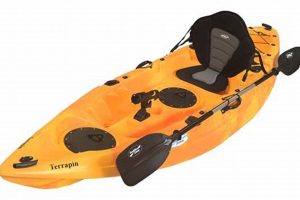
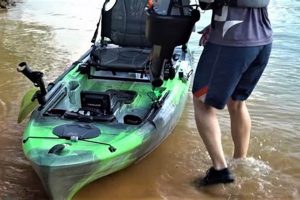
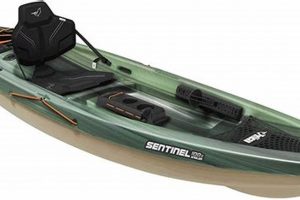
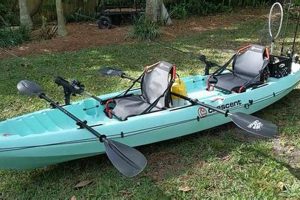
Specialized fishing kayaks often incorporate features enhancing angling functionality. Rod holders, tackle storage compartments, anchor trolleys, and transducer mounts facilitate efficient fishing practices. Elevated seating positions improve visibility and casting range. Recessed rod holders protect rods from breakage. Evaluating these specialized features streamlines the fishing process and optimizes angling success in rough conditions.
- Material and Construction
Kayak construction materials affect durability, weight, and performance. Rotationally molded polyethylene kayaks offer excellent impact resistance and durability, making them suitable for navigating rocky coastlines or shallow areas. Thermoformed plastic kayaks are lighter and stiffer, providing enhanced performance, but may be less resistant to impact. Composite kayaks (fiberglass or carbon fiber) offer superior performance and lighter weight, but require greater care and can be more expensive. Selecting the appropriate material balances durability, weight, and performance based on anticipated usage.
Considering these factors when selecting a kayak for rough water fishing ensures not only a more productive fishing experience, but also a safer one. The proper kayak facilitates efficient navigation and fishing techniques while mitigating risks associated with challenging water conditions. Choosing wisely is an investment in both success and safety on the water.
2. Safety Equipment

Safety equipment is paramount in rough water kayak fishing, where unpredictable conditions and the potential for capsizing necessitate preparedness. Appropriate gear minimizes risks and ensures angler well-being in challenging aquatic environments. Understanding and utilizing essential safety equipment is not merely recommended, but crucial for a safe and responsible approach to this demanding activity.
- Personal Flotation Device (PFD)
A properly fitted PFD is non-negotiable. It provides essential buoyancy in the event of a capsize, increasing survival chances in cold water or rough conditions. PFDs designed specifically for paddling offer greater freedom of movement while casting and reeling. Automatic inflatable PFDs require regular maintenance checks to ensure proper function. Selecting a comfortable, well-maintained PFD significantly enhances safety.
- Signaling Devices
Carrying multiple signaling devices is crucial for attracting attention in emergencies. A whistle provides a compact and reliable auditory signal. An air horn or other sound-producing device carries further, especially in windy conditions. Visual signals, such as flares or a signal mirror, can alert distant vessels or rescuers. Ensuring these devices are readily accessible in a capsize situation is vital.
- Communication Equipment
Reliable communication is essential for summoning assistance if needed. A waterproof VHF radio allows direct contact with the Coast Guard and other vessels. Mobile phones, while potentially useful, may have limited range or be rendered inoperable by water damage. Satellite communication devices offer global coverage in remote areas. Carrying a reliable communication device and knowing how to use it effectively can be life-saving.
- Bilge Pump and Paddle Float
A bilge pump facilitates rapid removal of water from the kayak’s cockpit after a capsize. A paddle float, combined with appropriate self-rescue techniques, assists in re-entering the kayak in deep water. Regular practice with these tools in calm conditions builds proficiency and increases the likelihood of a successful self-rescue in a challenging situation.
These safety precautions are interconnected and contribute to a comprehensive safety strategy for rough water kayak fishing. No single piece of equipment guarantees absolute safety, but the combined utilization of these tools, coupled with proper training and situational awareness, significantly reduces risks and empowers anglers to respond effectively to emergencies in dynamic aquatic environments. Prioritizing safety enhances the overall experience, allowing for greater enjoyment and confidence on the water.
3. Paddling Proficiency

Effective paddle strokes are fundamental to rough water kayak fishing. Proficiency extends beyond basic paddling; it encompasses maneuvering in challenging conditions, maintaining stability, and conserving energy for extended periods. Skillful paddling enables anglers to navigate turbulent waters safely, position the kayak effectively for fishing, and respond appropriately to unexpected situations. Mastery of essential techniques provides the foundation for a successful and safe experience.
- Efficient Forward Stroke
An efficient forward stroke maximizes propulsion while minimizing energy expenditure. Proper technique involves rotating the torso, engaging core muscles, and using the entire blade for a powerful, smooth stroke. This conserves energy during long paddling sessions and allows for efficient movement against currents or wind. A strong forward stroke enables anglers to cover greater distances and reach desired fishing locations efficiently, crucial in rough water scenarios where precise boat control is paramount.
- Bracing and Rolling
Bracing techniques are essential for maintaining stability in rough conditions. Low and high braces provide corrective strokes to prevent capsizing in waves or turbulent currents. Eskimo rolling, while more advanced, offers a reliable self-rescue technique for recovering from a capsize. Practicing these skills in calm water builds muscle memory and confidence, crucial for reacting effectively to unexpected instability caused by waves or wakes.
- Maneuvering Strokes
Maneuvering strokes, such as sweeps, draws, and rudders, enable precise boat control in tight spaces or challenging currents. Sweep strokes turn the kayak efficiently, while draw strokes pull the boat sideways for precise positioning. Rudder strokes maintain directional stability in windy conditions or strong currents. Mastery of these techniques allows anglers to navigate complex shorelines, position the kayak accurately for casting, and avoid hazards effectively. This precision becomes particularly important in rough water, where swift adjustments are often necessary.
- Current and Wave Management
Understanding how to paddle effectively in currents and waves is essential for navigating rough water. Ferrying across currents requires angling the kayak upstream to compensate for drift. Paddling into waves requires precise timing and boat control to avoid capsizing. Riding waves efficiently utilizes wave energy for propulsion and reduces fatigue. Knowledge of these techniques conserves energy, improves boat control, and enhances safety in dynamic conditions.
These interconnected paddling skills contribute significantly to successful rough water kayak fishing. Proficient paddling technique enables anglers to navigate challenging waters confidently, position themselves strategically for fishing, and respond effectively to unpredictable situations. Combined with proper safety precautions and equipment, strong paddling skills form the cornerstone of a safe and rewarding experience in turbulent aquatic environments. Mastery of these skills not only enhances fishing success but also significantly contributes to angler safety, a critical consideration in demanding conditions.
4. Strategic Location Choice

Strategic location choice is paramount in rough water kayak fishing. Success and safety depend heavily on selecting areas that offer suitable fishing opportunities while mitigating the inherent risks of turbulent conditions. Understanding water dynamics, anticipating environmental changes, and identifying sheltered zones are crucial components of this decision-making process. Cause and effect relationships between location choice and fishing outcomes are direct and significant. Selecting a location exposed to strong winds and large waves increases the risk of capsizing, whereas sheltered coves or areas downwind of islands offer calmer conditions and improved fishing prospects. For instance, fishing near rocky outcrops or reefs in moderately rough conditions can concentrate target species, while attempting to fish the same structures in heavy seas would be dangerous.
Practical application of this understanding involves careful observation and analysis of prevailing conditions. Consulting marine forecasts, studying nautical charts, and observing local water patterns provide crucial information for informed decision-making. Identifying areas where currents converge, or where structure provides shelter from waves, maximizes fishing opportunities while minimizing risks. For example, recognizing the influence of tides on current flow near inlets allows anglers to position themselves strategically for intercepting migrating fish, while simultaneously minimizing exposure to hazardous tidal races. Another example is leveraging knowledge of wind patterns to identify downwind shorelines offering calmer conditions for casting and retrieving lures.
Effective strategic location choice mitigates risks and maximizes fishing success in rough water kayak fishing. This understanding is not merely theoretical; it translates directly into safer and more productive fishing experiences. The ability to analyze environmental factors and select appropriate fishing locations is a defining characteristic of skilled anglers in challenging aquatic environments. Challenges remain, however, as even the most careful planning cannot fully eliminate the unpredictable nature of rough water. Constant vigilance and adaptability remain crucial for navigating dynamic conditions and ensuring angler safety, even within strategically chosen locations.
5. Environmental Awareness

Environmental awareness is paramount for safe and successful rough water kayak fishing. Turbulent conditions demand heightened sensitivity to natural forces, requiring anglers to interpret and respond effectively to dynamic changes in the aquatic environment. This awareness is not merely beneficial; it’s crucial for mitigating risks and ensuring responsible engagement with the natural world.
- Weather Patterns
Weather dictates conditions on the water. Rapid changes in wind speed and direction, approaching storms, and fluctuating temperatures significantly impact safety and fishing success. Observing cloud formations, monitoring barometric pressure, and understanding local weather patterns are crucial skills. For example, a sudden shift in wind direction combined with darkening skies indicates an approaching squall, necessitating a rapid return to shore. Ignoring such indicators can expose anglers to dangerous conditions. Real-time weather updates via a waterproof VHF radio or satellite communication device provide valuable supplemental information.
- Water Dynamics
Understanding currents, tides, and wave patterns is essential for navigating and fishing effectively in rough water. Currents can shift dramatically near inlets and points, creating challenging conditions or concentrating fish. Tidal flows influence water depth and current strength, impacting access to shallow areas and fishing grounds. Wave patterns, influenced by wind and bottom topography, present both navigation challenges and opportunities. For example, recognizing rip currents and understanding their formation allows anglers to avoid hazardous areas and potentially exploit the feeding patterns of fish drawn to these dynamic zones.
- Wildlife Interaction
Rough water environments often support diverse ecosystems. Marine mammals, seabirds, and other wildlife may be present, requiring respectful observation and avoidance. Understanding animal behavior and maintaining safe distances minimizes disturbance and potential conflicts. For example, approaching seals or sea lions too closely can provoke defensive behavior, endangering both the animals and the angler. Respectful observation enhances the overall experience and contributes to responsible environmental stewardship.
- Leave No Trace Principles
Practicing Leave No Trace principles minimizes human impact on the aquatic environment. Packing out all trash, avoiding disturbing sensitive habitats, and respecting local regulations preserves the natural integrity of the area. Disposing of fishing line properly prevents entanglement of wildlife. Minimizing noise pollution reduces disturbance to aquatic life. Adhering to these principles ensures the long-term health and enjoyment of these valuable natural resources. For example, retrieving lost lures or tackle not only prevents environmental pollution but also safeguards wildlife from potential harm.
These interconnected facets of environmental awareness are not isolated considerations; they represent a holistic approach to rough water kayak fishing. By cultivating a deep understanding of natural forces and practicing responsible environmental stewardship, anglers enhance not only their own safety and enjoyment but also contribute to the preservation of these dynamic and valuable ecosystems. This awareness informs decision-making throughout the fishing trip, from initial planning and location selection to on-the-water adjustments and post-trip practices, ensuring a responsible and rewarding experience in challenging aquatic environments. It fosters a deeper connection with nature, enhancing appreciation for the intricate interplay of elements that shape these dynamic ecosystems.
Frequently Asked Questions
Addressing common queries regarding navigating kayaks in turbulent conditions while angling provides clarity for both novice and experienced individuals. These responses aim to inform and promote safe practices within this demanding pursuit.
Question 1: What type of kayak is best suited for rough water fishing?
Kayaks designed for stability and maneuverability in challenging conditions are recommended. Longer kayaks with pronounced keels and wider beams generally offer superior tracking and stability in waves and wind. Sit-on-top kayaks are often preferred for their self-bailing capabilities, crucial in rough water. Specialized fishing kayaks often incorporate features like rod holders, tackle storage, and anchor trolleys.
Question 2: What essential safety gear is required?
Essential safety equipment includes a properly fitted personal flotation device (PFD), a signaling device (whistle, air horn, flares), a bilge pump, and a paddle float. A waterproof VHF radio is highly recommended for reliable communication in emergencies. A first-aid kit and emergency supplies should also be carried.
Question 3: How can one prepare for challenging conditions?
Preparation involves developing proficiency in essential paddling techniques, such as bracing, rolling, and self-rescue maneuvers. Practicing these skills in calm water builds confidence and muscle memory. Thorough knowledge of local water dynamics, including currents, tides, and wave patterns, is crucial. Consulting marine forecasts before each trip is essential.
Question 4: What fishing techniques are effective in rough water?
Adapting fishing techniques to suit turbulent conditions is key. Targeting areas where fish congregate in rough water, such as eddies, current breaks, and near structure, is often productive. Using heavier tackle and robust fishing rods helps manage stronger currents and larger fish. Securing all equipment to the kayak prevents loss in the event of a capsize.
Question 5: What are the primary dangers?
Capsizing, exposure to cold water, strong currents, and unpredictable weather changes pose significant risks. Collisions with submerged objects or other vessels are also potential hazards. Fatigue, dehydration, and inadequate preparation exacerbate these dangers. Awareness of these risks and appropriate safety measures are crucial for mitigation.
Question 6: When should one avoid fishing in rough water?
Conditions exceeding one’s skill level or kayak capabilities necessitate avoiding rough water fishing. Strong winds, large waves, rapidly changing weather, or limited visibility warrant postponing trips. Prioritizing safety and exercising conservative judgment are paramount.
Careful consideration of these frequently asked questions enhances angler preparedness and promotes safe practices in challenging aquatic environments. Consistent attention to safety protocols and continuous skill development are crucial for mitigating risks and maximizing positive outcomes.
Beyond these foundational elements, specialized techniques and considerations further enhance success and safety in rough water kayak fishing. Let’s explore these advanced concepts in the following section.
Conclusion
Navigating kayaks in turbulent waters while angling presents inherent challenges and significant rewards. Successful pursuit of this activity necessitates meticulous preparation, specialized equipment, and a deep understanding of environmental dynamics. Safe practices, including appropriate kayak selection, essential safety gear utilization, and proficiency in paddling techniques, are non-negotiable. Strategic location choice based on thorough assessment of weather patterns, water conditions, and potential hazards is crucial. Cultivating environmental awareness fosters responsible interaction with the natural world and ensures the long-term health of these dynamic ecosystems.
This demanding pursuit offers opportunities for unique angling experiences and a profound connection with nature. Continuous refinement of skills, coupled with unwavering adherence to safety protocols, empowers anglers to navigate challenging aquatic environments responsibly and confidently. The confluence of skill, knowledge, and respect for natural forces unlocks the potential for rewarding experiences in the dynamic realm of rough water kayak fishing. The future of this activity relies on the continued prioritization of safety and environmental stewardship by all who participate.