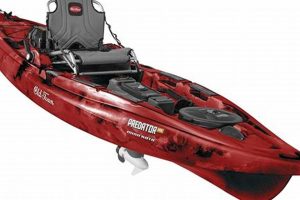
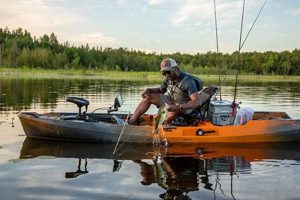
A premium angling kayak prioritizes stability, ample storage for gear, and ergonomic design features like adjustable seating and footrests. These features contribute to an angler’s ability to spend extended hours on the water without discomfort, allowing for more focused fishing. Consider a kayak with features like a high back seat, adjustable foot braces, and plenty of legroom. For example, a wider, sit-on-top model might offer superior stability and ease of entry/exit compared to a narrower, sit-in kayak, making it preferable for anglers who prioritize comfort and accessibility.
Enhanced comfort significantly improves fishing performance. A stable and supportive vessel minimizes fatigue and distractions caused by discomfort, enabling anglers to concentrate on casting, retrieving, and landing fish. Historically, fishing kayaks were less specialized, but increasing demand has led to significant advancements in design and features. This evolution has produced kayaks specifically tailored for angler comfort, resulting in longer and more productive fishing trips.
The subsequent sections will delve into specific features that contribute to optimal kayak comfort for fishing, including seat design, construction materials, and kayak types. Further discussion will explore the interplay of stability, maneuverability, and comfort to help anglers select the ideal vessel for their individual needs and fishing styles.
Tips for Selecting a Comfortable Fishing Kayak
Choosing a comfortable fishing kayak requires careful consideration of several factors. A well-chosen vessel enhances on-the-water experiences, allowing for longer, more productive, and enjoyable fishing trips.
Tip 1: Prioritize Seat Design: Look for adjustable seating systems with ample padding and lumbar support. High-back seats offer additional comfort and stability. Consider breathable mesh materials for enhanced ventilation, particularly in warmer climates.
Tip 2: Evaluate Kayak Width and Stability: Wider kayaks generally offer greater stability, reducing fatigue and providing a secure platform for casting and reeling. However, wider hulls can compromise maneuverability in tight spaces.
Tip 3: Consider Legroom and Footrests: Adequate legroom and adjustable footrests are essential for maintaining a comfortable posture during long hours on the water. Ensure sufficient space to stretch and shift position.
Tip 4: Assess Construction Material and Weight: Lighter kayaks are easier to transport and launch. Consider the durability and weight capacity of different materials like polyethylene and fiberglass.
Tip 5: Factor in Storage Capacity: Ample storage space is crucial for fishing gear, tackle boxes, and personal items. Look for well-designed storage compartments and integrated rod holders.
Tip 6: Test Paddle Length and Ergonomics: A properly sized paddle minimizes strain and maximizes efficiency. Consider adjustable paddles to fine-tune length and feathering angles for optimal performance.
Tip 7: Research Kayak Types: Explore different kayak types, including sit-on-top and sit-in models, to determine which best suits individual fishing styles and preferences.
By carefully considering these factors, anglers can select a kayak that maximizes comfort and enhances overall fishing experiences, contributing to longer, more productive, and enjoyable time on the water.
The concluding section will summarize the essential elements for choosing the most suitable fishing kayak and emphasize the importance of prioritizing comfort for successful angling.
1. Seat Design
Seat design plays a crucial role in determining the comfort and, consequently, the overall fishing experience in a kayak. An uncomfortable seat can lead to fatigue, back pain, and a reduced ability to focus on fishing. Conversely, a well-designed seat allows anglers to remain comfortable and engaged for extended periods, maximizing their time on the water.
Several key features contribute to effective seat design. Adjustable backrests allow individuals to customize the level of support, catering to different body types and preferences. Adequate padding, particularly in the seat bottom and lumbar region, cushions the body against the hard shell of the kayak. Breathable materials, such as mesh fabric, promote ventilation and prevent overheating, particularly in warm weather. For example, some high-end fishing kayaks incorporate seats with built-in cooling systems or inflatable lumbar supports for added comfort. In contrast, basic molded plastic seats offer minimal comfort and can quickly become uncomfortable during long fishing trips. This illustrates the practical significance of investing in a kayak with a superior seat design.
In summary, prioritizing seat design contributes significantly to finding a comfortable fishing kayak. Factors like adjustability, padding, and breathability directly impact an angler’s physical well-being and ability to focus on fishing. Considering these elements allows for informed decisions and ultimately enhances enjoyment and success on the water. The difference between a basic seat and an ergonomically designed one can significantly affect the duration and productivity of a fishing expedition, underscoring the importance of this often-overlooked component.
2. Backrest Support
Backrest support is a critical factor in achieving optimal comfort and promoting prolonged fishing sessions. Proper spinal alignment, facilitated by effective backrest design, reduces strain and fatigue, allowing anglers to maintain focus and maximize their time on the water. A poorly designed backrest can contribute to discomfort, back pain, and ultimately, a diminished fishing experience. Conversely, a supportive and adjustable backrest enhances posture, improves blood circulation, and reduces the likelihood of developing musculoskeletal issues related to prolonged sitting.
Consider, for instance, the difference between a basic kayak with a molded plastic seat and minimal back support versus a kayak equipped with an adjustable, high-back seat featuring lumbar support. In the former scenario, an angler might experience discomfort and fatigue within a relatively short period, limiting their mobility and enjoyment. In the latter, the adjustable backrest allows for personalized support, promoting proper posture and reducing strain, enabling longer, more productive fishing trips. This illustrates the direct correlation between backrest support and the ability to remain comfortable and engaged during extended periods on the water. Practical examples include features like adjustable straps, inflatable lumbar supports, and breathable mesh panels that enhance comfort and ventilation. These features directly impact an angler’s physical well-being and their capacity to focus on fishing rather than discomfort.
In summary, adequate backrest support is an indispensable element of a comfortable fishing kayak. Its importance stems from its direct impact on posture, comfort, and overall fishing experience. Selecting a kayak with a well-designed backrest is an investment in long-term comfort and fishing enjoyment. Ignoring this crucial aspect can compromise both the quality and duration of fishing trips, emphasizing the practical significance of prioritizing backrest support when selecting a fishing kayak. This understanding empowers anglers to make informed choices that optimize their comfort and enhance their time on the water.
3. Legroom and Footrests
Adequate legroom and strategically positioned, adjustable footrests are essential components of a comfortable fishing kayak. These features directly influence posture, stability, and overall comfort, particularly during extended periods on the water. Restricted legroom can lead to discomfort, cramping, and reduced circulation, hindering an angler’s ability to focus and enjoy the experience. Conversely, ample legroom allows for comfortable positioning and the ability to shift weight, promoting stability and balance while casting and reeling. Adjustable footrests further enhance comfort by providing support and leverage, reducing fatigue and strain on the legs and lower back. This combination of legroom and adjustable footrests creates an ergonomic environment, maximizing comfort and promoting efficient paddling and casting techniques.
Consider the scenario of an angler spending several hours in a kayak with limited legroom and fixed footrests. The restricted movement and lack of support can lead to discomfort and stiffness, negatively impacting their ability to focus on fishing. In contrast, an angler in a kayak with ample legroom and adjustable footrests can maintain a comfortable and stable position, allowing for greater freedom of movement and reduced fatigue. Practical examples include kayaks designed with recessed footwells and adjustable foot braces that cater to different leg lengths and paddling styles. These design elements contribute significantly to the overall comfort and functionality of the kayak, enabling anglers to maintain optimal posture and balance throughout their fishing trip.
In summary, the combination of sufficient legroom and adjustable footrests is crucial for achieving optimal comfort and performance in a fishing kayak. These features contribute directly to an angler’s physical well-being, stability, and ability to remain comfortable and engaged during extended periods on the water. Prioritizing these design elements during kayak selection contributes to a more enjoyable and productive fishing experience, underscoring the practical significance of these often-overlooked components. A well-designed kayak in this regard empowers anglers to maximize their time on the water, focusing on the enjoyment of fishing rather than the discomfort of inadequate legroom and foot support.
4. Kayak Stability

Kayak stability forms a cornerstone of comfort, particularly in the context of fishing. A stable platform significantly enhances an angler’s ability to focus on the task at hand, minimizing distractions caused by rocking or the fear of capsizing. This stability allows for comfortable casting, reeling, and landing fish, ultimately contributing to a more productive and enjoyable experience. Cause and effect are directly linked: increased stability leads to increased comfort and confidence, facilitating longer fishing trips and improved angling success. Consider the contrast between a stable, wide-hulled kayak and a narrower, less stable model. In rough water or when battling a strong fish, the stable kayak provides a secure platform, allowing the angler to maintain balance and control. The less stable kayak, on the other hand, might require constant adjustments and corrections, increasing fatigue and potentially compromising safety.
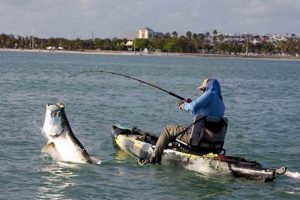
The importance of stability as a component of a comfortable fishing kayak cannot be overstated. It directly impacts an angler’s ability to perform essential tasks, such as casting and retrieving lures, setting hooks, and landing fish. Furthermore, stability enhances safety, particularly in challenging conditions like windy weather or choppy water. Real-life examples abound: an angler standing to cast in a stable kayak gains a significant advantage in sight fishing, while a seated angler benefits from a secure platform when fighting a large fish. Conversely, a less stable kayak restricts movement and increases the risk of capsizing, particularly when dealing with unexpected movements or external forces.
Understanding the crucial link between kayak stability and fishing comfort allows for informed decision-making during kayak selection. Prioritizing stability contributes not only to physical comfort but also to increased confidence and safety on the water. This understanding translates directly into more productive and enjoyable fishing trips. Challenges, such as navigating tight spaces or achieving higher speeds, might require trade-offs in stability, but the overall benefits for fishing comfort and safety often outweigh these considerations. The practical significance of this knowledge empowers anglers to choose kayaks best suited to their individual needs and fishing styles, ultimately enhancing their overall experience on the water.
5. Weight Capacity

Weight capacity is a critical factor influencing comfort and safety in fishing kayaks. Appropriate weight capacity ensures the kayak remains stable and performs optimally, directly impacting the angler’s ability to fish comfortably and effectively. Insufficient weight capacity compromises stability, maneuverability, and safety, detracting from the overall fishing experience. Understanding the interplay between weight capacity and comfort is essential for informed kayak selection.
- Total Weight Consideration
Total weight encompasses the combined weight of the angler, fishing gear, and any additional equipment carried on board. Accurately calculating this total weight and comparing it to the kayak’s specified weight capacity is crucial for safe and comfortable operation. Exceeding the weight capacity can submerge the hull, reducing stability and increasing the risk of capsizing. For example, an angler weighing 180 pounds carrying 60 pounds of gear requires a kayak with a minimum weight capacity of 240 pounds. Choosing a kayak with ample weight capacity ensures optimal performance and enhances safety.
- Impact on Stability and Performance
Weight capacity directly influences kayak stability and performance. A kayak loaded near its maximum capacity sits lower in the water, impacting maneuverability and increasing susceptibility to wind and waves. Reduced stability compromises comfort and can hinder fishing activities such as casting and retrieving. Conversely, a kayak with ample weight capacity for the given load provides enhanced stability, maneuverability, and overall performance, contributing to a more comfortable and enjoyable fishing experience. For instance, a kayak designed for a higher weight capacity will generally track straighter and handle waves more effectively than a kayak loaded near its limit.
- Safety Implications of Overloading
Overloading a kayak presents significant safety risks. Exceeding the weight capacity increases the likelihood of capsizing, especially in challenging conditions. A submerged hull reduces freeboard, making the kayak more susceptible to swamping. Furthermore, an overloaded kayak becomes more difficult to maneuver and control, potentially leading to accidents. Adhering to the manufacturer’s specified weight capacity is paramount for safe and responsible kayak operation. For example, attempting to navigate rough water in an overloaded kayak significantly increases the risk of capsizing, endangering the angler and potentially leading to equipment loss.
- Material and Design Considerations
Kayak materials and design influence weight capacity. Heavier-duty materials and wider hulls generally contribute to higher weight capacities. Longer kayaks often have higher weight capacities than shorter models of similar design. Understanding the relationship between these factors helps anglers select kayaks suited to their individual needs and intended use. A heavier angler with substantial gear, for instance, might benefit from a longer, wider kayak constructed from robust materials to ensure adequate weight capacity and stability. Choosing a kayak with appropriate material and design ensures comfort, safety, and optimal performance on the water.
Careful consideration of weight capacity is essential for selecting the most comfortable and safe fishing kayak. Understanding its impact on stability, performance, and safety empowers anglers to make informed decisions. Prioritizing appropriate weight capacity ensures a comfortable and enjoyable fishing experience while minimizing potential risks. A properly balanced kayak, operating within its specified weight limit, enhances overall comfort, control, and safety on the water, contributing to a more productive and enjoyable fishing experience.
6. Storage Space
Ample storage space directly contributes to comfort and efficiency in a fishing kayak. Organized and accessible storage reduces clutter, minimizes distractions, and allows anglers to focus on fishing rather than managing gear. This enhanced focus contributes to a more relaxed and enjoyable experience on the water. Cause and effect are clearly linked: sufficient storage leads to reduced clutter and improved organization, directly impacting angler comfort and efficiency. The importance of storage space stems from its ability to streamline fishing activities, enabling quick access to essential gear and minimizing disruptions caused by searching for misplaced items. Real-life examples illustrate this connection: an angler with dedicated storage for tackle boxes, rods, and other equipment can readily access necessary items without disrupting their fishing rhythm. Conversely, an angler struggling with limited storage might experience frustration and wasted time searching for misplaced gear, detracting from the overall fishing experience.
Further enhancing the connection between storage and comfort are specialized storage solutions. Integrated rod holders, tackle compartments, and dry storage areas contribute significantly to organization and efficiency. These features minimize clutter and protect valuable equipment from water damage, further enhancing the angler’s comfort and peace of mind. Practical applications include dedicated compartments for electronic devices, food and water, and safety gear, allowing for efficient organization and rapid access when needed. Consider an angler needing to quickly access a first-aid kit in an emergency; well-organized storage facilitates immediate retrieval, potentially mitigating negative consequences. Conversely, inadequate storage might delay access to critical items, exacerbating the situation.
In summary, adequate storage space is a key component of a comfortable and efficient fishing kayak. Its impact on organization, accessibility, and overall fishing experience is substantial. While maximizing storage might involve trade-offs in other areas, such as maneuverability or weight, the benefits for comfort and efficiency often outweigh these considerations. Understanding the practical significance of storage empowers anglers to select kayaks best suited to their individual needs and fishing styles. This knowledge translates directly into a more organized, efficient, and ultimately, more comfortable and enjoyable fishing experience. The ability to focus on fishing, rather than managing gear, underscores the integral role storage plays in achieving a comfortable and successful outing on the water.
Frequently Asked Questions
This section addresses common inquiries regarding comfort in fishing kayaks, providing concise and informative responses to facilitate informed decision-making.
Question 1: How does seat design impact long-term fishing comfort?
Ergonomic seat design, incorporating adjustable backrests, ample padding, and breathable materials, significantly reduces fatigue and discomfort during extended fishing trips. Proper lumbar support and adjustable features accommodate individual body types and preferences, promoting proper posture and reducing strain.
Question 2: Why are adjustable footrests important in a fishing kayak?
Adjustable footrests provide essential support and leverage, allowing anglers to maintain a comfortable and stable paddling position. They reduce strain on the legs and lower back, enhancing comfort during long hours on the water and contributing to efficient paddling technique.
Question 3: What role does kayak width play in overall stability and comfort?
Wider kayaks generally offer increased stability, reducing the likelihood of tipping and providing a secure platform for casting and reeling. This enhanced stability contributes to angler comfort and confidence, particularly in challenging conditions or when handling large fish.
Question 4: How does weight capacity relate to comfort in a fishing kayak?
Appropriate weight capacity ensures the kayak performs optimally and remains stable. Exceeding the weight capacity compromises stability and maneuverability, leading to discomfort and potential safety risks. Selecting a kayak with adequate weight capacity for the intended load is crucial for comfort and safety.
Question 5: Why is sufficient storage space important for a comfortable fishing experience?
Ample storage space allows for organized and accessible gear, reducing clutter and minimizing distractions. This organization enhances comfort and efficiency, allowing anglers to focus on fishing rather than managing equipment.
Question 6: What are the key considerations when choosing a comfortable fishing kayak seat?
Key considerations include adjustability, padding, breathability, and lumbar support. An adjustable backrest allows for personalized comfort, while ample padding cushions the body against the kayak’s hull. Breathable materials enhance ventilation, and robust lumbar support promotes proper posture and reduces strain.
Prioritizing comfort in a fishing kayak directly impacts the overall enjoyment and success of fishing trips. Addressing these common questions empowers informed decision-making, enabling anglers to select kayaks that best suit their individual needs and preferences.
This concludes the FAQ section. The following section will offer concluding thoughts on selecting the most comfortable kayak for individual fishing needs.
Finding the Most Comfortable Kayak for Fishing
Careful consideration of various factors contributes significantly to the selection of a comfortable fishing kayak. Seat design, backrest support, legroom, footrests, stability, weight capacity, and storage space collectively influence on-the-water comfort and overall fishing experience. Prioritizing these elements ensures reduced fatigue, enhanced stability, and increased enjoyment during extended fishing trips. Understanding the interplay of these factors empowers informed decision-making, allowing anglers to choose kayaks optimized for individual needs and preferences. Ergonomic design and appropriate features contribute significantly to long-term comfort and fishing success.
Ultimately, investing in a comfortable fishing kayak translates to enhanced enjoyment, increased productivity, and a greater appreciation for time spent on the water. The ability to focus on the sport of fishing, rather than physical discomfort, represents a significant advantage. Selecting a kayak optimized for comfort contributes not only to immediate satisfaction but also to a long-term investment in personal well-being and continued enjoyment of the sport. Continued advancements in kayak design and technology promise further enhancements in comfort and performance, ensuring future generations of anglers can experience the joys of fishing from a comfortable and supportive vessel.