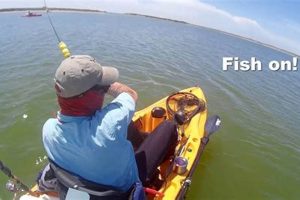
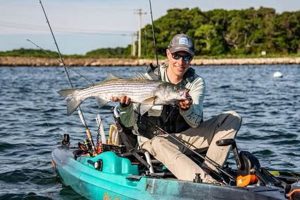
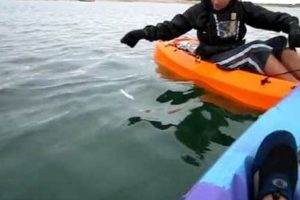
This specific model of recreational watercraft is designed for angling, blending stability and maneuverability for use in various aquatic environments. It typically features specialized components like rod holders, tackle storage, and a comfortable seating system tailored for extended fishing trips.
The combination of stability, specialized features, and portability makes this type of vessel a popular choice among anglers. Its design caters to both novice and experienced fishermen, offering a platform for accessing diverse fishing locations, from calm lakes to slow-moving rivers. This accessibility contributes to the growing popularity of kayak fishing as a recreational activity.
The following sections will delve deeper into specific aspects of this particular watercraft, exploring design features, performance characteristics, user experiences, and comparisons with other similar models.
Tips for Kayak Fishing
Effective angling from a kayak requires a blend of preparation, technique, and safety consciousness. The following tips offer guidance for enhancing the fishing experience from this unique platform.
Tip 1: Prioritize Stability: Weight distribution is crucial for maintaining balance. Keep the center of gravity low and distribute gear evenly throughout the vessel. Practice entering and exiting the kayak in shallow water before venturing into deeper areas.
Tip 2: Master Paddle Strokes: Efficient paddling techniques conserve energy and facilitate precise maneuvering. Learn basic strokes for forward movement, turning, and maintaining position against wind or current.
Tip 3: Choose Appropriate Tackle: Shorter rods and reels are often preferred for kayak fishing due to limited space. Select tackle appropriate for the target species and fishing environment.
Tip 4: Employ Anchor or Drifting Techniques: Anchoring allows for stationary fishing in specific locations, while controlled drifting presents bait or lures naturally with the current.
Tip 5: Organize and Secure Equipment: Securely stow fishing gear within easy reach to avoid clutter and prevent items from shifting during movement. Utilize designated storage compartments and attachment points.
Tip 6: Prioritize Safety: Always wear a personal flotation device (PFD). Check weather conditions before embarking and inform someone of the intended fishing location and return time.
Tip 7: Respect the Environment: Adhere to local fishing regulations and practice catch-and-release whenever possible. Properly dispose of fishing line and other waste to minimize environmental impact.
By adhering to these guidelines, anglers can maximize their enjoyment and success while maintaining safety and preserving the natural environment.
These practical tips provide a foundation for safe and productive kayak angling experiences. The subsequent conclusion will reiterate key takeaways and offer further resources for enhancing fishing proficiency from this versatile platform.
1. Stability

Stability is a critical factor in kayak fishing, directly influencing angler safety, comfort, and fishing effectiveness. For the Catch 110 HDII, stability is a key design consideration, impacting its performance in various water conditions and contributing to its suitability for different fishing styles.
- Hull Design:
The Catch 110 HDII typically features a wider, flatter hull design compared to recreational kayaks. This wider base provides increased primary stability, resisting initial tipping and providing a more stable platform, especially important for activities like casting, reeling, and landing fish. The specific hull shape contributes significantly to the kayak’s overall stability profile.
- Center of Gravity:
The kayak’s design and the distribution of weight within it significantly affect its center of gravity. A lower center of gravity enhances stability. The Catch 110 HDII’s design, combined with proper weight distribution by the angler (keeping heavier items low and centered), contributes to a lower center of gravity, improving balance and reducing the likelihood of capsizing.
- Secondary Stability:
Secondary stability refers to the kayak’s ability to resist tipping at greater angles. While initial stability is crucial, secondary stability provides a sense of security and allows for maneuvering and leaning without the immediate fear of capsizing. The Catch 110 HDII’s hull design is typically engineered to offer a balance of primary and secondary stability, providing a secure platform even when leaning or reaching for a fish.
- Impact of Water Conditions:
While the kayak’s inherent stability characteristics are crucial, external factors like wind and waves can influence its performance. The Catch 110 HDII’s wider hull generally provides better stability in choppy water compared to narrower designs. However, understanding and respecting the limitations imposed by water conditions remains crucial for safe and effective fishing.
The Catch 110 HDII’s stability profile, influenced by its hull design, center of gravity, and performance in varying water conditions, contributes significantly to its suitability as a fishing platform. This focus on stability allows anglers to confidently engage in fishing activities, enhancing their experience and maximizing their chances of success.
2. Maneuverability

Maneuverability is a crucial aspect of kayak fishing, impacting the angler’s ability to navigate diverse water environments, position effectively for fishing, and respond to changing conditions. For the Catch 110 HDII, maneuverability plays a significant role in its overall performance and suitability for various fishing scenarios.
- Hull Design:
The Catch 110 HDII’s hull design influences its maneuverability. While a wider hull generally enhances stability, it can sometimes compromise turning responsiveness. The specific hull shape of this model seeks to strike a balance between stability and maneuverability. Design elements such as a moderate rocker (the curvature of the hull from bow to stern) and a defined keel line can contribute to improved tracking and turning performance.
- Length and Width:
The kayak’s length and width directly affect its maneuverability. Longer kayaks tend to track straighter and glide more efficiently, while shorter kayaks generally turn more quickly. The Catch 110 HDII’s length and width dimensions contribute to its specific maneuverability profile. Its designed to offer a compromise, providing reasonable tracking for open water while retaining adequate turning responsiveness for navigating tighter spaces like creeks or rivers.
- Rudder or Skeg:
Some versions of the Catch 110 HDII may be equipped with a rudder or skeg. A rudder is a movable fin controlled by foot pedals, enabling precise steering and course correction. A skeg is a fixed fin that enhances tracking, particularly in windy conditions. The presence and type of these features significantly impact the kayak’s maneuverability, improving control and efficiency in various water conditions.
- Paddler Experience and Technique:
While the kayak’s inherent design characteristics influence its maneuverability, the paddler’s skill and technique also play a crucial role. Effective paddle strokes and efficient body positioning contribute significantly to precise maneuvering and responsive control. With practice, paddlers can maximize the Catch 110 HDII’s maneuverability potential.
The Catch 110 HDIIs maneuverability, determined by its hull design, dimensions, potential rudder or skeg system, and paddler input, significantly impacts its versatility and effectiveness as a fishing platform. The balance between stability and maneuverability allows anglers to navigate diverse waterways, position effectively for fishing, and adapt to changing conditions, ultimately enhancing their overall fishing experience.
3. Storage Capacity

Ample storage capacity is a defining feature of the Catch 110 HDII fishing kayak, directly impacting its practicality and suitability for extended fishing trips. The ability to securely and efficiently transport essential gear, including tackle boxes, rods, and other fishing accessories, contributes significantly to angler convenience and overall fishing success. Dedicated storage compartments, strategically positioned throughout the kayak, maximize space utilization and minimize clutter. For example, a large rear tank well can accommodate larger items like a cooler or crate, while smaller compartments within the cockpit provide easy access to frequently used items like lures and tools.
Several design elements contribute to the Catch 110 HDII’s storage capabilities. Recessed areas, bungee cords, and specialized compartments for specific gear, such as rod holders and paddle parks, optimize organization and secure equipment during transport and use. This thoughtful design allows anglers to focus on fishing rather than managing gear, enhancing efficiency and enjoyment. The practical implications of this ample storage are evident in scenarios like multi-day fishing trips or expeditions to remote locations where carrying sufficient supplies is crucial. The ability to bring necessary provisions, safety equipment, and extra layers of clothing expands the kayak’s versatility and enables anglers to explore diverse fishing environments with confidence.
Effective storage management contributes significantly to both safety and fishing success. A well-organized kayak reduces the risk of entanglement or tripping hazards, ensuring a safe and efficient fishing experience. Furthermore, readily accessible gear allows anglers to quickly adapt to changing conditions or fishing opportunities, maximizing their chances of success. The Catch 110 HDII’s storage solutions address these practical needs, offering a well-designed platform for anglers to pursue their passion with confidence and convenience.
4. Comfort Features

Comfort features significantly influence the overall fishing experience, particularly during extended trips. In the context of the Catch 110 HDII fishing kayak, these features contribute directly to angler endurance, focus, and overall enjoyment. An uncomfortable seating position or inadequate support can lead to fatigue and discomfort, detracting from the fishing experience. The Catch 110 HDII addresses these concerns with specific design elements aimed at enhancing comfort and promoting prolonged fishing enjoyment.
- Seat Design:
The seat plays a crucial role in overall comfort. The Catch 110 HDII typically features an adjustable seat designed for prolonged use. Factors such as seat height, backrest support, and cushioning contribute to angler comfort. Adjustable features allow for customization based on individual preferences and physical characteristics, ensuring optimal support and reducing strain during long hours on the water. A comfortable seat promotes better posture, reduces fatigue, and allows anglers to focus on fishing.
- Footrests:
Adjustable footrests provide essential support and leverage while paddling and fishing. Proper foot placement contributes to efficient paddling, improved balance, and reduced leg fatigue. The Catch 110 HDII’s footrest system allows for customization based on leg length, ensuring optimal comfort and control. This adjustability accommodates a range of body sizes and enhances overall paddling efficiency.
- Deck Padding:
Adequate deck padding enhances comfort and provides a non-slip surface for standing or moving around the kayak. The Catch 110 HDII typically incorporates strategically placed padding in areas where anglers frequently stand or sit, offering cushioning and traction. This feature contributes to both comfort and safety, reducing fatigue and minimizing the risk of slips or falls, particularly in wet conditions.
- Ergonomics:
The overall ergonomic design of the kayak, including the placement of seating, footrests, and storage compartments, influences comfort and efficiency. The Catch 110 HDII’s design aims to provide a comfortable and intuitive layout, allowing for easy access to essential gear and minimizing awkward reaching or bending. This thoughtful design contributes to a more enjoyable and less strenuous fishing experience, enabling anglers to focus on their technique and the surrounding environment.
The comfort features of the Catch 110 HDII, encompassing seat design, footrests, deck padding, and overall ergonomics, contribute significantly to its suitability for extended fishing trips. These features enhance angler comfort, reduce fatigue, and promote a more enjoyable and productive fishing experience. By prioritizing comfort, the Catch 110 HDII allows anglers to fully immerse themselves in the sport, maximizing their time on the water and their potential for success.
5. Durability

Durability is a critical factor influencing the lifespan and overall value of a fishing kayak. For the Catch 110 HDII, durability translates to resilience against the rigors of regular use, including impacts, abrasion, and exposure to various environmental conditions. This resilience ensures the kayak remains functional and safe over extended periods, minimizing the need for repairs and replacements. The materials used in construction, along with the manufacturing process, play a key role in determining the kayak’s overall durability.
High-density polyethylene (HDPE) is a common material choice for kayak construction due to its impact resistance, UV stability, and overall durability. The Catch 110 HDII often utilizes HDPE, contributing to its ability to withstand impacts from rocks, logs, and other obstacles encountered in various aquatic environments. Furthermore, proper hull construction techniques, such as robust seam welding and reinforcement in high-stress areas, enhance the kayak’s structural integrity. This robust construction minimizes the risk of damage from impacts or stress, ensuring longevity and maintaining performance over time. For example, reinforced keel areas protect against abrasion and impact when dragging the kayak across shallow areas or launching from rocky shorelines. Similarly, UV-resistant materials prevent degradation from prolonged sun exposure, preserving the kayak’s structural integrity and color over time.
The practical significance of durability in a fishing kayak is substantial. A durable kayak offers a reliable platform for anglers, enabling them to confidently explore diverse environments without concern for damage. This reliability translates to a safer and more enjoyable fishing experience, allowing anglers to focus on their pursuit rather than potential equipment failures. Furthermore, a durable kayak represents a long-term investment, minimizing the need for frequent repairs or replacements, thereby reducing overall cost and environmental impact. The Catch 110 HDII’s focus on durability through material selection and construction techniques contributes to its value proposition, making it a suitable choice for anglers seeking a dependable and long-lasting fishing platform.
6. Portability
Portability significantly influences the accessibility and overall usability of a fishing kayak. For the Catch 110 HDII, portability translates to ease of transport and deployment, enabling access to a wider range of fishing locations. Factors such as weight, dimensions, and available carrying options directly impact the kayak’s portability. A lighter kayak is generally easier to transport, while compact dimensions simplify storage and handling. Features like integrated handles or compatibility with roof rack systems further enhance portability. Consider, for example, an angler wishing to access a remote lake or river. A portable kayak allows for transport to these locations, expanding fishing opportunities beyond easily accessible areas. Conversely, a heavier or bulkier kayak might restrict access to such locations, limiting fishing options.
The Catch 110 HDII’s portability characteristics are influenced by several design and material choices. The use of lightweight yet durable materials, such as high-density polyethylene (HDPE), contributes to reduced overall weight, making transport more manageable. Furthermore, design elements like integrated handles, molded-in side handles, and compatibility with aftermarket accessories like kayak carts or roof rack systems further enhance portability. These features facilitate easier loading, unloading, and transport, reducing the physical strain associated with moving the kayak to and from the water. For instance, integrated handles provide secure grip points for lifting and carrying, while compatibility with roof rack systems allows for efficient transport on vehicles. The practical implications of this portability are evident in scenarios such as navigating challenging terrain to reach a secluded fishing spot or transporting the kayak in a smaller vehicle. The ease of transport offered by the Catch 110 HDII expands fishing possibilities and allows anglers to reach previously inaccessible locations.
Portability, therefore, directly influences the versatility and practicality of the Catch 110 HDII fishing kayak. Its manageable weight, compact dimensions, and integrated carrying features expand fishing opportunities and facilitate access to diverse waterways. This portability, achieved through considered design and material selection, enhances the overall fishing experience by minimizing the logistical challenges associated with transporting and deploying the kayak, ultimately allowing anglers to focus on their passion and explore new fishing grounds. Challenges may arise in balancing portability with other desirable features such as stability and storage capacity, but the Catch 110 HDII strives to achieve a practical balance.
7. Specialized Design

The specialized design of the Catch 110 HDII fishing kayak distinguishes it from recreational kayaks, optimizing its functionality for angling. This specialization manifests in several key features directly impacting fishing performance and overall user experience. Rod holders, strategically positioned for easy access and secure rod placement, exemplify this design focus. Multiple rod holders accommodate diverse fishing techniques and allow for quick transitions between different rods and setups. Similarly, integrated tackle storage compartments offer organized storage for lures, hooks, and other essential fishing accessories, keeping them readily available and protected from the elements. These specialized storage solutions minimize clutter and maximize efficiency on the water. Consider a fly fisherman requiring quick access to multiple fly rods or a bass angler switching between different lure presentations. The specialized design of the Catch 110 HDII facilitates these transitions smoothly, enhancing fishing effectiveness.
Further enhancing its specialized design are features like anchor trolleys and mounting plates for fish finders or other electronic devices. An anchor trolley system allows for precise anchor positioning, crucial for maintaining position in specific fishing locations, particularly in current or wind. Mounting plates provide convenient and secure installation of fish finders, GPS units, and other electronics, enhancing situational awareness and fish-finding capabilities. These features exemplify the Catch 110 HDII’s design focus on practicality and functionality for the serious angler. For example, an angler targeting specific structures or drop-offs benefits significantly from the precise anchor control offered by an anchor trolley system, while a kayak-based angler utilizing electronics for navigation or fish finding benefits from the convenience and security of integrated mounting plates.
In summary, the specialized design of the Catch 110 HDII elevates it beyond a basic recreational kayak, transforming it into a dedicated fishing platform. Features such as strategically positioned rod holders, integrated tackle storage, anchor trolleys, and mounting plates for electronics demonstrate this design focus. These features, driven by the specific needs of anglers, enhance fishing efficiency, improve on-the-water organization, and expand the kayak’s capabilities. While some design choices may prioritize fishing functionality over pure speed or open-water performance, the Catch 110 HDII’s specialized design effectively caters to its intended purpose as a versatile and effective fishing kayak. This specialization empowers anglers to pursue their passion with enhanced convenience, organization, and overall fishing success.
Frequently Asked Questions
This section addresses common inquiries regarding the Catch 110 HDII fishing kayak, providing concise and informative responses to facilitate informed decision-making.
Question 1: What is the weight capacity of the Catch 110 HDII?
The weight capacity typically ranges between 400-500 lbs, accommodating anglers, gear, and equipment. However, consulting the manufacturer’s specifications for the specific model year is recommended.
Question 2: Is the Catch 110 HDII suitable for use in saltwater environments?
While designed primarily for freshwater use, its high-density polyethylene construction offers reasonable saltwater resistance. Thorough rinsing after saltwater exposure is crucial for longevity.
Question 3: What is the overall length and width of the Catch 110 HDII?
Typical dimensions are approximately 11 feet in length and 34 inches in width. These dimensions influence stability and maneuverability. Confirming specific model year dimensions with the manufacturer is advised.
Question 4: Does the Catch 110 HDII come equipped with a rudder or skeg?
Availability of a rudder or skeg may vary depending on the specific model and configuration. Checking the manufacturer’s specifications for the desired model year and configuration is recommended.
Question 5: What type of seating system does the Catch 110 HDII feature?
The kayak typically features an adjustable seat designed for comfort during extended fishing trips. Specific seat features and adjustability may vary depending on the model year, warranting confirmation with the manufacturer.
Question 6: What are the recommended maintenance procedures for the Catch 110 HDII?
Regular rinsing, especially after saltwater exposure, and periodic inspection for damage are recommended. Consulting the owner’s manual for detailed maintenance guidelines specific to the model year is advisable.
Understanding these key aspects contributes to informed decisions regarding kayak selection and utilization. Thoroughly researching specific model year specifications and features ensures optimal suitability for individual needs and fishing environments.
The following section offers concluding thoughts and recommendations regarding the Catch 110 HDII fishing kayak.
Conclusion
This exploration of the Catch 110 HDII fishing kayak encompassed key aspects of its design, features, and performance characteristics. Stability, maneuverability, storage capacity, comfort features, durability, portability, and specialized design elements were examined, highlighting their contributions to the kayak’s suitability for angling. Its robust construction, specialized features like rod holders and tackle storage, and focus on angler comfort position this model as a dedicated fishing platform, distinct from standard recreational kayaks. Understanding these attributes facilitates informed decisions regarding kayak selection and utilization for specific fishing needs and environments.
The Catch 110 HDII represents a notable option within the fishing kayak market. Continued advancements in kayak design and technology promise further enhancements to performance, comfort, and overall fishing experience. Potential purchasers are encouraged to thoroughly research specific model year specifications and features, ensuring alignment with individual needs and fishing preferences. Careful consideration of these factors contributes to a satisfying and productive long-term ownership experience, empowering anglers to maximize their time on the water and pursue their passion effectively.