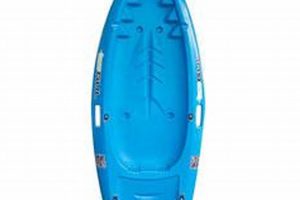
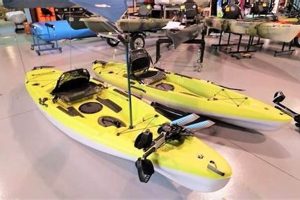
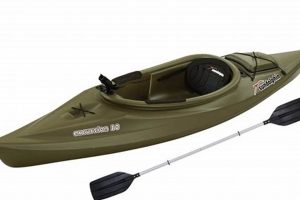
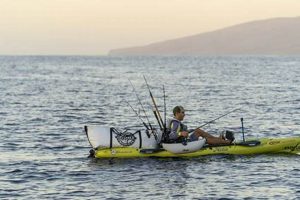
A tandem kayak designed for angling accommodates three individuals and typically features specialized amenities such as rod holders, storage compartments for tackle, and sometimes even livewells. These vessels offer stability and space for a comfortable fishing experience with multiple anglers.
Multi-person fishing kayaks offer several advantages. Sharing the paddling effort reduces fatigue, allowing for longer excursions. The increased capacity allows for a wider array of fishing gear and potentially a larger combined catch. The social aspect of shared fishing trips adds to the enjoyment. Historically, fishing from human-powered watercraft has been a common practice across cultures. Modern materials and designs have elevated this tradition, resulting in specialized vessels like these, enhancing both the efficiency and enjoyment of the sport.
Further exploration will cover key factors in selecting a suitable three-angler fishing kayak, including considerations of size, material, features, and price. Guidance on proper usage, safety precautions, and maintenance will also be provided.
Tips for Utilizing a Three-Person Fishing Kayak
Effective use of a three-person fishing kayak maximizes enjoyment and safety on the water. Careful consideration of these tips ensures a successful outing.
Tip 1: Distribute Weight Evenly: Balanced weight distribution is crucial for stability. Gear and passengers should be positioned to maintain an even keel.
Tip 2: Practice Paddling Coordination:Synchronized paddling is more efficient. Prior practice improves coordination and minimizes wasted effort.
Tip 3: Assign Roles and Responsibilities: Designating tasks such as navigation, anchoring, and fish handling streamlines the fishing process.
Tip 4: Prioritize Safety Equipment: Life vests are mandatory, and essential safety gear includes a first aid kit, signaling devices, and a bilge pump.
Tip 5: Check Weather Conditions: Avoid venturing out in unfavorable weather. Strong winds and storms pose significant risks.
Tip 6: Plan Fishing Locations Strategically: Research suitable fishing spots in advance and consider factors like water depth, currents, and accessibility.
Tip 7: Respect Wildlife and the Environment: Adhere to catch limits, dispose of waste responsibly, and avoid disturbing natural habitats.
Adhering to these guidelines contributes to a safer and more productive fishing experience. Proper preparation and mindful practices enhance enjoyment and minimize potential problems.
These practical tips offer valuable insights for a successful three-person kayak fishing trip. Next, essential equipment recommendations will be discussed.
1. Capacity

The defining characteristic of a three-person fishing kayak is its capacity to accommodate three anglers. This seemingly simple attribute has significant implications for vessel design, functionality, and overall fishing experience. The increased capacity necessitates a larger hull, impacting stability and maneuverability. Designers must carefully balance these factors to create a vessel that is both spacious and performs well on the water. For example, a wider hull enhances stability for three adults but may reduce maneuverability in tight spaces.
Furthermore, the “three angler” capacity influences the placement and design of fishing-specific features. Multiple rod holders, strategically positioned for convenient access by all anglers, become essential. Storage compartments must accommodate the combined gear of three individuals. Weight distribution becomes a crucial consideration, affecting both stability and paddling efficiency. Understanding the impact of three anglers on the overall design highlights the importance of selecting a kayak specifically designed for this capacity, rather than adapting a smaller vessel. Attempting to fit three adults into a smaller kayak designed for fewer occupants could compromise safety and negatively impact the fishing experience.
In summary, the “three angler” capacity is not merely a numerical designation but a fundamental design parameter that dictates several key aspects of the kayak. Recognizing this interconnectedness empowers informed decision-making during the selection process and promotes safe and efficient usage on the water. Failure to appreciate the full implications of this capacity could lead to an unsuitable purchase or a compromised on-water experience. This understanding is foundational for maximizing the benefits of a three-person fishing kayak.
2. Stability
Stability is paramount in a three-person fishing kayak. The added weight and potential movement of multiple anglers necessitates a design that resists tipping. A stable platform allows for comfortable casting, reeling, and landing fish without compromising safety. Hull design plays a crucial role in stability. Wider hulls generally provide greater initial stability, resisting tipping from side to side. However, excessive width can hinder maneuverability. Longer kayaks tend to track straighter but may be less responsive to turning. The hull’s shape, including features like chines and a flat bottom, also contributes to overall stability. Consider a scenario where three anglers are fishing in moderate chop. A stable kayak provides a secure platform, even if one angler shifts position or leans over the side to retrieve a fish. Conversely, an unstable kayak in the same situation could easily capsize, jeopardizing safety and equipment. This highlights the direct link between stability and a safe, enjoyable fishing experience.
Further enhancing stability are features like outriggers or pontoons. These additions provide extra buoyancy and resistance to tipping, particularly helpful for anglers who prioritize standing while fishing. Weight distribution also significantly impacts stability. Evenly distributing gear and passengers throughout the kayak optimizes balance and minimizes the risk of tipping. Practical considerations, such as the intended fishing environment and the experience level of the anglers, also influence stability requirements. Calm lakes and rivers necessitate less inherent stability compared to open ocean or challenging whitewater conditions. Similarly, experienced anglers comfortable with kayak handling might tolerate less stability than beginners. This careful consideration of design, features, and usage scenarios underscores the critical nature of stability for a safe and productive outing.
In summary, stability is not merely a desirable feature but a fundamental requirement for three-person fishing kayaks. It directly impacts safety, comfort, and the overall fishing experience. A thorough understanding of the factors influencing stability enables informed decisions regarding kayak selection, outfitting, and on-water practices. This knowledge translates into enhanced safety margins, reduced risk of capsizing, and a more confident and enjoyable experience for all anglers on board.
3. Storage

Ample and well-designed storage is essential for three-person fishing kayaks. Accommodating the gear of multiple anglers requires dedicated compartments and thoughtful organization. Sufficient storage contributes directly to a more efficient and enjoyable fishing experience by keeping essential equipment readily accessible and preventing clutter.
- Tackle Storage:
Dedicated tackle storage keeps lures, hooks, lines, and other small items organized and protected. Examples include waterproof boxes, trays with dividers, and specialized compartments for specific tackle types. Easy access to tackle streamlines the fishing process and minimizes time spent searching for necessary items. In a three-person kayak, efficient tackle organization prevents tangles and ensures each angler can quickly locate their preferred equipment.
- Rod Storage:
Secure rod storage is crucial for transporting and protecting fishing rods. Built-in rod holders, either flush-mounted or adjustable, keep rods secure and readily accessible. Recessed holders prevent rods from snagging on obstacles, while adjustable holders accommodate different rod lengths and angling styles. Safe rod storage is particularly critical in a three-person kayak, where multiple rods increase the risk of entanglement or damage if not properly secured.
- Dry Storage:
Protecting sensitive items from water damage is paramount. Dry storage compartments, often sealed with hatches or waterproof bags, safeguard electronics, wallets, keys, and other valuables. These compartments also provide a safe space for extra clothing or food. In a three-person kayak, where the potential for splashes or unexpected waves is higher, reliable dry storage ensures essential items remain protected.
- Gear Storage:
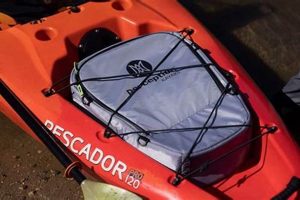
Larger compartments accommodate essential gear such as coolers, anchors, safety equipment, and personal belongings. Bungee cords and tie-down points secure larger items on deck. Well-designed gear storage maximizes usable space within the kayak and maintains a clutter-free environment. In a three-person kayak, efficiently utilizing storage space is essential for accommodating the combined gear of multiple anglers while maintaining stability and maneuverability. This can be particularly important for longer expeditions or when carrying specialized equipment like fish finders or cameras.
Effective storage solutions contribute significantly to the overall functionality and enjoyment of a three-person fishing kayak. Adequate storage capacity, combined with thoughtful compartmentalization and secure storage mechanisms, facilitates efficient organization, easy access to essential equipment, and protection from the elements. These factors collectively enhance the fishing experience by minimizing clutter, streamlining tackle management, and ensuring valuable items remain safe and dry. The strategic use of storage solutions transforms a three-person kayak into a well-equipped and organized fishing platform, maximizing both comfort and efficiency on the water.
4. Maneuverability
Maneuverability in a three-person fishing kayak significantly impacts its effectiveness and the overall angling experience. The ability to navigate tight spaces, position the kayak precisely for casting, and respond efficiently to changing water conditions are crucial aspects of successful fishing. A longer, wider hull, inherent in a three-person design, presents inherent challenges to maneuverability compared to smaller, single-person kayaks. The added weight and length increase inertia, requiring more effort to initiate turns and maintain directional control.
Consider navigating through narrow channels lined with vegetation or approaching a promising fishing spot obscured by submerged logs. A highly maneuverable kayak allows precise adjustments to position the anglers advantageously for casting without disturbing the target area. Conversely, a less maneuverable kayak might require excessive paddling or awkward repositioning, potentially spooking fish or hindering access to prime fishing locations. Similarly, in currents or windy conditions, maneuverability becomes essential for maintaining control and avoiding drifting into hazardous situations. The ability to quickly adjust the kayak’s position enhances safety and allows anglers to focus on fishing rather than constantly battling to maintain their desired location. Specialized features, such as rudder systems or skegs, can enhance maneuverability by improving tracking and responsiveness in various water conditions.
In summary, maneuverability is a critical performance characteristic that significantly influences the practicality and effectiveness of a three-person fishing kayak. While the inherent size and weight of these kayaks present challenges to maneuverability, careful design considerations and the strategic use of specialized features can mitigate these limitations. Understanding the interplay between hull design, weight distribution, and additional features like rudders allows for informed decisions during kayak selection and enhances the overall fishing experience. Prioritizing maneuverability empowers anglers to access prime fishing locations, maintain precise boat control in challenging conditions, and ultimately increase their chances of success on the water.
5. Specialized Features

Specialized features distinguish fishing kayaks from recreational models, enhancing their functionality and angler convenience. These features are particularly relevant in three-person fishing kayaks, where the combined needs of multiple anglers necessitate thoughtful design and equipment integration.
- Rod Holders
Rod holders secure fishing rods, freeing hands for paddling, baiting hooks, or landing fish. Various types exist, including flush-mounted, adjustable, and rotating holders. Multiple rod holders, strategically positioned for access by all anglers, are essential in a three-person kayak. For example, adjustable rod holders accommodate different fishing styles and rod lengths, while rotating holders allow for quick adjustments to fishing presentations. The number and placement of rod holders directly impact fishing efficiency and overall enjoyment.
- Tackle Storage
Organized tackle storage is paramount in a three-person fishing kayak, preventing tangles and ensuring efficient access to lures, hooks, and lines. Specialized compartments, trays with dividers, and waterproof boxes maintain order and protect tackle from the elements. Consider a scenario where three anglers are simultaneously changing lures. Well-designed tackle storage prevents interference and ensures each angler can quickly locate and access their preferred equipment without disrupting others. This efficiency translates to more time spent fishing and less time managing gear.
- Livewells
Livewells maintain the health and vitality of caught fish. These insulated, aerated compartments provide a temporary holding area, allowing for catch-and-release practices or keeping fish fresh for later consumption. In a three-person kayak, a larger livewell capacity might be necessary to accommodate the combined catch of multiple anglers. Proper livewell management, including regular water changes and appropriate aeration, is crucial for fish welfare and compliance with conservation regulations.
- Anchor Systems
Anchor systems maintain the kayak’s position in desired fishing locations, particularly in currents or windy conditions. Anchor trolleys allow for precise anchor placement and adjustment, optimizing fishing presentations. In a three-person kayak, a robust anchor system is essential for maintaining stability and preventing drift, allowing anglers to focus on fishing without constantly repositioning the vessel. Different anchor types suit various bottom compositions, highlighting the importance of selecting an anchor appropriate for the intended fishing environment.
These specialized features collectively enhance the functionality and practicality of three-person fishing kayaks. Rod holders, tackle storage, livewells, and anchor systems contribute to a more organized, efficient, and productive fishing experience. Strategic selection and utilization of these features allow anglers to focus on the core activity of fishing, maximizing enjoyment and success on the water. The seamless integration of these features within the kayak’s design underscores the importance of choosing a model specifically tailored for fishing, rather than adapting a recreational kayak for angling purposes. The thoughtful inclusion of these specialized features transforms a three-person kayak into a dedicated fishing platform, optimized for the combined needs of multiple anglers.
6. Durability

Durability is a critical factor in three-person fishing kayaks due to the increased stresses and potential hazards associated with carrying multiple anglers and their gear. These kayaks are subjected to higher impact forces, greater weight loads, and increased wear and tear compared to single-person models. A durable construction ensures longevity, minimizes repair costs, and contributes significantly to safety on the water. Constructing these kayaks from robust materials like high-density polyethylene (HDPE) or reinforced composites enhances their resistance to punctures, abrasions, and impacts from rocks, submerged logs, or accidental collisions. For example, consider a scenario where a fully loaded three-person kayak encounters a submerged rock or debris. A durable hull material prevents punctures and ensures the vessel’s integrity, protecting occupants and equipment from water damage or potential capsizing.
Furthermore, durable construction extends beyond the hull material. Reinforced seams, robust hardware, and high-quality fittings contribute to overall structural integrity. UV resistance is also crucial, preventing material degradation from prolonged sun exposure, which is particularly relevant for kayaks frequently used in open water. Regular maintenance, including cleaning and inspection for damage, further extends the lifespan of a three-person fishing kayak. Investing in a durable kayak minimizes downtime for repairs, reduces replacement costs, and ensures the vessel remains reliable and safe for extended periods. This reliability is particularly important for longer fishing expeditions or when venturing into remote locations where access to repair facilities is limited.
In summary, durability directly impacts the long-term value, safety, and performance of a three-person fishing kayak. Selecting a kayak constructed from robust materials and featuring high-quality components ensures its resilience against the rigors of carrying multiple anglers and gear. This durability translates into a reliable and safe vessel capable of withstanding the inevitable impacts and stresses encountered during fishing excursions. Investing in a durable kayak minimizes maintenance requirements, reduces long-term costs, and enhances the overall enjoyment and safety of shared fishing experiences. This understanding underscores the importance of prioritizing durability as a key selection criterion when choosing a three-person fishing kayak.
Frequently Asked Questions
This section addresses common inquiries regarding three-person fishing kayaks, providing concise and informative responses to facilitate informed decision-making and enhance understanding of these specialized vessels.
Question 1: What are the key advantages of a three-person fishing kayak?
Advantages include shared paddling effort, increased carrying capacity for gear and catches, and the social enjoyment of group fishing. The stability offered by a larger platform is also beneficial, particularly for less experienced anglers or those fishing in challenging conditions.
Question 2: How does one choose the right three-person fishing kayak?
Selection depends on factors such as intended fishing environment (calm lakes versus open ocean), angler experience levels, desired features (rod holders, livewells), and budget. Careful consideration of these factors ensures a suitable match for individual needs and preferences.
Question 3: What safety precautions are essential when using a three-person fishing kayak?
Essential precautions include wearing life vests, carrying safety equipment (first aid kit, signaling devices, bilge pump), checking weather conditions before departure, and informing someone of the trip plan. Adhering to established boating regulations and practicing responsible on-water conduct further enhance safety.
Question 4: How does weight capacity affect performance and stability?
Exceeding the specified weight capacity compromises stability and performance. Evenly distributing weight within the kayak optimizes balance and tracking. Understanding the combined weight of anglers, gear, and potential catches ensures safe and efficient operation within the vessel’s design limits.
Question 5: What maintenance is required for a three-person fishing kayak?
Regular maintenance includes rinsing with fresh water after each use, especially in saltwater environments, inspecting for damage, and storing the kayak properly. Periodic cleaning and application of UV protectant, if applicable, prolong the lifespan and maintain the appearance of the kayak.
Question 6: Are there specific regulations regarding the use of three-person fishing kayaks?
Regulations vary by jurisdiction and may include registration requirements, mandatory safety equipment, and specific rules regarding fishing licenses and catch limits. Consulting local authorities ensures compliance with applicable regulations and promotes responsible boating practices.
Careful consideration of these frequently asked questions provides a foundational understanding of three-person fishing kayaks, enabling informed selection, safe operation, and responsible usage. This knowledge empowers individuals to maximize the benefits of these versatile vessels and enjoy productive and safe fishing experiences.
Further exploration might include detailed reviews of specific kayak models, comparisons of different hull designs, or in-depth guides to fishing techniques from a kayak.
Conclusion
Three-person fishing kayaks offer a unique blend of capacity, stability, and specialized features, enabling shared angling experiences. Careful consideration of factors such as hull design, storage solutions, maneuverability, and specialized features like rod holders and livewells ensures appropriate selection for specific fishing needs. Durability and proper maintenance are essential for long-term value and safe operation. Understanding weight capacity limitations and adhering to safety precautions contribute to responsible and enjoyable use.
Successful utilization of a three-person fishing kayak involves understanding its capabilities and limitations. Informed decision-making regarding kayak selection, combined with responsible on-water practices, unlocks the full potential of these versatile vessels. This empowers anglers to explore diverse waterways, share memorable fishing experiences, and connect with the natural environment.