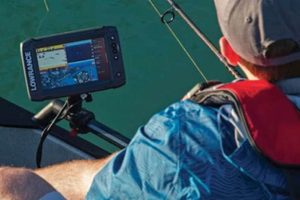
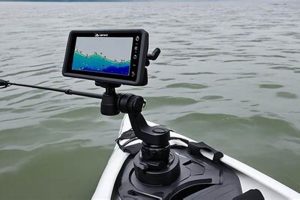
Securing a sonar device to a small watercraft involves several key considerations to ensure optimal performance and user experience. This includes selecting an appropriate mounting location based on hull design and user preference, choosing the correct mounting hardware for stability and security, and properly routing cables for power and transducer connection. For example, a transducer can be mounted using a scupper hole mount, a transom mount, or even inside the hull for certain types of sonar. Each method presents different installation requirements and potential performance trade-offs.
Effective sonar placement and installation contributes significantly to successful angling from kayaks. A correctly mounted fish finder provides clear and accurate readings of underwater structures, fish locations, and depth, enabling anglers to make informed decisions about where to cast their lines. This can drastically improve fishing success rates and overall enjoyment of the experience. Over time, mounting techniques have evolved alongside advancements in sonar technology, from basic suction cup mounts to specialized brackets designed for specific kayak models and transducer types, reflecting a growing understanding of hydrodynamics and signal clarity.
The following sections will delve into specific mounting methods, outlining the necessary tools, materials, and step-by-step procedures for each approach. Further discussion will cover cable management best practices and considerations for different transducer types, ensuring a comprehensive guide to achieving optimal sonar performance on a kayak.
Tips for Mounting a Fish Finder on a Kayak
Proper installation ensures optimal device performance and longevity. These tips offer guidance for a successful mounting process.
Tip 1: Choose the Right Mounting Location: Consider transducer type and kayak design. Transom mounts suit most kayaks, while inside-hull mounts require specific hull materials and can impact sonar sensitivity. Scupper hole mounts offer convenience but may limit transducer adjustability.
Tip 2: Select Appropriate Mounting Hardware: Use marine-grade stainless steel hardware to resist corrosion. Ensure screws and bolts are appropriately sized for the mounting surface and bracket. Consider using backing plates to distribute load and prevent stress cracking.
Tip 3: Plan Cable Routing Before Drilling: Determine the shortest, most direct route for power and transducer cables. Avoid sharp bends and potential interference with paddling or other equipment. Use cable ties or clips to secure cables and prevent entanglement.
Tip 4: Seal All Holes and Connections: Apply marine sealant to all drilled holes and around cable entries to prevent water intrusion. This protects the kayak and electronic components from damage.
Tip 5: Test the Setup Before Finalizing: Temporarily connect the fish finder and transducer to ensure proper operation and signal clarity before permanently securing all components. Adjust transducer position and settings as needed.
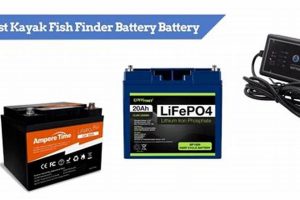
Tip 6: Consider Power Source Options: Choose a suitable battery and ensure proper connection. Calculate power consumption to determine required battery capacity for intended fishing duration.
Tip 7: Consult Manufacturer Instructions: Review specific recommendations from the fish finder and kayak manufacturers for optimal mounting procedures and compatibility information.
Following these guidelines ensures a stable, functional, and durable fish finder installation, maximizing its effectiveness and lifespan.
By adhering to these best practices, anglers can ensure a reliable and productive experience on the water. The final section will offer concluding thoughts and additional resources.
1. Location

Optimal fish finder performance depends heavily on transducer placement, influenced significantly by kayak design and intended fishing environment. Selecting the correct location ensures accurate readings and minimizes interference, contributing directly to angling success.
- Transom Mount
A common choice for kayaks, offering relatively easy installation and good performance in various water conditions. The transducer mounts directly to the stern, minimizing turbulence and providing clear sonar readings. However, it can be susceptible to impact damage and may not be suitable for all kayak designs.
- Scupper Hole Mount
Utilizing existing scupper holes simplifies installation and avoids drilling into the hull. This method offers good protection for the transducer but may limit adjustability and performance in shallow water or turbulent conditions. Some scupper hole sizes may not be compatible with all transducers.
- Inside-Hull Mount
Suitable for smooth, fiberglass hulls, this method involves bonding the transducer inside the kayak. It offers excellent protection and minimal impact on hydrodynamics but requires careful installation to avoid air bubbles and ensure proper signal transmission. Performance can be affected by hull thickness and material.
- Side-Mount
Mounting the transducer on the side of the kayak is less common but offers advantages in specific situations, such as trolling or vertical jigging. This placement can, however, increase the risk of damage and may create turbulence affecting sonar readings at higher speeds.
Careful consideration of these mounting locations, in conjunction with kayak design, transducer type, and fishing style, is crucial for maximizing fish finder effectiveness. The chosen location directly impacts sonar performance and influences overall user experience on the water.
2. Mounting Hardware

Mounting hardware plays a crucial role in the secure and stable attachment of fish finders to kayaks. Appropriate hardware selection directly impacts device longevity, performance, and overall user experience. Choosing corrosion-resistant materials, such as marine-grade stainless steel, is essential due to constant exposure to water and potentially harsh environmental conditions. Using incorrect hardware can lead to equipment failure, particularly in challenging situations like navigating rough waters or encountering unexpected impacts.
Specific hardware requirements depend on the chosen mounting location and transducer type. Transom mounts typically utilize bolts and backing plates to distribute forces and prevent damage to the kayak’s hull. Scupper hole mounts often employ specialized brackets and inserts designed to fit securely within the scupper hole, ensuring stability and preventing leaks. Inside-hull mounts require specific adhesives and bonding agents compatible with both the transducer and hull material. For instance, using stainless steel screws with nylon locking nuts on a transom mount provides robust fastening and resistance to vibration, while employing a specialized scupper mount bracket ensures a secure fit and minimizes transducer movement. Selecting the correct hardware for each scenario is paramount for a successful and long-lasting installation.
Understanding the relationship between mounting hardware and the overall fish finder installation process is essential for ensuring optimal performance and preventing equipment damage. Correct hardware selection, coupled with proper installation techniques, contributes significantly to a stable and reliable setup, allowing anglers to focus on their fishing experience without concerns about equipment failure. Neglecting this aspect can compromise the integrity of the installation, leading to potential equipment loss, reduced sonar effectiveness, and a compromised user experience. Therefore, careful consideration of mounting hardware choices is crucial for a successful and enjoyable kayaking and fishing experience.
3. Cable Management

Effective cable management is a critical aspect of fish finder installation on a kayak, impacting both functionality and aesthetics. Properly routed and secured cables minimize interference with paddling, reduce the risk of damage, and contribute to a clean, organized setup. Conversely, poorly managed cables can lead to tangles, snags, and potential damage to the fish finder system, hindering performance and creating frustration on the water.
- Routing
Strategic cable routing minimizes cable length and avoids areas prone to interference or damage. Running cables along the inside of the hull, through existing channels, or within protective tubing safeguards them from paddles, fishing gear, and environmental factors. For example, routing the transducer cable through a scupper hole and then along the inside of the hull protects it from abrasion and entanglement. Careful planning of cable pathways ensures efficient operation and prolongs the lifespan of the fish finder system.
- Securing
Securely fastening cables prevents movement and reduces strain on connections. Utilizing cable ties, clips, or adhesive mounts keeps cables organized and minimizes the risk of snags or tangles. Securing the power cable to the kayak prevents it from dangling and potentially interfering with paddling or becoming submerged. Proper securing methods ensure a tidy installation and prevent accidental disconnections, contributing to a safer and more enjoyable kayaking experience.
- Protection
Protecting cables from abrasion, UV exposure, and water intrusion is crucial for maintaining their integrity. Using appropriate cable covers or conduits shields them from environmental factors, extending their lifespan. For example, running cables through flexible conduit provides protection from sharp edges and abrasion. Applying marine sealant around cable entry points prevents water ingress and protects connections from corrosion. These preventative measures ensure long-term reliability and minimize the need for repairs or replacements.
- Connections
Ensuring waterproof and secure connections is vital for preventing corrosion and maintaining signal integrity. Using marine-grade connectors and applying dielectric grease protects connections from moisture and ensures reliable operation. Properly sealing all connections safeguards the fish finder system from water damage and maintains optimal performance. For example, using waterproof connectors for the power cable and transducer cable prevents water intrusion and ensures reliable signal transmission, contributing to the longevity and consistent performance of the device.
Careful attention to cable management contributes significantly to a successful and enjoyable fish finder installation on a kayak. A well-organized and protected cable system ensures optimal device performance, minimizes the risk of damage, and enhances the overall user experience on the water. Neglecting this crucial aspect can compromise the functionality and longevity of the fish finder system, potentially leading to equipment failure and disrupting valuable fishing time. Therefore, prioritizing proper cable management is essential for maximizing the effectiveness and enjoyment of using a fish finder on a kayak.
4. Power Source
Power source selection and integration are integral to mounting a fish finder on a kayak. The chosen power source directly impacts operational duration, device performance, and overall system weight and balance. Careful consideration of power requirements, battery type, and mounting location ensures reliable operation and optimal functionality of the fish finder unit. Selecting an insufficient power source can lead to premature battery depletion, interrupting fishing sessions and potentially compromising navigational capabilities. For example, a small, low-capacity battery might be suitable for short trips with a basic fish finder, but a larger, deep-cycle battery is necessary for extended use or powering more sophisticated sonar units. The power source must also be compatible with the fish finder’s voltage and amperage requirements to prevent damage and ensure reliable operation.
Several battery types are suitable for powering kayak fish finders, each offering different performance characteristics and trade-offs. Lead-acid batteries offer a cost-effective solution but are heavier and have a shorter lifespan compared to lithium-ion batteries. Lithium-ion batteries provide higher energy density, lighter weight, and longer lifespans, but come at a premium cost. Sealed batteries are essential for marine environments to prevent leaks and corrosion. The chosen battery’s capacity should align with the fish finder’s power consumption and intended usage duration. For instance, a 12V 7Ah sealed lead-acid battery might suffice for a few hours of use with a basic fish finder, whereas a 12V 10Ah lithium-ion battery would provide extended runtime for a more power-demanding unit. Mounting location considerations for the battery include accessibility, weight distribution, and protection from the elements. Securely mounting the battery prevents shifting during paddling and protects it from accidental damage.
Effective power source integration involves proper wiring, fusing, and connection to the fish finder. Using marine-grade wiring and connectors ensures reliable conductivity and resistance to corrosion. Incorporating an inline fuse protects the fish finder and battery from overcurrent situations. Connecting the power source correctly, observing proper polarity, is crucial to prevent damage to the fish finder unit. A poorly integrated power source can lead to intermittent operation, system failures, and potentially hazardous situations. Therefore, meticulous attention to power source selection and integration is essential for a successful and reliable fish finder installation on a kayak, ensuring optimal performance and enhancing the overall fishing experience.
5. Transducer Placement

Transducer placement is paramount for optimal fish finder performance on a kayak. Correct placement ensures accurate depth readings, clear identification of underwater structures, and precise fish location detection. Improper placement can result in distorted readings, reduced sensitivity, and interference from turbulence or aeration. Understanding the nuances of transducer placement is essential for maximizing the effectiveness of a kayak fishing setup.
- Location Selection
Choosing the right location on the kayak hull significantly influences transducer performance. Factors such as hull shape, kayak design, and intended fishing style dictate optimal placement. Common locations include the transom, inside the hull (for specific hull materials), and on the side of the kayak. For example, a transom mount is often preferred for its ease of installation and generally good performance, while an inside-hull mount offers protection and minimizes drag but requires specific hull characteristics. Selecting an appropriate location minimizes interference and maximizes sonar signal clarity.
- Orientation and Angle
Proper transducer orientation and angle are crucial for accurate readings. The transducer should be level and parallel to the waterline to avoid distortion and ensure consistent performance. Slight adjustments might be necessary depending on the kayak’s hull design and the specific transducer model. For instance, some transducers require a slight downward tilt to optimize signal transmission and reception. Incorrect orientation can lead to inaccurate depth readings and difficulty identifying underwater features.
- Turbulence and Interference
Minimizing turbulence and interference around the transducer is essential for clear sonar readings. Turbulence created by the kayak’s movement through the water, as well as aeration from hull design or paddling, can disrupt sonar signals and create inaccurate readings. Positioning the transducer away from areas of high turbulence, such as directly behind the paddle strokes or near hull protrusions, improves data accuracy. For example, mounting the transducer on a skeg or a dedicated transducer arm can help isolate it from turbulence and enhance signal clarity.
- Depth and Water Conditions
Transducer placement considerations vary depending on the target fishing depth and prevalent water conditions. In shallow water, a transducer mounted too deep might pick up bottom interference, while in deeper water, a shallow-mounted transducer might not provide adequate depth penetration. Similarly, rough water conditions might require a more protected transducer location to prevent damage and maintain signal stability. Adapting transducer placement to specific fishing environments optimizes performance and ensures accurate readings regardless of the prevailing conditions.
Careful consideration of these transducer placement factors ensures accurate readings, clear underwater imaging, and improved fish finding capabilities. Proper transducer placement, in conjunction with correct mounting hardware and effective cable management, contributes significantly to a successful kayak fishing experience. A well-placed transducer maximizes the effectiveness of the fish finder, providing anglers with valuable information and enhancing their chances of success on the water.
Frequently Asked Questions
This section addresses common queries regarding fish finder installations on kayaks, providing concise and informative responses to assist with successful mounting and operation.
Question 1: What type of transducer is best suited for kayak fishing?
Transducer choice depends on fishing style and environment. Transom-mount transducers are generally suitable for various kayak types and fishing conditions. In-hull transducers offer an alternative for smooth-hulled kayaks, minimizing drag, while side-mounted transducers can be beneficial for specific techniques like trolling.
Question 2: Can a fish finder transducer be mounted on any kayak?
While most kayaks can accommodate a transducer, certain limitations exist. Hull material, shape, and design influence suitable mounting locations. Kayaks with complex hull shapes might require specialized mounting solutions. Consulting the kayak manufacturer’s guidelines is recommended.
Question 3: Is it necessary to use marine-grade hardware for mounting?
Marine-grade stainless steel hardware is strongly recommended due to its corrosion resistance in saltwater environments. Non-marine-grade hardware can corrode quickly, compromising the installation’s integrity and potentially damaging the kayak.
Question 4: How does one determine the optimal mounting location for a transducer?
Optimal transducer placement depends on minimizing turbulence and interference. Locations near the stern, away from the paddle strokes, and protected from potential impacts are generally preferred. Manufacturer recommendations and experimentation can help determine the ideal location for specific kayak and transducer combinations.
Question 5: What type of battery is recommended for powering a kayak fish finder?
Sealed lead-acid or lithium-ion batteries are commonly used. Lithium-ion batteries offer advantages in terms of weight and lifespan but are more expensive. Battery capacity should be chosen based on the fish finder’s power consumption and intended fishing trip duration.
Question 6: How can cable clutter be minimized during installation?
Careful cable routing and securing are essential. Utilizing existing channels within the kayak, cable ties, and adhesive clips helps manage cables effectively. Planning cable routes before installation minimizes clutter and reduces the risk of tangles or interference.
Addressing these frequently asked questions provides a foundation for a successful fish finder installation on a kayak. Proper planning and execution ensure optimal performance, minimize potential issues, and enhance the overall fishing experience.
The following section will offer concluding remarks and additional resources for further exploration.
Conclusion
Successfully mounting a fish finder on a kayak requires careful consideration of several key factors. Appropriate transducer selection and placement, coupled with robust mounting hardware and meticulous cable management, ensure optimal sonar performance and system longevity. Power source selection and integration further influence operational effectiveness and user experience. Addressing these elements methodically yields a reliable and efficient fish finder setup, enhancing angling opportunities from a kayak.
Strategic planning and execution of a well-integrated fish finder system contribute significantly to successful kayak angling. Understanding the interplay between these components empowers informed decision-making, leading to a more productive and enjoyable on-the-water experience. Continuous exploration of evolving technologies and refined mounting techniques further enhances the pursuit of angling success from a kayak.