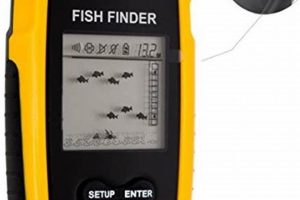
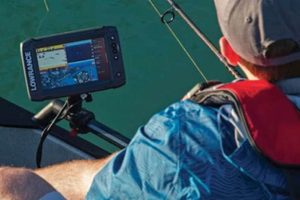
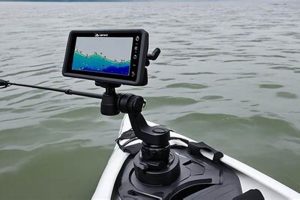
A portable power source is essential for operating electronic fish finders on kayaks. These devices require a reliable and consistent electrical supply to function correctly, displaying underwater terrain, fish locations, and other crucial data. Typically, 12-volt deep-cycle marine batteries are preferred for their ability to withstand the rigors of outdoor use and provide sustained power over extended periods. Smaller, lighter lithium-ion batteries are also gaining popularity due to their enhanced energy density and longer lifespans.
Reliable power delivery is crucial for a successful fishing expedition using a kayak. A dead power source can abruptly end a trip, leaving an angler without vital navigational and fish-finding capabilities. Choosing the right power source ensures continuous operation of the fish finder, maximizing fishing time and increasing the chances of a successful catch. Historically, anglers relied on less convenient methods, but modern technology offers compact, efficient power solutions that significantly enhance the kayak fishing experience.
Factors to consider when selecting a suitable power source include the fish finder’s power requirements, the anticipated duration of fishing trips, and the overall weight and size constraints of the kayak. This article will explore these considerations in greater detail, covering topics such as battery types, capacity calculations, charging methods, safety precautions, and mounting solutions.
Power Source Tips for Kayak Fishing
Optimizing power delivery for kayak fish finders ensures uninterrupted operation and a more productive fishing experience. The following tips offer guidance on selecting and maintaining a suitable power supply.
Tip 1: Match Battery Capacity to Fish Finder Requirements: Carefully examine the fish finder’s power consumption specifications. Choose a battery with sufficient amp-hour (Ah) rating to power the device for the anticipated duration of fishing trips, plus a safety margin.
Tip 2: Consider Deep-Cycle Marine Batteries: Deep-cycle marine batteries are designed to withstand repeated discharge and recharge cycles, making them well-suited for powering fish finders and other marine electronics.
Tip 3: Explore Lithium-Ion Alternatives: Lithium-ion batteries offer higher energy density and longer lifespans compared to traditional lead-acid batteries, albeit at a higher initial cost.
Tip 4: Employ a Battery Box: A dedicated battery box provides protection from the elements and secure mounting within the kayak, preventing accidental spills and damage.
Tip 5: Implement Proper Charging Practices: Use a compatible charger designed for the specific battery chemistry and follow manufacturer recommendations to ensure safe and efficient charging.
Tip 6: Monitor Battery Level: Regularly check the battery’s state of charge using a voltmeter or built-in indicator to avoid unexpected power loss during fishing trips.
Tip 7: Disconnect When Not in Use: Disconnecting the fish finder from the battery when not in use helps prevent parasitic drain and prolongs battery life.
Implementing these practices ensures a reliable power supply, enabling anglers to focus on fishing without concerns about power failure. Proper power management contributes to a safer and more enjoyable kayak fishing experience.
By understanding the importance of a reliable power source and following these tips, anglers can significantly improve their kayak fishing experience. A well-chosen and properly maintained power source contributes to successful and enjoyable fishing trips.
1. Type

Battery type significantly influences the performance and suitability of a power source for kayak fish finders. Several battery chemistries exist, each possessing distinct characteristics relevant to this application. Lead-acid batteries, particularly deep-cycle marine variants, are a common choice due to their robust construction, relatively low cost, and ability to deliver consistent power. However, they tend to be heavier and have shorter lifespans compared to other options. Absorbent Glass Mat (AGM) batteries, a type of lead-acid battery, offer improved spill resistance and durability, making them well-suited for the marine environment. Lithium-ion batteries, while more expensive, provide significantly higher energy density, lighter weight, and longer lifespans. This translates to longer runtimes, reduced kayak payload, and fewer battery replacements over time. For instance, a lithium-ion battery with a comparable amp-hour rating to a lead-acid battery can be substantially lighter and smaller, improving kayak maneuverability and storage capacity. Choosing the correct battery type necessitates careful consideration of factors such as budget, desired runtime, and weight sensitivity.
Different battery types also present varying charging requirements and safety considerations. Lead-acid batteries require specific charging profiles to prevent damage and ensure optimal lifespan. Lithium-ion batteries, while generally requiring less maintenance, necessitate specialized charging equipment and safety precautions to mitigate potential hazards. For example, overcharging a lithium-ion battery can lead to thermal runaway and potential fire hazards, highlighting the importance of using compatible chargers and monitoring the charging process. Understanding these nuances ensures safe and efficient battery operation, maximizing performance and longevity. Selecting a battery type compatible with existing charging infrastructure or investing in appropriate charging equipment further simplifies power management and enhances safety.
Selecting the appropriate battery type is fundamental to a reliable and efficient power solution for kayak fish finders. Careful consideration of the specific characteristics of each battery chemistry, including performance, lifespan, weight, and safety considerations, ensures a well-informed decision. Balancing these factors with individual needs and budget constraints ultimately determines the most suitable battery type for a given kayak fishing setup. This foundational choice influences the overall fishing experience, impacting everything from kayak maneuverability to the reliability of essential electronics.
2. Capacity (Amp-hours)

Amp-hour (Ah) rating represents a crucial parameter when selecting a power source for kayak fish finders. This metric quantifies the amount of electrical charge a battery can deliver over a specific period. Higher Ah ratings indicate a greater capacity to store and deliver energy, directly translating to longer operational durations for connected devices. A fish finder’s power consumption, expressed in amps, coupled with the desired runtime, dictates the required Ah rating. For instance, a fish finder drawing 1 amp and requiring 8 hours of operation necessitates a battery with a minimum 8 Ah rating. However, incorporating a safety margin is recommended to account for unforeseen circumstances and prevent premature battery depletion, potentially doubling the required capacity to 16 Ah in this example. Underestimating capacity requirements can lead to curtailed fishing trips and loss of essential navigational and fish-finding capabilities.
Practical application necessitates careful consideration of anticipated fishing durations and fish finder power demands. Longer fishing trips or the use of multiple electronic devices onboard necessitate higher capacity batteries. Conversely, shorter trips with minimal power requirements allow for smaller, lighter batteries, optimizing kayak weight and maneuverability. Calculating the cumulative power draw of all connected devices is essential. For example, adding a bilge pump or additional lights to the kayak’s electrical system necessitates a battery with sufficient capacity to power all devices concurrently without premature depletion. Furthermore, environmental factors, such as extreme temperatures, can influence battery performance and should be factored into capacity calculations. Cold temperatures can reduce battery capacity, requiring a larger Ah rating to maintain the desired runtime.
Understanding the relationship between amp-hour rating, fish finder power consumption, and desired runtime is fundamental to selecting an appropriate power source for kayak fishing. Accurate capacity calculations ensure uninterrupted operation of essential electronics, maximizing fishing time and enhancing safety on the water. Ignoring this critical aspect can lead to power failures, potentially compromising navigation and safety during fishing expeditions. Proper capacity selection ensures reliable power delivery, allowing anglers to focus on the task at hand without concerns about power limitations.
3. Lifespan
Battery lifespan significantly impacts the long-term cost and convenience of operating a fish finder on a kayak. A longer lifespan translates to fewer replacements, reducing expenses and the environmental impact associated with battery disposal. Understanding the factors influencing battery lifespan enables informed decisions, maximizing return on investment and minimizing interruptions to fishing excursions.
- Battery Chemistry:
Different battery chemistries exhibit varying lifespans. Lithium-ion batteries generally offer a longer lifespan compared to lead-acid alternatives, often exceeding several hundred charge cycles. Lead-acid batteries, while typically less expensive, have shorter lifespans, often requiring replacement sooner. This difference in lifespan directly influences long-term costs and the frequency of battery replacements.
- Charging Practices:
Proper charging practices play a crucial role in preserving battery health and maximizing lifespan. Using compatible chargers and adhering to manufacturer recommendations are essential. Overcharging or undercharging can significantly degrade battery performance and shorten its lifespan. Employing appropriate charging techniques ensures optimal battery health and longevity.
- Depth of Discharge:
Deeply discharging batteries, particularly lead-acid types, can negatively impact their lifespan. Avoiding complete discharge and recharging promptly after each use helps preserve battery health and prolong its useful life. Monitoring battery levels and avoiding excessive discharge contributes to maximizing lifespan.
- Environmental Factors:
Environmental conditions, such as extreme temperatures, can influence battery performance and lifespan. Storing batteries in a cool, dry environment, away from direct sunlight, helps maintain their integrity and prolong their operational life. Protecting batteries from harsh environmental conditions contributes to maximizing their lifespan.
Careful consideration of these factors, coupled with informed battery selection and proper maintenance, ensures optimal lifespan and performance. A longer-lasting battery minimizes disruptions to fishing trips caused by power failures, reduces long-term costs, and contributes to environmental responsibility. Selecting a battery with a suitable lifespan tailored to individual fishing habits and environmental conditions enhances the overall kayak fishing experience.
4. Weight/Size
Weight and size are critical considerations when selecting a battery for a kayak fish finder. Kayaks, by nature, have limited carrying capacity and weight distribution significantly affects stability and maneuverability. A heavier battery increases the overall weight of the kayak, potentially impacting its performance, especially in challenging conditions. Bulkier batteries also consume valuable storage space, limiting room for other essential equipment. The ideal battery balances sufficient power capacity with minimal weight and size. For instance, a compact lithium-ion battery, despite a higher initial cost, might be preferable to a larger, heavier lead-acid battery due to its superior weight-to-power ratio, enhancing kayak performance and leaving more room for tackle and other gear.
The trade-off between power capacity, weight, and size necessitates careful evaluation of individual needs and fishing style. Longer fishing trips require higher capacity batteries, potentially increasing weight and size. Shorter trips, however, allow for smaller, lighter options. Kayak dimensions also play a role; smaller kayaks have more stringent weight and size restrictions. Consider the impact of battery placement on kayak balance. An uneven weight distribution can compromise stability, especially in rough waters. Distributing weight evenly throughout the kayak enhances performance and safety. Technological advancements continue to yield smaller, lighter batteries with higher energy densities, offering increasingly viable options for kayak anglers.
Optimizing battery weight and size directly enhances kayak fishing experiences. A lighter, more compact battery improves maneuverability, facilitates easier transport, and maximizes available storage space. Careful consideration of these factors, in conjunction with power requirements and budget constraints, ensures the selection of a battery that complements the kayak fishing experience without compromising performance or safety. This balance contributes to a more enjoyable and efficient time on the water.
5. Mounting/Safety

Secure mounting and adherence to safety protocols are paramount when integrating a battery into a kayak fish finder setup. Improper mounting can lead to battery movement within the kayak, potentially causing damage to the battery, the kayak itself, or even injury to the angler. A shifting battery could damage wiring, leading to short circuits or power failures. In extreme cases, a loose battery could become a projectile in the event of a capsize, posing a significant safety risk. Secure mounting, typically within a dedicated battery box, mitigates these risks. A properly secured battery remains stable, protecting it from impacts and preventing unintended movement that could compromise the kayak’s stability.
Beyond secure mounting, safety considerations extend to battery ventilation and protection from the elements. Battery boxes often provide ventilation to prevent the buildup of potentially explosive gases, particularly with lead-acid batteries. Protection from water ingress is crucial, especially in a marine environment. A sealed battery box safeguards the battery from saltwater exposure, which can cause corrosion and premature failure. Further safety measures include using appropriately sized fuses and circuit breakers to protect the electrical system from overloads and short circuits. Regular inspection of wiring and connections ensures the integrity of the electrical system, minimizing risks associated with electrical faults. Disconnecting the battery when not in use further reduces the risk of accidental discharge or short circuits.
Proper mounting and adherence to safety guidelines are indispensable for a reliable and safe kayak fishing experience. These practices protect both the angler and the equipment, ensuring uninterrupted operation of the fish finder and minimizing potential hazards. Neglecting these aspects can lead to equipment damage, power failures, or even injury, significantly impacting the enjoyment and safety of kayak fishing. Prioritizing mounting and safety ensures a secure and reliable power system, allowing anglers to focus on fishing with peace of mind.
Frequently Asked Questions
This section addresses common inquiries regarding power sources for kayak fish finders.
Question 1: What type of battery is best suited for powering a fish finder on a kayak?
Deep-cycle marine batteries and lithium-ion batteries are commonly preferred. Deep-cycle marine batteries offer a balance of cost and performance, while lithium-ion batteries provide superior energy density and lifespan, albeit at a higher price point. The optimal choice depends on individual needs and budget.
Question 2: How is the necessary battery capacity determined for a kayak fish finder?
Battery capacity is determined by the fish finder’s power consumption (amps) and the desired runtime (hours). Multiplying these two values provides the minimum amp-hour (Ah) rating. Incorporating a safety margin, typically by doubling the calculated Ah rating, is recommended.
Question 3: What safety precautions should be observed when using batteries on a kayak?
Secure battery mounting within a dedicated battery box is crucial. Proper ventilation, protection from water ingress, and the use of appropriate fuses and circuit breakers are essential safety measures. Disconnecting the battery when not in use is also recommended.
Question 4: How does one maintain a battery for a kayak fish finder?
Proper charging practices, using a compatible charger and adhering to manufacturer guidelines, are essential for maintaining battery health. Avoiding deep discharges and storing the battery in a cool, dry environment prolong its lifespan.
Question 5: What are the advantages of using a lithium-ion battery for a kayak fish finder?
Lithium-ion batteries offer advantages such as higher energy density (longer runtime), lighter weight, and longer lifespan compared to traditional lead-acid batteries. These advantages enhance kayak performance and reduce long-term costs, although the initial investment is typically higher.
Question 6: Where should a battery be mounted on a kayak for a fish finder?
The battery should be securely mounted in a dedicated battery box, ideally positioned to maintain the kayak’s balance and stability. Placement considerations include accessibility for charging and minimizing interference with paddling and fishing activities. Weight distribution should be carefully considered to maintain kayak stability.
Understanding these key aspects of battery selection, maintenance, and safety ensures a reliable power supply for kayak fish finders, enhancing the overall fishing experience.
This information provides a foundation for selecting and maintaining an appropriate power source for kayak fish finders. Consulting with experienced kayak anglers or marine electronics specialists can provide further personalized guidance.
Conclusion
Selecting an appropriate power source for kayak fish finders requires careful consideration of various factors, including battery type, capacity, lifespan, weight, size, mounting, and safety. Deep-cycle marine and lithium-ion batteries present viable options, each with distinct advantages and disadvantages. Balancing power requirements, budget constraints, and kayak limitations is essential. Proper capacity calculations ensure sufficient power for desired fishing durations. Adherence to safety protocols and proper maintenance practices maximizes battery lifespan and ensures safe operation. Understanding these elements is fundamental to a reliable and enjoyable kayak fishing experience.
Reliable power delivery is critical for successful kayak fishing expeditions. Informed decisions regarding power sources contribute significantly to the efficiency, safety, and enjoyment of the sport. Technological advancements continue to refine battery technology, offering increasingly efficient and convenient power solutions for kayak anglers. Prioritizing power source selection empowers anglers to maximize their time on the water, focusing on the pursuit of fish rather than power-related concerns.