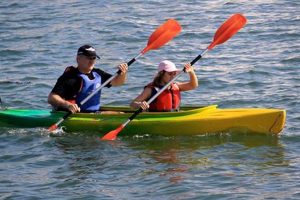
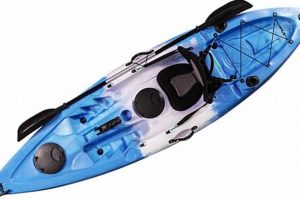
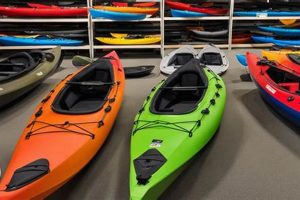
Small, human-powered vessels designed for use on lakes, rivers, and oceans, these craft typically feature a closed deck and a cockpit where the paddler sits. They are propelled using a double-bladed paddle and offer a unique blend of stability and maneuverability, suitable for recreational paddling, fishing, and even more adventurous pursuits like whitewater kayaking or ocean touring.
These vessels provide a low-impact way to experience nature, promoting physical activity and offering a close connection to the water. Their compact size allows access to shallow waters and narrow waterways often inaccessible to larger boats. Historically, similar watercraft have been used for centuries by indigenous cultures for transportation, hunting, and fishing, demonstrating their enduring utility and adaptability. Modern designs incorporate advanced materials and construction techniques, resulting in durable, lightweight, and efficient craft.
This exploration will delve further into various aspects of these versatile watercraft, covering topics such as different types and their intended uses, essential safety equipment, and basic paddling techniques.
Tips for Small Vessel Paddling
Safe and enjoyable experiences on the water require careful planning and adherence to essential safety practices. The following tips offer guidance for paddlers of all skill levels.
Tip 1: Dress for the Water Temperature, Not the Air Temperature. Cold water immersion can be life-threatening. Appropriate attire, such as a wetsuit or drysuit, is crucial in colder conditions.
Tip 2: Always Wear a Personal Flotation Device (PFD). A PFD is essential safety equipment and should be worn at all times while on the water, regardless of swimming ability.
Tip 3: Check Weather Conditions Before Heading Out. Avoid paddling in strong winds, storms, or fog. Be aware of changing weather patterns and have a plan for seeking shelter if necessary.
Tip 4: Inform Someone of Your Paddling Plan. Share your intended route, estimated return time, and contact information with a friend or family member.
Tip 5: Carry Essential Safety Gear. This includes a whistle, signaling device, first-aid kit, and bilge pump or sponge.
Tip 6: Learn Basic Paddling Techniques and Self-Rescue Skills. Proper paddling technique improves efficiency and reduces the risk of injury. Knowing how to self-rescue is crucial in case of capsizing.
Tip 7: Be Aware of Water Traffic and Navigation Rules. Understand right-of-way rules and maintain a safe distance from other vessels. Be visible to motorized craft.
By following these safety guidelines, paddlers can significantly enhance their enjoyment and mitigate risks associated with on-water activities. Preparation and awareness are key to a safe and successful paddling experience.
This information provides a foundation for safe paddling practices. Further research and education are encouraged to enhance skills and knowledge.
1. Types

Categorizing these vessels by type clarifies their intended use and informs appropriate selection based on individual needs and paddling environment. Understanding the nuances of each type ensures a safe and enjoyable experience on the water.
- Recreational Kayaks
Designed for calm waters like lakes and slow-moving rivers, these kayaks prioritize stability and ease of use. They are typically shorter and wider than other types, making them ideal for beginners. Common features include wider cockpits for easy entry and exit, and flat bottoms for stability. Examples include sit-on-top and sit-inside recreational models.
- Touring Kayaks
Built for longer journeys and open water conditions, these kayaks emphasize efficiency and tracking. They are longer and narrower than recreational kayaks, with a V-shaped hull for improved speed and performance in rougher waters. Features often include ample storage space for gear and provisions. Sea kayaks fall into this category.
- Whitewater Kayaks
Specialized for navigating rivers and rapids, these kayaks are designed for maneuverability and durability. They are shorter and more rockered (curved upward at the bow and stern) than other types, allowing for quick turns and navigation through challenging water features. Examples include playboats, river runners, and creek boats.
- Inflatable Kayaks
Offering portability and convenience, these kayaks are constructed from durable materials like PVC or Hypalon. They can be easily deflated and packed for transport and storage. While generally less durable than rigid kayaks, advancements in materials and construction have improved their performance and suitability for various water conditions. They range from basic recreational models to more specialized designs for touring or fishing.
Selecting the appropriate kayak type is paramount for safety and enjoyment. Matching the vessel’s design to the intended environment and paddling style ensures optimal performance and minimizes risk. Further research into specific models within each category is recommended based on individual needs and experience levels.
2. Materials

Material selection significantly influences a kayak’s performance, durability, and cost. Understanding the properties of common kayak construction materials allows informed decisions aligned with individual needs and paddling environments. The following list examines various materials and their implications.
- Polyethylene (Plastic)
The most common material for recreational and touring kayaks, polyethylene offers durability, impact resistance, and affordability. Rotomolded polyethylene creates a single, seamless hull, enhancing strength. However, polyethylene kayaks are heavier than composite options and more susceptible to UV degradation over time. Regular cleaning and storage out of direct sunlight mitigate UV damage.
- Fiberglass
Utilized in high-performance touring and sea kayaks, fiberglass offers a superior strength-to-weight ratio compared to polyethylene. It allows for precise shaping, resulting in efficient hull designs that track well and glide smoothly through the water. Fiberglass requires more meticulous care and is susceptible to scratches and chips, necessitating occasional repairs. Gelcoat, a protective outer layer, enhances durability and aesthetics.
- Composite Materials (Carbon Fiber, Kevlar)
Employed in lightweight, high-performance kayaks, composite materials like carbon fiber and Kevlar provide exceptional strength and stiffness at a minimal weight. These materials excel in racing and performance-oriented paddling but come at a premium cost. Composite kayaks require careful handling and specialized repair techniques due to their complex construction.
- Inflatable Materials (PVC, Hypalon, Nitrylon)
Inflatable kayaks utilize durable fabrics coated with materials like PVC, Hypalon, or Nitrylon. PVC offers affordability but is less resistant to abrasion and UV damage than Hypalon or Nitrylon. Hypalon and Nitrylon provide superior durability and resistance to punctures and UV degradation, but increase cost. Proper inflation and careful handling are crucial for inflatable kayak performance and longevity.
Careful consideration of material properties, intended use, and budget constraints informs optimal material selection. Balancing durability, performance, and cost ensures a kayak suited to individual paddling needs and desired experiences on the water.
3. Safety Gear
Safety gear stands as a critical component of responsible kayak use, directly impacting paddler well-being and mitigating potential risks inherent to the aquatic environment. The relationship between safety gear and kayaks represents a crucial link in accident prevention and emergency preparedness. A properly outfitted kayak, coupled with a paddler’s understanding of safety equipment usage, significantly enhances on-water safety. For example, a readily accessible bilge pump allows for rapid removal of water from a swamped kayak, while a well-maintained first-aid kit aids in addressing minor injuries. Understanding the function and application of each piece of safety gear is as crucial as having the gear itself.
Practical applications of this understanding translate directly to improved safety outcomes. Consider a scenario where a kayaker capsizes in cold water. A properly fitted and worn personal flotation device (PFD) provides immediate buoyancy, preventing drowning. A whistle, attached to the PFD, enables the paddler to signal for assistance. Carrying a waterproof VHF radio allows direct communication with rescue services, providing precise location information and expediting rescue efforts. These examples demonstrate the tangible benefits of carrying and understanding how to use essential safety equipment.
In summary, the relationship between safety gear and kayaks is fundamental to safe paddling practices. Appropriate gear selection, combined with practical knowledge of its application, minimizes risks and empowers paddlers to respond effectively to unforeseen circumstances. Challenges remain in ensuring consistent adherence to safety recommendations and promoting ongoing education regarding best practices. Addressing these challenges through community outreach, accessible training resources, and continued emphasis on safety awareness strengthens the connection between kayaks and safety gear, ultimately contributing to a safer and more enjoyable paddling experience for all.
4. Paddling Techniques

Effective paddling techniques are essential for efficient propulsion, maneuverability, and overall enjoyment of kayaking. Proper technique minimizes fatigue, maximizes speed and control, and reduces the risk of injury. The connection between paddling techniques and kayaks is fundamental to a successful and rewarding on-water experience. Understanding and applying these techniques allows paddlers to navigate various water conditions with confidence and control.
- Forward Stroke
The foundation of kayak propulsion, the forward stroke involves a combination of body rotation, core engagement, and blade placement. The paddle enters the water near the paddler’s feet and is pulled back along the side of the kayak, exiting near the hip. Proper body rotation and core engagement maximize power and efficiency, reducing strain on the arms and shoulders. This stroke propels the kayak forward smoothly and efficiently.
- Reverse Stroke
Used for stopping and maneuvering backward, the reverse stroke mirrors the forward stroke. The paddle enters the water near the hip and is pushed forward along the side of the kayak, exiting near the feet. This stroke allows for precise control when backing away from obstacles or reversing direction.
- Sweep Stroke
Essential for turning the kayak, the sweep stroke involves a wide arc motion with the paddle. A forward sweep stroke turns the kayak away from the paddle side, while a reverse sweep stroke turns the kayak toward the paddle side. Proper blade angle and body rotation are crucial for effective turning.
- Draw Stroke
Used for moving the kayak sideways, the draw stroke involves pulling the paddle towards the kayak. The blade is placed vertically in the water and pulled towards the hull, drawing the kayak sideways. This technique is useful for maneuvering in tight spaces or approaching a dock or another kayak.
Mastering these fundamental paddling techniques enhances kayak control, efficiency, and overall performance. These techniques form the basis for more advanced maneuvers and contribute significantly to a safe and enjoyable kayaking experience. Continued practice and refinement of these skills allow paddlers to navigate diverse water conditions and maximize their time on the water.

Navigation plays a crucial role in safe and successful kayak journeys. Understanding navigational principles, utilizing appropriate tools, and adapting to varying water conditions are essential for paddlers. Effective navigation enhances safety, allows for efficient route planning, and contributes to a more enjoyable experience on the water. This section explores key facets of navigation as they pertain to kayaks.
- Chart Reading and Map Interpretation
Understanding nautical charts and topographic maps is fundamental for planning kayak routes and navigating unfamiliar waterways. Charts provide information on water depths, hazards, navigation aids, and shoreline features. Interpreting these elements allows paddlers to plan safe and efficient routes, avoiding shallow areas, obstacles, and restricted zones. For example, recognizing symbols for rocks, reefs, and currents allows paddlers to navigate safely around these hazards.
- Compass Use and Bearing Taking
A compass provides a reliable directional reference, particularly in conditions of limited visibility or open water. Taking bearings to landmarks or known points allows paddlers to maintain their course and navigate accurately. Understanding magnetic declination and adjusting compass readings accordingly ensures accurate navigation. In foggy conditions or when paddling offshore, compass use becomes critical for maintaining orientation and reaching the intended destination.
- GPS and Electronic Navigation
GPS devices and electronic charts offer powerful navigation tools, providing precise location information, tracking progress, and displaying routes. These technologies simplify navigation, especially in complex waterways or challenging conditions. Integrating GPS data with nautical charts enhances situational awareness and allows paddlers to make informed decisions about route adjustments. However, reliance on electronic devices should not replace fundamental map and compass skills, as electronic systems can fail.
- Tidal Currents and Water Flow
Understanding the influence of tides and currents is critical for safe and efficient kayak navigation, especially in coastal areas and tidal rivers. Paddling with the current conserves energy and increases speed, while paddling against the current requires greater effort. Consulting tide tables and current charts before embarking on a trip allows paddlers to plan their routes strategically and avoid challenging tidal conditions. Ignoring tidal influences can lead to significant delays, increased exertion, and potentially hazardous situations.
These navigational facets are interconnected and contribute to a comprehensive understanding of safe and efficient kayak travel. Integrating these elements with practical on-water experience empowers paddlers to navigate confidently, explore new waterways, and enjoy the full potential of kayaking while minimizing risks.
6. Maintenance
Regular maintenance is essential for preserving the performance, longevity, and safety of kayaks. Neglecting routine care can lead to costly repairs, diminished performance, and potentially hazardous situations on the water. Proper maintenance practices safeguard the investment in a kayak and ensure its continued enjoyment for years to come. The following facets highlight key areas of kayak maintenance.
- Cleaning
Regular cleaning removes dirt, grime, salt deposits, and other contaminants that can degrade kayak materials over time. Rinsing the kayak with fresh water after each use, especially after paddling in saltwater, helps prevent corrosion and material degradation. Using mild soap and a soft sponge or brush removes stubborn dirt and stains. Thorough cleaning, including the cockpit, hatches, and deck fittings, preserves the kayak’s appearance and extends its lifespan. For example, removing salt crystals from metal fittings prevents corrosion and ensures their continued functionality.
- Storage
Proper storage protects the kayak from damage caused by UV exposure, extreme temperatures, and physical impacts. Storing the kayak out of direct sunlight, preferably in a shaded area or covered with a UV-resistant tarp, prevents fading and material degradation. Storing the kayak upside down or on its side, supported by padded cradles or straps, distributes weight evenly and prevents warping. Proper storage practices maintain the kayak’s structural integrity and extend its lifespan. Storing a kayak on its gunwales (sides) for extended periods can lead to deformation, impacting its performance and stability on the water.
- Inspection and Repair
Regular inspections identify potential issues before they become major problems. Checking the hull for cracks, scratches, or dents, inspecting deck fittings for tightness and corrosion, and examining the rudder and skeg for damage allows for timely repairs. Addressing minor issues promptly prevents further damage and maintains the kayak’s seaworthiness. For example, repairing a small crack in the hull prevents water intrusion and potential structural damage. Knowing how to perform basic repairs, such as patching small holes or replacing worn-out bungee cords, empowers kayakers to address minor issues independently.
- UV Protection
Ultraviolet radiation from sunlight degrades kayak materials, particularly plastics and composites. Applying a UV protectant spray or wax specifically designed for kayaks helps shield the hull from harmful UV rays. Reapplying UV protectant regularly, especially in areas with intense sunlight, maintains the kayak’s color and prevents material degradation. UV protection is crucial for preserving the kayak’s appearance and extending its lifespan. Neglecting UV protection can lead to fading, cracking, and reduced structural integrity of the kayak’s hull.
These maintenance practices contribute significantly to the longevity and performance of kayaks. Regular care minimizes the risk of costly repairs, maintains the kayak’s aesthetic appeal, and ensures its continued seaworthiness. By understanding and implementing these maintenance procedures, kayakers protect their investment and maximize their enjoyment on the water. Integrating these practices into a regular routine establishes a proactive approach to kayak ownership, fostering a deeper appreciation for the craft and promoting safe and enjoyable paddling experiences.
Frequently Asked Questions
This section addresses common inquiries regarding small, human-powered vessels designed for water navigation, aiming to provide clear and concise information for informed decision-making and enhanced paddling experiences.
Question 1: What are the key differences between recreational and touring kayaks?
Recreational kayaks prioritize stability and ease of use, typically shorter and wider, ideal for calm waters. Touring kayaks, designed for longer journeys and open water, emphasize efficiency and tracking, featuring longer, narrower hulls and ample storage.
Question 2: How does one choose the correct kayak size and type?
Selection depends on intended use, paddler size and weight, and water conditions. Recreational kayaks suit calm waters, while touring kayaks handle open water and longer distances. Whitewater kayaks are specialized for rivers and rapids. Proper sizing ensures comfort and efficient paddling.
Question 3: What essential safety gear should be carried on every kayak trip?
Essential safety gear includes a personal flotation device (PFD), whistle, signaling device, first-aid kit, bilge pump or sponge, and appropriate attire for water temperature. A VHF radio and navigation lights are recommended for open water or low-visibility conditions.
Question 4: How does one learn basic kayaking techniques?
Instruction from certified instructors offers structured learning and skill development. Numerous resources, including online tutorials and instructional videos, provide guidance on basic paddling techniques. Practice in calm, shallow water enhances skill acquisition and builds confidence.
Question 5: What are the essential maintenance practices for kayaks?
Regular cleaning with fresh water, especially after saltwater use, prevents material degradation. Proper storage, out of direct sunlight and supported correctly, maintains hull shape and prevents damage. Regular inspections identify potential issues, allowing for timely repairs.
Question 6: What are the primary considerations when choosing a kayak paddle?
Paddle selection involves factors like paddle length, blade shape, and material. Paddle length depends on paddler height, kayak width, and paddling style. Blade shape influences stroke efficiency and maneuverability. Material choice impacts weight, durability, and cost.
Addressing these common inquiries enhances understanding and promotes safe and enjoyable paddling experiences. Further research and consultation with experienced paddlers or instructors provides additional guidance tailored to individual needs and paddling environments. Continuous learning and adherence to safety guidelines ensure rewarding experiences on the water.
For further information on specific kayak models, paddling destinations, or advanced techniques, consult specialized resources or connect with local paddling communities.
Conclusion
Small, human-powered vessels offer diverse opportunities for recreation, exploration, and connection with aquatic environments. Understanding vessel types, materials, safety practices, paddling techniques, navigation principles, and maintenance procedures are crucial for safe and rewarding experiences. From recreational paddling on calm lakes to challenging whitewater descents and extended touring expeditions, informed participation enhances enjoyment and mitigates inherent risks. Proper equipment selection, coupled with continuous skill development and adherence to safety guidelines, empowers individuals to navigate diverse waterways confidently and responsibly.
The enduring appeal of these versatile vessels lies in their ability to connect individuals with nature, promote physical activity, and provide access to otherwise inaccessible waterways. As technology advances and designs evolve, continued emphasis on safety, education, and environmental stewardship will ensure the sustainability and enjoyment of human-powered watercraft for generations to come. Consideration of environmental impact and responsible paddling practices are essential for preserving the delicate balance of aquatic ecosystems and ensuring continued access to these unique recreational opportunities.