Elevated watercraft designed for upright navigation offer a unique blend of stability and maneuverability. These vessels typically feature wider hulls and specialized deck padding for enhanced balance and secure footing. This design allows for a wider range of motion and an elevated vantage point compared to traditional seated kayaks.
The enhanced perspective offered by this type of watercraft allows for improved sight lines for activities like fishing and birdwatching. The upright posture can also engage core muscles, providing a low-impact workout. While relatively recent in widespread popularity, the concept draws inspiration from ancient fishing techniques utilizing stand-up platforms on small boats.
This article will further explore the advantages and disadvantages of this innovative approach to kayaking, covering topics such as design variations, suitable water conditions, and essential safety considerations.
Tips for Elevated Kayaking
Successful navigation and enjoyment of elevated watercraft depend on careful preparation and adherence to safety guidelines. The following tips provide essential information for both novice and experienced users.
Tip 1: Select Appropriate Water Conditions: Calm, flat water, such as lakes and slow-moving rivers, provides the optimal environment for initial attempts. Avoid areas with strong currents, significant boat traffic, or choppy conditions.
Tip 2: Utilize a Personal Flotation Device: A properly fitted personal flotation device is crucial for safety and should be worn at all times.
Tip 3: Practice Mounting and Dismounting: Practice entering and exiting the watercraft in shallow water until comfortable with the process. Maintain three points of contact with the vessel during these maneuvers.
Tip 4: Start Slowly and Maintain a Low Center of Gravity: Initially, paddle from a low stance, gradually rising as confidence and balance improve. Keeping a low center of gravity enhances stability.
Tip 5: Use a Kayak Designed for Standing: Vessels designed specifically for upright use offer enhanced stability features such as wider hulls and non-slip deck padding. Avoid attempting to stand on traditional sit-in or sit-on-top kayaks not designed for this purpose.
Tip 6: Be Mindful of Wind and Weather Changes: Monitor weather conditions carefully and avoid venturing out in strong winds or storms. Sudden changes in weather can significantly impact stability.
Tip 7: Consider Using an Anchor in Shallow Water: Dropping anchor in shallow, calm areas can provide added stability, particularly when fishing or observing wildlife.
Adhering to these guidelines contributes significantly to a safe and enjoyable experience on the water, allowing full enjoyment of the benefits offered by this unique style of kayaking.
By understanding the nuances of elevated watercraft and following these practical tips, individuals can maximize their experience and appreciate the unique perspective this activity provides. The following section concludes the discussion by addressing frequently asked questions and offering additional resources for further exploration.
1. Stability

Stability forms the cornerstone of the standing kayaking experience. Success in this activity hinges on the vessel’s ability to resist capsizing and provide a secure platform for the user. Multiple factors contribute to this stability, including hull design, kayak width, and the user’s center of gravity. Wider hulls provide greater initial stability, making them suitable for beginners, while narrower hulls, although less stable, offer increased maneuverability preferred by experienced paddlers. Cause and effect are directly linked: a wider hull provides greater resistance to tipping, while a higher center of gravity, such as a standing paddler, decreases stability. Consider the real-life example of a flat-bottomed barge versus a racing canoe; the barge, with its wider hull, exhibits far greater stability. A similar principle applies to specialized kayaks designed for standing: their wider hulls provide the necessary platform for upright navigation.
Understanding the factors influencing stability allows for informed decision-making when selecting a suitable watercraft. Kayaks specifically engineered for standing often incorporate design features that maximize stability. These can include wider beams, flatter hulls, and outriggers for added support. Furthermore, the paddler’s position and weight distribution play a crucial role. Maintaining a low center of gravity by bending the knees and keeping the core engaged enhances stability. Conversely, sudden movements or leaning too far to one side can compromise stability and lead to capsizing. Practical application of this understanding translates to safer and more enjoyable kayaking experiences. Selecting an appropriate vessel, understanding its limitations, and adopting proper paddling techniques are all crucial aspects informed by this knowledge.
In summary, stability is not merely a desirable attribute in standing kayaks; it is the fundamental requirement that underpins the entire activity. It is a multifaceted characteristic influenced by design, usage, and environmental conditions. Appreciating the interplay of these factors empowers informed choices and fosters a safer, more controlled, and ultimately more rewarding experience on the water. This knowledge also informs the development and refinement of kayak designs, paddling techniques, and safety protocols within the evolving discipline of stand-up kayaking.
2. Hull Design

Hull design plays a critical role in the performance and stability of standing kayaks. The hull’s shape directly influences how the vessel interacts with the water, affecting its stability, maneuverability, and tracking. Several key design elements contribute to a hull’s suitability for standing, primarily focusing on stability and balance. Cause and effect relationships are evident: a wider, flatter hull provides increased primary stability, crucial for maintaining balance while standing, but sacrifices maneuverability and speed. Conversely, a narrower, more V-shaped hull enhances tracking and speed but compromises stability, making it unsuitable for novices attempting to stand. Consider the contrasting designs of a recreational barge, renowned for its stability due to its broad, flat hull, and a sleek racing kayak, prioritized for speed with its narrow, pointed hull. Standing kayaks occupy a middle ground, balancing stability and maneuverability through thoughtful design.
Further analysis reveals the importance of specific design elements. Features such as a wider beam, a flatter bottom, and a shallow draft contribute to increased stability. These elements provide a larger surface area in contact with the water, creating greater resistance to tipping. The shape of the rocker, the curvature of the hull from bow to stern, also influences performance. A flatter rocker enhances stability, while a more pronounced rocker improves maneuverability in waves and currents. Real-world examples of these design principles can be observed in various commercially available standing kayaks. Models designed for fishing often prioritize stability with wider hulls and flatter rockers, while those intended for touring may incorporate a slightly more pronounced rocker for improved performance in varying water conditions. The practical significance of understanding these design features is paramount when selecting a standing kayak.
In conclusion, hull design is integral to the functionality and safety of standing kayaks. The interplay of various design elements, such as width, bottom shape, and rocker, determines the vessel’s stability, maneuverability, and overall performance. An informed understanding of these design principles allows for appropriate kayak selection based on individual needs and intended use. Matching hull characteristics to specific activities, such as fishing, touring, or recreational paddling, ensures a safe and enjoyable experience. This knowledge empowers informed choices, fostering confidence and enhancing performance in the unique discipline of stand-up kayaking.
3. Fishing Advantages

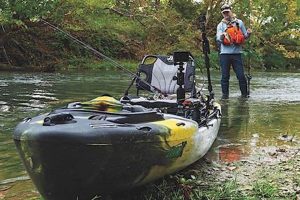
Elevated angling platforms offer distinct advantages compared to traditional seated positions. Improved visibility allows for better sight-fishing and assessment of underwater terrain. Casting becomes more efficient and accurate due to increased leverage and range of motion. These advantages directly impact fishing success: enhanced sight lines translate to increased fish spotting opportunities, while improved casting facilitates precise lure placement and better hook sets. Consider the scenario of spotting a fish near a submerged log; the elevated perspective allows for a clear casting lane, whereas a seated position might obstruct the angler’s view and casting trajectory. This enhanced control and precision contribute significantly to a more productive and enjoyable fishing experience. The practical implications of this enhanced perspective are substantial for angling success.
Further analysis reveals additional benefits specific to various fishing styles. Fly fishing, for instance, benefits from the improved casting control and line management afforded by the standing position. Lure fishing similarly gains advantages through increased casting distance and accuracy, particularly in scenarios requiring precise targeting of structure or cover. Moreover, the elevated position facilitates easier maneuvering and retrieval of larger fish, reducing strain on the angler and minimizing the risk of losing the catch. Real-world examples abound: anglers targeting shallow flats often prefer standing to better sight fish for bonefish or permit; those fishing in rivers can more effectively wade and cast while maintaining balance and stability; and kayak anglers targeting bass among submerged logs or vegetation benefit from the clear casting angles and unobstructed views. These practical applications demonstrate the tangible benefits derived from the elevated perspective offered by these specialized watercraft.
In summary, the advantages conferred by standing kayaks in a fishing context are significant and multifaceted. The elevated perspective enhances visibility, improves casting accuracy and efficiency, and facilitates fish retrieval. These combined advantages translate directly to increased fishing success and overall enjoyment. Furthermore, the benefits extend across various fishing disciplines, highlighting the versatility and adaptability of this approach. Understanding these advantages allows anglers to make informed decisions about equipment choices and fishing strategies, maximizing their potential for success on the water.
4. Paddling Techniques

Paddling techniques in the context of standing kayaks differ significantly from traditional seated kayaking. Effective propulsion and maneuverability require adaptations in stroke mechanics, balance, and core engagement. Mastery of these specialized techniques is crucial for efficient navigation and maintaining stability on the water. This exploration delves into the key facets of stand-up paddling technique.
- High-Angle Paddle Stroke
The high-angle paddle stroke maximizes propulsion while maintaining balance. Unlike the low-angle stroke used in seated kayaking, the paddle shaft remains relatively vertical, entering the water closer to the kayak and exiting near the paddler’s feet. This technique reduces the likelihood of capsizing by minimizing lateral forces. Imagine a paddle as a lever; a vertical lever (high-angle) provides more direct downward force for propulsion than an angled lever (low-angle).
- Core Engagement and Balance
Maintaining balance while standing requires constant core engagement and subtle weight shifts. The paddler’s core muscles act as stabilizers, compensating for the dynamic movement of the paddle and the inherent instability of standing on water. This is analogous to balancing on a stability ball; core strength is essential for maintaining an upright position. Active core engagement becomes particularly crucial in challenging conditions such as wind or chop.
- Steering and Turning Techniques
Steering techniques in standing kayaks often utilize a combination of sweep strokes, reverse sweeps, and rudder strokes. Sweep strokes involve a wide arc motion, pulling the paddle along the side of the kayak to initiate a turn. Reverse sweeps achieve the opposite effect. Rudder strokes, performed at the stern, provide finer directional control. These techniques can be compared to the steering mechanisms of a canoe, where paddle placement and stroke direction dictate the vessel’s course.
- Adapting to Conditions
Adapting paddling techniques to prevailing conditions, such as wind, current, and waves, is essential for efficient and safe navigation. In windy conditions, lowering the body’s center of gravity by slightly bending the knees enhances stability. In currents, angled strokes and ferry angles are employed to maintain the desired course. Navigating waves requires anticipation and timing, adjusting paddle strokes to maintain balance and momentum. These adaptations reflect the dynamic interplay between paddler, vessel, and environment, highlighting the importance of experience and situational awareness.
These interconnected facets of paddling technique underscore the distinct skill set required for successful stand-up kayaking. Mastery of these techniques, combined with an understanding of hull design and water conditions, empowers paddlers to navigate efficiently, maintain balance, and fully enjoy the unique perspective and challenges offered by this evolving discipline.
5. Safety Precautions
Elevated kayaking presents unique challenges compared to traditional seated kayaking, necessitating specific safety precautions to mitigate risks and ensure a secure experience. Understanding and implementing these precautions is crucial for preventing accidents and promoting responsible enjoyment of this activity. The following facets outline essential safety considerations for stand-up kayaking.
- Personal Flotation Device (PFD)
A properly fitted PFD is paramount for safety in any kayaking activity, especially when standing. In the event of a fall, a PFD provides essential buoyancy, preventing submersion and assisting in regaining a stable position or re-entering the kayak. Consider the scenario of an unexpected wave or a sudden loss of balance; a PFD can be the difference between a minor inconvenience and a potentially life-threatening situation. Choosing a PFD specifically designed for kayaking ensures optimal fit and freedom of movement while paddling.
- Leash Usage
A kayak leash connects the paddler to the vessel, preventing separation in case of a fall. This is particularly important in windy or current-prone areas where a detached kayak can quickly drift out of reach. Visualize a scenario where a paddler falls into swift-moving water; a leash ensures the kayak remains accessible, providing a platform for recovery and preventing a potentially dangerous drift downstream. Different leash types exist, including paddle leashes and waist leashes, each offering specific advantages in various conditions.
- Awareness of Water Conditions
Assessing water conditions before embarking on a stand-up kayaking trip is crucial for safety. Factors such as wind speed, current strength, and wave height significantly influence stability and maneuverability. Venturing into conditions beyond one’s skill level can lead to capsizing or other hazardous situations. Consider a scenario where a paddler accustomed to calm lake conditions attempts to stand in choppy ocean waters; the unfamiliar conditions and increased instability can easily lead to a fall. Checking weather forecasts and local water conditions before heading out provides essential information for informed decision-making.
- Appropriate Attire and Equipment
Appropriate attire and equipment further enhance safety. Wearing water shoes or sandals provides grip on the kayak’s surface and protects feet from sharp objects in the water. Quick-drying clothing enhances comfort and prevents hypothermia in colder conditions. Carrying a whistle allows for signaling in emergencies. Consider the example of a paddler falling into cold water; appropriate clothing helps minimize the risk of hypothermia, while a whistle allows for attracting attention and summoning assistance. These seemingly minor details can play a significant role in overall safety and well-being.
These interconnected safety precautions underscore the importance of preparedness and responsible decision-making in stand-up kayaking. Integrating these practices into every kayaking excursion mitigates risks, enhances safety, and promotes a more enjoyable experience on the water. By understanding the potential hazards and adopting appropriate safety measures, paddlers can confidently explore the unique challenges and rewards of elevated kayaking.
6. Specialized Equipment

Specialized equipment plays a crucial role in enhancing the stability, performance, and overall experience of stand-up kayaking. While a standard kayak paddle can suffice, dedicated equipment designed specifically for this activity contributes significantly to safety, comfort, and efficient navigation. This exploration delves into the key components of specialized equipment and their implications for elevated kayaking.
- Paddle Design and Length
Paddle design and length significantly impact paddling efficiency and stability. Longer paddles, typically extending above the paddler’s head, provide greater leverage and a more efficient stroke in the upright position. Lightweight materials, such as carbon fiber or fiberglass, reduce fatigue during extended paddling sessions. Consider the physics of a lever; a longer paddle acts as a longer lever arm, requiring less force for the same output. Adjustable-length paddles offer versatility for adapting to different water conditions and paddler heights.
- Stability Aids (Outriggers and Stabilizers)
Stability aids, such as outriggers or stabilizers, provide additional support, especially for beginners or those seeking enhanced stability in challenging conditions. Outriggers, extending laterally from the kayak’s hull, create a wider base of support, significantly reducing the likelihood of capsizing. Stabilizers, often inflatable, attach to the sides of the kayak and function similarly. Imagine the stability of a trimaran compared to a single-hull sailboat; outriggers provide a comparable increase in stability for kayaks. These aids are particularly beneficial in windy conditions or when carrying additional weight, such as fishing gear.
- Specialized Kayaks
Kayaks designed specifically for standing offer enhanced features that contribute to stability and performance. Wider hulls, flatter decks, and non-slip surfaces provide a secure platform for standing and paddling. Some models incorporate integrated features like elevated seating positions or stand-assist straps. These specialized kayaks represent a departure from traditional sit-on-top or sit-in designs, prioritizing stability and functionality for upright paddling. Consider the difference between a surfboard and a stand-up paddleboard; the latter’s design caters specifically to the demands of standing, providing greater stability and maneuverability.
- Apparel and Footwear
Appropriate apparel and footwear further enhance comfort and safety during stand-up kayaking excursions. Quick-drying clothing and water shoes provide protection and comfort while allowing for freedom of movement. Polarized sunglasses reduce glare and improve visibility, while a wide-brimmed hat offers protection from the sun. These elements, while not directly related to kayak performance, contribute significantly to the overall experience. Consider the discomfort of paddling in wet, heavy clothing or the risk of slipping on a wet kayak deck; appropriate attire mitigates these issues, enhancing safety and enjoyment.
These specialized equipment components contribute significantly to a safer, more comfortable, and ultimately more rewarding stand-up kayaking experience. Understanding the function and benefits of each element allows for informed choices, enhancing performance and maximizing enjoyment on the water. The careful selection and utilization of appropriate equipment empower paddlers to confidently explore the unique challenges and rewards of elevated kayaking, promoting safety and maximizing the potential of this dynamic watersport.
Frequently Asked Questions
This section addresses common inquiries regarding elevated watercraft, providing concise and informative responses to clarify potential uncertainties and misconceptions.
Question 1: What are the primary advantages of utilizing a specialized vessel designed for upright paddling?
Specialized vessels offer enhanced stability and maneuverability due to design features such as wider hulls and specialized deck padding. The elevated perspective improves sight lines for activities like fishing and wildlife observation.
Question 2: Are specific paddling techniques required for these watercraft?
Yes, paddling techniques differ from traditional kayaking. A high-angle paddle stroke and active core engagement are essential for maintaining balance and efficient propulsion.
Question 3: What safety precautions should one consider before engaging in this activity?
Essential safety precautions include wearing a personal flotation device, using a leash, assessing water conditions prior to embarking, and carrying essential safety equipment such as a whistle.
Question 4: Are these watercraft suitable for all skill levels?
While accessible to various skill levels, beginners should start in calm, flat water conditions and gradually progress to more challenging environments as skills develop. Professional instruction can significantly benefit novice paddlers.
Question 5: What are the typical costs associated with acquiring these specialized vessels?
Costs vary depending on the brand, materials, and features. Entry-level models can be relatively affordable, while high-end fishing or touring versions may represent a more significant investment.
Question 6: Where can one find reputable resources for learning more about elevated kayaking techniques and safety practices?
Reputable resources include certified kayaking instructors, specialized retailers, and online communities dedicated to the sport. Seeking guidance from experienced paddlers can provide valuable insights and enhance safety awareness.
Addressing these common inquiries provides a foundation for informed decision-making and promotes a safer and more enjoyable experience. Thorough preparation and a commitment to safety are essential for fully realizing the benefits of elevated kayaking.
The following section offers additional resources for further exploration and continued learning within the realm of stand-up kayaking.
Conclusion
Elevated watercraft represent a significant evolution in kayaking, offering unique advantages and challenges. This exploration has examined key aspects, from design principles and specialized equipment to paddling techniques and essential safety precautions. The interplay of stability, maneuverability, and the elevated perspective contributes to the distinct appeal of this activity, particularly within fishing and recreational contexts. Understanding these elements is crucial for informed participation and safe enjoyment.
As the popularity of elevated watercraft continues to grow, ongoing innovation and refinement promise further advancements in design and functionality. Continued emphasis on safety education and responsible practices will remain paramount for ensuring the sustainable growth and enjoyment of this dynamic watersport. The potential for exploration and enhanced interaction with aquatic environments positions elevated kayaking as a compelling pursuit for those seeking a unique and engaging on-water experience.