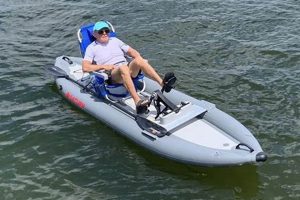
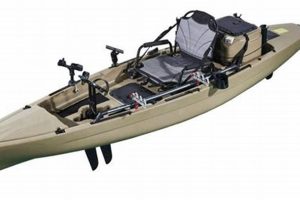
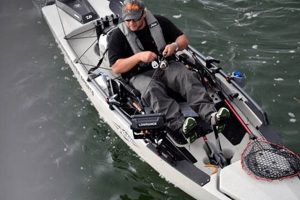
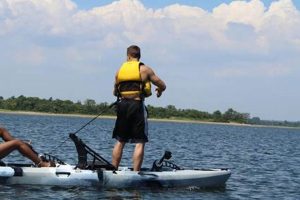
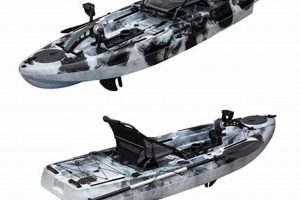
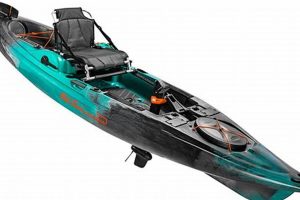
This specific watercraft is a high-performance fishing vessel designed for anglers seeking efficient and hands-free propulsion. It combines a stable hull platform with a pedal-driven propeller system, allowing for maneuverability and speed while keeping hands free for fishing. This type of watercraft is typically constructed from durable, lightweight materials and often features specialized accessories like rod holders, tackle storage, and comfortable seating designed for long hours on the water.
Pedal-powered kayaks offer significant advantages over traditional paddle kayaks. They allow anglers to cover more water with less effort, maintain better positioning in currents or wind, and focus on fishing rather than paddling. The hands-free operation is particularly valuable for techniques like trolling or sight-fishing. The evolution of these vessels has contributed significantly to the accessibility and enjoyment of kayak fishing. Durable construction and specialized features cater to the specific needs of anglers, improving their overall experience and success on the water.
Further exploration will delve into specific design elements, performance characteristics, user experiences, and the broader impact of this technology on the sport of fishing. Additional topics may include comparisons with other propulsion methods, maintenance requirements, and the selection of appropriate accessories.
Tips for Pedal Kayak Fishing
Maximizing the advantages of a pedal-driven fishing kayak involves understanding its features and employing effective techniques. The following tips offer guidance for enhanced performance and a more productive fishing experience.
Tip 1: Trim Adjustment: Proper hull trim is crucial for efficient propulsion and maneuverability. Adjust the kayak’s seating position or onboard weight distribution to achieve optimal balance and minimize drag.
Tip 2: Current Management: Pedal drives excel in moderate currents. Plan routes to leverage current flow for effortless travel and position holding. Be mindful of stronger currents, which may require strategic paddling assistance.
Tip 3: Stealth Approach: Pedal propulsion offers quieter operation compared to paddling, allowing anglers to approach fish without disturbance. Employ slow, deliberate pedal strokes when nearing target areas.
Tip 4: Hands-Free Fishing: Capitalize on the hands-free nature of pedal kayaks. Rig rods and prepare tackle before launching to maximize fishing time and responsiveness to bites.
Tip 5: Regular Maintenance: Proper maintenance ensures optimal performance and longevity. Regularly rinse the pedal drive system with fresh water after each use, especially in saltwater environments. Lubricate moving parts according to manufacturer recommendations.
Tip 6: Safety First: Always wear a personal flotation device and carry essential safety equipment. Be aware of weather conditions and water traffic. Inform someone of your fishing plans, including location and estimated return time.
Tip 7: Practice and Experiment: Become familiar with the nuances of pedal propulsion. Practice maneuvering in various conditions to develop proficiency and discover effective techniques for specific fishing scenarios.
By implementing these tips, anglers can fully leverage the advantages of a pedal-driven fishing kayak, leading to increased efficiency, enhanced fishing opportunities, and a more rewarding experience on the water.
These insights contribute to a comprehensive understanding of pedal kayak fishing. A concluding discussion will summarize key benefits and offer perspectives on future developments in this evolving segment of the fishing industry.
1. Propel Drive System

The Propel Drive System is integral to the functionality and performance of the Native Slayer Propel 13 fishing kayak. This system distinguishes it from traditional paddle-powered kayaks, offering distinct advantages for anglers. The pedal-driven propeller mechanism provides hands-free propulsion, allowing users to focus on fishing rather than paddling. This is particularly beneficial for techniques like trolling or sight fishing, where maintaining position and having readily available hands are critical. The Propel Drive System contributes significantly to the kayak’s efficiency, enabling anglers to cover more water with less physical exertion and maintain better control in currents or wind. For example, an angler targeting shallow flats can utilize the Propel Drive System to quietly navigate the area, keeping hands free for casting and retrieving lures. The precise control afforded by the pedals allows for subtle adjustments in position without disturbing the water or alerting wary fish.
The Propel Drive System’s design influences the overall performance and usability of the kayak. Its integration within the hull impacts stability and maneuverability. The system’s gearing ratio and propeller design contribute to its speed and efficiency in different water conditions. Maintenance requirements, such as regular rinsing and lubrication, contribute to the system’s long-term performance and reliability. For instance, the ability to pedal in reverse simplifies navigation in tight spaces like mangrove tunnels or around submerged obstacles. This maneuverability enhances the kayak’s versatility and accessibility to diverse fishing environments.
Understanding the Propel Drive System’s role in the Native Slayer Propel 13 is essential for maximizing its utility. Recognizing the system’s capabilities and limitations empowers anglers to optimize performance in various fishing scenarios. Regular maintenance and adherence to manufacturer guidelines contribute to the system’s longevity and consistent functionality. The Propel Drive System ultimately enhances the overall fishing experience by providing efficient, hands-free propulsion, allowing anglers to dedicate more time and attention to the pursuit of their target species.
2. Fishing-Specific Design

The Native Slayer Propel 13’s fishing-specific design differentiates it from recreational kayaks. Features are intentionally incorporated to enhance angling effectiveness and overall experience. Rod holders, strategically placed for easy access and diverse fishing techniques, exemplify this design philosophy. Integrated tackle storage compartments keep essential gear organized and readily available, minimizing clutter and maximizing fishing time. Consider a fly fisherman needing multiple rods rigged with different flies; dedicated rod holders prevent tangling and allow quick transitions between setups. Similarly, readily accessible tackle storage facilitates swift lure changes based on prevailing fish activity.
Further design considerations include seating ergonomics and stability. The elevated seating position improves visibility and casting range, while a stable hull platform allows anglers to stand and sight fish or cast larger lures without compromising balance. Imagine an angler sight-fishing in shallow water. The elevated seat provides a clearer view of the fish, and the stable platform allows for confident standing and casting accuracy. These design elements contribute directly to increased fishing success and overall enjoyment.
Ultimately, the Native Slayer Propel 13’s fishing-specific design reflects a deep understanding of angler needs. Every feature, from rod holders to storage compartments and the stable hull, contributes to a more productive and comfortable fishing experience. This specialized design caters directly to the demands of serious anglers, elevating the kayak from a simple mode of transportation to a dedicated fishing platform.
3. Stability and Maneuverability

Stability and maneuverability are critical performance attributes for fishing kayaks, particularly those employing pedal-drive systems. These characteristics directly influence an angler’s ability to effectively fish various environments, from calm lakes to flowing rivers or open coastal waters. In the context of the Native Slayer Propel 13, these attributes are carefully balanced to provide a platform conducive to both fishing performance and user comfort. Examining these aspects in detail reveals how they contribute to the kayak’s overall effectiveness.
- Hull Design and Stability
The hull design significantly impacts stability. A wider, flatter hull provides greater initial stability, making it less likely to tip when stationary or under minimal movement. This is crucial for activities like standing to cast or sight fish. The Native Slayer Propel 13 features a carefully engineered hull that balances initial stability with secondary stability, the ability to resist tipping when leaned. This balance allows for both a stable casting platform and efficient tracking through the water. For example, a wide, flat bottom allows an angler to stand and cast with confidence, while the hull’s design also allows the kayak to track straight while pedaling.
- Maneuverability and Tracking
Maneuverability refers to the kayak’s responsiveness to steering input. A kayak with good maneuverability turns efficiently, allowing navigation through tight spaces or quick adjustments in position. Tracking, the ability to maintain a straight course, is also essential for efficient paddling or pedaling. The Native Slayer Propel 13 utilizes a rudder system that enhances maneuverability, enabling precise turns and adjustments, while the hull design contributes to good tracking performance. Consider navigating a winding river; responsive steering is crucial for avoiding obstacles and maintaining desired positioning within the current.
- Influence of the Propel Drive System
The Propel Drive System itself influences both stability and maneuverability. The system’s weight and placement within the hull can affect the kayak’s center of gravity, impacting stability. The propeller’s underwater profile and the rudder’s control interact with water flow, influencing maneuverability and tracking. For example, the Propel Drive System’s position contributes to a lower center of gravity, enhancing stability. Simultaneously, the rudder, integrated with the drive system, allows for precise steering adjustments, enhancing maneuverability.
- Impact on Fishing Applications
The interplay between stability and maneuverability directly affects various fishing applications. High stability is advantageous for sight fishing and stand-up casting, while maneuverability is crucial for navigating tight spaces, like mangrove tunnels or rocky shorelines. The Native Slayer Propel 13 aims to provide a balance suitable for diverse fishing scenarios. Consider an angler fishing in windy conditions. The kayak’s stability is crucial for maintaining balance and casting accuracy, while its maneuverability allows the angler to adjust position effectively in response to changing wind and current patterns.
In conclusion, the Native Slayer Propel 13s balance of stability and maneuverability contributes significantly to its effectiveness as a fishing platform. By considering the interplay of hull design, the Propel Drive System, and their influence on performance in different fishing scenarios, anglers can maximize their potential on the water.
4. Durability and Construction

Durability and construction are paramount for a fishing kayak, especially one designed for the rigors of pedal-driven propulsion. The Native Slayer Propel 13 faces unique stresses compared to traditional paddle kayaks. The forces exerted by the pedal drive system, combined with the potential for impacts in shallow water or against obstacles, necessitate a robust construction. Material selection and manufacturing processes directly influence the kayak’s ability to withstand these demands. For example, the hull must resist deformation under the continuous pressure from the pedal drive and potential impacts from submerged rocks or logs. A durable construction minimizes the risk of damage and ensures the kayak’s longevity, contributing to a safe and reliable fishing platform.
The Native Slayer Propel 13 typically employs high-density polyethylene (HDPE) for its hull construction. HDPE offers a balance of impact resistance, durability, and UV resistance, crucial for withstanding the harsh marine environment. The manufacturing process, often involving rotational molding, ensures uniform wall thickness and structural integrity. Beyond the hull material, hardware components, like rudder assembly and pedal drive mechanisms, must also exhibit corrosion resistance and structural strength. Consider saltwater environments where corrosion is a significant concern; stainless steel or other corrosion-resistant materials are essential for ensuring the long-term functionality of critical components. Reinforcements in high-stress areas further contribute to the kayak’s overall durability.
Investing in a durably constructed kayak translates to long-term value and enhanced safety. A robust construction minimizes downtime due to repairs and ensures the vessel can withstand the demands of regular fishing excursions. Understanding the materials and construction methods employed in the Native Slayer Propel 13 allows informed purchasing decisions and appropriate maintenance practices. Ultimately, durable construction contributes significantly to the kayak’s overall performance, reliability, and longevity, allowing anglers to focus on fishing rather than equipment concerns. The kayak’s robust build instills confidence, enabling exploration of diverse fishing environments without compromising safety or performance.
5. Hands-Free Propulsion
Hands-free propulsion is a defining feature of the Native Slayer Propel 13, distinguishing it from traditional paddle kayaks. This capability significantly alters the fishing experience, offering distinct advantages and influencing angling techniques. Understanding the implications of hands-free propulsion is crucial for maximizing the kayak’s potential and appreciating its impact on fishing practices.
- Enhanced Fishing Techniques
Hands-free propulsion allows anglers to dedicate their full attention to fishing techniques. Tasks like casting, retrieving lures, and setting hooks become more efficient and responsive. Consider a scenario where a fish strikes while trolling. With a traditional paddle kayak, the angler must first drop the paddle before handling the rod. With hands-free propulsion, the angler can immediately react to the strike, increasing the likelihood of a successful hookset. This advantage extends to techniques like sight fishing, where maintaining precise boat position and having hands readily available for casting are critical.
- Improved Boat Control and Positioning
Maintaining precise boat position is often crucial for successful fishing. Hands-free propulsion, particularly with the pedal-driven system of the Native Slayer Propel 13, allows anglers to subtly adjust position and maintain heading in currents or wind. This level of control is invaluable for techniques like drifting along weed lines or holding position near structure. For instance, an angler fishing in a river can use the pedals to maintain a consistent upstream position and presentation of bait, compensating for the current’s force. This precise control is difficult to achieve with traditional paddling.
- Increased Efficiency and Reduced Fatigue
Paddling, especially over long distances or extended periods, can be physically demanding. Hands-free propulsion reduces fatigue, allowing anglers to cover more water and fish longer without tiring. This is particularly beneficial in larger bodies of water or when navigating against currents or wind. The energy conserved by not paddling can be redirected towards fishing activities, maximizing the overall experience. For example, an angler exploring a large lake can reach distant fishing grounds more quickly and efficiently with pedal power, preserving energy for the actual fishing.
- Multitasking and Enhanced Situational Awareness
Hands-free propulsion allows anglers to multitask. They can manage fishing rods, adjust tackle, operate fish finders, or even consume refreshments while maintaining boat control and position. This freedom enhances situational awareness, allowing anglers to observe their surroundings, monitor fishing lines, and react quickly to changing conditions or fish activity. Imagine an angler trolling multiple lines while simultaneously scanning the water for signs of baitfish or using a fish finder to locate underwater structure. Hands-free propulsion enables this level of multitasking, significantly increasing fishing efficiency and effectiveness.
The advantages of hands-free propulsion offered by the Native Slayer Propel 13 significantly impact fishing practices. From enhanced techniques and improved boat control to increased efficiency and multitasking capabilities, this feature redefines the kayak fishing experience. By understanding these benefits, anglers can fully leverage the Native Slayer Propel 13’s capabilities, leading to a more productive and enjoyable time on the water.
Frequently Asked Questions
This section addresses common inquiries regarding the Native Slayer Propel 13 pedal drive fishing kayak, providing concise and informative responses.
Question 1: What differentiates the Propel Drive System from other pedal-powered kayak mechanisms?
The Propel Drive System is known for its forward and reverse pedaling capability, along with its weedless propeller design. These features offer advantages in maneuverability and shallow-water performance.
Question 2: How does the stability of the Native Slayer Propel 13 compare to other fishing kayaks?
The Slayer Propel 13 offers a balance of stability and maneuverability. Its wide hull provides a stable platform, especially beneficial for standing while fishing, yet retains sufficient maneuverability for navigating various water conditions.
Question 3: What maintenance is required for the Propel Drive System?
Regular rinsing with fresh water, especially after use in saltwater, is crucial. Periodic lubrication of moving parts, as outlined in the owner’s manual, ensures optimal performance and longevity.
Question 4: What is the weight capacity of the Native Slayer Propel 13?
The weight capacity typically exceeds 400 pounds, accommodating anglers, gear, and potential catches comfortably.
Question 5: Can the Propel Drive System be easily removed for transport or storage?
Yes, the Propel Drive System is designed for relatively easy removal and installation, facilitating transport and storage.
Question 6: What are the advantages of choosing a pedal-powered kayak like the Native Slayer Propel 13 over a traditional paddle kayak for fishing?
Key advantages include hands-free operation, allowing for simultaneous fishing and boat control; increased efficiency covering water, especially over longer distances; and enhanced maneuverability in currents or wind.
These responses offer a preliminary understanding of key aspects of the Native Slayer Propel 13. Consulting the manufacturer’s website or authorized dealers can provide more detailed specifications and information.
Further exploration could involve comparing the Native Slayer Propel 13 with other fishing kayaks on the market, considering factors like price, features, and performance characteristics. Analyzing user reviews and expert opinions can provide additional insights into real-world experiences and long-term performance evaluations.
Conclusion
The Native Slayer Propel 13 pedal drive fishing kayak represents a significant advancement in kayak fishing technology. Its combination of stability, maneuverability, and the efficient Propel Drive System offers anglers a distinct advantage on the water. The fishing-specific design, incorporating features like rod holders, ample storage, and a stable hull, caters directly to the needs of serious anglers. Durable construction ensures longevity, while hands-free propulsion enhances fishing techniques and overall efficiency. From navigating challenging currents to maintaining precise positioning for sight fishing, this kayak empowers anglers to explore diverse environments and maximize their fishing potential.
The evolution of fishing kayak technology continues, and the Native Slayer Propel 13 stands as a testament to innovation in the pursuit of a more effective and enjoyable fishing experience. Careful consideration of individual needs, fishing styles, and target environments remains crucial when selecting any fishing kayak. Thorough research and informed decision-making will ultimately lead anglers to the best equipment for their specific requirements and aspirations on the water.