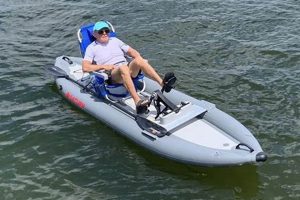
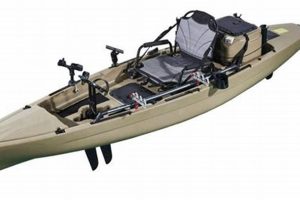
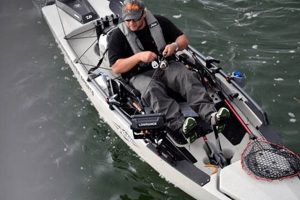
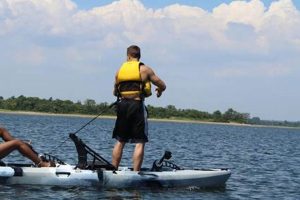
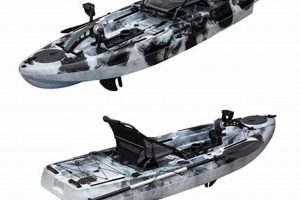
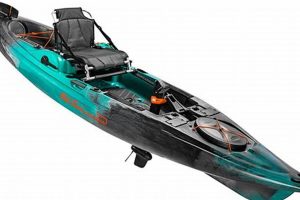
Anglers seeking affordable, hands-free propulsion on the water often explore pedal-powered kayaks designed for fishing. These vessels typically feature specialized seating, rod holders, and storage compartments tailored to angling needs, combined with a pedal-drive system for enhanced maneuverability and speed. A budget-conscious consumer might prioritize affordability when selecting such a kayak, leading to searches for cost-effective options that balance features and price.
The combination of fishing-specific features and pedal propulsion offers significant advantages. Hands-free operation allows anglers to focus on casting, retrieving, and landing fish, while the pedal drive provides efficient and quiet movement, ideal for approaching fish-holding areas stealthily. This combination, when available at a lower price point, democratizes access to advanced kayak fishing technology, making it more accessible to a wider range of anglers. Historically, pedal kayaks were a premium item; however, increasing market competition and manufacturing advancements have led to more budget-friendly choices.
Further exploration of this topic will cover factors influencing cost, key features to consider when selecting an affordable pedal fishing kayak, popular models and brands, and tips for finding the best deals.
Tips for Selecting a Budget-Friendly Pedal Fishing Kayak
Acquiring a pedal-powered fishing kayak without exceeding a budget requires careful consideration of several factors. The following tips offer guidance for making an informed purchase.
Tip 1: Prioritize Essential Features: Focus on must-have features like rod holders, storage capacity, and a comfortable seat. Less crucial add-ons can be acquired later to manage initial costs.
Tip 2: Consider Used Kayaks: Exploring the used market can yield significant savings. Inspect pre-owned kayaks thoroughly for any damage or wear before purchasing.
Tip 3: Compare Prices Across Retailers: Online and brick-and-mortar stores often offer varying prices. Diligent comparison shopping is essential to secure the best deal.
Tip 4: Explore Off-Season Sales: Retailers often discount kayaks during the off-season. Taking advantage of these sales can result in substantial savings.
Tip 5: Evaluate Pedal Drive Systems: Different pedal systems offer varying performance characteristics and durability. Research different types to identify one that aligns with fishing needs and budget constraints.
Tip 6: Factor in Additional Costs: Remember to account for accessories like paddles, life vests, and transportation equipment when budgeting.
Tip 7: Read Reviews and Seek Recommendations: Online reviews and forums can provide valuable insights into the performance and reliability of different kayak models.
By following these tips, anglers can acquire a well-equipped pedal fishing kayak without overspending, enabling them to enjoy enhanced fishing experiences on the water.
Armed with this information, anglers can confidently navigate the market and select a kayak that meets their fishing needs and budgetary constraints.
1. Stability

Stability is a paramount concern for anglers, especially in pedal-driven kayaks where hands-free operation is essential for casting and retrieving. A stable platform allows for comfortable and safe fishing, preventing accidental capsizes and ensuring anglers can focus on the task at hand. In the context of budget-conscious purchases, stability considerations become even more critical, as compromises on design and materials can sometimes impact a kayak’s stability.
- Hull Design and Stability
Hull design plays a crucial role in kayak stability. Wider, flatter hulls generally offer greater primary stability (initial resistance to tipping), making them ideal for calmer waters and stand-up fishing. However, they can be slower and less maneuverable. Conversely, narrower, V-shaped hulls provide better secondary stability (resistance to capsizing once tilted) and tracking but feel less stable initially. Budget kayaks might utilize simpler hull designs to reduce manufacturing costs, potentially impacting overall stability. Careful consideration of intended fishing environments and personal preferences is essential when evaluating stability in relation to hull design.
- Center of Gravity and Weight Distribution
The center of gravity significantly influences stability. Lower centers of gravity enhance stability. Anglers and gear contribute to the overall weight distribution, affecting the kayak’s balance. Budget kayaks may have higher seats, raising the center of gravity and potentially decreasing stability. Proper weight distribution within the kayak is crucial for maintaining balance, particularly in less stable designs often found at lower price points.
- Impact of Pedal Drive Systems on Stability
The addition of a pedal drive system can alter a kayak’s stability characteristics. The weight and placement of the drive system can impact the center of gravity. Some pedal systems protrude below the hull, potentially affecting stability in shallow water or when encountering obstacles. Evaluating the impact of the specific pedal drive system on stability is crucial, especially in budget-friendly models where simpler drive systems might have different stability implications.
- Stability Enhancements and Accessories
Stabilizers, outriggers, and other accessories can enhance stability, especially valuable for anglers seeking increased confidence on the water. While these additions can improve stability on less stable hulls, they represent an additional cost that must be factored into the overall budget. Anglers seeking maximum stability might need to allocate a portion of their budget to such enhancements.
Understanding the interplay of these factors is crucial for selecting a budget-friendly pedal fishing kayak that offers adequate stability for a safe and enjoyable fishing experience. Prioritizing stability alongside other essential features requires careful consideration of design, materials, and potential trade-offs associated with lower price points. Ultimately, a well-balanced approach to stability ensures anglers can confidently focus on fishing, maximizing their time on the water.
2. Propulsion efficiency
Propulsion efficiency is a critical factor in evaluating pedal-driven fishing kayaks, especially within a budget-conscious framework. Efficient propulsion translates to greater speed, range, and reduced angler fatigue. This is particularly relevant for fishing kayaks, where anglers often cover considerable distances to reach desired fishing spots. A less efficient system requires more effort for the same distance, leading to quicker fatigue and potentially a shorter fishing trip. In budget-friendly models, propulsion efficiency can be influenced by the type of pedal drive system, fin design, and hull characteristics. For example, a kayak with a less refined propeller design might be cheaper to manufacture, but offer reduced propulsion compared to a more advanced fin system.
The interplay between propulsion efficiency and cost presents a significant decision point for prospective buyers. A more efficient system might come with a higher initial price tag, but offer long-term benefits in terms of reduced effort and increased fishing time. Conversely, a less efficient but cheaper system might suffice for anglers fishing smaller bodies of water or making shorter trips. Consider an angler targeting offshore fishing grounds. A highly efficient pedal drive system allows them to reach distant locations with less effort, maximizing fishing time and minimizing physical strain. In contrast, an angler fishing a small pond might prioritize affordability over top-tier propulsion, opting for a simpler, less expensive system adequate for their needs.
Understanding the relationship between propulsion efficiency and overall cost is crucial for making informed purchasing decisions. Balancing desired performance with budget constraints involves careful consideration of fishing style, target locations, and the trade-offs associated with different pedal drive systems. Prioritizing propulsion efficiency often leads to a more rewarding fishing experience, enabling anglers to cover more water, conserve energy, and ultimately spend more time focusing on fishing. However, recognizing that optimal efficiency often comes at a premium, budget-conscious consumers must weigh the benefits against the associated costs and select a system that aligns with their specific needs and financial limitations.
3. Storage Capacity
Storage capacity is a crucial consideration when selecting a fishing kayak, particularly for anglers seeking budget-friendly pedal-driven options. Kayak fishing often requires carrying a substantial amount of gear, including rods, reels, tackle boxes, safety equipment, and potentially fish finders or other electronics. Ample storage allows anglers to organize and readily access necessary equipment, enhancing efficiency and enjoyment on the water. In the context of affordability, storage solutions often represent a point of differentiation between models. Manufacturers might utilize less expensive materials or simpler designs in storage compartments to reduce overall costs. Consequently, evaluating the type, size, and accessibility of storage options becomes essential for budget-conscious anglers.
Consider the practical implications of limited storage. An angler with insufficient storage might be forced to leave essential gear behind, limiting fishing options or preparedness for various situations. For example, an angler targeting different species might need to carry a variety of rods and lures. Limited storage could restrict their ability to bring all necessary equipment, potentially impacting fishing success. Conversely, a well-designed kayak with ample storage allows anglers to bring everything they need, maximizing their fishing versatility. Moreover, readily accessible storage compartments allow for efficient gear changes and retrieval without disrupting the fishing process. Imagine an angler needing to re-tie a lure in rough conditions. Easy access to tackle boxes and tools stored in well-designed compartments can make a significant difference in maintaining stability and safety. In contrast, fumbling through a cluttered or poorly designed storage area can be dangerous and frustrating. The practical significance of adequate storage becomes readily apparent in such scenarios.
Ultimately, balancing storage capacity with budgetary constraints requires careful consideration of individual fishing needs and preferences. While maximizing storage is generally desirable, anglers must weigh the benefits against potential cost increases. Budget-friendly kayaks might offer simpler storage solutions, requiring anglers to prioritize essential gear and potentially adopt more minimalist packing strategies. However, the ability to carry and organize necessary equipment directly impacts fishing effectiveness and enjoyment. Therefore, understanding the trade-offs between storage capacity and cost is crucial for selecting a pedal fishing kayak that meets both practical needs and budgetary limitations.
4. Durability of Construction
Durability is a critical factor influencing the long-term value and performance of pedal-driven fishing kayaks, especially within a budget-conscious context. Kayaks endure significant stress from various environmental factors, including UV exposure, saltwater corrosion, impacts with underwater obstacles, and the general wear and tear of regular use. A durable construction ensures the kayak withstands these challenges, minimizing maintenance costs and extending its lifespan. However, achieving robust construction often involves higher-quality materials and manufacturing processes, typically translating to increased costs. This presents a central dilemma for anglers seeking durable yet affordable options. Balancing cost considerations with the need for robust construction requires careful evaluation of materials, manufacturing techniques, and potential compromises associated with budget-friendly models.
Compromises on construction quality to achieve lower price points can lead to premature wear, requiring frequent repairs or even complete replacement. For example, a kayak constructed with thinner, less durable plastic might be more susceptible to cracks or punctures, leading to leaks and compromising buoyancy. Similarly, lower-grade hardware, such as cheaper fasteners or hinges, can corrode quickly in saltwater environments, requiring replacement and potentially affecting the structural integrity of key components like hatches or seat mounts. Such issues not only detract from the fishing experience but also necessitate additional expenses that negate the initial cost savings. Conversely, investing in a kayak built with durable materials, like high-density polyethylene or reinforced composites, and robust hardware ensures long-term reliability, minimizing maintenance needs and maximizing the kayak’s usable lifespan. This long-term perspective underscores the importance of balancing initial cost with durability considerations.
Ultimately, the connection between durability and affordability represents a crucial decision point for prospective buyers. While budget constraints often necessitate careful consideration of initial costs, compromising excessively on durability can lead to higher long-term expenses and a diminished fishing experience. Evaluating the materials, construction techniques, and potential weaknesses of different models allows anglers to make informed choices that align with their budgetary limitations and long-term usage expectations. Prioritizing durability within a reasonable budget ensures a reliable, long-lasting kayak, providing years of enjoyable fishing experiences and maximizing the return on investment. This long-term perspective highlights the significance of considering durability not merely as an added feature but as a fundamental aspect influencing overall value and performance throughout the kayak’s lifespan.
5. Feature Trade-offs

Affordability in pedal-driven fishing kayaks often necessitates feature trade-offs. Balancing desired functionalities with budgetary constraints requires careful consideration of which features are essential and where compromises can be made without significantly impacting performance or enjoyment. Understanding these trade-offs is crucial for selecting a kayak that meets individual needs and budget limitations.
- Pedal Drive System Complexity
Simpler, less expensive pedal drive systems might lack the speed, efficiency, or durability of higher-end models. Rotational pedal systems are often more affordable than fin-based systems but may be less efficient in certain conditions. This trade-off requires anglers to balance performance requirements with budget constraints, opting for a system that provides adequate performance within their financial limitations.
- Material and Construction Quality
Budget-friendly kayaks might utilize less expensive materials, potentially impacting durability and lifespan. For instance, a kayak constructed with thinner polyethylene might be lighter and more affordable but more susceptible to damage from impacts or UV exposure. Evaluating the trade-off between cost and material quality requires consideration of intended usage and environmental conditions.
- Storage Capacity and Features
Less expensive kayaks might offer less storage space or fewer specialized storage features. Fewer or smaller storage compartments might limit the amount of gear carried, potentially impacting fishing versatility. Anglers must prioritize essential gear and consider additional storage solutions when opting for kayaks with limited built-in storage.
- Seating and Comfort
Basic seating systems often found in budget kayaks may lack the adjustability and comfort of higher-end models. A less comfortable seat can impact fishing enjoyment, especially during longer trips. Anglers might need to consider aftermarket seat upgrades or additional padding to enhance comfort when selecting a budget-friendly option.
Recognizing these common feature trade-offs allows anglers to make informed decisions when selecting a budget-friendly pedal fishing kayak. Prioritizing essential features, understanding potential compromises, and researching specific models allows for a balanced approach, ensuring a satisfying fishing experience without exceeding budgetary limitations. Ultimately, informed decision-making allows anglers to maximize value while remaining within their budget.
Frequently Asked Questions
This section addresses common inquiries regarding affordable pedal-driven fishing kayaks, providing concise and informative responses to facilitate informed purchasing decisions.
Question 1: How does the price of a pedal fishing kayak influence its performance and durability?
Price often reflects materials, construction, and features. Lower-priced kayaks may utilize less durable materials and simpler pedal systems, potentially impacting long-term performance and lifespan. However, careful selection can yield affordable options with acceptable performance and durability.
Question 2: Are cheaper pedal drive systems significantly less efficient than more expensive options?
While more expensive systems often offer enhanced efficiency and features, some budget-friendly options provide acceptable performance for recreational anglers. Evaluating individual needs and fishing styles helps determine the appropriate balance between cost and performance.
Question 3: What are the key features to prioritize when selecting a budget-friendly pedal fishing kayak?
Prioritize stability, storage capacity, and a comfortable seat. These core features directly impact fishing experience and safety. Additional features, such as advanced electronics or specialized storage, can be considered based on individual needs and budget.
Question 4: How can one find reputable deals on budget-friendly pedal fishing kayaks?
Comparing prices across multiple retailers, considering used kayaks, and exploring off-season sales can yield significant savings. Thorough research and comparison shopping are crucial for securing the best value.
Question 5: Are there any significant disadvantages associated with choosing a less expensive pedal fishing kayak?
Potential disadvantages include reduced durability, less efficient propulsion, and fewer features compared to higher-priced models. However, careful selection and prioritization of essential features can mitigate these drawbacks.
Question 6: What maintenance considerations are associated with budget-friendly pedal fishing kayaks?
Regular maintenance, including cleaning, lubrication, and inspection of the pedal drive system and hull, is essential for all kayaks. Budget-friendly models might require more frequent maintenance due to the use of less durable materials or components.
Careful consideration of these frequently asked questions helps prospective buyers navigate the market effectively and select a pedal-driven fishing kayak that meets both performance needs and budgetary constraints. Informed decision-making ensures a satisfying and rewarding on-the-water experience without overspending.
Further sections will explore specific models and brands suitable for budget-conscious anglers, providing in-depth reviews and comparisons to aid in the selection process.
Conclusion
Exploring affordable pedal-powered fishing kayaks requires careful consideration of various factors. Balancing cost with essential features like stability, propulsion efficiency, storage capacity, and durability necessitates informed decision-making. Compromises are often inevitable, but understanding the trade-offs associated with different price points allows anglers to prioritize essential features and maximize value within budget constraints. Diligent research, comparison shopping, and a clear understanding of individual fishing needs are crucial for selecting a kayak that delivers satisfactory performance and long-term value without excessive expenditure.
The pursuit of affordable, high-quality pedal fishing kayaks continues to drive innovation and market competition, making advanced angling technology increasingly accessible. Careful consideration of the factors presented herein empowers anglers to navigate the market effectively, enabling informed purchases that enhance fishing experiences without compromising financial prudence. Ultimately, selecting a well-suited kayak within budget constraints unlocks new possibilities on the water, promoting enjoyment and success in the pursuit of angling endeavors.