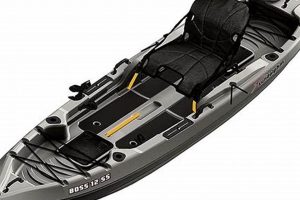
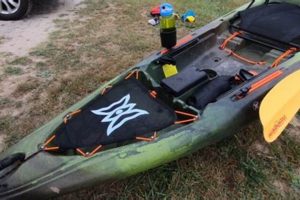
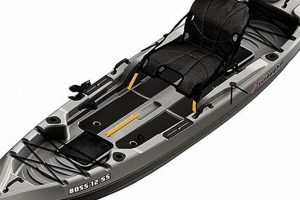
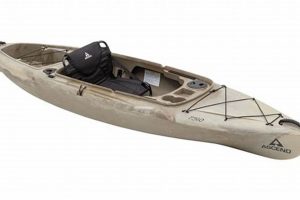
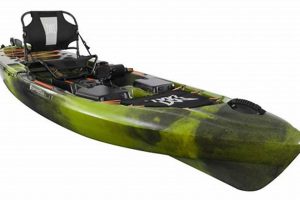
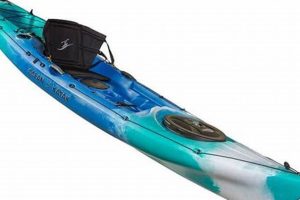
Two primary kayak styles dominate the fishing market: those designed for the angler to sit atop a molded seat (often referred to as “sit-on-top” kayaks) and those with a recessed cockpit where the angler sits inside (typically called “sit-in” kayaks). Each configuration offers distinct advantages and disadvantages for various fishing environments and angler preferences.
The choice between these styles significantly impacts stability, comfort, and gear accessibility. Sit-on-top kayaks generally offer greater initial stability and are easier to re-enter from the water, making them popular choices for warmer climates and anglers who prefer a more open feel. Sit-in kayaks, on the other hand, provide better protection from the elements and often feature more storage options for gear, making them suitable for colder conditions and longer excursions. Historically, traditional kayaks were exclusively sit-in, but the development of rotomolded plastic kayaks opened the door for the innovative sit-on-top design, revolutionizing recreational kayaking and particularly kayak fishing.
Understanding the nuances of each style is critical for selecting the appropriate vessel. Factors such as water temperature, fishing style, intended use, and personal preference should all be carefully considered. The following sections will explore these factors in greater detail, providing anglers with the necessary information to make informed decisions based on their individual needs and fishing goals.
Tips for Kayak Fishing
Choosing the right kayak configuration is fundamental to a successful fishing experience. The following tips offer guidance for selecting between sit-on-top and sit-in kayaks, enhancing stability, and maximizing fishing potential.
Tip 1: Consider Water Temperature: Cold water conditions necessitate consideration of a sit-in kayak for enhanced protection from the elements. Conversely, warmer climates often favor the breathability and ease of water re-entry offered by sit-on-top designs.
Tip 2: Evaluate Fishing Style: Anglers frequently casting and retrieving benefit from the open deck space and higher vantage point of sit-on-top kayaks. Sit-in kayaks offer advantages for trolling or still-fishing, providing greater protection from wind and waves.
Tip 3: Prioritize Stability: Wider sit-on-top kayaks generally offer enhanced initial stability, benefiting less experienced paddlers. Sit-in kayaks, while initially less stable, can achieve superior secondary stability with proper technique.
Tip 4: Assess Gear Storage Requirements: Longer fishing trips or specialized gear may require the ample storage typically found in sit-in kayaks. Sit-on-top kayaks offer readily accessible gear storage options but often with less overall capacity.
Tip 5: Factor in Physical Limitations: Entering and exiting sit-in kayaks can present challenges for individuals with mobility limitations. Sit-on-top designs offer easier access and egress.
Tip 6: Plan for Transportation and Storage: Sit-in kayaks are often longer and heavier, requiring more storage space and specialized transport equipment. Sit-on-top kayaks can be easier to manage due to their shorter length and lighter weight in some models.
Tip 7: Consider Comfort: The seat design and padding play a crucial role in overall comfort, particularly during extended fishing trips. Thoroughly evaluate seating options in both sit-on-top and sit-in models.
Careful consideration of these factors ensures optimal kayak selection, leading to enhanced fishing performance and enjoyment on the water. The right kayak choice ultimately depends on individual needs and preferences.
By understanding the characteristics of each kayak style and applying these tips, anglers can confidently select the ideal vessel to enhance their fishing experience and pursue their angling goals effectively.
1. Stability

Stability forms a cornerstone of successful kayak fishing. A stable platform allows anglers to cast, retrieve, and land fish effectively, while maintaining comfort and safety. The inherent stability characteristics of sit-on-top and sit-in kayaks differ significantly, influencing their suitability for various fishing environments and angler experience levels. Sit-on-top kayaks possess greater initial stability due to their wider beam and higher center of gravity. This inherent stability makes them ideal for beginners and calmer waters. Conversely, sit-in kayaks, with their lower center of gravity, offer superior secondary stability, performing well in rougher conditions once the paddler develops appropriate bracing techniques. For example, an angler fishing in sheltered bays or estuaries might prefer a sit-on-top kayak’s inherent stability for casting while standing. An experienced angler tackling ocean conditions, however, might choose a sit-in kayak for its ability to handle waves and swells.
The concept of primary and secondary stability differentiates the two kayak styles further. Primary stability refers to the initial resistance to tipping, while secondary stability describes the kayak’s ability to remain upright at greater angles of lean. A wider, flatter-bottomed sit-on-top kayak offers high primary stability, feeling secure even for novice paddlers. A narrower, rounded-hull sit-in kayak may feel initially less stable but provides greater secondary stability, allowing experienced paddlers to lean into turns and maintain balance in challenging conditions. Consider an angler encountering unexpected wakes from a passing motorboat. A sit-on-top kayak’s primary stability might prevent an immediate capsize, while a sit-in kayak’s secondary stability, combined with proper bracing, allows the angler to recover from a significant lean.
Understanding the nuances of kayak stability is crucial for safe and effective fishing. Choosing between a sit-on-top and a sit-in kayak requires careful consideration of individual experience, intended fishing environment, and desired performance characteristics. Ultimately, selecting a kayak with appropriate stability characteristics maximizes both angler safety and fishing success.
2. Comfort

Comfort significantly impacts fishing kayak performance. Extended periods on the water necessitate a comfortable seating arrangement to minimize fatigue and maximize focus on fishing. Discomfort can detract from the experience, hindering concentration and potentially shortening fishing trips. Several factors influence comfort, including seat design, back support, legroom, and overall kayak ergonomics. A well-designed seat with adequate padding and adjustable back support mitigates strain, promoting sustained comfort. Sufficient legroom allows for changes in posture, reducing stiffness and promoting circulation. The kayak’s width and hull design also play a role; a kayak too narrow can feel cramped, while one too wide may require excessive paddling effort, leading to fatigue.
Consider an angler targeting offshore species. A comfortable, supportive seat allows for hours of focused fishing, even in challenging conditions. Conversely, an uncomfortable seat can lead to back pain, leg cramps, and a general sense of fatigue, potentially forcing an early return to shore, regardless of fishing success. Similarly, an angler navigating tight mangrove tunnels benefits from a kayak offering ample legroom and maneuverability. A cramped seating position hinders paddling efficiency and reduces the angler’s ability to react quickly to changing conditions. In contrast, a comfortable and appropriately sized kayak allows for extended exploration and enhances the overall fishing experience.
Comfort should be a primary consideration when selecting a fishing kayak. While factors such as stability and storage are crucial, neglecting comfort can compromise overall performance and enjoyment. Evaluating seat design, back support, and legroom alongside other key features ensures a positive and productive fishing experience. Ultimately, prioritizing comfort allows anglers to focus on the task at handcatching fishrather than contending with discomfort and fatigue. This translates to longer, more enjoyable, and ultimately more successful fishing trips.
3. Accessibility

Accessibility in kayak fishing encompasses ease of entry and exit, on-water maneuverability, and gear management. Appropriate kayak selection significantly influences these aspects, impacting both safety and fishing effectiveness. Considerations range from physical limitations of the angler to the specific fishing environment. Choosing between a sit-on-top and a sit-in kayak requires careful evaluation of accessibility needs.
- Entering and Exiting
Entering and exiting a kayak presents unique challenges, particularly in deeper water or challenging conditions. Sit-on-top kayaks offer superior accessibility, allowing anglers to simply slide on or off the deck. This design proves advantageous for individuals with mobility limitations or those fishing in areas requiring frequent entry and exit, such as shallow-water fishing or wading. Sit-in kayaks, conversely, require more dexterity and flexibility to enter and exit through the cockpit opening. While manageable for most, this can pose challenges for some individuals.
- On-Water Maneuverability
Maneuverability impacts access to specific fishing locations. Shorter, wider sit-on-top kayaks excel in tight spaces, such as mangrove tunnels or shallow creeks, allowing anglers to navigate complex environments. Longer, narrower sit-in kayaks track better in open water, covering greater distances with less effort, but may prove less agile in confined areas. The choice depends on the targeted fishing environment.
- Gear Management
Accessibility of fishing gear significantly affects angling efficiency. Sit-on-top kayaks provide open deck space, offering immediate access to rods, tackle boxes, and other equipment. This layout benefits techniques requiring frequent gear changes or adjustments. Sit-in kayaks typically offer enclosed storage compartments, protecting gear from the elements but potentially requiring more effort to access during active fishing. Consideration of fishing style and gear requirements influences kayak selection.
- Water Re-entry
Re-entering a kayak after an accidental capsize is a critical safety consideration. Sit-on-top kayaks simplify this process, allowing anglers to easily climb back aboard from the water. Sit-in kayaks present greater challenges, often requiring specific techniques and potentially assistance. This factor becomes particularly crucial in colder water or rough conditions, where prolonged immersion poses significant risks. Choosing the appropriate kayak significantly influences water re-entry safety and ease.
Accessibility considerations play a pivotal role in selecting the appropriate fishing kayak. Evaluating individual needs and the intended fishing environment allows anglers to choose a kayak that maximizes both safety and fishing effectiveness. The ease of entry and exit, on-water maneuverability, and gear accessibility each contribute to the overall fishing experience. A carefully chosen kayak enhances enjoyment and promotes successful angling excursions.
4. Storage

Storage capacity and accessibility significantly influence kayak fishing effectiveness. Effective gear organization and secure storage contribute to a streamlined fishing experience, maximizing time on the water and minimizing disruptions. Choosing between sit-on-top and sit-in kayaks requires careful consideration of storage needs based on fishing style, target species, and trip duration. Each design offers distinct storage solutions with inherent advantages and disadvantages.
- Capacity
Storage capacity dictates the amount of gear that can be carried comfortably and safely. Sit-in kayaks generally offer greater overall storage volume with internal compartments and hatches. This allows for transport of larger items, such as tackle boxes, coolers, and safety equipment. Sit-on-top kayaks, while often featuring less internal storage, provide readily accessible deck space for gear placement and customization with aftermarket accessories. An angler planning an extended multi-day trip might prioritize the ample storage of a sit-in kayak, while a day-tripper focused on minimalist fishing may prefer the open deck and accessible storage of a sit-on-top design.
- Accessibility
Gear accessibility impacts fishing efficiency. Sit-on-top kayaks offer immediate access to frequently used items, facilitating quick lure changes and equipment adjustments. Sit-in kayaks, while offering protected storage, may require reaching into compartments or hatches, potentially interrupting fishing flow. An angler frequently changing lures might prioritize the immediate access offered by a sit-on-top design, whereas an angler trolling with less frequent gear adjustments might prefer the secure, protected storage of a sit-in kayak.
- Security
Gear security protects valuable equipment from loss or damage. Sit-in kayaks provide enclosed storage, shielding gear from the elements and reducing the risk of items falling overboard. Sit-on-top kayaks necessitate securing gear to the deck using bungee cords or other methods to prevent loss, particularly in rough conditions. An angler fishing in challenging conditions might choose a sit-in kayak for enhanced gear security, while an angler fishing calm waters might prefer the convenience of a sit-on-top design with appropriate gear securing methods.
- Organization
Efficient gear organization optimizes fishing time and minimizes frustration. Many sit-in kayaks feature dedicated compartments and organizers for specific items, promoting efficient storage and retrieval. Sit-on-top kayaks often require aftermarket accessories or personal organization systems to manage gear effectively. Anglers prioritizing meticulous gear organization might prefer the structured storage options of a sit-in kayak, while those with simpler gear requirements may find the open deck of a sit-on-top kayak adaptable to their organizational preferences.
Careful consideration of storage needs is essential for selecting the appropriate fishing kayak. Evaluating capacity, accessibility, security, and organization requirements, alongside individual fishing style and environmental conditions, ensures optimal gear management and contributes to a more productive and enjoyable fishing experience. The right kayak choice optimizes gear storage and enhances overall fishing efficiency.
5. Conditions

Prevailing environmental conditions significantly influence kayak selection for fishing. Factors such as water temperature, wind, waves, and currents dictate the suitability of sit-on-top versus sit-in kayaks. Careful consideration of these conditions ensures angler safety, comfort, and fishing effectiveness. Ignoring prevailing conditions can lead to hazardous situations and compromise fishing success.
- Water Temperature
Water temperature dictates appropriate safety precautions and influences kayak choice. Cold water necessitates protective measures against hypothermia, favoring the enclosed cockpit of a sit-in kayak. The added protection from wind and spray reduces the risk of cold-water immersion and its associated dangers. In warmer climates, the open design of a sit-on-top kayak offers better ventilation and easier re-entry after an accidental immersion. For example, anglers fishing in icy northern waters might choose a sit-in kayak for its protective qualities, while those fishing tropical flats might prefer a sit-on-top kayak for its breathability and ease of water re-entry.
- Wind and Waves
Wind and waves directly impact kayak stability and handling. Sit-in kayaks, with their lower center of gravity and enclosed cockpit, generally perform better in rough conditions, offering greater protection from wind and waves. Sit-on-top kayaks, while more susceptible to windage and wave impact, offer greater initial stability and easier recovery from capsize in calmer conditions. Anglers fishing exposed coastlines or large lakes might choose a sit-in kayak for its seaworthiness, while those fishing sheltered bays or rivers might opt for a sit-on-top kayak’s stability and ease of use in calmer waters.
- Currents and Tides
Currents and tides influence kayak positioning and control. Longer, narrower sit-in kayaks track better in moving water, allowing anglers to maintain desired positions with less effort. Sit-on-top kayaks, while generally less efficient in strong currents, offer maneuverability advantages in shallow, moving water. Anglers fishing tidal rivers or fast-flowing streams might prefer a sit-in kayak for its tracking ability, while those fishing shallow flats or backwater areas might choose a sit-on-top kayak for its maneuverability in tight spaces and shallow drafts.
- Accessibility and Logistics
Launching and landing conditions influence kayak selection. Sit-on-top kayaks, due to their lighter weight and simpler design, are often easier to transport and launch from challenging locations, such as rocky shorelines or remote access points. Sit-in kayaks, while offering greater storage capacity, can be more cumbersome to transport and launch in such environments. Anglers frequently accessing remote or challenging locations might prioritize the portability and ease of launching a sit-on-top kayak, while those with easier access to launch sites might opt for the added storage capacity of a sit-in kayak.
Matching kayak selection to prevailing environmental conditions optimizes safety, comfort, and fishing success. Careful consideration of water temperature, wind, waves, currents, and accessibility requirements ensures anglers choose the most suitable kayak for their specific fishing environment. Failing to account for these conditions can lead to compromised safety, reduced fishing effectiveness, and a diminished overall experience. Choosing the appropriate kayak empowers anglers to confidently and safely enjoy their time on the water.
6. Fishing Style
Fishing style significantly influences kayak choice. Specific techniques and target species often favor either sit-on-top or sit-in designs due to their inherent characteristics. Understanding this relationship allows anglers to optimize their equipment and maximize fishing success. Casting, trolling, still-fishing, and fly-fishing each present unique demands, influencing kayak selection based on stability, maneuverability, and gear accessibility requirements.
Casting anglers, frequently making short, accurate casts, often prefer the open deck and higher vantage point provided by sit-on-top kayaks. This design facilitates quick casting motions and allows for standing, enhancing visibility and casting range. Conversely, trolling anglers, covering larger distances and requiring less frequent casting, may favor the tracking efficiency and gear storage capacity of sit-in kayaks. These kayaks excel in open water, efficiently maintaining course and speed while offering secure storage for trolling gear. Still-fishing, often requiring extended periods in a stationary position, benefits from the stability and comfort offered by both kayak types, with the choice depending on individual preference and environmental conditions. Fly-fishing, demanding precise casting and line management, presents unique challenges. While both sit-on-top and sit-in kayaks can accommodate fly-fishing, adaptations and specialized equipment often enhance the experience. Sit-on-top designs offer open casting decks but require careful line management. Sit-in kayaks offer line protection within the cockpit but can restrict casting movements. Anglers targeting specific species, such as inshore game fish versus deep-sea species, further refine kayak selection based on the associated fishing techniques and environmental demands.
Matching kayak type to fishing style optimizes angling effectiveness. Careful consideration of casting frequency, trolling needs, still-fishing comfort, and fly-fishing requirements, alongside species-specific considerations, informs appropriate kayak selection. Aligning equipment with fishing style maximizes efficiency, enhances comfort, and contributes to a more rewarding fishing experience. Ignoring this relationship can compromise performance and limit angling success.
Frequently Asked Questions
Addressing common inquiries regarding kayak selection for fishing clarifies key distinctions between sit-on-top and sit-in designs. Understanding these differences empowers informed decisions, optimizing angler safety, comfort, and fishing success.
Question 1: Which kayak type offers greater stability for beginners?
Sit-on-top kayaks generally provide greater initial stability due to their wider beam and higher center of gravity, making them suitable for novice paddlers. However, sit-in kayaks can achieve superior secondary stability with practice, offering advantages in rougher conditions.
Question 2: What are the advantages of a sit-in kayak for fishing?
Sit-in kayaks offer protection from the elements, enhanced gear storage capacity, and improved tracking in moving water or wind. These features benefit anglers fishing in colder climates, longer excursions, or environments with significant wind or current.
Question 3: Are sit-on-top kayaks suitable for cold-water fishing?
While sit-on-top kayaks are generally preferred in warmer climates, they can be used in colder conditions with appropriate protective clothing and safety precautions. However, the risk of hypothermia increases significantly in cold water if an angler becomes immersed.
Question 4: Which kayak type is easier to transport and store?
Sit-on-top kayaks are often shorter and lighter, simplifying transportation and storage. Sit-in kayaks, especially longer models, may require specialized roof racks or trailers for transport and more dedicated storage space.
Question 5: What factors influence kayak selection for specific fishing techniques?
Fishing techniques like casting, trolling, and still-fishing each influence kayak selection. Casting anglers may prefer the open deck of a sit-on-top, while trolling anglers might favor the tracking and storage of a sit-in. Still-fishing benefits from stability and comfort offered by both designs.
Question 6: How does gear accessibility differ between kayak types?
Sit-on-top kayaks offer immediate access to gear on the open deck, while sit-in kayaks typically feature enclosed storage compartments requiring reaching or opening hatches. The choice depends on fishing style and frequency of gear changes.
Careful consideration of individual needs, fishing style, and environmental conditions ensures appropriate kayak selection. Addressing these frequently asked questions clarifies key differences and empowers informed decisions for a safe and successful fishing experience.
Further exploration of specific kayak models and features provides additional insights for optimizing equipment selection and maximizing angling performance.
Conclusion
Kayak selection for fishing hinges on a comprehensive understanding of the distinct advantages offered by sit-on-top and sit-in designs. Factors such as stability, comfort, accessibility, storage capacity, prevailing environmental conditions, and intended fishing style significantly influence this decision. A thorough assessment of these elements ensures the chosen kayak aligns with individual angler needs and targeted fishing objectives. Prioritizing stability enhances safety and casting effectiveness. Comfort maximizes endurance during extended fishing trips. Accessibility considerations ensure ease of entry and exit, maneuverability within the fishing environment, and efficient gear management. Adequate storage capacity accommodates essential equipment and provisions. Careful evaluation of prevailing conditions, including water temperature, wind, and waves, prioritizes safety and optimizes performance. Finally, aligning kayak design with the intended fishing style, whether casting, trolling, or still-fishing, maximizes efficiency and effectiveness on the water.
Appropriate kayak selection significantly impacts overall fishing success and enjoyment. A well-informed decision empowers anglers to confidently navigate their chosen waters, maximizing both safety and the potential for a rewarding experience. The careful consideration of these critical factors ensures the chosen kayak serves as a stable, comfortable, and efficient platform for pursuing angling passions. This informed approach unlocks the full potential of kayak fishing, transforming each outing into a productive and fulfilling pursuit.