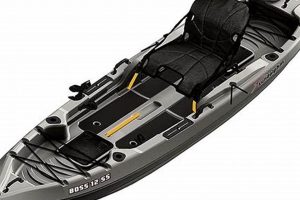
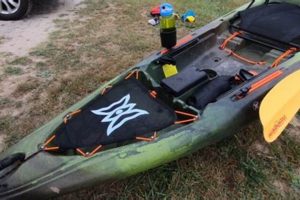
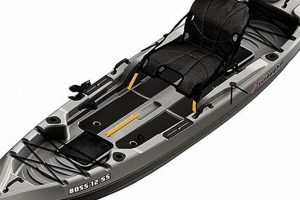
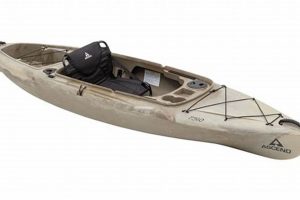
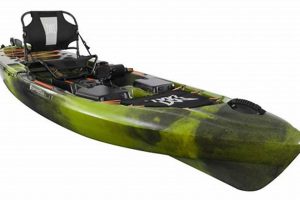
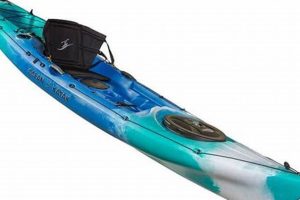
This specific model of watercraft is a closed-deck vessel designed for angling, offering stability and a lower center of gravity compared to sit-on-top kayaks. Its compact size, typically around 10 feet in length, makes it maneuverable, particularly in smaller bodies of water like ponds, lakes, and slow-moving rivers. The “sit-in” design provides protection from the elements and splash, enhancing comfort during longer trips.
Small, stable fishing platforms offer distinct advantages for anglers seeking a personalized experience. Their compact design allows access to shallow or heavily vegetated areas often inaccessible to larger boats. The lower profile minimizes wind resistance, improving paddling efficiency and control. Historically, smaller watercraft have played a crucial role in fishing cultures worldwide, demonstrating the enduring practicality of this design for both recreational and subsistence fishing.
Further exploration will cover key features like hull design, material construction, weight capacity, storage options, and potential modifications for enhancing this type of kayak’s fishing capabilities. Understanding these aspects allows for informed decision-making and ensures the vessel aligns with individual angling needs and preferences.
Tips for Utilizing a Compact Sit-In Fishing Kayak
Effective use of a small, closed-deck fishing kayak requires attention to several key areas. These tips focus on maximizing stability, safety, and overall fishing success.
Tip 1: Understand Weight Capacity: Respect the manufacturer’s specified weight limit, including angler weight, gear, and any potential catch. Exceeding this limit compromises stability and increases the risk of capsizing.
Tip 2: Practice Paddling and Maneuvering: Before venturing into open water, become comfortable with paddling strokes and turning techniques in a controlled environment. This builds confidence and improves handling in challenging conditions.
Tip 3: Plan and Organize Gear: Limited storage space necessitates careful planning and organization. Prioritize essential equipment and secure it properly to prevent shifting during movement.
Tip 4: Dress for Immersion: Even in calm conditions, the possibility of capsizing exists. Dressing in appropriate layers and considering a personal flotation device (PFD) ensures safety and preparedness for unexpected situations.
Tip 5: Check Weather Conditions: Wind, currents, and changing weather patterns can significantly impact small vessels. Monitor forecasts and avoid venturing out in conditions that exceed experience levels.
Tip 6: Maintain Proper Balance: Avoid sudden movements or leaning too far to one side. Distributing weight evenly within the cockpit enhances stability and minimizes the risk of tipping.
Tip 7: Respect Wildlife and the Environment: Practice leave-no-trace principles. Dispose of waste responsibly and avoid disturbing natural habitats.
Adhering to these guidelines contributes to a safe and enjoyable fishing experience, maximizing the advantages of this compact and specialized vessel type.
The subsequent section will address common questions and concerns regarding the use and maintenance of these kayaks, providing further resources for informed ownership.
1. Compact Size

The compact size of an excursion-style fishing kayak, typically around 10 feet, directly influences its suitability for specific environments and angling styles. This reduced length contributes to increased maneuverability, allowing navigation through narrow waterways, shallow coves, and areas dense with vegetation often inaccessible to larger vessels. This advantage proves particularly beneficial in smaller lakes, ponds, and slow-moving rivers where tight turns and precise positioning are essential for successful fishing. For example, accessing secluded fishing spots tucked away in dense reeds or navigating through fallen timber becomes significantly easier with a shorter, more responsive kayak.
Furthermore, the compact design contributes to ease of transport and storage. Reduced length and weight simplify loading and unloading from vehicle roof racks or trailers, and smaller storage footprints minimize space requirements in garages or sheds. This practicality expands accessibility for anglers with limited storage options or smaller vehicles, reducing logistical barriers to entry for this type of fishing. Consider an angler living in an urban environment with limited storage; a compact kayak allows participation in the sport without requiring significant logistical adjustments.
While the compact size presents advantages in maneuverability and portability, it can also influence stability and storage capacity. Careful consideration of these trade-offs is essential when selecting a kayak. Understanding the relationship between length, stability, and storage allows anglers to choose a vessel that best suits their individual needs and the specific fishing environments they frequent. This careful assessment ensures a balanced approach, maximizing the benefits of a compact design while mitigating potential drawbacks.
2. Sit-in Design

The “sit-in” design distinguishes this kayak type and significantly influences its performance characteristics and suitability for specific fishing environments. Unlike sit-on-top kayaks, the enclosed cockpit of a sit-in design places the angler’s lower body inside the hull, creating a lower center of gravity. This lower center of gravity enhances stability, a crucial factor in fishing scenarios requiring balance, such as casting, reeling, and landing fish. Consider an angler fly fishing in windy conditions; the lower center of gravity minimizes the impact of wind gusts, enhancing stability and allowing for more controlled casts.
Further, the enclosed cockpit offers protection from the elements, including spray, rain, and cold weather. This protection extends fishing seasons into colder months, providing greater comfort and potentially expanding fishing opportunities. For example, an angler fishing in late autumn can remain relatively dry and warm within the cockpit of a sit-in kayak, even when paddling through light chop or facing occasional splashes. This added protection expands the range of conditions suitable for fishing, enabling access to colder-water species or fishing during inclement weather.
While offering advantages in stability and protection, the sit-in design presents challenges related to water entry and egress. Self-rescue can be more complex than with sit-on-top kayaks, requiring specific techniques and practice. Additionally, re-entry into the kayak from deep water poses greater difficulty, emphasizing the importance of safety precautions and proper training. However, despite these considerations, the benefits of enhanced stability and protection from the elements make the sit-in design a preferred choice for many anglers, particularly those fishing in colder climates or seeking a more stable platform for their fishing activities. Understanding these characteristics contributes to informed decision-making and ensures alignment with individual angling needs and preferences.
3. Fishing Features
Specialized features distinguish fishing kayaks from recreational models, enhancing angling effectiveness and overall experience. These features directly influence an angler’s ability to target specific species, manage equipment efficiently, and maintain comfort during extended fishing trips. In the context of an excursion-style sit-in fishing kayak, these features are integrated into a compact and stable platform designed for accessing diverse fishing environments.
- Rod Holders:
Integrated rod holders, typically flush-mounted or adjustable, provide secure storage for fishing rods while paddling or preparing tackle. Multiple rod holders allow anglers to carry various rod and reel combinations suited for different fishing techniques or target species. For example, an angler might carry a spinning rod for casting lures and a baitcasting rod for bottom fishing. Secure rod storage minimizes the risk of damage or loss during transit and allows for quick access when fish are spotted. This feature is particularly crucial in compact kayaks where deck space is limited.
- Storage Compartments:
Dedicated storage compartments, often located within the hull or behind the seat, provide secure storage for tackle boxes, fishing tools, and other essential equipment. Dry storage compartments protect sensitive items from water damage, while larger open compartments accommodate bulkier items like landing nets or extra paddle blades. Consider an angler carrying a variety of lures and terminal tackle; organized storage ensures easy access and prevents tangling, maximizing fishing efficiency. The strategic placement and design of these compartments contribute to a balanced weight distribution, maintaining kayak stability.
- Anchor Trolley System:
An anchor trolley system allows controlled deployment and positioning of an anchor from various points along the kayak. This system enhances fishing precision by allowing anglers to maintain position in specific locations, such as along weed lines, drop-offs, or near submerged structures. For example, an angler fishing a river current can precisely control drift speed and maintain position relative to a promising fishing spot. This level of control is invaluable for techniques requiring precise boat positioning, maximizing fishing effectiveness in challenging environments.
- Paddle Holders/Leashes:
Paddle holders or leashes provide secure storage for the paddle when not in use, preventing loss and freeing hands for fishing activities. This feature is crucial during casting, reeling, or landing fish, ensuring the paddle remains within easy reach while minimizing interference with fishing operations. Consider an angler fighting a large fish; having the paddle securely stored allows for dedicated focus on landing the catch without the risk of losing the paddle or having it obstruct critical movements. This simple feature significantly enhances fishing efficiency and overall safety.
These specialized fishing features, integrated into the design of an excursion-style sit-in fishing kayak, transform the vessel into a highly effective and efficient fishing platform. By combining stability, maneuverability, and specialized features, these kayaks cater specifically to the needs of anglers, allowing them to maximize their time on the water and enhance their overall fishing experience. Further consideration of individual fishing styles and target species will guide the selection of specific features and modifications to optimize the kayak for individual angling preferences.
4. Stability

Stability represents a critical performance characteristic in any kayak, especially crucial in fishing kayaks where anglers frequently shift weight for casting, reeling, and landing fish. In the context of an excursion 10 sit-in fishing kayak, stability directly influences not only comfort and confidence but also safety and fishing effectiveness. Understanding the factors contributing to kayak stability is essential for informed decision-making and safe operation on the water.
- Hull Design:
Hull design plays a pivotal role in kayak stability. Wider hulls generally offer greater primary stability, resisting initial tipping motions. However, they may sacrifice maneuverability. Longer kayaks possess greater secondary stability, recovering more effectively from larger leans. The specific hull design of an excursion 10 fishing kayak balances these factors to provide adequate stability for fishing activities while maintaining reasonable maneuverability in various water conditions. For example, a slightly flatter hull bottom might provide enhanced initial stability for standing casting, a common technique in shallow-water fishing.
- Center of Gravity:
A lower center of gravity contributes significantly to kayak stability. The sit-in design of the excursion 10 places the angler’s weight lower in the hull compared to sit-on-top kayaks, inherently lowering the center of gravity and enhancing stability. This lower center of gravity makes the kayak less susceptible to tipping, particularly during sudden movements or when encountering external forces like wind or waves. This characteristic is beneficial when engaging in activities that shift weight, such as casting or retrieving a hooked fish.
- Weight Distribution:
Proper weight distribution within the kayak further influences stability. Evenly distributing gear and equipment throughout the hull minimizes imbalances that could compromise stability. Storing heavier items lower in the kayak and closer to the centerline enhances stability. For example, placing a tackle box in the bow and a cooler in the stern could create instability, whereas distributing weight more evenly would improve balance. Careful attention to weight distribution optimizes stability and enhances overall control.
- Water Conditions:
External factors such as wind, waves, and currents directly impact kayak stability. Strong winds or choppy water can create destabilizing forces, requiring increased vigilance and careful paddle strokes. Understanding how these conditions affect stability and adjusting paddling techniques accordingly is crucial for maintaining control and preventing capsizing. Operating in calm, protected waters generally presents fewer stability challenges compared to open, exposed areas subject to wind and waves. Therefore, matching water conditions to experience levels enhances safety and reduces the risk of instability-related incidents.
The interplay of these factors determines the overall stability of an excursion 10 sit-in fishing kayak. Understanding these elements allows anglers to make informed decisions about where and how to use the kayak safely and effectively. Proper consideration of hull design, center of gravity, weight distribution, and prevailing water conditions ensures a stable and enjoyable fishing experience, maximizing the benefits of this specialized vessel design. Recognizing the impact of these factors on stability contributes significantly to safe and successful on-water experiences.
5. Maneuverability
Maneuverability in a fishing kayak directly impacts an angler’s ability to navigate diverse water environments and effectively target fish. For an excursion 10 sit-in fishing kayak, maneuverability is particularly relevant due to its intended use in smaller bodies of water and areas requiring precise boat control. The kayak’s length, hull design, and water conditions all influence its maneuverability, impacting the angler’s fishing experience.
Shorter kayaks, like the excursion 10, generally offer enhanced maneuverability compared to longer vessels. The shorter length reduces turning radius, allowing for quicker turns and adjustments in direction. This proves advantageous when navigating tight spaces, such as narrow creeks, shallow coves, or areas with dense vegetation. For example, navigating a winding creek choked with fallen logs requires a highly maneuverable kayak capable of sharp turns and precise adjustments. A longer kayak would struggle in such environments, limiting access to potentially productive fishing areas.
Hull design also significantly affects maneuverability. A kayak with a more rounded hull tends to turn more easily than one with a flatter, tracking-oriented hull. While a tracking hull excels in maintaining a straight course in open water, it sacrifices maneuverability in tight spaces. The excursion 10 typically balances these characteristics, offering sufficient maneuverability for its intended purpose while maintaining reasonable tracking performance. This balance allows anglers to navigate diverse environments effectively, from open lakes to confined creeks. Consider an angler targeting bass in a shallow, weedy cove; a maneuverable kayak allows precise positioning for casting to pockets within the vegetation, maximizing fishing effectiveness. Conversely, a kayak designed solely for tracking would struggle to navigate the tight confines of the cove, limiting access to these prime fishing locations.
Water conditions also play a role in maneuverability. Strong currents or windy conditions can significantly impact a kayak’s responsiveness and directional control. In such conditions, a highly maneuverable kayak allows for more precise adjustments and corrections, maintaining course and preventing unintended drifts. However, even the most maneuverable kayak requires skilled paddling technique to maintain control in challenging conditions. Understanding the influence of water conditions on maneuverability allows anglers to choose appropriate locations and adapt paddling techniques for safe and effective navigation. Ultimately, maneuverability significantly contributes to fishing success by enabling access to productive fishing areas and precise boat control for casting and retrieving. Choosing a kayak with appropriate maneuverability for the intended fishing environment enhances angling opportunities and overall enjoyment on the water.
Frequently Asked Questions
This section addresses common inquiries regarding excursion 10 sit-in fishing kayaks, providing concise and informative responses to facilitate informed decision-making and enhance understanding of this specialized vessel type.
Question 1: What differentiates an excursion 10 sit-in fishing kayak from a recreational kayak?
Specialized features like rod holders, storage compartments designed for tackle, and an anchor trolley system distinguish fishing kayaks. These features enhance angling functionality compared to recreational kayaks designed primarily for general paddling and exploration.
Question 2: How does the sit-in design contribute to fishing performance?
The sit-in design provides a lower center of gravity, enhancing stability crucial for casting, reeling, and landing fish. It also offers protection from the elements, extending fishing seasons into colder months.
Question 3: What are the advantages of the compact size of an excursion 10 kayak?
The compact size enhances maneuverability in tight spaces like narrow creeks or shallow coves, providing access to areas often inaccessible to larger boats. It also simplifies transport and storage.
Question 4: What are the potential drawbacks of a sit-in kayak for fishing?
Sit-in kayaks can be more challenging for re-entry from the water compared to sit-on-top models. They also require more attention to safety procedures and self-rescue techniques due to the enclosed cockpit.
Question 5: How does one choose the right paddle length for an excursion 10 kayak?
Paddle length depends on factors like angler height, kayak width, and paddling style. Consulting retailer recommendations or utilizing online paddle sizing charts provides guidance for optimal selection.
Question 6: What maintenance is required for an excursion 10 fishing kayak?
Regular rinsing with fresh water after each use, especially in saltwater environments, prevents corrosion and damage. Periodic inspection of hull integrity and hardware ensures continued performance and safety.
Addressing these common questions provides a foundational understanding of excursion 10 sit-in fishing kayaks. Further research based on individual needs and intended uses is encouraged for informed purchase decisions and safe operation.
The following section will offer a concluding overview and highlight key takeaways for prospective buyers considering this specialized fishing platform.
Conclusion
This exploration of compact sit-in fishing kayaks, exemplified by the excursion 10 model, reveals a specialized vessel designed for precise maneuvering and enhanced stability. Key features such as rod holders, storage compartments, and anchor trolley systems cater specifically to angling needs. The sit-in design offers protection from the elements and contributes to a lower center of gravity, enhancing stability while potentially extending fishing seasons. The compact size facilitates access to shallow or confined waters, increasing fishing opportunities in diverse environments. However, considerations regarding re-entry challenges and the importance of safety procedures underscore the need for informed operation and appropriate training.
Careful evaluation of individual fishing styles, target species, and preferred environments remains crucial for informed purchase decisions. Understanding the interplay between design features, performance characteristics, and intended usage ensures optimal selection and maximized enjoyment on the water. Potential buyers are encouraged to continue research, seeking expert advice and practical experience to fully appreciate the potential of this specialized fishing platform.