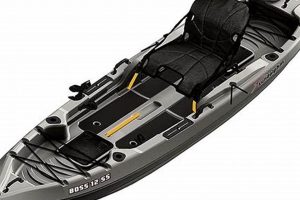
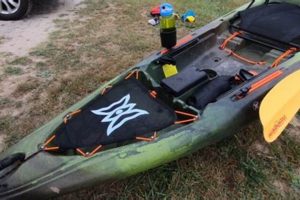
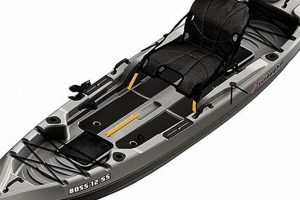
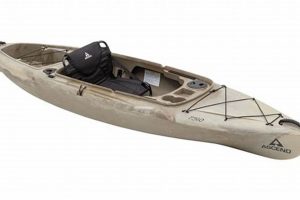
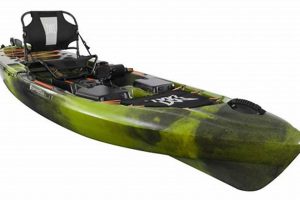
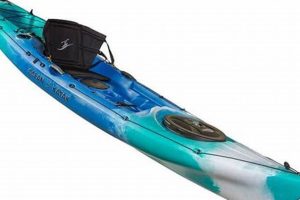
This type of watercraft is designed for two paddlers and specifically outfitted for angling. It features open cockpits, allowing users to sit on top rather than inside, offering enhanced stability and ease of entry and exit. Specialized features often include built-in rod holders, gear tracks, and storage compartments for tackle and equipment. These vessels provide a stable platform for anglers to cast lines and reel in catches collaboratively.
The open design offers several advantages, including improved visibility for spotting fish and navigating shallow waters. Self-bailing systems efficiently drain water, contributing to a dryer and safer experience. The increased stability compared to traditional sit-inside kayaks makes them particularly suitable for beginners or those fishing in rougher conditions. The shared paddling experience fosters camaraderie and teamwork, enhancing the overall fishing trip.
This article will further explore key considerations for selecting and utilizing such a craft, covering topics such as hull design, materials, essential accessories, and popular fishing techniques best suited to this platform.
Tips for Utilizing a Two-Person, Open-Cockpit Fishing Kayak
Optimizing the use of this specialized watercraft requires careful consideration of several factors. These tips aim to enhance safety, efficiency, and overall enjoyment on the water.
Tip 1: Coordinate Paddling Strokes: Synchronous paddling is crucial for efficient movement and maintaining a straight course. Practice paddling together on calm water to develop a rhythm and avoid collisions.
Tip 2: Distribute Weight Evenly: Proper weight distribution is essential for stability. Gear should be balanced between the two paddlers and positioned low in the kayak to prevent tipping.
Tip 3: Utilize Anchor or Stake-Out Pole: Maintaining position in a current or while targeting specific fishing spots requires an anchor or stake-out pole. Learning proper anchoring techniques is essential for safety and effectiveness.
Tip 4: Practice Re-Entry Techniques: While inherently stable, understanding how to re-enter the vessel after a capsize is crucial for safety. Practice these techniques in a controlled environment before venturing into open water.
Tip 5: Consider Specialized Paddles: Shorter, wider kayak fishing paddles offer greater maneuverability and control when casting and retrieving lines.
Tip 6: Invest in Appropriate Safety Gear: Personal flotation devices (PFDs) are mandatory and essential safety equipment. A whistle, first-aid kit, and communication device should also be carried on board.
Tip 7: Check Weather Conditions: Avoid paddling in strong winds, storms, or adverse weather conditions. Consult marine forecasts before embarking on any fishing trip.
Adhering to these guidelines will contribute to a safer and more productive fishing experience. Careful planning and preparation will enhance enjoyment and allow anglers to focus on the task at hand.
By understanding the nuances of this specialized watercraft, anglers can maximize their time on the water and enhance their chances of success.
1. Stability

Stability forms a cornerstone of effective angling from a two-person, open-cockpit kayak. The inherent design of these vessels, with their wider beam and higher center of gravity compared to traditional sit-inside kayaks, contributes significantly to their stability. This characteristic proves particularly advantageous when casting, reeling, and landing fish, especially larger species that exert considerable force. The open cockpit allows anglers greater freedom of movement, reducing the risk of capsizing during these activities. Consider a scenario where two anglers hook fish simultaneously; a stable platform becomes crucial for managing lines, rods, and potential sudden movements without compromising balance.
Furthermore, the stability offered by these kayaks extends beyond fishing activities. Navigating challenging water conditions, such as mild chop or currents, requires a stable platform to maintain course and prevent capsizing. Entering and exiting the kayak, often performed in shallow water or near docks, presents a further stability challenge that these designs effectively address. For instance, embarking or disembarking with fishing gear in hand necessitates a stable vessel to prevent accidental slips or falls. This enhanced stability instills confidence, particularly for less experienced paddlers or those fishing with children.
In conclusion, stability plays a pivotal role in the overall performance and safety of two-person, open-cockpit fishing kayaks. The design inherently promotes stability, facilitating various fishing activities and mitigating risks associated with challenging water conditions or angler movements. This characteristic ultimately contributes to a more secure and enjoyable fishing experience.
2. Capacity (Two-Person)

The two-person capacity inherent in these specialized kayaks directly influences several key aspects of the fishing experience. This design element impacts not only practical considerations like weight capacity and storage but also social dynamics and collaborative fishing strategies. Understanding the implications of this two-person configuration is crucial for selecting and effectively utilizing these vessels.
- Shared Paddling and Effort:
The two-person design allows for shared paddling responsibilities, distributing the physical effort required for propulsion. This shared workload reduces fatigue, particularly during longer trips or against challenging currents. One individual can paddle while the other focuses on fishing, or both can paddle together for increased speed and efficiency. This collaborative paddling significantly expands the range and duration of fishing excursions.
- Collaborative Fishing Strategies:
Two anglers in a single vessel can implement coordinated fishing strategies. For instance, one angler might troll a lure while the other casts to visible structure. This coordinated approach increases the chances of locating and catching fish. Furthermore, two individuals can more effectively manage larger catches or assist each other with landing challenging fish.
- Enhanced Safety and Support:
The presence of two individuals on board enhances safety. In the event of an emergency, such as a capsize or injury, having a companion provides immediate assistance. Further, two sets of eyes improve navigation and situational awareness, reducing the risk of collisions or grounding. The shared responsibility also extends to tasks like anchoring, equipment management, and general boat handling.
- Social Interaction and Shared Experience:
Beyond the practical advantages, the two-person configuration fosters social interaction and a shared experience. Fishing becomes a collaborative activity, enhancing camaraderie and creating lasting memories. This shared aspect makes these kayaks particularly well-suited for friends, family members, or fishing partners looking to strengthen bonds while enjoying the outdoors.
The two-person capacity is thus a defining feature of these kayaks, influencing not just practical aspects like paddling efficiency and weight distribution, but also the social dynamics of the fishing experience. By understanding the implications of this design element, anglers can leverage its benefits to enhance their fishing trips.
3. Fishing Features
Specialized fishing features distinguish these kayaks from recreational models, optimizing them for angling pursuits. These integrated features directly influence efficiency, organization, and overall fishing success. Rod holders, often flush-mounted or adjustable, secure rods while paddling or when actively fighting fish. This hands-free capability allows for lure adjustments, baiting hooks, or managing other equipment without compromising safety. Consider a scenario where an angler hooks a powerful fish; secured rods prevent loss or damage during the ensuing struggle. Similarly, integrated tackle storage compartments keep essential gear organized and readily accessible, eliminating the need to rummage through bags or boxes, which could disrupt balance or lead to lost equipment.
Further enhancing functionality are features like gear tracks, mounting platforms, and transducer scuppers. Gear tracks provide versatile mounting points for fish finders, GPS units, cameras, and other accessories. These additions streamline the electronics setup and enhance situational awareness. For example, a fish finder mounted on a gear track provides real-time depth readings and fish location information, significantly improving fishing success. Transducer scuppers facilitate clean and efficient transducer installations, crucial for accurate sonar readings without the need for external mounting hardware. These integrated features minimize clutter and maximize usable deck space. Practical examples include mounting a camera to capture memorable catches or installing a GPS unit for precise navigation.
The thoughtful integration of fishing features significantly elevates the functionality of these kayaks. Rod holders, tackle storage, gear tracks, and transducer scuppers enhance organization, efficiency, and ultimately, fishing success. These specialized features are not mere add-ons but integral components that transform a standard two-person kayak into a dedicated fishing platform. Understanding the purpose and application of these features allows anglers to fully leverage the capabilities of their vessel and maximize their time on the water. This targeted design contributes to a more organized, efficient, and ultimately, more rewarding fishing experience.
4. Open Cockpit Design

The open cockpit design is a defining characteristic of these specialized kayaks, fundamentally influencing their functionality and suitability for angling. Unlike traditional sit-inside kayaks, the open cockpit allows anglers to sit on top of the hull, providing several key advantages specifically relevant to fishing activities. This design fosters enhanced stability, crucial for casting, reeling, and landing fish, especially in challenging conditions or when handling larger species. The unobstructed seating position improves visibility, allowing for better fish spotting and navigation in shallow waters. Furthermore, the open design facilitates easier entry and exit, a significant advantage for anglers who may need to quickly reposition or re-enter the kayak after a brief swim. For example, landing a large fish might necessitate maneuvering out of the kayak temporarily; the open cockpit simplifies this process.
The self-bailing system, an inherent feature of open cockpit designs, further contributes to practicality and safety. This system efficiently drains water that enters the cockpit, keeping anglers dry and preventing the kayak from becoming swamped. This self-bailing mechanism proves particularly beneficial in rougher water or during unexpected splashes. Consider a scenario where a wave washes over the bow; the self-bailing system quickly removes the water, maintaining stability and preventing the need for manual bailing. This feature enhances safety and allows anglers to focus on fishing without the distraction of accumulating water.
In summary, the open cockpit design offers several practical advantages directly relevant to fishing. Enhanced stability, improved visibility, easier entry and exit, and the self-bailing system contribute to a safer, more efficient, and ultimately more enjoyable fishing experience. This design element is not merely a stylistic choice but a functional adaptation that distinguishes these specialized kayaks from traditional closed-cockpit models. Understanding the practical implications of the open cockpit design is crucial for appreciating the utility and effectiveness of these vessels in a fishing context.
5. Durability
Durability is a critical factor influencing the lifespan and overall performance of a two-person, open-cockpit fishing kayak. These vessels are subjected to various stresses, from impacts with rocks and submerged obstacles to prolonged exposure to sun, water, and fluctuating temperatures. A durable construction ensures the kayak can withstand these rigors, maintaining its structural integrity and functionality over extended periods. This directly translates to a safer and more reliable fishing platform, reducing the risk of damage and costly repairs.
- Material Selection:
The choice of material significantly impacts a kayak’s durability. High-density polyethylene (HDPE) is a common choice due to its impact resistance, UV stability, and affordability. Other options include rotomolded polyethylene, known for its enhanced durability, and composite materials like fiberglass or carbon fiber, which offer superior strength and stiffness but come at a higher price point. Selecting appropriate materials ensures the kayak can withstand the rigors of regular use, including impacts, abrasion, and exposure to the elements. For example, an HDPE kayak can tolerate minor collisions with rocks without sustaining significant damage, while a composite kayak might be more susceptible to cracking or chipping under similar circumstances.
- Construction Methods:
The construction method employed influences a kayak’s overall strength and resistance to wear. Rotomolding, a common process for polyethylene kayaks, creates a seamless, one-piece hull with uniform wall thickness, enhancing durability and impact resistance. Other methods, such as thermoforming or vacuum infusion for composite kayaks, influence the final product’s strength and stiffness. A robust construction method, combined with quality materials, translates to a longer-lasting and more resilient kayak. A well-constructed rotomolded kayak, for instance, is less likely to develop leaks or structural weaknesses compared to a poorly manufactured one.
- Hardware and Fittings:
The durability of hardware components, such as handles, latches, and rod holders, plays a significant role in the kayak’s overall longevity. Corrosion-resistant stainless steel or marine-grade aluminum fittings are essential for withstanding exposure to saltwater and other harsh environments. High-quality hardware ensures these components remain functional and reliable over time. For example, stainless steel rod holders resist corrosion and maintain their structural integrity even after prolonged exposure to saltwater spray.
- UV Resistance:
Prolonged exposure to sunlight can degrade certain materials, leading to fading, cracking, and weakening. UV-resistant coatings or additives incorporated into the kayak’s construction protect against sun damage, extending the lifespan and maintaining the aesthetic appeal of the vessel. This UV resistance is particularly important for kayaks frequently used in sunny climates, ensuring they remain structurally sound and visually appealing despite prolonged sun exposure. For instance, a kayak with a UV-resistant coating will retain its color and structural integrity better than one without such protection.
The durability of a two-person, open-cockpit fishing kayak directly impacts its lifespan, maintenance requirements, and overall performance. By carefully considering material selection, construction methods, hardware quality, and UV resistance, anglers can choose a kayak that withstands the demands of regular use and provides years of reliable service. Investing in a durable kayak minimizes the risk of damage, reduces maintenance costs, and ensures a safe and enjoyable fishing experience for years to come.
6. Maneuverability
Maneuverability is a crucial performance characteristic influencing the effectiveness and enjoyment of a two-person, open-cockpit fishing kayak. The ability to precisely control the vessel’s movement and positioning directly impacts fishing success, particularly in dynamic environments such as rivers, streams, or areas with complex underwater structures. Effective maneuvering enables anglers to navigate tight spaces, hold position against currents, and approach target fishing zones stealthily. Understanding the factors affecting maneuverability is essential for selecting and effectively utilizing these specialized kayaks.
- Hull Design:
Hull design significantly influences a kayak’s maneuverability. Shorter kayaks with a flatter hull tend to be more agile and responsive, allowing for quick turns and precise adjustments. Longer kayaks with a more pronounced keel track better in a straight line but sacrifice some turning ability. The specific hull design should align with the intended fishing environment. For example, a shorter, more maneuverable kayak excels in navigating tight creeks or maneuvering around dense vegetation, while a longer, tracking-focused kayak performs better in open water or when covering longer distances. The choice of hull design reflects a trade-off between maneuverability and tracking performance.
- Paddle Length and Design:
Paddle length and blade shape affect maneuverability. Shorter paddles offer greater control for quick turns and maneuvering in tight spaces, while longer paddles provide more leverage for powerful strokes and increased speed. Asymmetrical paddle blades enhance stroke efficiency and reduce flutter, further contributing to controlled movement. Paddle selection should complement the kayak’s hull design and the angler’s paddling style. A shorter paddle paired with a maneuverable kayak maximizes agility, while a longer paddle coupled with a tracking-focused kayak optimizes speed and efficiency.
- Rudder or Skeg Systems:
Rudders and skegs influence directional stability and maneuverability. A rudder, controlled by foot pedals, provides active steering control, enabling precise course adjustments and counteracting wind or current drift. A skeg, a fixed or retractable fin, enhances tracking in a straight line, particularly in windy conditions, but can limit turning agility. The presence and type of steering system influence the kayak’s responsiveness and suitability for specific fishing environments. A rudder proves beneficial in navigating challenging currents or maintaining precise positioning while fishing, whereas a skeg enhances stability and tracking in open water. The choice between a rudder and a skeg, or a combination of both, depends on the angler’s specific needs and preferences.
- Water Conditions and Currents:
Maneuverability is affected by prevailing water conditions and currents. Strong winds or currents can significantly impact a kayak’s tracking and responsiveness, requiring more effort to maintain course or execute turns. Understanding how the kayak behaves in various conditions is crucial for safe and effective maneuvering. In calm conditions, a kayak’s inherent maneuverability characteristics are readily apparent, while in challenging conditions, factors like wind and current become dominant influences. Adapting paddling techniques and utilizing rudder or skeg systems become essential for maintaining control and achieving desired positioning in dynamic environments.
Maneuverability significantly impacts the effectiveness and versatility of a two-person, open-cockpit fishing kayak. Factors such as hull design, paddle characteristics, steering systems, and prevailing water conditions all influence the kayak’s responsiveness and control. Understanding the interplay of these factors enables anglers to select a kayak appropriate for their intended fishing environment and develop effective paddling techniques for precise maneuvering and optimal fishing success. A highly maneuverable kayak offers advantages in tight spaces and dynamic environments, while a less maneuverable but more tracking-focused kayak excels in open water or covering longer distances. Selecting the right balance of maneuverability and tracking performance is crucial for maximizing fishing efficiency and enjoyment.
7. Storage

Ample and well-designed storage is essential for two-person, open-cockpit fishing kayaks, directly impacting organization, efficiency, and overall fishing success. These vessels must accommodate not only personal gear but also a significant amount of fishing equipment, including rods, reels, tackle boxes, safety gear, and potentially food and beverages. Effective storage solutions keep these items secure, organized, and readily accessible, minimizing clutter and maximizing usable deck space.
- Tank Wells (Rear Storage):
Large, open storage areas located at the stern, often referred to as tank wells, accommodate bulky items like tackle crates, coolers, and dry bags. Bungee cords or straps secure these items, preventing shifting or loss during transit. This rear storage keeps heavier items centralized, contributing to balanced weight distribution and optimal kayak performance. For example, storing a cooler and tackle crate in the tank well keeps these frequently accessed items within easy reach while maintaining a balanced center of gravity.
- Hatches (Dry Storage):
Sealed hatches provide protected storage for sensitive items like electronics, wallets, keys, and spare clothing. These compartments keep items dry and safe from water damage, essential in a frequently wet environment. Strategically placed hatches maximize storage capacity while minimizing interference with paddling or fishing activities. Storing a phone and wallet in a dry hatch ensures these valuables remain protected even during unexpected splashes or capsizes.
- Side Storage and Gear Tracks:
Smaller storage compartments or recessed areas located along the sides of the kayak provide convenient access to frequently used items like pliers, knives, and leader material. Gear tracks, integrated into the kayak’s deck, offer versatile mounting points for accessories, further enhancing storage options and customization. These features keep essential tools within easy reach, streamlining fishing activities and minimizing disruptions. Mounting a small tackle box or tool holder on a gear track keeps frequently used lures and tools readily accessible without cluttering the cockpit area.
- Rod Holders and Storage:
Dedicated rod holders, either flush-mounted or adjustable, secure fishing rods during transport and while actively fishing. Some kayaks also feature integrated rod storage compartments, protecting rods from damage and keeping them organized. These features maximize deck space and prevent rod entanglement, enhancing safety and efficiency. Securely storing rods in dedicated holders prevents them from interfering with paddling or becoming entangled with other gear, particularly during challenging retrieves or when maneuvering in tight spaces.
Effective storage solutions are integral to the functionality and enjoyment of a two-person, open-cockpit fishing kayak. Adequate and well-designed storage compartments, combined with features like gear tracks and rod holders, maximize usable space, enhance organization, and contribute to a more efficient and productive fishing experience. The strategic placement and accessibility of storage compartments directly influence the angler’s ability to quickly locate and deploy necessary equipment, minimizing disruptions and maximizing time spent actively fishing. By understanding the various storage options and their practical applications, anglers can optimize their kayak setup and enhance their overall fishing experience.
Frequently Asked Questions
This section addresses common inquiries regarding two-person, open-cockpit fishing kayaks, providing concise and informative responses to facilitate informed decision-making and optimal utilization.
Question 1: What are the key advantages of an open-cockpit design for fishing?
Open cockpits offer enhanced stability, improved visibility, easier entry and exit, and integrated self-bailing systems, contributing to a safer and more efficient fishing experience.
Question 2: How does the two-person configuration benefit fishing activities?
The two-person design enables shared paddling effort, collaborative fishing strategies, enhanced safety through mutual support, and a more social and enjoyable experience.
Question 3: What materials are typically used in the construction of these kayaks, and how do they impact durability?
Common materials include high-density polyethylene (HDPE) and rotomolded polyethylene, chosen for their impact resistance, UV stability, and affordability. Composite materials offer higher strength but at a premium cost. Material selection directly influences the kayak’s resistance to wear, tear, and environmental factors.
Question 4: What features should one look for when choosing a fishing-specific kayak?
Essential features include rod holders, tackle storage compartments, gear tracks, transducer scuppers, and comfortable seating arrangements designed for extended fishing trips.
Question 5: How does one maintain and care for a two-person fishing kayak?
Regular cleaning, proper storage out of direct sunlight, and periodic inspections for damage contribute to the kayak’s longevity. Rinsing with freshwater after saltwater use prevents corrosion. Proper care ensures optimal performance and extends the lifespan of the vessel.
Question 6: Are there specific safety considerations for using these kayaks in different water conditions?
Always check weather forecasts before embarking on any fishing trip. Personal flotation devices (PFDs) are mandatory. Understanding proper paddling techniques and re-entry procedures is crucial, especially in challenging conditions. Carrying a communication device and first-aid kit enhances safety preparedness.
These responses offer concise insights into key aspects of two-person, open-cockpit fishing kayaks. Careful consideration of these points ensures informed selection, optimal utilization, and a safe and rewarding fishing experience.
The following sections will explore specific models and accessories, providing practical guidance for equipping and optimizing these specialized fishing platforms.
Conclusion
This exploration of specialized two-person, open-cockpit fishing kayaks has highlighted their unique design elements and their impact on angling pursuits. Stability, capacity, specialized fishing features, open cockpit design, durability, maneuverability, and storage considerations all contribute to the effectiveness and enjoyment of these vessels. Understanding these interconnected aspects empowers informed decision-making, optimizing kayak selection and utilization for specific fishing environments and individual preferences.
The increasing popularity of this style of kayak reflects a growing appreciation for their specialized design and the enhanced fishing experience they offer. Careful consideration of the factors discussed herein ensures not only successful angling but also a safe and rewarding connection with the aquatic environment.