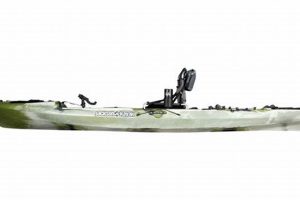
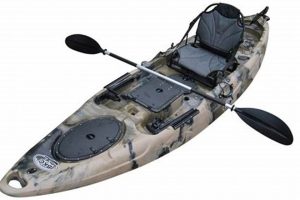
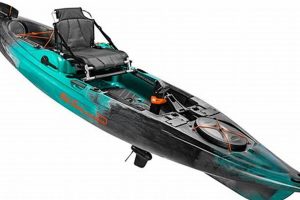
A shallow-water fishing vessel designed for optimal performance in these environments requires specific characteristics. Stability, maneuverability, and stealth are crucial for navigating shallow waters, approaching fish undetected, and maintaining balance while casting. A suitable watercraft often features a shallow draft, allowing access to areas inaccessible to deeper-hulled boats. Specialized features, such as rod holders, anchor trolleys, and ample storage for gear, further enhance the angler’s experience and effectiveness.
The pursuit of game fish in shallow, often vegetated areas necessitates specialized equipment. An appropriate craft provides a stable platform for sight fishing and accurate casting, maximizing the chances of a successful catch. Quiet propulsion, whether by paddle or a shallow-draft motor, minimizes disturbance to the environment and avoids spooking fish. Historically, anglers have utilized various small watercraft for this purpose, but modern designs prioritize stability, maneuverability, and features tailored to the demands of this specific fishing style. This contributes to the growing popularity of the sport and its accessibility to a wider range of anglers.
Factors influencing the selection of an ideal shallow-water fishing vessel include hull design, propulsion systems, and integrated features. Understanding these elements is essential for making an informed decision and optimizing fishing performance. The following sections will delve into these factors in detail, offering guidance and insights for anglers of all experience levels.
Tips for Selecting a Shallow-Water Fishing Kayak
Choosing the right vessel for shallow-water fishing requires careful consideration of several key factors. These tips offer guidance for selecting a kayak optimized for stability, maneuverability, and overall fishing performance in flats environments.
Tip 1: Consider Hull Design: A flat-bottomed hull offers exceptional stability and maneuverability in shallow water, allowing for effortless gliding over vegetation. However, a slightly rounded or pontoon hull may provide better tracking in open water sections often encountered when traversing flats.
Tip 2: Evaluate Propulsion Options: Paddle kayaks provide stealth and allow access to extremely shallow areas. Pedal-driven options offer hands-free fishing and increased speed for covering larger areas. Motorized kayaks, though less common, offer the greatest range and speed.
Tip 3: Prioritize Stability: Stability is paramount for sight fishing and stand-up casting. Wider kayaks generally offer greater stability, while narrower designs excel in speed and maneuverability. Consider individual balance and fishing style when evaluating stability.
Tip 4: Assess Storage Capacity: Ample storage is essential for carrying fishing gear, tackle boxes, and safety equipment. Look for kayaks with dedicated storage compartments, including dry hatches and tank wells, to keep gear organized and protected.
Tip 5: Examine Seating Comfort: Long hours on the water necessitate a comfortable seating system. Adjustable seats with lumbar support and breathable fabric contribute to a more enjoyable and less fatiguing fishing experience.
Tip 6: Consider Weight and Portability: Kayak weight influences transportation and launching ease. Lighter kayaks are easier to car-top and carry to remote launch sites. Consider the available transportation methods and physical capabilities when selecting a kayak.
Tip 7: Evaluate Additional Features: Features such as rod holders, anchor trolleys, and integrated fish finders enhance fishing functionality. Evaluate the necessity of these features based on individual fishing preferences and techniques.
By considering these factors, anglers can select a kayak tailored to their specific needs and maximize their shallow-water fishing success. A well-chosen kayak enhances the overall fishing experience and allows for efficient exploration of these unique and productive environments.
The insights provided here aim to equip anglers with the knowledge necessary to choose the right equipment. The concluding section will summarize the key points and offer final recommendations.
1. Stability

Stability represents a critical factor in selecting a kayak for flats fishing. A stable platform is essential for successful sight fishing, accurate casting, and comfortable maneuvering in shallow, often unpredictable waters. Compromised stability can lead to angler fatigue, difficulty in casting, and even capsizing, significantly impacting the fishing experience and potentially posing safety risks. The following facets explore the components and implications of stability in this specialized fishing context.
- Primary Stability:
Primary stability refers to a kayak’s initial resistance to tipping. A wider hull and lower center of gravity contribute to higher primary stability. This is crucial for maintaining balance while stationary or making small movements, such as casting or retrieving a lure. A kayak with high primary stability feels secure and inspires confidence, allowing the angler to focus on fishing rather than balancing.
- Secondary Stability:
Secondary stability describes a kayak’s resistance to tipping at greater angles of lean. This comes into play when paddling, maneuvering through currents, or encountering waves. While a kayak with high primary stability might feel initially secure, its secondary stability dictates how it handles larger movements. For flats fishing, a balance between primary and secondary stability is desirable, offering both initial stability and the ability to lean into turns or handle unexpected disturbances.
- Impact of Kayak Design:
Hull design, including width, shape, and length, significantly influences stability. Wider, flatter hulls generally offer higher primary stability, while longer, narrower hulls prioritize speed and tracking. Pontoon hulls provide enhanced stability but can sacrifice maneuverability. Understanding the trade-offs between stability, speed, and maneuverability is crucial for selecting a kayak suited to individual fishing styles and the specific conditions of the flats environment.
- Influence of Angler Behavior:
While kayak design plays a central role, angler behavior also impacts stability. Shifting weight, standing up for sight fishing, and making sudden movements can compromise stability, even in a well-designed kayak. Practicing balance and maintaining a low center of gravity are essential for maximizing stability on the water. Understanding the kayak’s limitations and adapting fishing techniques accordingly are crucial for maintaining stability and ensuring a safe and productive fishing experience.
Ultimately, stability in a flats fishing kayak contributes directly to angling effectiveness and safety. Choosing a kayak with appropriate stability characteristics for the intended fishing style and environmental conditions enhances the angler’s ability to focus on the task at hand catching fish rather than constantly battling to maintain balance. Careful consideration of these facets of stability ensures a more comfortable, confident, and successful flats fishing experience.
2. Shallow Draft

Shallow draft is paramount for effective flats fishing. Flats environments are characterized by their shallow water depths, often mere inches deep. A kayak with a deep draft restricts access to these productive fishing zones, limiting opportunities to target species inhabiting these shallow areas. Reduced draft enables navigation through shallow channels, over submerged vegetation, and closer to shorelines where fish often congregate. This accessibility is crucial for maximizing fishing success in flats environments. For instance, navigating shallow mangrove estuaries or grassy flats requires minimal draft to avoid grounding or disturbing the bottom, allowing anglers to approach fish discreetly.
The relationship between shallow draft and flats fishing success extends beyond mere accessibility. A shallower draft minimizes disturbance to the seabed, reducing noise and turbidity that can spook fish. This stealth advantage is particularly crucial in clear, shallow water where fish are easily alerted by disturbances. Furthermore, a shallow draft allows for more efficient poling or paddling, reducing drag and effort required for navigating these shallow environments. Consider a scenario where an angler pursues bonefish on a shallow flat; a shallow draft kayak allows for quiet and effortless movement, maximizing chances of a successful approach and cast.
Minimizing draft is a key design consideration for kayaks optimized for flats fishing. Hull design, weight distribution, and the angler’s weight all contribute to the overall draft. Understanding these factors allows anglers to make informed decisions when selecting a kayak and optimizing its performance in shallow water. Challenges may arise in balancing shallow draft with other desirable kayak characteristics, such as stability and tracking. However, prioritizing a shallow draft remains a critical element in achieving optimal performance and maximizing fishing success in the unique conditions presented by flats environments.
3. Maneuverability

Maneuverability is a defining characteristic of a kayak well-suited for flats fishing. The shallow, often complex terrain of flats environments demands a vessel capable of navigating tight channels, quickly changing direction, and effortlessly maneuvering around obstacles such as submerged vegetation or oyster beds. A highly maneuverable kayak allows anglers to exploit these intricate environments, accessing prime fishing spots and positioning themselves optimally for casting to target species. Consider a scenario where a school of redfish is spotted tailing in a shallow, mangrove-lined creek; a maneuverable kayak allows the angler to quietly and efficiently navigate the narrow waterway, approaching the fish without spooking them.
Several factors contribute to kayak maneuverability in flats fishing. Shorter kayaks generally turn more quickly than longer ones, enabling rapid changes in direction. Hull design also plays a crucial role; a kayak with a flatter bottom and defined chines (edges where the hull meets the side) will turn more sharply than one with a rounded or V-shaped hull. Furthermore, the type of propulsion influences maneuverability. Paddle kayaks offer precise control and the ability to spin on a dime, while pedal-driven kayaks provide efficient forward and reverse movement, facilitating quick adjustments in position. The choice of propulsion depends on the specific fishing style and the characteristics of the flats being fished.
The practical significance of maneuverability in flats fishing cannot be overstated. It directly impacts an angler’s ability to effectively present lures or flies to target species, reach productive fishing areas, and avoid obstacles. A lack of maneuverability can lead to missed opportunities, frustration, and even damage to the kayak or its propulsion system. Understanding the factors that influence maneuverability allows anglers to select a kayak optimized for navigating the complexities of flats environments, ultimately maximizing their chances of fishing success. Careful consideration of these factors ensures a more efficient, enjoyable, and productive flats fishing experience.
4. Propulsion (Paddle/Pedal)

Propulsion systems represent a critical consideration when selecting a kayak optimized for flats fishing. The choice between paddle and pedal propulsion significantly impacts an angler’s experience and effectiveness in these unique environments. Each system presents distinct advantages and disadvantages, influencing factors such as stealth, speed, maneuverability, and overall fishing performance. Understanding these nuances is essential for making an informed decision tailored to individual fishing styles and the specific characteristics of the target flats.
Paddle propulsion offers unparalleled stealth, a crucial factor when approaching wary fish in shallow, clear water. The quiet operation of a paddle minimizes disturbance, allowing anglers to get within casting range without spooking their quarry. Paddling also provides excellent maneuverability, enabling precise adjustments in position and quick turns in tight spaces. However, paddling requires continuous physical effort, potentially leading to fatigue, especially during long fishing days or in challenging conditions. This physical exertion can also compromise stability, particularly when casting or retrieving a fish.
Pedal-powered kayaks provide hands-free fishing, a significant advantage when sight fishing or managing multiple rods. Pedal drives offer greater speed and range compared to paddling, allowing anglers to cover more water and access distant fishing spots. Modern pedal systems also offer forward and reverse functionality, enhancing maneuverability and control in shallow water. However, pedal drives can be less stealthy than paddles, potentially disturbing fish in extremely shallow areas. They also add complexity and cost to the kayak, requiring maintenance and potentially limiting access to the shallowest waters due to increased draft.
The ideal propulsion system for flats fishing depends on various factors, including the specific environment, target species, fishing style, and individual preferences. Anglers prioritizing stealth and maneuverability in extremely shallow water may find paddle propulsion more suitable. Those seeking speed, range, and hands-free fishing might prefer the advantages of a pedal drive. Careful consideration of these factors ensures the selection of a propulsion system that aligns with individual needs and maximizes fishing success in the flats environment.
5. Storage Capacity
Storage capacity is a crucial factor influencing the effectiveness and enjoyment of flats fishing kayak excursions. Adequate storage allows anglers to carry essential gear, including tackle boxes, safety equipment, extra clothing, and food and water. Insufficient storage can lead to a cluttered deck, hindering movement and casting, and potentially compromising safety. Organized and accessible storage contributes to a more efficient and enjoyable fishing experience, allowing anglers to focus on the task at hand rather than managing gear.
- Types of Storage
Kayaks designed for flats fishing typically offer various storage options, including hatches, tank wells, and bungee systems. Hatches provide dry storage for sensitive items like electronics and wallets. Tank wells, located behind the seat, accommodate larger items such as tackle crates or coolers. Bungee systems secure items to the deck, providing quick access to frequently used gear. Understanding the types and capacities of available storage options allows anglers to select a kayak suited to their specific needs.
- Organization and Accessibility
Effective organization is as crucial as storage capacity. A well-organized kayak allows for quick and easy access to essential gear without disrupting fishing activities. Dividers within hatches and tackle-specific storage solutions enhance organization. Accessibility is equally important; strategically placed storage compartments ensure that frequently used items are within easy reach, minimizing movement and maximizing fishing time.
- Weight Capacity and Distribution
Kayak weight capacity dictates the total amount of gear and angler weight the vessel can safely carry. Exceeding this limit compromises stability and performance. Weight distribution is also critical; evenly distributing gear throughout the kayak maintains balance and prevents tipping. Understanding weight capacity and practicing proper weight distribution ensures safe and efficient operation.
- Impact on Fishing Performance
Ample and well-organized storage directly impacts fishing performance. Easy access to tackle and gear streamlines lure changes and adjustments, maximizing fishing time. A clutter-free deck enhances casting accuracy and range. Carrying essential safety equipment, such as a first-aid kit and communication devices, ensures preparedness for unexpected situations. Proper storage contributes to a more focused, efficient, and ultimately successful flats fishing experience.
Ultimately, adequate storage capacity is an essential element of a well-equipped flats fishing kayak. Careful consideration of storage types, organization, accessibility, weight capacity, and the impact on fishing performance allows anglers to select a kayak that meets their specific needs and enhances their overall fishing experience. Prioritizing storage contributes to a more organized, efficient, and ultimately successful outing on the flats.
Frequently Asked Questions
This section addresses common inquiries regarding kayak selection for flats fishing, providing concise and informative responses to aid decision-making.
Question 1: What hull design is best suited for flats fishing?
Flat-bottomed hulls offer exceptional stability and maneuverability in shallow water, while slightly rounded or pontoon hulls provide better tracking in open water. Selection depends on the specific fishing environment and angler preference.
Question 2: Is paddle or pedal propulsion better for flats fishing?
Paddle propulsion offers superior stealth, while pedal drives provide hands-free fishing and increased speed. The optimal choice depends on individual fishing styles and priorities.
Question 3: How important is stability in a flats fishing kayak?
Stability is paramount for sight fishing, casting, and overall comfort. Wider kayaks generally offer greater stability, but maneuverability may be compromised. Balancing stability and maneuverability is key.
Question 4: What storage features should one look for in a flats fishing kayak?
Ample storage, including dry hatches, tank wells, and rod holders, is essential for carrying gear and maintaining a clutter-free deck. Prioritize storage solutions tailored to specific fishing needs.
Question 5: How does kayak weight influence flats fishing performance?
Lighter kayaks are easier to transport and launch, particularly in remote areas. However, heavier kayaks may offer greater stability. Consider transportation logistics and individual physical capabilities.
Question 6: What additional features can enhance the flats fishing experience?
Features such as anchor trolleys, integrated fish finders, and specialized seating systems can significantly enhance fishing functionality and comfort. Evaluate these features based on individual needs and budget.
Careful consideration of these frequently asked questions empowers anglers to make informed decisions and select a kayak optimized for the unique demands of flats fishing.
This concludes the FAQ section. The following section will offer concluding thoughts and recommendations.
Conclusion
Choosing the optimal shallow-water fishing kayak requires careful evaluation of key features directly impacting performance and angler experience. Hull design, propulsion systems, stability, maneuverability, and storage capacity all play crucial roles. Balancing these elements based on individual fishing styles, target species, and the specific characteristics of the fishing environment is essential for maximizing success. Prioritizing stability ensures comfortable casting and sight fishing, while a shallow draft allows access to shallow areas. Maneuverability is crucial for navigating complex waterways, and the choice between paddle and pedal propulsion impacts stealth, speed, and overall efficiency. Adequate storage capacity further enhances organization and convenience on the water.
Ultimately, the ideal shallow-water fishing kayak is a personalized choice. Thorough research, consideration of individual needs, and a clear understanding of the interplay between kayak features and the flats environment empowers anglers to make informed decisions. This careful selection process contributes significantly to a more productive, enjoyable, and successful pursuit of game fish in these unique and challenging shallow-water ecosystems.