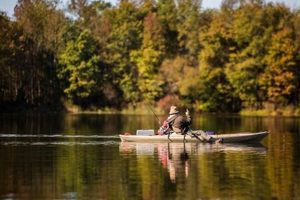
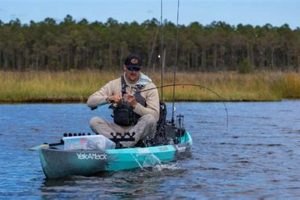
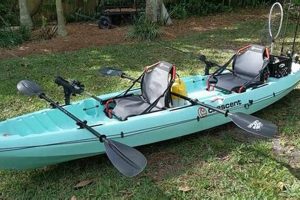
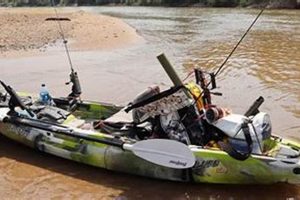
This specific watercraft is a popular choice among anglers due to its unique design and features tailored for fishing. It combines stability, maneuverability, and specialized equipment, creating a platform well-suited for various fishing environments, from open water to shallow creeks.
The pedal-driven propulsion system offers hands-free operation, allowing anglers to focus on casting and retrieving. Its ample storage accommodates fishing gear, tackle, and catches. Furthermore, the design incorporates features like rod holders and transducer mounts, enhancing the fishing experience. This vessel has become a prominent fixture in the angling community, reflecting the growing popularity of kayak fishing and its specialized equipment.
The following sections will delve deeper into the design, features, performance, and overall value of this specialized watercraft.
Tips for Optimizing Pedal Kayak Fishing
Maximizing the angling experience with a pedal-driven fishing kayak requires careful consideration of various factors, from pre-trip planning to on-the-water techniques.
Tip 1: Pre-Trip Planning: Thorough preparation is essential. Researching potential fishing locations, checking weather forecasts, and mapping out routes ensures a safe and productive outing. Understanding local regulations and obtaining necessary permits should also be prioritized.
Tip 2: Gear Organization: Efficient organization is crucial for a streamlined fishing experience. Storing tackle, tools, and safety equipment in readily accessible compartments minimizes clutter and maximizes fishing time.
Tip 3: Pedal Propulsion Technique: Mastering the pedal drive system allows for efficient and silent movement through the water. Practicing different pedaling speeds and maneuvering techniques improves control and minimizes disturbance to fish.
Tip 4: Anchor Positioning: Proper anchor deployment is essential for maintaining position in desired fishing areas. Understanding wind and current conditions allows for optimal anchor placement and prevents drifting.
Tip 5: Sound Management: Minimizing noise is crucial for stealthy angling. Avoiding sudden movements and minimizing gear clatter increases the chances of attracting fish.
Tip 6: Fish Handling: Proper handling techniques ensure the safe release of caught fish. Using appropriate tools and techniques minimizes stress on the fish and promotes conservation efforts.
Tip 7: Safety Precautions: Prioritizing safety enhances the overall fishing experience. Wearing a personal flotation device, carrying communication equipment, and informing someone of fishing plans are crucial safety measures.
By implementing these strategies, anglers can significantly enhance their fishing success and overall enjoyment on the water.
These tips provide a foundation for successful outings. The subsequent conclusion will recap the key advantages and considerations for utilizing this type of specialized fishing kayak.
1. Pedal-driven propulsion

Pedal-driven propulsion represents a significant advantage of the Hobie Outback fishing kayak, distinguishing it from traditional paddle-powered kayaks. This system employs a foot-pedal mechanism to drive a propeller, offering distinct advantages for anglers. The hands-free operation allows for continuous fishing, enabling anglers to maintain casting and retrieving while navigating. This is particularly beneficial in situations requiring precise boat control, such as trolling or maintaining position in a current. Compared to paddling, pedal propulsion offers greater efficiency over longer distances and reduces fatigue, allowing for extended fishing trips.
This system’s impact on fishing practices is substantial. The ability to maintain a consistent speed and direction while simultaneously managing fishing rods enhances angling effectiveness. For example, anglers can subtly adjust position to follow fish movement or maintain an ideal presentation of lures or bait without interrupting the fishing process. The quiet operation of the pedal drive also minimizes disturbance to fish, particularly in shallow or clear water environments. This stealth advantage can significantly improve catch rates, especially for wary species.
In summary, pedal-driven propulsion is a defining feature of the Hobie Outback, significantly enhancing fishing effectiveness and overall experience. The hands-free operation, increased efficiency, and quiet movement offer distinct advantages over traditional paddling, contributing to the popularity of this specialized fishing kayak. This technology directly addresses the challenges of traditional kayak fishing, providing anglers with greater control, reduced fatigue, and enhanced stealth, ultimately increasing their chances of success on the water.
2. Enhanced Stability
Stability is a critical factor in kayak fishing, influencing both safety and angling effectiveness. The Hobie Outback fishing kayak addresses this crucial aspect through its hull design and features. Enhanced stability provides a secure and balanced platform, allowing anglers to focus on fishing rather than constantly managing balance. This is particularly important when standing to cast, landing fish, or navigating challenging water conditions.
- Hull Design:
The Hobie Outback’s wider hull and flattened bottom contribute significantly to its stability. This design provides a larger surface area in contact with the water, creating greater inherent stability compared to narrower kayak designs. This wider platform allows for more comfortable movement within the kayak and reduces the tendency to tip, especially during activities that shift the center of gravity, such as casting or retrieving fish.
- Weight Distribution:
The strategic distribution of weight within the kayak further enhances stability. The placement of heavier items, such as batteries or tackle boxes, lower in the hull and towards the center improves balance and reduces the risk of capsizing. This balanced weight distribution contributes to a more predictable and stable feel on the water, even in choppy conditions or during sudden movements.
- Standing Platform:
The Hobie Outback’s design often incorporates a designated standing platform or area. This feature provides a stable and secure footing for anglers who prefer to stand while fishing. Standing offers improved visibility and casting range, and the stable platform minimizes the risk of falls, allowing for more confident and effective angling.
- Outriggers (Optional):
While not standard, outriggers can be added to further enhance stability. These extendable arms provide additional points of contact with the water, creating an even more stable platform, particularly beneficial for anglers who prioritize standing or require maximum stability in rough conditions. Outriggers offer increased confidence and safety, expanding the range of fishable water conditions.
The Hobie Outback’s enhanced stability, achieved through a combination of hull design, weight distribution, standing platform, and optional outriggers, significantly contributes to its effectiveness as a fishing platform. This stability allows anglers to confidently perform actions essential for fishing, from casting and retrieving to landing fish, without compromising balance or safety. This design focus on stability differentiates the Hobie Outback and contributes to its popularity among anglers seeking a secure and reliable fishing kayak.
3. Ample storage capacity
Ample storage capacity is a defining characteristic of the Hobie Outback fishing kayak, directly impacting its practicality and effectiveness for angling. Kayak fishing necessitates carrying a variety of equipment, from rods and reels to tackle boxes, safety gear, and personal items. The Outback’s generous storage options accommodate these needs, allowing anglers to carry essential gear comfortably and efficiently. This capacity translates to fewer trips back to shore and more time focused on fishing. For instance, larger storage wells can accommodate bulky items like tackle crates or coolers, while smaller compartments can hold essential tools, electronics, or personal belongings.
Several design features contribute to the Outback’s storage capabilities. Large, open hatches provide access to spacious storage wells within the hull. These wells are often designed to accommodate specific items, such as rods or tackle boxes, maximizing space utilization. Sealed hatches protect gear from water damage, ensuring equipment remains dry even in challenging conditions. Bungee cords and tie-down points on the deck offer additional storage for readily accessible items like paddles or landing nets. The strategic placement of these storage options throughout the kayak allows for balanced weight distribution, contributing to overall stability and performance.
The practical significance of ample storage in the Hobie Outback becomes evident during extended fishing trips or excursions to remote locations. The ability to carry sufficient supplies, safety gear, and fishing equipment contributes to a more self-sufficient and enjoyable experience. Furthermore, organized storage enhances efficiency on the water. readily accessible gear allows anglers to adapt to changing fishing conditions or target different species without time-consuming searches for equipment. This streamlined approach maximizes fishing time and contributes to a more productive and enjoyable outing. The ample storage capacity of the Hobie Outback directly addresses the logistical challenges of kayak fishing, solidifying its position as a practical and well-equipped fishing platform.
4. Specialized fishing features
The Hobie Outback fishing kayak distinguishes itself through a suite of specialized features designed to enhance angling effectiveness and overall experience. These features cater specifically to the needs of anglers, setting it apart from recreational kayaks. Built-in rod holders secure fishing rods, freeing hands for other tasks like paddling, maneuvering, or handling fish. Multiple rod holders accommodate diverse fishing techniques and allow for quick transitions between different setups. Flush-mounted rod holders minimize line entanglement and reduce the risk of snags, contributing to a smoother fishing experience. Tackle management systems offer designated compartments and trays for organizing lures, hooks, weights, and other small items, promoting efficient access and preventing clutter. These systems often incorporate removable containers for convenient customization and replenishment. Integrated transducer mounts provide a dedicated location for mounting fish finders or depth sounders, eliminating the need for DIY solutions and ensuring optimal transducer performance. These mounts are often strategically positioned to minimize interference with the kayak’s hull and maximize sonar accuracy. Pre-installed accessory mounting tracks offer versatility for attaching additional equipment like cameras, GPS units, or lighting systems, allowing anglers to customize their setup based on individual preferences and fishing styles. These mounting tracks provide a standardized and secure method for attaching various accessories, enhancing functionality and personalization.
The practical significance of these specialized features becomes evident on the water. The ability to quickly switch between different fishing rods, access tackle efficiently, and utilize electronics seamlessly enhances angling effectiveness and maximizes time spent fishing. These features contribute to a more organized, productive, and enjoyable fishing experience. For instance, a readily accessible tackle system allows anglers to adapt quickly to changing fish behavior or water conditions, while secure rod holders prevent rod loss during unexpected strikes or maneuvers. Furthermore, integrated transducer mounts provide accurate sonar readings, enhancing fish-finding capabilities and contributing to overall fishing success. The strategic incorporation of these specialized features demonstrates a focus on the unique needs of anglers, setting the Hobie Outback apart and reinforcing its position as a dedicated fishing platform.
In summary, the Hobie Outback’s specialized fishing features represent a significant departure from standard kayak designs. These features address the practical challenges of kayak fishing, streamlining processes, enhancing efficiency, and ultimately maximizing the angler’s chances of success on the water. From built-in rod holders and tackle management systems to transducer mounts and accessory tracks, these features are integral to the Outback’s identity as a purpose-built fishing kayak. The careful consideration of angler-specific needs in the design and incorporation of these features distinguishes the Hobie Outback and contributes to its enduring popularity among serious kayak anglers.
5. Versatile Maneuverability

Maneuverability is a critical aspect of kayak fishing, particularly in environments requiring precise boat control. The Hobie Outback excels in this area, offering versatile maneuverability that enhances angling effectiveness in diverse water conditions. The pedal-driven MirageDrive system, with its unique fin design, allows for forward and reverse movement as well as precise turning and positioning. This level of control enables anglers to navigate tight spaces, hold position in currents, and approach fishing spots stealthily. The ability to make quick adjustments in direction without changing paddling strokes is a significant advantage when tracking fish or reacting to changing water conditions. For example, navigating through narrow mangrove tunnels or maintaining position near submerged structures becomes significantly easier with the Outback’s responsive maneuverability. This advantage also extends to open water scenarios, where precise boat control enhances techniques like trolling or drifting.
The Outback’s maneuverability stems from a combination of factors. The hull design, featuring a moderate rocker and a defined keel, contributes to tracking and responsiveness. The rudder system, controlled by hand levers, allows for fine-tuned adjustments in direction, complementing the MirageDrive’s capabilities. This combination of hull design and rudder control provides exceptional maneuverability, especially in challenging conditions like wind or current. Furthermore, the relatively compact size and lightweight nature of the Outback contribute to its agility. This allows for quick turns and rapid changes in direction, proving beneficial when targeting fast-moving fish or navigating complex underwater terrain. The practical implications of this maneuverability are significant, enabling anglers to access difficult-to-reach fishing spots and effectively present lures or bait in optimal locations, ultimately increasing their chances of success.
In summary, versatile maneuverability is a defining characteristic of the Hobie Outback fishing kayak. This attribute, facilitated by the MirageDrive system, rudder control, and hull design, enhances angling effectiveness across a wide range of fishing environments. From navigating tight waterways to maintaining precise position in currents, the Outback’s maneuverability provides anglers with a significant advantage on the water. This capability translates to increased access to prime fishing locations, improved boat control for precise lure presentations, and ultimately, a more successful and enjoyable fishing experience. The Outback’s maneuverability distinguishes it from less agile kayaks, making it a preferred choice for anglers seeking optimal control and precision in their fishing pursuits.
6. Durable Construction
Durable construction is paramount for fishing kayaks, especially given the demanding environments they often endure. The Hobie Outback fishing kayak addresses this requirement through robust materials and construction techniques, ensuring longevity and reliable performance in harsh conditions. The hull, often constructed from rotomolded polyethylene, provides exceptional impact resistance and durability against abrasion from rocks, submerged debris, and transport. This material’s inherent UV resistance safeguards against sun damage, preserving the kayak’s structural integrity over time, even with prolonged exposure to sunlight. Reinforced areas, particularly in high-stress zones like the keel and seating areas, further enhance durability, withstanding the impacts and pressures associated with rough water conditions and heavy loads. These reinforcements contribute to the kayak’s overall structural rigidity, ensuring it maintains its shape and performance even under stress.
This durability translates directly into practical benefits. The ability to withstand impacts and abrasion minimizes the risk of damage during transport, launching, and navigating challenging waters. For instance, the robust hull can endure scrapes against rocky shorelines or impacts from submerged logs without sustaining significant damage. This durability reduces maintenance requirements and prolongs the kayak’s lifespan, representing a significant advantage for anglers seeking a reliable and long-lasting investment. Furthermore, the kayak’s robust construction enhances safety on the water. The ability to withstand impacts and maintain structural integrity in challenging conditions provides anglers with increased confidence and security, particularly in remote locations or unpredictable weather.
In summary, the durable construction of the Hobie Outback fishing kayak is a crucial aspect of its design. The use of robust materials like rotomolded polyethylene, combined with reinforced high-stress areas, ensures the kayak can withstand the rigors of regular use in diverse fishing environments. This durability translates to practical benefits, including reduced maintenance, enhanced safety, and a longer lifespan, making the Outback a sound investment for anglers seeking a reliable and resilient fishing platform. The robust construction allows anglers to confidently explore a wider range of fishing locations, from rocky coastlines to shallow rivers, without compromising the kayak’s structural integrity or their own safety. This focus on durability reinforces the Outback’s reputation as a well-built and dependable fishing kayak designed for serious anglers.
Frequently Asked Questions
This section addresses common inquiries regarding the Hobie Outback fishing kayak, providing concise and informative responses.
Question 1: What differentiates the Hobie Outback from other fishing kayaks?
The Hobie Outback distinguishes itself through its pedal-driven MirageDrive system, offering hands-free propulsion and enhanced maneuverability. Combined with specialized fishing features like rod holders, ample storage, and a stable hull design, the Outback caters specifically to angling needs.
Question 2: How stable is the Hobie Outback for standing and fishing?
The Outback’s wide hull and design contribute to significant stability, allowing many anglers to stand and fish comfortably. While individual balance and experience play a role, the kayak’s inherent stability makes standing a viable option for many users.
Question 3: What is the weight capacity of the Hobie Outback?
Weight capacity varies slightly between model years, but generally falls within the range of 400-500 lbs. This includes the combined weight of the angler, gear, and any catches.
Question 4: What maintenance is required for the MirageDrive system?
Regular rinsing with fresh water after each use is crucial, especially in saltwater environments. Periodic lubrication and inspection of the drive components are also recommended to ensure optimal performance and longevity.
Question 5: Can the Hobie Outback be transported on a standard car roof rack?
Yes, the Outback can typically be transported on standard roof racks. However, specialized kayak cradles or carriers are recommended for secure and convenient transport. Checking the kayak’s dimensions and roof rack specifications is essential for compatibility.
Question 6: What are the typical costs associated with owning a Hobie Outback?
Costs vary depending on the model year, condition, and included accessories. Factors such as purchasing new versus used, additional equipment, and potential maintenance should be considered when evaluating overall cost.
These responses offer a general overview. Consulting authorized dealers or referencing specific model specifications provides the most accurate and up-to-date information.
The following section concludes this overview of the Hobie Outback fishing kayak.
Conclusion
This exploration has highlighted the distinct attributes of the Hobie Outback fishing kayak, emphasizing its specialized design and features tailored for angling. From the pedal-driven propulsion system and enhanced stability to the ample storage and versatile maneuverability, the Outback offers a comprehensive platform for diverse fishing environments. Its durable construction ensures longevity, while specialized features like rod holders and transducer mounts further enhance its utility for serious anglers. The Outback’s ability to address the practical challenges of kayak fishing contributes to its prominent position within the angling community.
The Hobie Outback fishing kayak represents a significant advancement in kayak fishing technology, offering a compelling blend of performance, functionality, and durability. Its impact on angling practices is evident, providing anglers with greater access, efficiency, and control on the water. As kayak fishing continues to grow in popularity, the Outback’s innovative design and specialized features position it as a leading choice for anglers seeking a dedicated and high-performing fishing platform.