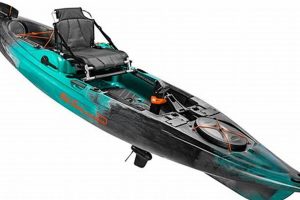
Selecting the optimal rod and reel combination for kayak angling involves considering various factors such as the target species, fishing environment, and available storage space. A shorter rod, typically between six and seven feet, is often preferred due to the confined space of a kayak. For example, a medium-power, fast-action spinning rod paired with a 2500-size reel offers versatility for a range of freshwater species and techniques.
Optimized tackle enhances angler performance and enjoyment on the water. Shorter rods provide better control and maneuverability in a kayak’s limited space, minimizing the risk of tangling lines or hooking the vessel. Historically, kayak fishing relied on basic handlines and rudimentary rods. Modern advancements in materials and design have led to specialized equipment that significantly improves casting accuracy, fish fighting power, and overall angling success from a kayak platform.
This article will delve into the critical aspects of choosing appropriate fishing equipment for kayak angling, exploring rod length, power, action, reel types, line selection, and essential accessories. It will also discuss specific recommendations tailored to different fishing styles and target species commonly pursued from kayaks.
Tips for Choosing Kayak Fishing Tackle
Proper tackle selection is paramount for a successful and enjoyable kayak fishing experience. These tips offer guidance on selecting appropriate equipment.
Tip 1: Prioritize Rod Length and Action. Rods between 6 and 7.5 feet offer optimal balance and control in a kayak. A fast-action rod provides greater sensitivity for detecting bites and setting hooks efficiently.
Tip 2: Consider Target Species. Lighter rods and reels suffice for smaller species like panfish or trout. Larger, more powerful tackle is necessary for targeting larger species like bass or saltwater fish.
Tip 3: Choose a Suitable Reel. Spinning reels are generally preferred for their ease of use and versatility. Baitcasting reels offer greater casting distance and accuracy but require more practice to master.
Tip 4: Select Appropriate Line. Braided line provides excellent sensitivity and strength, while monofilament offers greater abrasion resistance and stretch for shock absorption.
Tip 5: Don’t Overlook Rod Holders. Securely mounted rod holders keep rods organized and protected while paddling or when fighting a fish.
Tip 6: Organize Tackle Efficiently. Utilize tackle boxes or bags designed for kayak fishing to keep lures, hooks, and other essential gear readily accessible and protected from the elements.
Tip 7: Practice Casting from a Kayak. The limited space and stability of a kayak require adjustments to casting technique. Practice casting before venturing out to avoid tangles and maximize fishing time.
Careful consideration of these factors ensures anglers have the right tools for a productive and safe kayak fishing outing. Appropriate gear enhances casting performance, improves fish-fighting ability, and ultimately contributes to a more rewarding angling experience.
By understanding these key elements and tailoring equipment choices to specific needs and target species, anglers can significantly enhance their kayak fishing success. The following section will offer concluding remarks and reinforce the importance of proper tackle selection.
1. Length
Rod length significantly impacts kayak fishing effectiveness and angler comfort. Kayaks offer limited space and mobility compared to other fishing platforms. Shorter rods, typically ranging from 6 to 7.5 feet, prove advantageous in such confined environments. Longer rods, while suitable for casting distance in open areas, become cumbersome and difficult to manage within a kayak’s limited space. For example, an 8-foot rod might prove unwieldy when battling a fish alongside a kayak, potentially leading to tangles or even capsizing. A shorter rod offers greater control during casting and retrieval, especially in challenging conditions like wind or current. Shorter lengths also reduce the risk of snagging on overhead obstacles or the kayak itself.
The relationship between rod length and target species also warrants consideration. While shorter rods excel in close-quarters combat with smaller to medium-sized fish, anglers targeting larger species from a kayak might opt for slightly longer rods, around 7 to 7.5 feet, to provide additional leverage during the fight. This compromise retains manageable length while providing sufficient power to handle larger fish. For instance, anglers pursuing inshore saltwater species like redfish or snook often favor rods in this range. Ultimately, the “best” length represents a balance between maneuverability, casting control, and the demands of the target species and fishing environment.
Optimizing rod length for kayak fishing enhances angler performance and safety. It directly affects casting accuracy, fish-fighting ability, and overall comfort on the water. Choosing a length appropriate for the kayak environment and target species proves crucial for a successful and enjoyable fishing experience. Attempting to use a rod designed for shore or boat fishing within the confines of a kayak can lead to frustration and diminished effectiveness. Therefore, selecting a rod specifically suited to kayak fishing contributes significantly to positive outcomes on the water.
2. Action
Rod action, denoting the rod’s bending point and recovery speed, represents a critical factor influencing kayak fishing performance. Choosing the appropriate action contributes significantly to casting accuracy, hook setting ability, and overall fish-fighting control. Understanding the nuances of rod action empowers anglers to optimize their tackle selection for specific techniques and target species within the context of kayak fishing.
- Fast Action
Fast-action rods bend primarily in the top third, offering rapid tip recovery. This characteristic translates to increased sensitivity for detecting subtle bites and facilitates powerful hooksets. Fast action excels in techniques requiring precise lure presentations and quick reactions, such as jigging or topwater fishing. In kayak fishing scenarios, where space is limited and quick maneuvering is essential, fast action allows for efficient hooksets even in close proximity to the kayak.
- Moderate Action
Moderate-action rods bend in the top half, providing a balance between sensitivity and casting distance. This action proves versatile across various fishing techniques and offers a forgiving feel when fighting fish. In kayak fishing, moderate action can be advantageous when targeting larger fish that require more give in the rod to absorb runs and headshakes. This flex helps prevent line breakage and allows the angler to maintain control during the fight.
- Slow Action
Slow-action rods bend throughout their length, providing maximum flex and shock absorption. This action excels in scenarios requiring delicate presentations and playing larger fish. While less common in kayak fishing due to space constraints, slow action can be beneficial when targeting larger, hard-fighting species in open water. The deep bend helps cushion the impact of powerful runs and prevents pulling hooks during extended fights.
- Action and Kayak Fishing Context
Rod action interacts closely with other rod characteristics, like power and length, to determine its overall suitability for kayak fishing. For instance, a shorter, fast-action rod might be ideal for casting light lures in tight spaces, while a slightly longer, moderate-action rod could be preferred for fishing heavier lures or battling stronger fish. The “best” action for a kayak fishing rod depends on the specific techniques employed, the target species, and the angler’s personal preferences. Choosing the right action can significantly enhance casting accuracy, fish-fighting efficiency, and overall enjoyment on the water.
Selecting the appropriate rod action for kayak fishing requires careful consideration of the targeted species, preferred fishing techniques, and the specific environment. The interplay between rod action, length, and power determines its overall performance in a kayak setting. Understanding the nuances of each action type empowers anglers to optimize their tackle selection for enhanced success and enjoyment on the water. Balancing sensitivity, casting distance, and fish-fighting capabilities through appropriate action selection contributes significantly to positive kayak fishing outcomes.
3. Power

Rod power, a measure of a fishing rod’s lifting strength, plays a crucial role in determining the optimal fishing pole for kayak angling. Power classifications, ranging from ultralight to heavy, dictate the size and weight of lures and lines a rod can effectively handle, as well as the size of fish it can manage. Selecting the appropriate power becomes particularly important in kayak fishing due to the confined space and the angler’s limited mobility. For example, an ultralight rod, designed for small panfish and light lines, lacks the backbone necessary to handle larger species like bass or inshore saltwater fish commonly targeted from kayaks. Conversely, a heavy-power rod, suited for large offshore species, proves cumbersome and unwieldy within a kayak’s restricted environment. The “best” power for a kayak fishing rod often falls within the medium to medium-heavy range, offering a balance of strength and control suitable for a variety of species and fishing techniques.
Matching rod power to target species and fishing conditions directly impacts angling success from a kayak. Underpowered rods struggle to set hooks effectively on larger fish or cast heavier lures necessary for specific techniques. Overpowered rods, while capable of handling larger fish, sacrifice sensitivity, making detecting subtle bites difficult and potentially leading to a less engaging fishing experience. Consider the scenario of targeting redfish in shallow saltwater flats from a kayak. A medium-heavy power rod provides sufficient strength to manage these hard-fighting fish while maintaining the sensitivity needed to detect their often-subtle takes in shallow water. Furthermore, the appropriate power allows for casting heavier lures or using heavier lines necessary for fishing in windy conditions or strong currents commonly encountered in such environments.
Understanding the relationship between rod power and kayak fishing requirements enables informed tackle selection. Choosing a rod with appropriate power facilitates efficient casting, effective hooksets, and increased control during fish fights. This optimization translates to a more productive and enjoyable experience on the water. Furthermore, aligning rod power with target species and fishing conditions minimizes the risk of equipment failure and ensures a balanced and harmonious tackle system. Effectively harnessing rod power contributes significantly to successful kayak angling outcomes.
4. Material

Fishing rod material significantly influences performance characteristics relevant to kayak angling. The material dictates the rod’s weight, strength, sensitivity, and durability, all crucial factors in the confined space and demanding environment of a kayak. Choosing the appropriate material contributes directly to angler comfort, casting efficiency, and fish-fighting success.
- Graphite
Graphite, a popular choice for fishing rods, offers a combination of lightweight construction, sensitivity, and strength. Its lightweight nature reduces angler fatigue during long fishing sessions, a significant advantage in kayak fishing where casting motions often involve more restricted movements. Graphite’s sensitivity transmits subtle vibrations from the line to the angler’s hand, aiding in bite detection, especially crucial in kayak fishing where visual cues might be obscured by the kayak’s structure or water reflections. High-modulus graphite offers increased strength and responsiveness, making it suitable for targeting larger, more powerful fish from a kayak. For instance, a graphite rod allows an angler to feel the subtle tap of a speckled trout taking a small jig in a shallow grass flat.
- Fiberglass
Fiberglass rods, known for their durability and affordability, present a robust option suitable for beginners or anglers targeting larger, hard-fighting fish. Fiberglass’s inherent strength makes it resistant to damage from impacts or bending, a valuable attribute in kayak fishing where rods are often subjected to more rigorous handling and storage conditions. While generally heavier than graphite, fiberglass rods offer excellent value and can withstand the demands of battling powerful fish in a kayak setting. For example, a fiberglass rod provides the necessary strength and durability to handle the powerful runs of a large catfish in a river current.
- Composite
Composite rods blend materials like graphite and fiberglass, seeking to combine the benefits of both. These rods often aim to balance strength and sensitivity while offering a more affordable option than high-end graphite. Composite construction allows manufacturers to tailor rod characteristics to specific fishing applications. For kayak fishing, a composite rod might offer a good compromise between the lightweight sensitivity of graphite and the durability of fiberglass. This balance proves advantageous when targeting a variety of species or fishing in diverse environments from a kayak.
- Material Considerations in Kayak Fishing
Material selection impacts other rod characteristics relevant to kayak fishing. A lighter rod enhances maneuverability and reduces fatigue during long paddling and casting sessions. Sensitivity becomes crucial for detecting subtle bites, especially in challenging conditions like wind or current. Durability ensures the rod can withstand the rigors of kayak fishing environments, including impacts, bending, and exposure to the elements. Balancing these factors through careful material selection ultimately enhances angler performance and enjoyment on the water.
The material of a kayak fishing rod directly influences its weight, strength, sensitivity, and durability. Choosing the appropriate material requires considering the target species, fishing techniques, and the specific demands of the kayak fishing environment. Balancing these factors through informed material selection contributes significantly to a productive and enjoyable kayak fishing experience.
5. Reel Compatibility

Reel compatibility represents a critical factor in optimizing a fishing rod for kayak angling. A harmonious balance between the rod and reel maximizes casting performance, fish-fighting efficiency, and overall angler comfort. Improperly matched components can negatively impact casting distance and accuracy, compromise line management, and reduce sensitivity, hindering the kayak angler’s effectiveness.
- Balance and Weight Distribution
The combined weight and balance of the rod and reel significantly influence angler fatigue and casting control, particularly crucial in the confined space of a kayak. A properly balanced setup minimizes strain during repetitive casting motions and allows for precise lure presentations. For instance, pairing a lightweight graphite rod with a heavier reel might create an unbalanced feel, tiring the angler’s wrist and hindering accurate casting. Conversely, a well-balanced setup allows for effortless casting and improved responsiveness, enhancing the kayak angler’s ability to target specific areas and present lures effectively.
- Line Capacity and Retrieval Rate
The reel’s line capacity and retrieval rate must align with the target species and fishing techniques employed from the kayak. Insufficient line capacity limits the angler’s ability to fight larger fish or handle long runs, while an improper retrieval rate can hinder lure presentation and fish-fighting efficiency. For example, when targeting larger saltwater species from a kayak, a reel with ample line capacity and a high retrieval rate becomes essential for managing powerful runs and quickly retrieving line to maintain tension. Conversely, when finesse fishing for smaller species, a slower retrieval rate and lighter line capacity might be preferred.
- Drag System Performance
A smooth and reliable drag system is paramount for successfully landing fish from a kayak, where the angler’s mobility is restricted. A jerky or inconsistent drag can lead to line breakage, especially when battling strong fish in close proximity to the kayak. A well-functioning drag system allows the angler to apply consistent pressure, tiring the fish and increasing the likelihood of a successful landing. For instance, when fighting a powerful fish near a kayak’s structure, a smooth drag prevents sudden surges from snapping the line, maximizing the angler’s control and increasing the chances of landing the fish.
- Reel Seat and Handle Design
The reel seat secures the reel to the rod, ensuring a stable connection crucial for efficient power transfer during casting and retrieving. A comfortable and ergonomic handle enhances grip and control, reducing hand fatigue during long fishing sessions. In kayak fishing, where anglers often wear gloves for sun protection or warmth, a secure and comfortable grip becomes even more critical. A well-designed reel seat and handle contribute to efficient power transfer and angler comfort, maximizing control and minimizing fatigue during extended kayak fishing trips.
Optimal reel compatibility significantly enhances kayak fishing performance. A well-balanced and appropriately matched rod and reel combination improves casting accuracy, facilitates efficient fish fighting, and reduces angler fatigue. Considering the interplay between balance, line capacity, drag performance, and ergonomic design ensures a harmonious tackle system tailored to the specific demands of kayak angling.
6. Portability

Portability represents a critical factor when selecting a fishing rod optimized for kayak angling. Transporting and managing fishing gear within the confined space of a kayak necessitates compact and easily handled equipment. Longer, one-piece rods, while potentially advantageous in other fishing contexts, pose significant challenges in kayak environments. Their length hinders maneuverability within the kayak and complicates storage and transport. A longer rod increases the risk of entanglement with other gear or the kayak itself, potentially leading to frustrating disruptions or even safety hazards during paddling or fish fighting. Conversely, rods designed with portability in mind, such as telescoping or multi-piece models, offer significant advantages for kayak anglers. These designs collapse into shorter lengths, facilitating easy storage within the kayak and safe transport to and from the launch site. For example, a four-piece travel rod breaks down into compact sections, easily stowed in a kayak’s storage compartment or strapped securely to the deck, minimizing interference during paddling and maximizing available space for other essential gear.
The practical implications of portability extend beyond mere convenience. A portable rod system allows kayak anglers to access remote fishing locations often inaccessible by larger boats. The ability to quickly and efficiently assemble and disassemble a rod contributes to a more streamlined and enjoyable fishing experience. Imagine navigating a narrow, overgrown creek in a kayak. A portable rod allows the angler to quickly adapt to the changing environment, collapsing the rod for paddling through tight passages and then reassembling it for fishing in open pockets of water. This adaptability maximizes fishing opportunities and enhances the overall kayak angling experience. Furthermore, portable rod designs often incorporate features that enhance their resilience to the rigors of transport and handling, such as reinforced ferrules and protective carrying cases. These features contribute to the rod’s longevity and ensure its continued performance over time.
Prioritizing portability in rod selection directly contributes to a more efficient, safe, and enjoyable kayak fishing experience. Compact designs minimize storage challenges, facilitate transport, and enhance adaptability in diverse environments. While portability might entail certain trade-offs regarding casting distance or overall rod power, the benefits for kayak anglers, in terms of convenience and access, often outweigh these considerations. Understanding the importance of portability empowers kayak anglers to choose equipment optimized for their specific needs and contributes significantly to positive outcomes on the water.
7. Durability
Durability stands as a critical attribute in defining the best fishing pole for kayak angling. The demanding environment of kayak fishing, characterized by exposure to the elements, potential impacts, and the rigors of transport and storage, necessitates a rod built to withstand these challenges. A durable fishing rod translates to fewer breakages, reduced maintenance, and a longer lifespan, ultimately contributing to a more cost-effective and enjoyable kayak fishing experience. Cause and effect relationships between durability and kayak fishing outcomes are readily apparent. A rod lacking durability might fracture during a forceful hookset, leading to lost fishing opportunities and the expense of replacement. Conversely, a durable rod withstands such stresses, ensuring consistent performance and maximizing the chances of landing a fish. For instance, a kayak angler navigating through mangrove tunnels requires a rod resistant to scratches and impacts; a durable rod constructed with robust materials and reinforced joints withstands such encounters, preserving its integrity and functionality over time. Similarly, exposure to saltwater necessitates corrosion-resistant components, further emphasizing the importance of durability in selecting a kayak fishing rod.
The practical significance of durability extends beyond mere longevity. A durable rod instills confidence, allowing anglers to focus on fishing rather than worrying about equipment failure. This peace of mind proves particularly valuable in challenging kayak fishing scenarios, such as battling strong currents or landing large fish in close proximity to the kayak. Furthermore, durable construction often translates to enhanced sensitivity and responsiveness, contributing to a more refined and engaging fishing experience. A robust blank and guides, less prone to flexing or damage, transmit subtle vibrations from the line to the angler’s hand, improving bite detection and hooksetting precision. Consider the example of an angler targeting bottom-dwelling species in a rocky, fast-flowing river from a kayak. A durable rod with reinforced guides and a robust blank withstands the abrasive environment and transmits subtle bites effectively, maximizing the angler’s chances of success. Conversely, a less durable rod might fail under such stress, leading to frustration and lost opportunities.
In conclusion, durability represents a cornerstone of the “best fishing pole for kayak” equation. It directly influences rod lifespan, performance consistency, and angler confidence. Selecting a durable rod requires careful consideration of materials, construction techniques, and the specific demands of the kayak fishing environment. Understanding the interplay between durability and kayak fishing outcomes empowers anglers to make informed decisions, maximizing their investment and ensuring enjoyable and productive experiences on the water. Challenges such as saltwater corrosion or accidental impacts necessitate specific design considerations in achieving optimal durability. This understanding links directly to broader themes of equipment selection, fishing strategy, and overall success in the specialized context of kayak angling.
Frequently Asked Questions
This section addresses common inquiries regarding the selection and use of fishing poles optimized for kayak angling.
Question 1: What rod length is ideal for kayak fishing?
Rods ranging from 6 to 7.5 feet generally provide optimal balance and maneuverability within a kayak’s confined space. Longer rods become cumbersome, while shorter rods sacrifice casting distance. The ideal length depends on the target species and fishing environment.
Question 2: What rod power is recommended for kayak fishing?
Medium to medium-heavy power rods offer versatility for a range of species commonly targeted from kayaks. Lighter powers suit smaller fish and finesse techniques, while heavier powers handle larger species and demanding conditions.
Question 3: Are two-piece rods suitable for kayak fishing?
Two-piece or multi-piece rods offer significant advantages in portability and storage for kayak anglers. They facilitate transport and storage within the kayak’s limited space. Modern multi-piece rods often perform comparably to one-piece rods.
Question 4: What reel type pairs well with a kayak fishing rod?
Spinning reels are generally preferred for their ease of use and versatility in kayak fishing. Baitcasting reels offer greater casting distance and accuracy but require more practice to master.
Question 5: What line type is recommended for kayak fishing?
Braided line offers excellent sensitivity and strength, advantageous for detecting subtle bites and handling larger fish. Monofilament provides greater abrasion resistance and stretch, beneficial in environments with structure or cover.
Question 6: What other accessories enhance kayak fishing rod performance?
Essential accessories include rod holders for secure storage and organization, kayak-specific tackle boxes for efficient gear management, and landing nets for safe fish retrieval in a kayak’s limited space.
Careful consideration of these frequently asked questions facilitates informed decisions regarding fishing pole selection and contributes to a more productive and enjoyable kayak angling experience.
The subsequent section will delve into specific rod and reel recommendations tailored to various kayak fishing scenarios.
Best Fishing Pole for Kayak
Optimal fishing pole selection for kayak angling necessitates careful consideration of various interconnected factors. Rod length, power, and action must align with the target species and fishing environment. Material selection influences durability, sensitivity, and weight, directly impacting angler comfort and performance. Reel compatibility ensures a balanced and efficient system, maximizing casting distance and fish-fighting control. Portability considerations enhance maneuverability and storage within the kayak’s limited space. Durability safeguards against the rigors of kayak fishing, ensuring consistent performance and longevity. A holistic approach to tackle selection, acknowledging the interplay of these elements, proves crucial for successful kayak angling.
Effective kayak fishing hinges on appropriate equipment choices. Informed decisions based on a comprehensive understanding of rod and reel characteristics empower anglers to maximize their potential on the water. The pursuit of the “best” fishing pole for kayak represents an ongoing process of adaptation and refinement, driven by the angler’s evolving needs and the specific challenges presented by each unique kayak fishing experience.