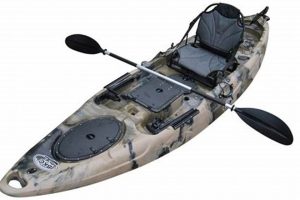
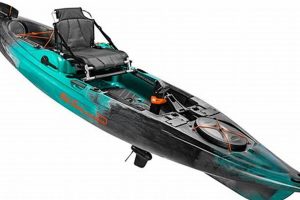
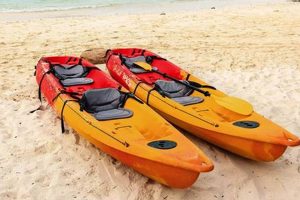
A premium, canine-compatible watercraft designed for angling offers stability, durability, and features tailored to accommodate both angler and canine companion. Such features might include ample deck space, designated dog seating areas, leash attachment points, and easy entry/exit points for the dog. A stable, wide kayak designed for lakes and slow-moving rivers would be one example of a suitable vessel.
Selecting an appropriate watercraft enhances the safety and enjoyment of shared fishing excursions. A stable platform minimizes the risk of capsizing, while dedicated space and features ensure the dog’s comfort and security. This shared activity strengthens the human-animal bond and provides enriching experiences for both. Historically, while dogs have accompanied humans on boats for centuries, purpose-built kayaks tailored for shared angling are a relatively recent innovation, reflecting a growing demand for pet-inclusive outdoor recreation.
Further exploration of this topic will cover key features to consider, popular models, safety precautions, and tips for successful fishing trips with canine companions.
Tips for Kayak Fishing with Dogs
Careful planning and preparation are essential for safe and enjoyable kayak fishing trips with canine companions. The following tips offer guidance for selecting appropriate gear and ensuring a positive experience.
Tip 1: Prioritize Stability and Space: Opt for wider, more stable kayak models designed for lakes or slow-moving rivers. Adequate deck space is crucial for both angler and canine comfort and movement.
Tip 2: Introduce the Kayak Gradually: Acclimate the dog to the kayak on dry land before venturing onto the water. Short, supervised introductory sessions build confidence and reduce anxiety.
Tip 3: Invest in a Canine Life Vest: A properly fitted life vest provides buoyancy and enhances visibility, ensuring the dog’s safety in case of an unexpected capsize.
Tip 4: Secure a Leash and Designated Space: A leash or tether attached to a secure point on the kayak prevents the dog from jumping overboard. Designate a comfortable, non-slip area for the dog to sit or lie down.
Tip 5: Pack Essential Supplies: Bring fresh water, dog treats, waste bags, and a first-aid kit specifically equipped for canine needs.
Tip 6: Start with Short Trips: Initially, keep trips short and close to shore, allowing the dog to adjust to the experience gradually. Monitor the dog’s behavior and adjust the trip length as needed.
Tip 7: Practice Proper Kayak Etiquette: Be mindful of other boaters and wildlife. Keep the dog under control and avoid disturbing the natural environment.
Implementing these tips promotes safety, reduces stress, and enhances the overall enjoyment of kayak fishing with a canine companion. Shared experiences on the water create lasting memories and strengthen the human-animal bond.
By considering these factors, anglers can select the ideal watercraft and prepare for rewarding fishing adventures with their canine companions.
1. Stability

Stability forms the cornerstone of a safe and successful fishing kayak excursion with a canine companion. A stable platform minimizes the risk of capsizing, particularly with the added movement and weight of a dog on board. This characteristic is crucial not only for angler and canine safety but also for maintaining a comfortable fishing experience, free from anxiety and potential disruptions.
- Hull Design:
Wider, flatter hulls provide greater primary stability, resisting initial tipping. Pontoon-style hulls offer exceptional stability, while longer, narrower hulls offer enhanced speed but compromise initial stability. For canine-inclusive kayaking, a wider hull design is generally preferable, mitigating the destabilizing effects of dog movement.
- Center of Gravity:
A lower center of gravity contributes significantly to stability. Kayaks designed for fishing often feature lower seating positions, enhancing overall stability. Adding a dog raises the center of gravity, emphasizing the importance of a stable hull design and mindful weight distribution within the kayak.
- Water Conditions:
Calm, flat water conditions are ideal for kayak fishing with dogs. Rough water or strong currents exacerbate instability, posing a greater risk of capsizing. Carefully assessing water conditions before embarking on a fishing trip is essential for canine-inclusive kayaking.
- Dog’s Behavior:
A calm and well-trained dog contributes to a stable kayaking experience. Sudden movements, shifting weight, or attempts to jump overboard can compromise stability. Proper training and acclimation to the kayak are essential for maintaining a safe and balanced platform.
By carefully considering hull design, center of gravity, water conditions, and canine behavior, anglers can select a kayak and plan excursions that prioritize stability. This focus on stability ultimately enhances safety, comfort, and the overall enjoyment of shared fishing adventures with canine companions.
2. Space

Adequate space is a critical factor in selecting a suitable fishing kayak for canine companions. Sufficient room ensures both angler and dog can comfortably move, sit, and shift positions without compromising stability or interfering with fishing activities. The available space directly impacts safety, comfort, and the overall enjoyment of shared angling excursions.
- Deck Space:
Ample deck space allows the dog to comfortably sit, lie down, or change positions without hindering the angler’s movements. A cramped deck can lead to discomfort, anxiety, and restricted movement for both, potentially compromising stability and fishing effectiveness. Kayaks with designated dog platforms or recessed areas offer dedicated space and improve overall comfort.
- Storage Capacity:
Sufficient storage is essential for carrying fishing gear, safety equipment, and canine-specific supplies like water, treats, and waste bags. Dry storage compartments protect essential items from water damage. Ample storage capacity allows anglers to bring necessary gear without encroaching on the dog’s allocated space.
- Legroom:
Adequate legroom for the angler is essential for maintaining a comfortable paddling position and efficient casting. The dog’s presence should not restrict the angler’s ability to move their legs freely, impacting both comfort and fishing performance. Kayaks with adjustable footrests can further enhance comfort and accommodate different leg lengths.
- Weight Capacity:
The kayak’s weight capacity must accommodate the combined weight of the angler, dog, and all gear. Exceeding the weight capacity compromises stability and safety. Manufacturers provide weight capacity guidelines, which anglers should adhere to strictly when choosing a kayak for canine-inclusive fishing trips.
Careful consideration of deck space, storage capacity, legroom, and weight capacity ensures a comfortable and safe kayaking experience for both angler and canine companion. A well-designed kayak with ample space facilitates relaxed movement, efficient fishing, and enhances the enjoyment of shared time on the water, contributing significantly to successful and memorable angling excursions.
3. Durability

Durability is a paramount consideration when selecting a fishing kayak intended for use with canine companions. Dogs, by nature, interact with their environment with enthusiasm, which can translate to scratches, abrasions, and potential impacts on the kayak. A durable kayak withstands the rigors of canine activity, ensuring longevity and maintaining performance over extended periods. Selecting a robust kayak minimizes the risk of damage and ensures continued safe and enjoyable fishing excursions.
- Material:
Kayak construction materials significantly influence overall durability. High-density polyethylene (HDPE) is a common choice, offering excellent impact resistance and UV protection. Thermoformed plastics provide enhanced rigidity and durability compared to rotomolded options, though often at a higher price point. Inflatable kayaks, while convenient for transport, generally offer less resistance to punctures and abrasions from canine claws.
- Construction Quality:
Manufacturing techniques and attention to detail affect a kayak’s structural integrity. Well-constructed kayaks feature reinforced seams, robust hardware, and quality components designed to withstand stress and resist wear and tear. Examining the kayak’s construction detailssuch as the quality of welding or bondingprovides insights into its long-term durability.
- Scratch Resistance:
Dogs’ nails can easily scratch kayak surfaces, impacting aesthetics and potentially compromising the material’s integrity over time. Kayaks with textured or reinforced surfaces offer enhanced scratch resistance, minimizing visible damage and maintaining the kayak’s structural integrity. Protective coatings or films can also be applied to further enhance scratch resistance.
- UV Resistance:
Exposure to sunlight degrades certain materials, leading to fading, brittleness, and reduced lifespan. UV-resistant materials are crucial for maintaining the kayak’s structural integrity and appearance, especially in regions with intense sunlight. Storing the kayak properly, out of direct sunlight when not in use, further prolongs its lifespan.
Evaluating these elementsmaterial, construction quality, scratch resistance, and UV resistanceallows informed decisions when selecting a durable fishing kayak suited for canine companionship. A robust kayak withstands the demands of canine activity, ensuring long-term performance, safety, and enjoyment on the water. This focus on durability ultimately contributes to a greater return on investment and countless shared adventures with canine fishing partners.
4. Features (dog-specific)

Specialized features catering to canine needs distinguish a standard fishing kayak from one optimized for shared angling adventures. These features directly influence canine comfort, safety, and overall enjoyment, contributing significantly to a positive experience on the water. Careful consideration of these dog-specific features is crucial in selecting the best fishing kayak for canine companions.
- Designated Seating Area
A dedicated space for the dog promotes comfort and security, minimizing movement and potential interference with the angler. This area might feature a non-slip surface or recessed platform to prevent sliding and provide a secure footing. Examples include molded-in platforms, textured surfaces, or designated areas with added padding. A comfortable, secure space encourages the dog to remain settled, contributing to both stability and angler focus.
- Leash Attachment Points
Securely attaching a leash or tether is crucial for preventing the dog from jumping or falling overboard. Multiple, strategically placed attachment points offer flexibility and control, allowing anglers to adjust leash length as needed. Stainless steel D-rings or recessed leash plugs provide durable and reliable anchoring points. These features enhance canine safety while minimizing entanglement risks and interference with fishing activities.
- Easy Entry and Exit Points
Lowered side rails or open designs facilitate easy entry and exit for the dog, reducing stress and minimizing the risk of injury. This is particularly important for older dogs or those with mobility limitations. Wide, stable platforms near the waterline allow dogs to enter and exit the kayak with minimal effort. This feature simplifies launching and landing, enhancing both canine comfort and overall trip enjoyment.
- Protective Coverings
While not a standard feature, protective coverings or padding can enhance canine comfort and protect the kayak from scratches. These coverings can be placed in the designated seating area to provide cushioning and insulation. Examples include aftermarket foam pads or custom-fit covers designed for kayaks. Such additions improve the dog’s overall comfort and minimize wear and tear on the kayak’s surface.
These dog-specific features contribute significantly to the overall suitability of a fishing kayak for canine companionship. Prioritizing these features ensures a safe, comfortable, and enjoyable experience for both angler and canine fishing partner, maximizing the potential for successful and memorable shared adventures on the water.
5. Weight Capacity

Weight capacity is a critical factor in selecting a suitable kayak for fishing with a canine companion. A kayak’s weight capacity dictates the total combined weight it can safely support, encompassing the angler, the dog, fishing gear, and any additional equipment. Insufficient weight capacity compromises stability and safety, increasing the risk of capsizing. Conversely, ample weight capacity ensures safe and stable performance, enabling anglers to confidently navigate the water with their canine companions. For instance, a kayak with a weight capacity of 300 lbs. may be suitable for a 150 lb. angler with a 50 lb. dog and 100 lbs. of gear, but insufficient for a heavier angler or larger breed.
The relationship between weight capacity and kayak performance is directly proportional to stability and safety. Exceeding the manufacturer’s specified weight limit significantly reduces stability, making the kayak more susceptible to tipping. This poses a serious safety risk, particularly in challenging conditions like wind or choppy water. Selecting a kayak with ample weight capacity not only promotes safety but also enhances overall performance, ensuring the kayak remains maneuverable and responsive even with the added weight of a canine passenger. Practical applications include calculating the combined weight of all intended occupants and gear before selecting a kayak model. Cross-referencing this total weight with the manufacturer’s stated capacity is crucial for ensuring safe and optimal performance. Moreover, understanding weight distribution within the kayak further enhances stability and control.
Selecting a fishing kayak with adequate weight capacity is paramount for ensuring safe and successful outings with canine companions. Careful consideration of angler weight, dog weight, and gear weight, coupled with adherence to manufacturer guidelines, prevents overloading and optimizes stability. This proactive approach to weight management mitigates safety risks, enhances performance, and contributes to a positive and enjoyable experience for both angler and canine fishing partner. Overlooking weight capacity can lead to dangerous situations, while proper weight management contributes significantly to a successful and enjoyable angling experience.
6. Ease of Entry/Exit
Ease of entry and exit is a crucial factor when selecting a fishing kayak designed for canine companionship. Simple, unassisted entry and exit minimize stress on both the dog and the angler, reducing the risk of injury and enhancing the overall enjoyment of the fishing trip. This consideration is particularly important for senior dogs, dogs with mobility limitations, or larger breeds.
- Kayak Design:
Sit-on-top kayaks generally offer superior ease of access compared to sit-inside kayaks. The open deck design allows dogs to step directly onto the kayak, minimizing the need for lifting or maneuvering. Wider kayaks with lower decks further simplify entry and exit, reducing the height the dog needs to clear. For example, a sit-on-top kayak with a wide, flat deck and a recessed cockpit provides a stable and accessible platform compared to a narrow, high-sided sit-inside kayak.
- Launch and Landing Locations:
Shallow, gradual slopes simplify launching and landing, enabling dogs to walk directly into or out of the kayak. Rocky or steep launch sites can pose challenges, particularly for dogs with mobility issues. Choosing a launch location with calm, shallow water and a stable shoreline contributes significantly to ease of entry and exit. For instance, a sandy beach offers a much easier entry point compared to a rocky shoreline with a steep drop-off.
- Assistive Devices:
Ramps, steps, or platforms designed for kayak access can assist dogs in entering and exiting, particularly for larger or less agile breeds. These devices minimize strain on the dog’s joints and reduce the risk of slips or falls. A floating platform placed next to the kayak, for example, provides a stable stepping stone for dogs, facilitating smooth transitions between land and water.
- Dog Training and Conditioning:
Training a dog to confidently enter and exit the kayak simplifies the process and minimizes anxiety. Positive reinforcement and gradual acclimation to the kayak help build the dog’s confidence. Regular exercise and conditioning maintain the dog’s physical ability to navigate the entry and exit process. A dog accustomed to the kayak and trained to respond to specific commands enters and exits the kayak with greater ease and less hesitation.
Facilitating smooth entry and exit minimizes stress, enhances safety, and contributes significantly to a positive kayaking experience for both dog and angler. Selecting a kayak with an accessible design, choosing appropriate launch locations, utilizing assistive devices when necessary, and investing in dog training contribute to effortless transitions and enhance the enjoyment of shared fishing adventures. A well-planned approach to entry and exit transforms this potentially challenging aspect into a seamless part of the kayaking experience, further solidifying the kayak’s suitability for canine companionship.
Frequently Asked Questions
Addressing common inquiries regarding the selection and utilization of fishing kayaks suitable for canine companions provides clarity and facilitates informed decision-making.
Question 1: What type of kayak is best suited for fishing with a dog?
Sit-on-top kayaks are generally preferred for their stability, ease of entry and exit for dogs, and ample deck space. Wider, flatter hulls offer enhanced stability, while longer kayaks provide greater storage capacity.
Question 2: What safety precautions should be taken when kayak fishing with a dog?
Essential safety measures include outfitting the dog with a properly fitted life vest, using a leash or tether to prevent accidental overboard excursions, and carrying a canine-specific first-aid kit. Gradual acclimation to the kayak and calm water conditions are also recommended.
Question 3: How can a dog be trained to behave appropriately in a kayak?
Positive reinforcement training methods, starting with short introductory sessions on dry land, gradually acclimate the dog to the kayak. Rewarding calm behavior and using specific commands for entering, exiting, and staying put establish clear expectations.
Question 4: What essential gear is needed for kayak fishing with a dog?
Beyond standard fishing gear, canine-specific necessities include a life vest, leash, water bowl, fresh water, waste bags, and a first-aid kit. A comfortable pad or blanket for the dog’s designated area enhances comfort.
Question 5: How can one choose a kayak with adequate weight capacity for both angler and dog?
Calculate the combined weight of the angler, dog, and all gear, including fishing equipment and canine supplies. Select a kayak with a specified weight capacity exceeding this total, ensuring ample margin for safety and stability.
Question 6: Are there any specific kayak features that enhance canine comfort and safety?
Features like designated dog seating areas with non-slip surfaces, strategically placed leash attachment points, and easy entry/exit points enhance both comfort and safety for canine companions. Additional padding or protective coverings can further improve comfort.
Careful consideration of these commonly addressed questions promotes safe and enjoyable kayak fishing experiences for both angler and canine companion. Understanding these aspects facilitates informed decisions and contributes to successful shared adventures on the water.
For further exploration, consider researching specific kayak models recommended for canine companionship and consulting expert resources for additional tips and guidance.
Conclusion
Careful selection of a premium, canine-compatible fishing kayak hinges on prioritizing stability, space, durability, and specialized features. A thorough assessment of these factors ensures the safety, comfort, and overall enjoyment of both angler and canine companion. Weight capacity considerations and ease of entry/exit further refine the selection process, culminating in a watercraft optimized for shared angling adventures.
Enhanced angling experiences await those who prioritize informed decision-making. Investing in a suitable vessel fosters rewarding human-animal interactions on the water, creating lasting memories and promoting responsible outdoor recreation. Thorough preparation and careful consideration pave the way for countless successful fishing excursions shared with canine companions.