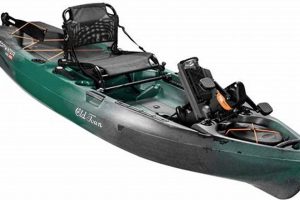
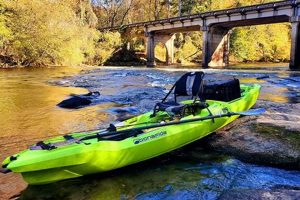
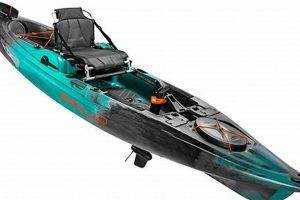
A superior angling kayak configuration involves carefully selecting and integrating various components to create an efficient and enjoyable on-the-water experience. This typically includes the kayak itself, chosen for stability, maneuverability, and storage capacity, along with essential accessories such as a comfortable and adjustable seat, rod holders, paddle, and a fish finder. A well-planned system might also incorporate features like anchor trolleys, livewells, and dry storage compartments, tailored to specific fishing styles and target species. An example would be a sit-on-top kayak with a high weight capacity, equipped with flush-mounted rod holders, a GPS-enabled fish finder, and an anchor trolley system, ideal for targeting larger fish in open water.
An optimized arrangement offers several advantages, including enhanced fishing success, improved safety, and increased comfort. A stable and maneuverable vessel allows anglers to access diverse fishing locations, present lures effectively, and fight fish efficiently. Properly positioned accessories minimize wasted time and effort, allowing anglers to focus on the task at hand. Historically, kayak fishing has evolved from basic adaptations of recreational kayaks to highly specialized designs. This evolution mirrors the growing understanding of the specific needs and demands of anglers, leading to continuous improvements in kayak design, accessories, and overall system integration.
The following sections will delve into the critical components of an effective configuration: choosing the right kayak, selecting essential accessories, and customizing the setup for specific fishing styles and environments. These topics will provide readers with the knowledge and insights necessary to create their own personalized system optimized for success and enjoyment on the water.
Tips for an Optimized Fishing Kayak Setup
Careful consideration of several factors contributes significantly to a productive and enjoyable kayak fishing experience. The following tips offer guidance for creating a personalized setup.
Tip 1: Prioritize Stability and Maneuverability: Kayak selection should balance stability, crucial for casting and landing fish, with maneuverability for navigating various water conditions. A wider hull generally provides greater stability, while a longer, narrower hull enhances speed and tracking.
Tip 2: Select Appropriate Seating: Seat comfort directly impacts endurance. Look for adjustable seating with ample back support, allowing for changes in posture throughout the day.
Tip 3: Optimize Rod Holder Placement: Strategically placed rod holders facilitate easy access and efficient rod management. Flush-mounted or adjustable rod holders offer versatility for different fishing techniques.
Tip 4: Integrate a Fish Finder: A fish finder significantly improves the ability to locate fish and understand underwater structure. Choose a model with features suitable for the target species and environment.
Tip 5: Consider an Anchor Trolley System: An anchor trolley allows for controlled positioning in various current and wind conditions, maximizing fishing effectiveness.
Tip 6: Choose a Paddle Designed for Fishing: A lightweight, efficient paddle with a comfortable grip minimizes fatigue and allows for precise maneuvering.
Tip 7: Implement a Storage System: Organize essential gear and tackle within easy reach through a well-designed storage system, including dry storage compartments and tackle boxes.
Tip 8: Personalize Based on Fishing Style: Tailor the setup to specific needs and preferences. A bass angler might prioritize maneuverability and shallow-water access, while an offshore angler may require enhanced stability and ample storage.
By carefully addressing these aspects, anglers can create a streamlined and efficient setup that enhances both performance and enjoyment on the water.
These optimization strategies provide a foundation for a successful kayak fishing experience. The subsequent conclusion will summarize key considerations and offer final recommendations.
1. Kayak Selection

Kayak selection forms the cornerstone of an optimal fishing kayak setup. The vessel’s characteristics directly influence stability, maneuverability, and overall fishing effectiveness. An inappropriate choice can hinder performance, limiting access to desired fishing locations and compromising safety. Conversely, a well-chosen kayak enhances the angling experience, providing a stable platform for casting, fighting fish, and navigating diverse water conditions. For instance, a shorter, wider kayak offers superior stability in calm, shallow waters, ideal for sight fishing or targeting species in tight quarters. However, this design may prove challenging in open water or strong currents where a longer, more streamlined hull excels.
Consider the intended fishing environment and target species when selecting a kayak. Offshore anglers pursuing larger game fish require a vessel with high stability and ample storage for gear and potential catches. Conversely, anglers targeting bass in rivers and lakes benefit from increased maneuverability and shallow-water access. Examining specific features like hull design, weight capacity, and storage options allows anglers to identify a kayak aligned with their individual needs. Failure to adequately address these factors can lead to instability, limited storage, and reduced fishing effectiveness.
In conclusion, kayak selection holds significant weight in achieving a best fishing kayak setup. Careful evaluation of intended use, target species, and specific kayak features ensures compatibility between the angler, the vessel, and the fishing environment. This informed approach maximizes efficiency, safety, and overall enjoyment on the water. Neglecting this critical aspect can compromise the entire setup, hindering performance and potentially jeopardizing safety. A thorough understanding of these considerations empowers anglers to make informed decisions and optimize their on-the-water experience.
2. Paddle Choice
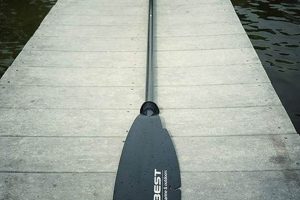
Paddle choice significantly impacts the effectiveness of a fishing kayak setup. An appropriate paddle enhances maneuverability, reduces fatigue, and allows anglers to focus on fishing rather than paddling. Paddle length, blade shape, and material construction all contribute to overall performance. A paddle that is too short or too long results in inefficient strokes, wasting energy and reducing boat control. Similarly, a blade shape unsuited to the angler’s paddling style or the water conditions compromises efficiency and increases fatigue. For example, a high-angle paddle with a shorter, wider blade suits shallow water and maneuvering, while a low-angle paddle with a longer, narrower blade is more efficient for open water and longer distances. Material selection influences weight and durability. Lightweight paddles, often constructed from carbon fiber or fiberglass, minimize fatigue during long paddling sessions, but come at a higher cost. Less expensive aluminum or plastic paddles offer durability but may be heavier and less efficient.
The connection between paddle choice and a best fishing kayak setup becomes evident when considering practical applications. Anglers frequently navigate varying water conditions, requiring precise boat control for positioning and fishing effectiveness. An ill-suited paddle hinders the ability to hold position in current, maneuver through tight spaces, or efficiently cover distance. Consider an angler fishing in windy conditions. A shorter, high-angle paddle allows for quick, corrective strokes to maintain position, while a longer, low-angle paddle proves less effective in such circumstances. Similarly, a lightweight paddle minimizes fatigue during long days on the water, allowing anglers to focus on fishing rather than battling exhaustion. The cumulative effect of these factors underscores the importance of paddle selection in optimizing a fishing kayak setup.
In summary, paddle choice represents a critical component of a well-designed fishing kayak configuration. A properly selected paddle contributes to efficient paddling, reduced fatigue, and enhanced boat control. Understanding the interplay between paddle characteristics, fishing environment, and individual paddling style empowers anglers to make informed decisions. Neglecting this aspect can compromise the overall effectiveness of the setup, hindering performance and diminishing the overall fishing experience. Selecting the correct paddle maximizes efficiency and enjoyment on the water.
3. Rod Holders
Rod holders represent a critical component within a best fishing kayak setup, directly influencing angling efficiency and safety. Proper rod placement facilitates hands-free operation, allowing anglers to manage lines, change lures, and handle fish without compromising stability. Conversely, inadequate rod storage solutions can lead to tangled lines, lost tackle, and potentially dangerous situations. This section explores the multifaceted role of rod holders in optimizing kayak fishing functionality.
- Placement and Accessibility
Strategic rod holder placement maximizes efficiency and minimizes interference. Easy access allows for quick retrieval and stowage of rods without hindering paddling or other fishing activities. Positioning rod holders within easy reach, angled slightly outward, facilitates grab-and-go access while preventing rods from obstructing paddling strokes or tangling with other gear. Conversely, poorly placed holders can create obstacles, increasing the risk of tangling lines or losing balance.
- Rod Security and Stability
Secure rod storage prevents loss or damage during navigation and while fighting fish. Rod holders should firmly grip the rod butt, preventing slippage or ejection in rough water or during aggressive strikes. Examples include adjustable rod holders with straps or locking mechanisms, and flush-mounted holders designed for specific rod types. Inadequate rod security can lead to valuable equipment loss, particularly in challenging conditions.
- Types and Functionality
Various rod holder types cater to different fishing styles and preferences. Flush-mounted holders offer a streamlined profile and minimize interference, ideal for trolling or drifting. Adjustable rod holders provide versatility for changing fishing techniques and targeting different species. Specialized holders accommodate specific rod types, such as fly rods or spinning rods. Selecting the appropriate type ensures compatibility with the chosen fishing style and enhances overall effectiveness.
- Integration with Other Accessories
Integrating rod holders with other accessories, such as fish finders and anchor trolleys, further optimizes the fishing experience. Positioning rod holders near the fish finder display allows anglers to monitor readings while keeping rods readily accessible. Similarly, placing holders near the anchor trolley control point facilitates controlled drifting and precise bait placement. This integration streamlines workflow, maximizing efficiency and enhancing fishing success.
In conclusion, rod holders play a pivotal role in creating a best fishing kayak setup. Careful consideration of placement, security, type, and integration with other accessories ensures a streamlined and efficient fishing experience. A well-designed rod holder system maximizes fishing effectiveness, minimizes the risk of equipment loss or damage, and enhances overall safety on the water.
4. Fish Finder
A fish finder constitutes a crucial element within a best fishing kayak setup, significantly impacting angling success. This electronic device utilizes sonar technology to provide underwater insights, revealing bottom structure, fish locations, and depth readings. Integrating a fish finder empowers anglers with enhanced situational awareness, enabling strategic decision-making and increasing the likelihood of locating and catching target species. Its absence can limit effectiveness, particularly in unfamiliar waters or when targeting specific structures.
- Locating Fish and Structure
Fish finders excel at pinpointing fish concentrations and identifying underwater structures such as drop-offs, reefs, and submerged vegetation. This information proves invaluable in locating productive fishing zones. For instance, identifying a thermocline or a school of baitfish near a submerged structure can significantly increase the chances of encountering target species. Without a fish finder, locating these hotspots often relies on guesswork or prior knowledge, potentially leading to wasted time and reduced catches.
- Depth and Bottom Contour Mapping
Accurate depth readings and bottom contour mapping facilitate safe navigation and effective fishing strategies. Understanding depth variations allows anglers to avoid grounding or damaging their kayaks in shallow areas. Furthermore, recognizing bottom contours aids in identifying ideal locations for specific species, such as channels or depressions where fish often congregate. This information proves particularly beneficial in unfamiliar waters or when navigating changing tides.
- Water Temperature Analysis
Water temperature significantly influences fish behavior. Fish finders provide real-time temperature readings, enabling anglers to locate areas where target species are most likely to be active. For example, finding a temperature break or a pocket of warmer water in a colder environment can reveal prime fishing locations. This data empowers anglers to adapt their strategies and target specific areas based on temperature preferences of the species they seek.
- Integration with GPS and Chartplotting
Many modern fish finders integrate with GPS and chartplotting capabilities, further enhancing navigation and fishing efficiency. This combination allows anglers to mark waypoints, track their movements, and create detailed maps of productive fishing areas. This feature proves particularly useful for revisiting successful locations or sharing information with other anglers. The integrated system streamlines navigation and simplifies route planning, maximizing time spent fishing in productive areas.
In summary, the integration of a fish finder elevates a fishing kayak setup from basic to advanced. Its ability to reveal underwater details empowers anglers with crucial information for locating fish, understanding underwater terrain, and optimizing fishing strategies. While other accessories contribute to comfort and efficiency, the fish finder directly impacts fishing success, providing a distinct advantage in locating and catching target species. Its presence within a kayak setup signals a serious angler committed to maximizing their on-the-water effectiveness.
5. Safety Gear

Safety gear represents a non-negotiable component of a best fishing kayak setup. Prioritizing safety ensures an enjoyable and incident-free experience on the water. While focusing on optimizing fishing effectiveness, neglecting safety protocols compromises angler wellbeing and potentially leads to preventable emergencies. This section examines the essential safety elements integral to a responsible and well-equipped fishing kayak configuration.
- Personal Flotation Device (PFD)
A properly fitted PFD constitutes the most critical piece of safety equipment. It provides essential buoyancy in the event of capsizing or accidental overboard entry. Selecting a PFD specifically designed for kayaking ensures comfort and freedom of movement while paddling and fishing. Inflatable PFDs offer increased comfort but require regular maintenance and inspection. Neglecting to wear a PFD significantly increases the risk of drowning, particularly in cold water or challenging conditions.
- Whistle or Signaling Device
A whistle or other signaling device provides a crucial means of attracting attention in emergencies. A loud whistle can alert nearby boaters or individuals on shore in situations requiring assistance. Visual signaling devices, such as flares or signal mirrors, further enhance visibility and increase the likelihood of rescue. Relying solely on voice projection for signaling proves ineffective, particularly in windy conditions or across larger distances. A dedicated signaling device ensures effective communication in distress situations.
- First-Aid Kit and Emergency Supplies
A comprehensive first-aid kit, including essential medical supplies and medications, addresses minor injuries and ailments that may occur on the water. Items like bandages, antiseptic wipes, pain relievers, and sunscreen provide immediate care for common issues such as cuts, sunburn, or insect bites. Supplementing the first-aid kit with emergency supplies, such as a waterproof flashlight, a multi-tool, and extra drinking water, further enhances preparedness for unforeseen circumstances. Neglecting to carry basic medical and emergency supplies can exacerbate minor injuries or create discomfort during longer outings.
- Communication Device
A reliable communication device, such as a VHF radio or a waterproof cell phone, enables communication with shore or other boaters in emergencies. A VHF radio provides direct access to emergency channels and allows for communication with the Coast Guard or other rescue services. A waterproof cell phone, stored in a protective case, offers an alternative communication method, provided cellular service is available. Relying solely on visual or auditory signals can delay rescue efforts, particularly in remote locations or during periods of low visibility. A dedicated communication device ensures prompt assistance in critical situations.
Integrating these safety measures transforms a fishing kayak setup into a responsible and prepared platform for on-the-water activities. While enhancing fishing capabilities remains a primary objective, prioritizing safety ensures angler wellbeing and minimizes the risk of preventable incidents. A best fishing kayak setup incorporates both performance-enhancing features and essential safety equipment, creating a balanced approach that prioritizes both successful angling and responsible on-the-water practices. This comprehensive perspective underscores the importance of safety within the overall kayak fishing experience.
6. Storage Solutions
Effective storage solutions represent a critical link between a functional and a truly best fishing kayak setup. A well-organized kayak facilitates efficient tackle management, maximizes usable space, and contributes significantly to both safety and enjoyment on the water. Conversely, inadequate storage leads to clutter, wasted time searching for gear, and potential safety hazards. The relationship between storage and a premium kayak fishing experience hinges on accessibility, organization, and the preservation of essential equipment.
Consider the scenario of an angler targeting multiple species requiring diverse tackle. Without a well-defined storage system, locating specific lures or rigs becomes a time-consuming and frustrating endeavor. Tangled lines, misplaced tools, and shifting gear compromise both efficiency and focus. In contrast, a dedicated storage system allows for quick and easy access to necessary equipment, minimizing disruption and maximizing fishing time. For example, incorporating waterproof tackle boxes, designated compartments for rods and reels, and strategically placed storage bags keeps essential gear organized and readily available. This streamlined approach enhances efficiency, reduces stress, and allows anglers to focus on the task at handcatching fish.
Furthermore, efficient storage directly impacts safety. Loose gear shifting within the kayak compromises stability, particularly in challenging conditions. Unsecured items can become entangled with paddles or fishing lines, creating hazardous situations. A well-designed storage system mitigates these risks by securing equipment and maximizing usable space. Dry storage compartments protect sensitive electronics and essential items from water damage, ensuring functionality and preserving valuable investments. This attention to detail elevates a fishing kayak setup from simply functional to truly optimized, reflecting a commitment to both performance and safety.
In conclusion, the connection between storage solutions and a best fishing kayak setup proves undeniable. A well-organized kayak enhances efficiency, maximizes safety, and contributes significantly to the overall fishing experience. While other components contribute to performance, effective storage solutions underpin the entire setup, creating a streamlined and functional platform for angling success. Prioritizing storage demonstrates a commitment to optimizing not only fishing effectiveness but also the overall enjoyment and safety on the water. This comprehensive perspective underscores the integral role of storage within a truly best-in-class kayak fishing configuration.
7. Personal Comfort
Personal comfort forms an often-overlooked yet crucial connection within a best fishing kayak setup. While factors like kayak selection and accessory choices contribute significantly to on-the-water effectiveness, neglecting personal comfort compromises endurance, focus, and ultimately, enjoyment. A comprehensive approach to kayak fishing recognizes the direct link between angler comfort and overall fishing success. Discomfort, whether stemming from an improperly adjusted seat, inadequate clothing, or insufficient hydration, detracts from the experience and hinders performance.
- Seating Adjustments and Support
Proper seating configuration directly impacts long-term comfort and fishing effectiveness. An adjustable seat, offering lumbar support and customizable positioning, allows anglers to maintain a comfortable posture throughout extended fishing sessions. A poorly designed or improperly adjusted seat leads to fatigue, back pain, and reduced mobility, hindering casting, reeling, and overall fishing performance. For example, an angler targeting pelagic species might prefer a higher seat position for improved visibility, while an angler fishing in shallow water might opt for a lower position for enhanced stability.
- Appropriate Clothing and Sun Protection
Appropriate attire significantly influences comfort and protection from the elements. Moisture-wicking fabrics keep anglers dry and comfortable in warm weather, while layered clothing provides insulation in colder conditions. Protecting exposed skin from the sun’s harmful rays through sunscreen, hats, and long sleeves prevents sunburn and long-term skin damage. Neglecting these considerations can lead to discomfort, distraction, and potentially serious health issues, impacting the overall fishing experience. For example, an angler fishing in tropical climates benefits from lightweight, breathable clothing and a wide-brimmed hat, while an angler fishing in colder regions requires insulated layers and waterproof outerwear.
- Hydration and Nutrition
Maintaining adequate hydration and consuming appropriate nutrition sustains energy levels and prevents fatigue during long hours on the water. Bringing ample drinking water and nutrient-rich snacks, such as energy bars or trail mix, combats dehydration and energy depletion. Neglecting these basic needs leads to decreased performance, impaired focus, and potential health risks. For example, an angler engaged in strenuous paddling or fishing in hot weather requires increased fluid intake compared to an angler fishing in cooler, calmer conditions.
- Accessibility and Organization
Efficiently organized gear and readily accessible essential items contribute significantly to comfort and reduced stress. Positioning frequently used items, such as pliers, line cutters, and lures, within easy reach minimizes disruptive movements and maximizes fishing efficiency. For example, utilizing a tackle box with clearly labeled compartments or employing a lanyard system for essential tools keeps gear organized and readily available, enhancing comfort and minimizing frustration. This streamlined approach allows anglers to focus on fishing rather than searching for misplaced equipment.
In conclusion, personal comfort represents a crucial, albeit often overlooked, component of a best fishing kayak setup. Addressing these seemingly minor details significantly impacts the overall fishing experience, influencing endurance, focus, and ultimately, enjoyment. While a well-equipped kayak and strategically chosen accessories contribute to on-the-water effectiveness, prioritizing personal comfort elevates the experience from simply functional to truly optimized. A comfortable angler remains focused, energized, and better equipped to handle the challenges and rewards of a successful day on the water. This holistic approach recognizes the interconnectedness of angler comfort and optimal fishing performance, solidifying its importance within a best-in-class kayak fishing configuration.
Frequently Asked Questions
Addressing common inquiries regarding optimal kayak fishing configurations provides clarity and facilitates informed decision-making. The following questions and answers offer insights into key considerations for enhancing on-the-water experiences.
Question 1: How does hull design influence kayak fishing performance?
Hull design significantly impacts stability and maneuverability. Wider, flatter hulls offer enhanced stability, ideal for calm waters and stand-up fishing. Longer, narrower hulls prioritize speed and tracking, suitable for covering greater distances and navigating currents. Specialized hull designs, such as pontoon hulls, maximize stability for specialized fishing techniques.
Question 2: What factors determine appropriate paddle length?
Appropriate paddle length depends on angler height, kayak width, and paddling style. Taller individuals and wider kayaks generally require longer paddles. High-angle paddlers typically use shorter paddles than low-angle paddlers. Proper fit maximizes efficiency and minimizes fatigue.
Question 3: What are the advantages of a pedal-driven kayak for fishing?
Pedal-driven kayaks offer hands-free propulsion, allowing anglers to focus on fishing rather than paddling. This advantage proves particularly beneficial for techniques requiring precise boat control, such as trolling or casting in moving water. However, pedal drives add complexity and weight compared to traditional paddle kayaks.
Question 4: How does one choose an appropriate fish finder for kayak fishing?
Fish finder selection depends on target species, fishing environment, and budget. Basic models provide essential depth and fish location information, while advanced units offer features like GPS, chartplotting, and down-imaging. Screen size and transducer type also influence performance and usability.
Question 5: What safety precautions should kayak anglers observe?
Essential safety precautions include wearing a properly fitted personal flotation device (PFD), carrying a whistle or signaling device, informing someone of fishing plans, and checking weather forecasts before departure. Understanding basic navigation and self-rescue techniques further enhances safety.
Question 6: How does one optimize storage space within a fishing kayak?
Optimizing storage involves utilizing waterproof containers, employing tackle management systems, and strategically placing gear for easy access. Prioritizing frequently used items and minimizing unnecessary equipment maximizes usable space and enhances efficiency. Dry bags, tackle trays, and specialized storage compartments contribute to effective organization.
Careful consideration of these frequently asked questions empowers anglers to refine their kayak fishing setups, maximizing both performance and enjoyment on the water.
For further guidance and specific product recommendations, consult the comprehensive guide available in the following section.
Best Fishing Kayak Setup
Achieving a best fishing kayak setup requires a comprehensive and nuanced approach, extending beyond simply acquiring the latest gear. Careful consideration of individual needs, fishing style, and target environment informs the selection and integration of various components. From the foundational choice of kayak, balancing stability and maneuverability, to the strategic placement of rod holders and the integration of advanced electronics, each element contributes to the overall effectiveness and enjoyment of the on-the-water experience. Prioritizing safety through essential gear and responsible practices ensures angler wellbeing, while addressing personal comfort through appropriate attire, seating adjustments, and hydration maximizes endurance and focus. Efficient storage solutions further enhance functionality, streamlining access to essential equipment and minimizing clutter. The synthesis of these interconnected elements transforms a collection of gear into a cohesive and high-performing system, optimized for angling success.
Mastery of kayak fishing, therefore, transcends mere equipment acquisition. It represents a continuous process of refinement, adapting and evolving the setup to meet specific challenges and enhance overall performance. An understanding of the interplay between these elements empowers anglers to create truly personalized and effective systems, maximizing not only fishing success but also the profound connection with nature inherent within the sport. The pursuit of a best fishing kayak setup represents an ongoing journey of optimization, driven by a passion for angling and a commitment to maximizing the on-the-water experience.