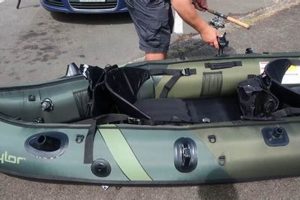
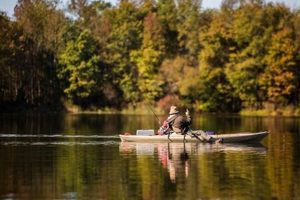
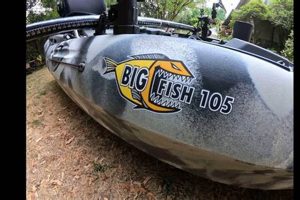
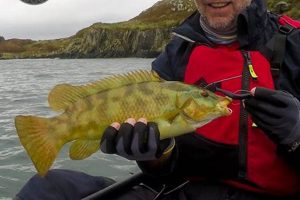
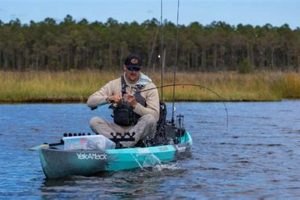
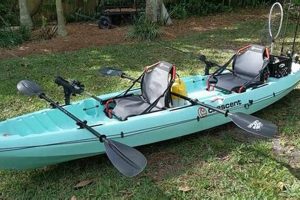
This term likely refers to a kayak designed for diverse aquatic environments, capable of handling larger fish and potentially having a length of 120 centimeters or relating to a 120-pound weight capacity. Such a vessel would be suitable for various bodies of water, from calm lakes and rivers to more challenging coastal waters or offshore fishing, offering versatility to anglers. The ability to handle larger fish suggests features like enhanced stability, robust construction, and ample storage or rigging options.
A multi-water kayak capable of landing substantial catches provides a significant advantage to fishing enthusiasts. It expands the range of accessible fishing locations and target species. The potential length or weight capacity specification suggests a vessel designed with stability and durability in mind, crucial factors for anglers dealing with larger, more powerful fish. This type of kayak likely meets the needs of anglers seeking diverse experiences, from recreational fishing to more serious angling pursuits.
The following sections will delve deeper into the specific features and benefits of kayaks suited for multiple water types and larger fish, explore factors influencing kayak selection for different fishing environments, and discuss appropriate gear and techniques for maximizing success on the water.
Tips for Multi-Water Kayak Fishing
Effective kayak fishing across diverse environments and for larger fish necessitates careful planning and specialized techniques. The following tips offer guidance for enhancing angling success and overall safety.
Tip 1: Stability is Paramount: Kayak stability is crucial, especially when battling strong fish. Consider wider, flatter-hulled kayaks designed for stability in various water conditions.
Tip 2: Appropriate Gear Selection: Heavier tackle and specialized rods and reels are often required for larger fish. Ensure gear compatibility with the kayak’s size and weight capacity.
Tip 3: Safety First: Always wear a personal flotation device (PFD) and carry essential safety equipment, including a whistle, signaling device, and first-aid kit. Inform someone of fishing plans and estimated return time.
Tip 4: Understanding Water Conditions: Research and understand the specific characteristics of the target water body, including currents, tides, and potential hazards. Adapt fishing techniques and kayak maneuvering strategies accordingly.
Tip 5: Effective Fish Handling: Utilize appropriate landing techniques and tools, such as nets or lip grips, to minimize stress on both the fish and the angler. Practice catch-and-release principles whenever possible.
Tip 6: Kayak Customization: Consider customizing the kayak with rod holders, fish finders, and other accessories to enhance fishing efficiency and comfort. Ensure proper weight distribution and balance.
Tip 7: Environmental Awareness: Respect wildlife and natural habitats. Adhere to local fishing regulations and practice Leave No Trace principles.
By adhering to these guidelines, anglers can improve their chances of landing larger fish while prioritizing safety and responsible environmental stewardship.
These tips provide a solid foundation for successful and enjoyable multi-water kayak fishing experiences. The subsequent conclusion will recap key takeaways and offer additional resources for continued learning and exploration.
1. Kayak Stability

Kayak stability forms the cornerstone of successful angling, especially in the context of “3 waters kayak big fish 120.” This concept implies navigating diverse water conditions and targeting larger, more powerful fish, making stability a paramount consideration. A stable platform allows for effective casting, fighting fish, and maneuvering in challenging environments without compromising safety.
- Hull Design and Stability:
Hull design directly impacts stability. Wider, flatter hulls provide greater initial stability, ideal for calm waters and stand-up fishing. However, they can be slower and less maneuverable. Longer, narrower hulls offer better tracking and speed but sacrifice some initial stability. “3 waters” suggests a need for a balanced hull design accommodating varying conditions. A kayak intended for “big fish” necessitates enhanced stability to manage the forces exerted during a fight.
- Center of Gravity and Weight Distribution:
Maintaining a low center of gravity is essential for stability. Proper weight distribution within the kayak plays a crucial role. Positioning heavier items lower and centrally improves stability. When battling a “big fish,” maintaining balanced weight distribution becomes even more critical to prevent capsizing. In “3 waters” scenarios, adapting weight distribution based on water conditions is vital.
- Impact of Water Conditions:
Calm lakes and rivers allow for greater stability compared to choppy coastal waters or offshore environments. “3 waters” suggests encountering diverse conditions, requiring a kayak stable across a range of situations. Wind, currents, and waves significantly impact stability, requiring adjustments in paddling technique and body positioning. A stable kayak is crucial for maintaining control and safety in challenging “3 waters” environments, especially when hooked to a “big fish.”
- Stability and Angling Techniques:
Certain angling techniques, such as stand-up fishing or fly fishing, demand higher levels of stability. A stable platform enables anglers to focus on technique and fish handling rather than maintaining balance. When targeting “big fish” from a kayak, stability becomes crucial for executing effective hooksets and fighting the fish without compromising safety. In the “3 waters” context, a stable kayak allows for adapting angling techniques based on the specific environment.
These facets of kayak stability are intrinsically linked to the “3 waters kayak big fish 120” concept. A kayak designed for these conditions must offer a balance of stability and maneuverability. Understanding the interplay between hull design, weight distribution, water conditions, and angling techniques is vital for selecting the appropriate kayak and maximizing success on the water while ensuring angler safety.
2. Target Fish Species
Target fish species significantly influence equipment choices and strategies within the “3 waters kayak big fish 120” framework. “Big fish” implies targeting larger species, potentially requiring heavier tackle and a kayak with greater stability and capacity. The “3 waters” aspect necessitates considering species inhabiting different environments, from freshwater lakes and rivers to saltwater estuaries and coastal areas. This interconnectedness demands careful consideration of species-specific habitat preferences, feeding behaviors, and fighting characteristics.
For instance, targeting largemouth bass in freshwater lakes requires different gear and techniques compared to pursuing tarpon in coastal estuaries. Bass fishing might involve lighter tackle and lures designed for ambush predation in shallower, vegetated areas. Tarpon fishing necessitates heavier rods, reels, and lines capable of handling powerful runs and acrobatic leaps in open water. The kayak’s stability and size become crucial factors when battling larger species like tarpon, highlighting the interconnectedness between target species and kayak selection within the “3 waters” context. A kayak designed for “big fish” in varied environments needs to accommodate the specific demands of each target species, impacting rod and reel choices, line strength, lure selection, and overall fishing strategy.
Understanding the target fish species’ behavior and habitat preferences is essential for effective angling across different water types. Species like trout thrive in cooler, flowing freshwater environments, while redfish prefer brackish estuaries and saltwater flats. This diversity within the “3 waters” concept necessitates tailoring fishing approaches to match the specific target species and its environment. The “120” element, likely referring to length or weight capacity, further emphasizes the importance of species consideration. A smaller kayak might suffice for targeting smaller freshwater species, while a larger, more stable kayak is essential for pursuing larger saltwater gamefish. Effectively integrating target fish species considerations within the “3 waters kayak big fish 120” concept is fundamental for maximizing angling success and ensuring a safe and rewarding experience.
3. Water Types (3)

The “3 waters” component of “3 waters kayak big fish 120” signifies the kayak’s intended versatility across diverse aquatic environments. This adaptability is crucial for anglers seeking to target various fish species in different locations. Understanding the characteristics of these distinct water types is essential for selecting appropriate gear, optimizing fishing techniques, and ensuring safety.
- Lakes and Ponds:
These typically calmer bodies of freshwater present unique opportunities and challenges. Often characterized by relatively still water, they allow for easier maneuverability and precise casting. However, wind can create choppiness, requiring a kayak with adequate stability. Depths and vegetation vary significantly, influencing fish habitat and angling strategies. The “big fish” aspect of “3 waters kayak big fish 120” suggests targeting larger species like bass, pike, or catfish, necessitating appropriate tackle and potentially a kayak with higher weight capacity.
- Rivers and Streams:
Flowing freshwater environments introduce the element of current, demanding a kayak with good tracking and maneuverability. Current speed, depth fluctuations, and obstacles like rocks and fallen trees require careful navigation. Targeting “big fish” in rivers might involve species like salmon, steelhead, or larger catfish, necessitating stronger gear and the ability to manage the kayak in moving water. The “3 waters” context implies the kayak is suitable for varying current speeds, enhancing its versatility.
- Coastal Waters and Estuaries:
These saltwater environments present more dynamic conditions, including tides, currents, and wind-generated waves. Kayak stability becomes paramount in these often-challenging waters. Targeting “big fish” in coastal areas might involve species like redfish, snook, or tarpon, demanding specialized saltwater tackle and a kayak capable of handling rougher conditions. The “3 waters” concept suggests the kayak possesses the stability and seaworthiness required for coastal fishing. The “120” element, potentially related to length or weight capacity, further reinforces the kayak’s suitability for larger fish and potentially heavier gear in these environments.
- Oceans and Open Water (Potentially Implied):
While not explicitly stated, “3 waters” could encompass offshore environments, implying a kayak capable of handling more demanding conditions. Ocean fishing presents significant challenges, requiring a highly stable and seaworthy kayak designed for open water. Targeting “big fish” offshore often involves pelagic species like tuna or marlin, necessitating specialized heavy tackle and a robust kayak equipped for long-distance paddling and challenging conditions. The “120” designation might relate to features designed for open water performance and larger fish, further emphasizing the kayak’s versatility within the “3 waters” concept.
The “3 waters” designation within “3 waters kayak big fish 120” is not merely a descriptive element but a defining characteristic. It dictates the kayak’s design, features, and capabilities, directly impacting its suitability for specific fishing scenarios. The interplay between water type, target species, and kayak characteristics is crucial for anglers seeking to maximize their success and safety on the water. Understanding the specific demands of each water type within the “3 waters” context allows for informed decisions regarding kayak selection, gear preparation, and angling techniques.
4. Kayak Capacity (120)
Kayak capacity, denoted as “120” within the “3 waters kayak big fish 120” framework, plays a critical role in determining the vessel’s suitability for diverse fishing scenarios. This numerical value likely represents either a length of 120 centimeters or a weight capacity of 120 pounds, each having significant implications for kayak performance, target species, and overall angling experience. Understanding the precise meaning of “120” within this context is crucial for informed decision-making.
- Length (120cm):
If “120” signifies length, it indicates a relatively compact kayak, suitable for maneuverability in confined spaces like smaller rivers and creeks, aligning with the “3 waters” versatility. However, a shorter length might limit storage space for gear and impact tracking in open water or challenging conditions. This length would be more appropriate for smaller to medium-sized fish, potentially constraining the “big fish” aspect depending on the target species.
- Weight Capacity (120 lbs):
Alternatively, “120” might denote a weight capacity of 120 pounds. This figure encompasses the combined weight of the angler, gear, and potential catch. A 120-pound capacity suggests a kayak suitable for smaller to average-sized anglers targeting moderately sized fish. This aligns with the “big fish” aspect if targeting species within this weight range but could limit options for larger anglers or exceptionally large fish. The “3 waters” aspect remains relevant as this capacity could suffice across various environments, though stability might become a concern in rougher conditions with heavier loads.
- Impact on Gear and Target Species:
The interpretation of “120” directly impacts gear choices and target species. A shorter kayak might limit the size and quantity of gear carried, while a lower weight capacity restricts angler size and potential catch weight. Targeting larger gamefish necessitates a kayak with ample capacity for heavier tackle and the potential strain of a substantial catch. The “3 waters” aspect emphasizes the need for a capacity suitable for gear appropriate to each environment, from lighter freshwater tackle to heavier saltwater setups.
- Stability Considerations:
Capacity influences stability, particularly concerning weight distribution. Exceeding the recommended capacity compromises stability and increases the risk of capsizing, especially in challenging “3 waters” environments. A lower capacity kayak necessitates careful weight management, especially when targeting “big fish” that could further destabilize the vessel during a fight. Understanding the capacity’s impact on stability is crucial for safe and successful angling across varied water conditions.
The “120” designation in “3 waters kayak big fish 120” is a pivotal specification. Whether interpreted as length or weight capacity, it informs decisions regarding suitable water types, target species, and overall fishing strategy. Correctly interpreting this figure within the broader context of “3 waters” and “big fish” is paramount for optimizing kayak selection and ensuring a safe and successful angling experience. Failure to consider capacity limitations can lead to instability, equipment constraints, and potentially unsafe situations, particularly when battling larger fish in challenging environments.
5. Fishing Gear

Fishing gear selection is paramount within the “3 waters kayak big fish 120” framework. The “big fish” component implies targeting larger, more powerful species, necessitating robust tackle. “3 waters” suggests diverse fishing environments, from freshwater rivers and lakes to potentially saltwater estuaries or coastal areas, each demanding specialized equipment. The “120,” whether denoting length or weight capacity, influences gear choices based on available storage space and the kayak’s stability. Harmonizing fishing gear with these factors is crucial for angling success and safety.
- Rods and Reels:
Rod and reel selection depends heavily on target species and fishing environment. Heavier rods and reels with higher line capacities are essential for larger saltwater species in open water, aligning with the “big fish” aspect. Lighter, more sensitive setups are suitable for freshwater species in calmer environments. The “3 waters” component necessitates considering rod length and action for casting in different conditions, from tight quarters in rivers to open areas in lakes or coastal zones. The kayak’s size, reflected in the “120” designation, can restrict rod length choices due to storage limitations.
- Lines and Leaders:
Line and leader selection hinges on target species and fishing location. Heavier lines with higher breaking strengths are essential for “big fish,” especially in saltwater environments where abrasion resistance is crucial. Lighter lines are suitable for freshwater species and finesse presentations. “3 waters” demands adaptable line choices, considering factors like water clarity and vegetation. Fluorocarbon leaders offer stealth and abrasion resistance, valuable assets in varied environments. Line capacity is constrained by reel size, influenced by the kayak’s “120” designation, whether interpreted as length or weight capacity.
- Lures and Baits:
Lure and bait choices depend on target species, their feeding habits, and the specific “3 waters” environment. Larger lures and baits are often necessary for “big fish,” while smaller, more subtle offerings are effective for finesse presentations. Freshwater environments might require lures mimicking local forage, while saltwater locations demand lures designed for specific species and conditions. The “120” element, influencing kayak size and storage, can impact the variety of lures and baits carried.
- Terminal Tackle:
Hooks, weights, swivels, and other terminal tackle components must align with the “big fish” objective. Stronger hooks and heavier weights are required for larger species and varying “3 waters” conditions. Swivels prevent line twist, particularly important when using spinning lures in moving water. The “120” element, potentially impacting storage capacity, influences the quantity and variety of terminal tackle carried. Proper organization is essential in the limited space of a kayak.
Effective fishing gear selection within the “3 waters kayak big fish 120” context demands careful consideration of the interconnectedness between target species, fishing environment, and kayak limitations. Balancing these elements through appropriate gear choices is fundamental for maximizing angling success, ensuring angler safety, and promoting responsible fishing practices across diverse water bodies.
6. Safety Equipment

Safety equipment is paramount within the “3 waters kayak big fish 120” framework. “3 waters” implies navigating diverse environments, from calm lakes to potentially challenging coastal waters, increasing the inherent risks. Targeting “big fish” introduces the potential for powerful struggles and unexpected situations, further emphasizing safety considerations. “120,” whether denoting length or weight capacity, influences equipment choices based on available storage and the kayak’s stability. A comprehensive understanding of required safety equipment is crucial for mitigating risks and ensuring a positive angling experience.
A personal flotation device (PFD) is non-negotiable. Selecting a comfortable, properly fitted PFD is crucial for prolonged wear. In the event of capsizing, especially when battling a “big fish” or navigating challenging “3 waters” conditions, a PFD is essential for survival. A whistle is vital for signaling distress, particularly in remote locations or foggy conditions. A visual distress signal, such as a mirror or flare, further enhances visibility in emergency situations. A first-aid kit equipped to address common fishing-related injuries, like hook removals and cuts, is essential. Carrying a communication device, like a waterproof VHF radio or a charged mobile phone in a waterproof case, allows for contacting emergency services if needed. Navigational tools, including a compass or GPS device, are crucial for orientation, especially in unfamiliar “3 waters” environments. These tools become particularly important in adverse weather conditions or if separated from the kayak while pursuing a “big fish.” A bilge pump or bailing device is essential for removing water from the kayak in case of swamping or wave intrusion, critical in “3 waters” scenarios where conditions can change rapidly. Carrying a paddle leash prevents losing the paddle in rough water or during an unexpected struggle with a “big fish,” a situation further complicated by the limited stability of a smaller kayak, potentially indicated by the “120” designation. Proper storage of safety equipment within the kayak, accessible in emergencies, is crucial. Distributing weight evenly enhances stability, important in challenging “3 waters” environments and especially when fighting a “big fish.”
Neglecting safety equipment can have dire consequences. A capsize without a PFD in cold water can lead to hypothermia and drowning. An injury without a first-aid kit can exacerbate the situation, particularly in remote locations. Disorientation without navigational tools can result in getting lost. These risks are amplified in the “3 waters kayak big fish 120” context, where challenging environments and the potential for strenuous fish fights increase the likelihood and potential severity of incidents. Prioritizing safety equipment is not merely a precaution but a fundamental requirement for responsible kayaking and angling. It demonstrates respect for personal well-being and preparedness for the inherent risks associated with navigating diverse water bodies and pursuing large fish. Investing in appropriate safety gear and understanding its proper use transforms “3 waters kayak big fish 120” from a potentially hazardous pursuit into a safe and enjoyable angling experience.
7. Location Scouting

Location scouting is integral to the “3 waters kayak big fish 120” concept. “3 waters” implies fishing diverse environmentslakes, rivers, and coastal areaseach possessing unique characteristics impacting fish behavior and angling strategies. “Big fish” suggests targeting larger species, often requiring specific habitat features. “120,” whether denoting length or weight capacity, influences location choices based on accessibility and kayak suitability. Effective scouting maximizes angling success and ensures angler safety by identifying optimal fishing spots and potential hazards.
Scouting involves researching potential locations, considering factors like water depth, current flow, vegetation, structure, and prevailing weather patterns. For lake fishing, this might involve identifying drop-offs, weed beds, or submerged structures attractive to larger species. River fishing requires analyzing current seams, eddies, and deeper pools where fish congregate. Coastal scouting focuses on identifying channels, flats, and inlets influenced by tides and currents, holding “big fish” like redfish or snook. Understanding these factors and their influence on target species behavior is crucial for effective location selection. For example, scouting a river for large catfish might involve identifying deep holes with slower currents and submerged logs offering cover, while seeking trophy bass in a lake requires locating weed lines, drop-offs, and points where bass ambush prey. Ignoring location-specific factors can lead to unproductive fishing trips and potentially dangerous situations. Launching a small, 120cm kayak into strong currents without prior scouting can result in difficulties controlling the vessel, while venturing into unfamiliar coastal waters without understanding tides and currents can lead to stranding or exposure to hazardous conditions.
Effective location scouting optimizes the “3 waters kayak big fish 120” experience. It allows anglers to target specific species in their preferred habitats, increasing the likelihood of encountering “big fish.” Understanding water dynamics, structure, and access points enhances safety and efficiency. Scouting minimizes wasted time searching for productive areas, maximizing fishing time and enjoyment. Integrating location-specific knowledge with kayak capabilities, indicated by the “120” element, ensures the chosen locations are accessible and navigable with the chosen vessel. Thorough scouting transforms “3 waters kayak big fish 120” from a generalized concept into a targeted, strategic approach maximizing angling success and prioritizing angler safety.
Frequently Asked Questions
This FAQ section addresses common inquiries regarding kayaks suitable for diverse water types and targeting larger fish, often summarized by the phrase “3 waters kayak big fish 120.” The following questions and answers provide clarity on key aspects of kayak selection, fishing techniques, and safety considerations.
Question 1: What kayak features are most important for stability when targeting larger fish in varied water conditions?
Hull design, width, and length significantly impact stability. Wider, flatter hulls offer greater initial stability, advantageous for calm waters and stand-up fishing, while longer kayaks provide better tracking in open water or currents. A balanced design accommodating diverse “3 waters” conditions is essential.
Question 2: How does kayak length or weight capacity (“120”) influence gear choices and target species?
Kayak length restricts storage space, impacting the quantity of gear carried. Weight capacity limits the combined weight of the angler, gear, and potential catch. Targeting larger fish requires a kayak with adequate capacity for heavier tackle and the potential strain of a substantial fish.
Question 3: What safety precautions are essential when kayak fishing in diverse environments, especially for larger fish?
Wearing a PFD, carrying a whistle and visual distress signals, having a well-equipped first-aid kit, and possessing a communication device are crucial safety measures. Understanding water conditions, weather forecasts, and local regulations is paramount.
Question 4: How does location scouting contribute to successful kayak fishing for larger species across different water types?
Scouting helps identify optimal fishing spots based on water depth, current flow, structure, and fish behavior. Understanding these factors allows anglers to target specific areas holding larger fish and avoid potential hazards.
Question 5: What fishing techniques are most effective for targeting larger fish from a kayak in varied environments?
Techniques vary based on target species and water conditions. Trolling, bottom fishing, and drift fishing are effective for larger fish in open water or rivers. Jigging, casting, and live bait fishing are suitable for various species in lakes and coastal areas. Adapting techniques based on the specific “3 waters” environment is crucial.
Question 6: How does one choose the right kayak paddle length and blade shape for fishing in diverse conditions?
Paddle length depends on angler height, kayak width, and paddling style. Wider kayaks and higher seats require longer paddles. Blade shape influences paddling efficiency and maneuverability. Shorter, wider blades offer more power, while longer, narrower blades are better for sustained paddling.
These FAQs provide fundamental insights into key considerations for kayak fishing across diverse environments and targeting larger fish. Understanding these elements enhances angling success, promotes safety, and contributes to a more informed and enjoyable experience on the water.
The following section will delve into specific kayak models and brands suitable for the 3 waters big fish 120 concept, providing further guidance for equipment selection.
Conclusion
Navigating the complexities of “3 waters kayak big fish 120” requires a comprehensive understanding of interconnected factors. Kayak selection hinges on balancing stability, maneuverability, and capacity (represented by “120,” whether length or weight limit) to accommodate diverse aquatic environments (“3 waters”) and the demands of targeting larger species (“big fish”). Equipment choices, from rods and reels to safety gear, must align with target species, anticipated water conditions, and kayak limitations. Thorough location scouting and adherence to safety protocols are non-negotiable for maximizing success and mitigating risks inherent in navigating varied waters and engaging with powerful fish.
Successful angling in diverse environments while targeting larger species demands informed decision-making, meticulous preparation, and a deep respect for the dynamic interplay between angler, equipment, and the aquatic world. The pursuit of “3 waters kayak big fish 120” represents a challenging yet rewarding endeavor, offering opportunities to connect with nature, test angling skills, and experience the thrill of landing trophy catches while prioritizing safety and environmental responsibility.