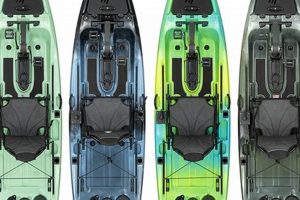
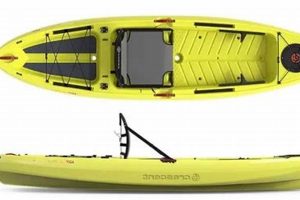
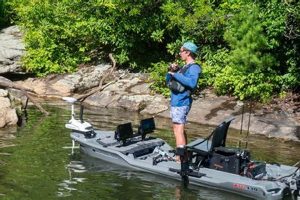
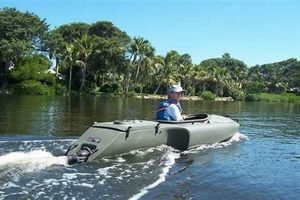
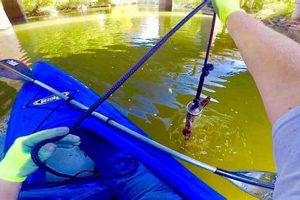
This specific type of watercraft designates a sit-on-top kayak measuring twelve feet in length, manufactured by Sun Dolphin, and designed for angling. Such vessels typically feature specialized amenities like rod holders, tackle storage, and often a comfortable, elevated seat. They offer stability and maneuverability suitable for navigating calm waters like lakes and slow-moving rivers.
A watercraft of this size and design offers several advantages to the recreational fisher. The twelve-foot length provides a balance of stability and tracking efficiency, crucial for maintaining position while casting or trolling. Dedicated fishing features minimize clutter and maximize efficiency, allowing anglers to focus on the sport. Sun Dolphin’s reputation for producing affordable, durable recreational kayaks makes this type of craft accessible to a wide range of users. The evolution of fishing kayak design reflects a growing understanding of angler needs, resulting in highly specialized vessels tailored to specific fishing styles and environments.
The following sections will explore the key features that distinguish this type of fishing kayak, provide guidance on selecting the right model, and offer practical tips for using and maintaining the vessel effectively. Further discussion will delve into the broader context of kayak fishing and its increasing popularity within the recreational angling community.
Tips for Utilizing a 12-Foot Fishing Kayak
Effective use of a fishing kayak maximizes enjoyment and ensures safety on the water. These guidelines offer practical advice for leveraging the advantages of this type of vessel.
Tip 1: Prioritize Stability Testing: Before venturing into open water, conduct stability tests in a controlled environment, such as a shallow, calm area. This allows one to become familiar with the vessel’s balance and behavior.
Tip 2: Master Paddling Techniques: Efficient paddling conserves energy and improves maneuverability. Practice different strokes to control speed and direction effectively.
Tip 3: Utilize Proper Safety Gear: A personal flotation device (PFD) is essential. Additional safety equipment, including a whistle, signaling mirror, and first-aid kit, should be readily accessible.
Tip 4: Plan and Share Trip Details: Inform someone of the intended fishing location and estimated return time. Unexpected delays can occur, and having a contact person ensures appropriate assistance if needed.
Tip 5: Respect Wildlife and the Environment: Observe wildlife from a respectful distance and avoid disturbing natural habitats. Pack out all trash and fishing line to maintain a clean environment.
Tip 6: Understand Water Conditions: Check weather forecasts and water conditions prior to departure. Avoid venturing out in strong winds, currents, or storms.
Tip 7: Distribute Weight Evenly: Proper weight distribution contributes to stability and tracking. Gear should be stowed securely and balanced within the vessel.
Adherence to these practices enhances both safety and enjoyment on the water. Appropriate preparation and responsible conduct contribute significantly to a positive fishing experience.
By understanding the capabilities and limitations of a 12-foot fishing kayak, anglers can fully appreciate the advantages offered by this increasingly popular angling platform. The following conclusion summarizes the key considerations discussed in this article.
1. Length

The length of a kayak significantly influences its performance characteristics, and in the context of a 12-foot Sun Dolphin fishing kayak, this dimension plays a crucial role in determining its suitability for various fishing environments and styles. Understanding the implications of this length provides valuable insights for prospective buyers.
- Tracking and Maneuverability
A 12-foot length represents a compromise between tracking efficiency and maneuverability. Longer kayaks generally track straighter, requiring fewer corrective strokes, beneficial for covering longer distances or trolling. Shorter kayaks, conversely, turn more easily, advantageous for navigating tight spaces like creeks or maneuvering around obstacles. A 12-foot kayak provides a balance suitable for a range of fishing scenarios, though it may not excel in extreme conditions requiring exceptional tracking or tight turning.
- Stability
Length contributes to a kayak’s stability, with longer vessels typically exhibiting greater initial stability. This stability is important for fishing activities, allowing anglers to cast, reel, and land fish without excessive rocking or tipping. While a 12-foot kayak offers reasonable stability for its size, factors such as hull design and weight distribution also influence overall stability. Anglers seeking enhanced stability might consider wider or more specialized hull designs within the 12-foot length category.
- Storage Capacity
A 12-foot kayak provides adequate storage space for fishing gear, including tackle boxes, rods, and other essential equipment. While larger kayaks offer more storage, a 12-foot length strikes a balance between storage capacity and maneuverability. Anglers planning extended trips or carrying substantial gear might find this length sufficient for their needs, while those requiring maximum storage might consider longer options.
- Transportation and Storage
The 12-foot length influences transportation and storage considerations. While manageable for transport on roof racks or trailers, it requires adequate vehicle capacity and secure tie-down methods. Storage space requirements are also a factor, necessitating sufficient garage or outdoor storage space. The 12-foot length presents a manageable size for many users, though those with limited transport or storage capacity might find shorter kayaks more practical.
These interconnected factors demonstrate the significance of the 12-foot length in the context of a Sun Dolphin fishing kayak. By understanding the impact of length on performance, stability, storage, and transportation, anglers can make informed decisions based on their specific fishing needs and logistical considerations. This understanding contributes to a more informed purchase and enhances the overall fishing experience.
2. Brand
Sun Dolphin’s association with the 12-foot fishing kayak significantly impacts the vessel’s perceived value, target market, and overall reception within the angling community. Sun Dolphin, known for producing affordable recreational kayaks, positions this particular model within a specific market segment. This brand identity influences consumer expectations regarding price point, durability, and performance. The companys manufacturing processes and material choices directly affect the kayak’s longevity and on-water performance. For instance, the common use of rotomolded polyethylene in Sun Dolphin kayaks contributes to their affordability and impact resistance, though it may impact overall weight and performance compared to higher-end materials. This connection between brand and product characteristics influences consumer purchasing decisions and long-term satisfaction.
Understanding Sun Dolphin’s market positioning provides context for evaluating the 12-foot fishing kayak’s features and performance. While not typically considered a premium brand, Sun Dolphin caters to recreational users seeking accessible entry points into kayaking and fishing. This focus on affordability influences design choices, potentially prioritizing cost-effectiveness over high-end materials or advanced features. Practical implications include potential trade-offs between performance and price. For example, a Sun Dolphin fishing kayak might offer excellent stability and basic fishing features at a competitive price, but might not match the speed or tracking performance of more expensive models. Recognizing these trade-offs empowers consumers to make informed decisions aligned with their budgetary constraints and performance expectations.
The Sun Dolphin brand inherently shapes the perception and experience of owning and operating a 12-foot fishing kayak. Consumers often associate the brand with entry-level recreational kayaking, influencing their expectations regarding performance, durability, and overall value. While some anglers might seek higher-end brands for advanced features or prestige, Sun Dolphin’s accessibility broadens the kayaking community by offering affordable options. This inclusivity contributes to the growing popularity of kayak fishing and provides entry points for individuals exploring the sport. Recognizing the brand’s influence provides valuable context for evaluating the kayak’s strengths and limitations within its intended market segment.
3. Purpose
The designation “fishing” applied to a 12-foot Sun Dolphin kayak signifies a deliberate design orientation toward angling activities. This purpose dictates specific features and performance characteristics that differentiate it from recreational or touring kayaks. Understanding this core purpose provides a framework for evaluating its suitability for various fishing styles and environments.
- Specialized Features
Fishing kayaks often incorporate features tailored to angling needs. Rod holders, strategically positioned for easy access and secure rod storage, are common. Tackle storage compartments, designed to organize and protect fishing gear, are also frequently integrated. These specialized features streamline the fishing experience, allowing anglers to focus on the activity rather than equipment management. A 12-foot Sun Dolphin fishing kayak typically includes these features, reflecting its intended purpose. Examples include flush-mounted rod holders, recessed tackle trays, and even integrated livewells on some models. These features directly contribute to the kayak’s utility as a fishing platform.
- Stability and Performance
Stability is paramount in a fishing kayak, as anglers frequently shift weight while casting, reeling, and landing fish. A stable platform minimizes the risk of capsizing and allows for comfortable fishing. The 12-foot length of the Sun Dolphin fishing kayak contributes to its stability, providing a relatively stable platform for angling activities. Performance considerations include maneuverability, essential for navigating around obstacles or accessing specific fishing spots. The kayak’s hull design and length influence its maneuverability, impacting its suitability for different fishing environments. For example, a wider, flatter hull might offer enhanced stability in calm lakes, while a slightly narrower hull might provide better maneuverability in rivers or streams.
- Comfort and Ergonomics
Comfort is crucial for extended fishing trips. Fishing kayaks often feature adjustable seating systems designed to provide ergonomic support and minimize fatigue. The seat height and adjustability impact visibility and casting comfort. A comfortable seating position allows anglers to focus on fishing without discomfort or distraction. Examples include adjustable padded seats with high or low backrests and integrated footrests. These ergonomic features contribute to a positive fishing experience, particularly during long hours on the water.
- Durability and Material Selection
Fishing kayaks often encounter challenging environments, including rocky shorelines, submerged debris, and abrasive fishing gear. Durable construction is essential for withstanding these conditions. The material selection influences the kayak’s resistance to impacts, abrasion, and UV degradation. Sun Dolphin fishing kayaks typically utilize rotomolded polyethylene, a durable and cost-effective material suitable for recreational fishing environments. This material choice reflects a balance between durability and affordability, consistent with the kayak’s intended market segment.
These facets collectively highlight the significance of “fishing” as the core purpose of the 12-foot Sun Dolphin kayak. The specialized features, stability considerations, comfort enhancements, and material choices all contribute to its suitability for angling activities. This focused design orientation differentiates it from other kayak types and positions it as a practical and accessible option for recreational anglers. Understanding this purpose provides valuable context for evaluating its performance, features, and overall value within the fishing kayak market.
4. Type
The “sit-on-top” classification significantly impacts the design, functionality, and target user of a 12-foot Sun Dolphin fishing kayak. This design, characterized by an open deck and molded seat, offers distinct advantages and disadvantages compared to traditional sit-inside kayaks. The sit-on-top configuration directly influences stability, ease of entry and exit, and overall fishing experience. Its self-bailing design, facilitated by scupper holes that drain water from the deck, enhances safety and simplifies water management, crucial for anglers dealing with splashes, rain, or unexpected submersions. This inherent buoyancy and simplified drainage contribute to the kayak’s popularity among recreational anglers, particularly in warmer climates.
The sit-on-top design’s impact on a 12-foot fishing kayak extends beyond basic functionality. Its open deck provides enhanced freedom of movement, facilitating casting, reeling, and landing fish. Anglers can easily shift positions and access gear without the constraints of a closed cockpit. This enhanced mobility proves advantageous in various fishing scenarios, from casting in tight spaces to fighting larger fish. The elevated seating position characteristic of many sit-on-top kayaks improves visibility and casting range, allowing anglers to spot fish and cover more water. However, this open design also exposes anglers to the elements, requiring appropriate clothing and sun protection, particularly during extended trips. In colder climates, the open design can lead to greater heat loss, necessitating specialized gear for warmth and comfort.
The sit-on-top designs inherent simplicity and stability make it ideal for beginners and experienced anglers alike. Its ease of entry and exit reduces apprehension and simplifies re-entry after an accidental fall. This accessibility contributes to the kayak’s popularity among recreational anglers, especially those new to the sport. Furthermore, the sit-on-top design simplifies cleaning and maintenance. The open deck allows for easy rinsing and drainage, reducing the risk of mildew or trapped debris. This simplified maintenance contributes to the kayak’s longevity and overall user experience. Understanding the practical implications of the sit-on-top design provides valuable insights for prospective buyers, allowing for informed decisions based on individual needs and preferences. The design’s inherent strengths and limitations contribute significantly to the overall fishing experience, influencing angler comfort, performance, and safety on the water.
5. Material

Polyethylene’s prevalence as the primary construction material for 12-foot Sun Dolphin fishing kayaks significantly influences the vessel’s cost, durability, and performance. This material choice reflects a balance between affordability and practicality, aligning with the kayak’s target market and intended usage. Understanding polyethylene’s properties provides insights into the kayak’s overall value proposition.
- Durability and Impact Resistance
Polyethylene’s inherent toughness and flexibility contribute to its impact resistance, a crucial characteristic for kayaks navigating various water conditions. This resilience minimizes damage from collisions with rocks, submerged debris, or accidental impacts during transport and storage. The material’s flexibility allows it to deform and absorb impacts without cracking or breaking, preserving the kayak’s structural integrity. This durability translates to a longer lifespan and reduced maintenance requirements, enhancing the kayak’s overall value.
- UV Resistance and Degradation
Polyethylene’s susceptibility to UV degradation necessitates protective measures to prolong its lifespan. Prolonged exposure to sunlight can weaken the material, leading to fading, cracking, and reduced structural integrity. UV-resistant additives incorporated during manufacturing mitigate this degradation, but proper storage and maintenance practices, such as covering the kayak when not in use, are crucial for maximizing its lifespan. Understanding this vulnerability empowers owners to take preventative measures and prolong the kayak’s useful life.
- Weight and Performance Implications
Polyethylene’s density contributes to the kayak’s overall weight, impacting its portability and on-water performance. While durable, polyethylene kayaks are generally heavier than those constructed from composite materials, potentially affecting transportation and handling, especially for users with limited strength or mobility. The added weight can also influence paddling speed and maneuverability, though the impact is often minimal in calm water conditions. This weight consideration becomes more relevant when transporting the kayak over longer distances or navigating challenging currents.
- Cost-Effectiveness and Manufacturing Processes
Polyethylene’s cost-effectiveness and suitability for rotational molding make it a practical choice for mass-produced kayaks. Rotational molding allows for efficient production of complex shapes, contributing to the affordability of Sun Dolphin kayaks. This manufacturing process also lends itself to consistent quality and uniform wall thickness, enhancing the kayak’s overall structural integrity. The combination of material properties and manufacturing processes contributes to Sun Dolphin’s ability to offer affordable and durable recreational kayaks.
These interconnected facets demonstrate the significance of polyethylene as the primary material in 12-foot Sun Dolphin fishing kayaks. The material’s durability, UV vulnerability, weight implications, and cost-effectiveness contribute to the kayak’s overall value proposition. By understanding these characteristics, prospective buyers can make informed decisions based on their individual needs, priorities, and intended usage. The material choice reflects Sun Dolphin’s focus on providing affordable and durable recreational kayaks accessible to a broad range of users.
6. Stability
The “moderate” stability designation associated with a 12-foot Sun Dolphin fishing kayak reflects a balance between maneuverability and steadiness. This stability level results from a combination of factors, including the kayak’s length, width, hull design, and intended usage. A moderate stability profile suits a variety of fishing conditions, allowing for comfortable casting and reeling while retaining maneuverability for navigating diverse waterways. Kayaks designed for fishing prioritize stability to facilitate angling activities; however, excessive stability can hinder maneuverability. A 12-foot length offers a reasonable compromise, providing adequate stability for fishing while maintaining responsiveness for navigating currents or tight spaces. Wider kayaks generally offer greater initial stability, while narrower designs prioritize speed and maneuverability. Sun Dolphin fishing kayaks often feature a hull design that balances these attributes to achieve moderate stability.
Consider a scenario involving an angler fishing in a moderately flowing river. A kayak with moderate stability allows the angler to cast and retrieve lures effectively while maintaining position and control in the current. Excessive stability might make paddling and turning more challenging, while insufficient stability could compromise balance and safety. Another example involves an angler standing to cast in calm lake waters. Moderate stability provides a secure platform for standing and casting, while still allowing for easy maneuvering between fishing spots. These examples illustrate the practical significance of “moderate” stability in the context of a fishing kayak’s intended purpose. Understanding this balance allows anglers to select a kayak appropriate for their fishing style and the anticipated water conditions.
The “moderate” stability designation provides valuable insights into the 12-foot Sun Dolphin fishing kayak’s performance characteristics and suitability for various fishing scenarios. This balance between stability and maneuverability makes it versatile enough for diverse fishing environments, from calm lakes to slow-moving rivers. Recognizing the interplay between design elements and resulting stability empowers anglers to choose a kayak that aligns with their skill level, fishing style, and the anticipated water conditions. This informed selection contributes significantly to safety, comfort, and overall fishing success.
Frequently Asked Questions
This section addresses common inquiries regarding 12-foot Sun Dolphin fishing kayaks, providing concise and informative responses to facilitate informed decision-making.
Question 1: What weight capacity can a typical 12-foot Sun Dolphin fishing kayak handle?
Weight capacities vary by model but typically range from 300 to 400 pounds. Consulting the manufacturer’s specifications for the specific model is essential for accurate information.
Question 2: Are these kayaks suitable for ocean use?
While designed primarily for calm waters like lakes and slow-moving rivers, some 12-foot Sun Dolphin fishing kayaks can handle protected coastal bays or estuaries. However, open ocean use is generally discouraged due to potential stability limitations in rough conditions. Careful consideration of water conditions and personal experience is crucial.
Question 3: What essential accessories are recommended for a fishing kayak?
Essential accessories include a personal flotation device (PFD), paddle leash, dry bag for valuables, and appropriate fishing gear. Additional accessories, such as an anchor, fish finder, and rod holders, enhance the fishing experience. Individual needs and fishing styles dictate specific accessory choices.
Question 4: How does one transport a 12-foot kayak?
Transportation options include roof racks, trailers, and truck beds. Proper securing methods, such as straps and tie-downs, are essential for safe transport. Vehicle compatibility and local regulations should be considered.
Question 5: What maintenance is required for a polyethylene fishing kayak?
Regular rinsing with fresh water after each use helps prevent salt buildup and prolongs the kayak’s lifespan. Storing the kayak out of direct sunlight, preferably covered, minimizes UV damage. Periodic inspections for cracks or damage and prompt repairs maintain its structural integrity.
Question 6: What are the primary advantages of a sit-on-top fishing kayak?
Sit-on-top kayaks offer inherent stability, ease of entry and exit, and self-bailing capabilities. These features enhance safety and convenience, particularly for anglers. The open design facilitates casting and movement, providing greater freedom compared to sit-inside kayaks.
Addressing these common inquiries provides a foundation for informed decision-making regarding 12-foot Sun Dolphin fishing kayaks. Potential buyers are encouraged to research specific models and consider individual needs and intended usage before making a purchase.
The subsequent section will explore the diverse range of 12-foot Sun Dolphin fishing kayak models available, highlighting key features and differentiating characteristics.
12-Foot Sun Dolphin Fishing Kayak
This exploration of the 12-foot Sun Dolphin fishing kayak encompassed key aspects defining its utility and position within the recreational angling market. Material selection, design characteristics, and intended purpose contribute to a balanced assessment of its strengths and limitations. Polyethylene construction offers durability and affordability, while the sit-on-top design enhances stability and ease of use. Specialized features cater to angling needs, further solidifying its role as a dedicated fishing platform. Moderate stability offers a compromise between maneuverability and steadiness, suitable for diverse fishing environments. Understanding these elements provides a comprehensive perspective on the kayak’s suitability for various angling pursuits.
The 12-foot Sun Dolphin fishing kayak represents an accessible entry point into the growing sport of kayak fishing. Its affordability and user-friendly design expand opportunities for individuals seeking to experience on-the-water angling. Careful consideration of individual needs, intended usage, and prevailing water conditions remains crucial for maximizing enjoyment and ensuring safety. Continued innovation within the kayak fishing industry promises further advancements in design and functionality, enhancing the overall angling experience for enthusiasts of all levels.