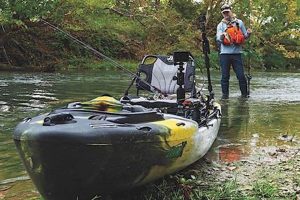
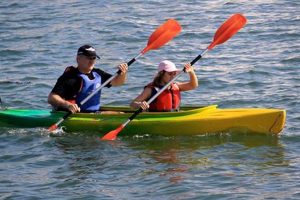
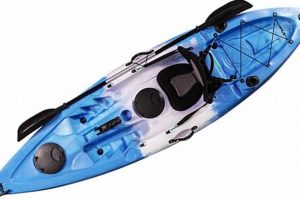
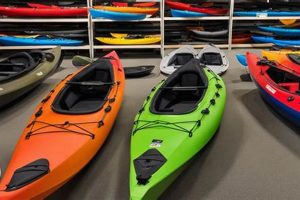
A small, narrow watercraft propelled by a double-bladed paddle typically accommodates one or two paddlers who sit facing forward. These vessels feature a covered deck and cockpit, distinguishing them from canoes and other open boats. Examples include recreational sit-on-tops, touring vessels designed for longer journeys, and whitewater models built for navigating rapids.
This type of boat offers a unique way to experience nature and waterways, promoting physical activity and a sense of tranquility. Its compact size allows access to shallow waters and secluded coves often unreachable by larger boats. Historically, these craft were developed by indigenous peoples of the Arctic regions for hunting and transportation, evolving from animal skin-covered frames to the modern composite and polyethylene constructions seen today. Their versatility continues to make them a popular choice for recreation, exploration, and even competitive sports.
From understanding the different types available to choosing essential accessories and mastering paddling techniques, subsequent sections will explore various aspects of this rewarding activity.
Tips for Choosing a Suitable Vessel
Selecting an appropriate vessel is crucial for a safe and enjoyable experience. Factors such as intended use, paddler experience, and budget should be carefully considered.
Tip 1: Consider the intended use. Recreational models are suitable for calm waters and shorter trips, while touring models are designed for longer journeys and open water. Whitewater designs are specifically crafted for navigating rapids and challenging river conditions. Choosing the right type for the planned activity ensures optimal performance and safety.
Tip 2: Evaluate paddler experience and skill level. Beginners might find shorter, wider, and more stable models easier to maneuver. Experienced paddlers can explore longer, narrower vessels designed for speed and efficiency.
Tip 3: Establish a budget. Prices vary significantly based on materials, features, and brand. Determining a budget beforehand helps narrow down the options and focus on vessels within the desired price range.
Tip 4: Research different materials. Polyethylene is durable and affordable, while composite materials offer lighter weight and improved performance. Inflatable options provide portability and convenient storage.
Tip 5: Assess storage and transportation needs. Consider the available storage space and transportation method. Hard-shell models require more storage space than inflatable or foldable alternatives.
Tip 6: Test the vessel if possible. Trying out different models, either through rentals or demo days, provides valuable insight into stability, comfort, and handling characteristics.
Tip 7: Consider essential accessories. A personal flotation device (PFD), paddle, and appropriate clothing are essential for safety and comfort. Other accessories, such as dry bags and spray skirts, enhance the overall experience.
Careful consideration of these factors will result in a well-informed decision, leading to a more enjoyable and rewarding paddling experience. The correct vessel ensures safety, comfort, and optimal performance on the water.
With an understanding of choosing the right vessel, the focus now shifts to exploring various paddling techniques and safety precautions.
1. Type

Categorizing kayaks by type is essential for matching the vessel to specific paddling activities and environments. The “type” designation clarifies a kayak’s intended purpose, influencing its design characteristics, including hull shape, length, width, and features. This categorization directly impacts performance, stability, and overall suitability for different water conditions and paddling styles. For instance, a sit-on-top kayak, designed for recreational use in calm waters, prioritizes stability and ease of entry and exit. Conversely, a sea kayak, built for open water expeditions, emphasizes speed, efficiency, and storage capacity for extended journeys. Understanding these distinctions is fundamental to making informed decisions when selecting a kayak.
The relationship between type and kayak selection extends beyond simple categorization. It dictates the practical experience on the water. A whitewater kayak, with its short length and rounded hull, allows for maneuverability in rapids, while a touring kayak, with its longer length and V-shaped hull, tracks efficiently over long distances. Choosing the incorrect type can lead to instability, decreased performance, and potential safety risks. Recognizing the specific design features associated with each type, such as the rocker profile, deck height, and cockpit size, allows for optimized performance and a safer, more enjoyable paddling experience. For example, a recreational kayaker using a sea kayak in a sheltered bay might find it challenging to maneuver in tight spaces, whereas a sea kayaker attempting open-water crossings in a recreational kayak could face stability issues and limited storage for essential gear.
In summary, the “type” designation acts as a critical filter when navigating the diverse world of kayaks. This understanding empowers informed choices based on intended use, paddling environment, and skill level. Recognizing the direct relationship between type and performance ensures a safer, more enjoyable, and efficient kayaking experience, aligning vessel selection with specific paddling goals and maximizing time on the water. Failure to appreciate the nuances of kayak types can lead to mismatched equipment and potentially hazardous situations. Therefore, careful consideration of “type” serves as a cornerstone of responsible and informed kayak selection.
2. Size

Kayak size significantly influences performance, stability, and suitability for various paddling environments and user needs. Understanding the dimensions, including length, width, and height, is crucial for informed selection. Size directly impacts maneuverability, tracking, speed, and overall comfort. This section explores key facets of kayak size and their implications.
- Length
Length directly affects tracking (the ability to paddle straight) and speed. Longer kayaks generally track better and glide more efficiently, making them suitable for open water and longer distances. Shorter kayaks offer greater maneuverability, making them ideal for navigating tight turns and confined waterways like rivers and creeks. A longer sea kayak, for instance, excels in covering distance efficiently on open water, whereas a shorter whitewater kayak prioritizes maneuverability in rapids. Choosing the appropriate length depends on the intended paddling environment and desired performance characteristics.
- Width
Width primarily influences stability. Wider kayaks offer greater initial stability, making them ideal for beginners or those seeking a stable platform for activities like fishing or photography. Narrower kayaks are less stable but offer increased speed and efficiency. A wider recreational kayak provides a reassuringly stable platform for leisure paddling, while a narrower racing kayak prioritizes speed and minimizes water resistance. Balancing stability and performance is a key consideration when evaluating kayak width.
- Height (Depth)
Height, specifically the depth of the hull, affects volume and carrying capacity. Deeper kayaks provide more storage space for gear and supplies, making them suitable for touring or expeditions. Shallower kayaks sit lower in the water, reducing wind resistance and increasing responsiveness. A deep-hulled touring kayak accommodates ample gear for multi-day trips, whereas a shallower recreational kayak offers increased maneuverability and responsiveness in calm waters. Choosing the appropriate depth depends on intended use and storage needs.
- Weight Capacity
Weight capacity dictates the maximum load a kayak can safely carry, including paddler weight, gear, and supplies. Exceeding the weight capacity compromises stability and performance, potentially leading to capsizing. Weight capacity should align with the intended use and anticipated load. A tandem kayak designed for two paddlers and their gear will have a higher weight capacity than a solo recreational kayak. Matching weight capacity to anticipated load is essential for safety and optimal performance.
Understanding the interplay between these size-related factors is crucial for selecting a kayak that aligns with individual needs and paddling goals. Choosing an appropriately sized kayak contributes significantly to comfort, safety, and efficient performance on the water. These dimensions, when considered in relation to paddling style, experience level, and intended use, ensure a fulfilling and enjoyable kayaking experience.
3. Material

Kayak construction materials directly influence performance characteristics, durability, cost, and maintenance requirements. Material selection represents a critical decision point, impacting everything from hull stiffness and weight to resistance against impact and abrasion. Understanding the properties of common kayak materials is essential for informed decision-making.
Polyethylene, a widely used thermoplastic, offers excellent impact resistance and durability, making it suitable for recreational kayaks and challenging environments. Its affordability contributes to its popularity, though it comes at the cost of increased weight compared to composite materials. Fiberglass, consisting of woven glass fibers embedded in a resin matrix, offers a balance of strength, stiffness, and lighter weight than polyethylene. This material is often favored for touring and sea kayaks where performance and efficiency are prioritized. Kevlar, a high-strength synthetic fiber, delivers exceptional stiffness and lightweight properties, but its higher cost typically reserves it for high-performance kayaks and racing applications. Composite constructions, combining materials like fiberglass and carbon fiber, offer customizable performance characteristics tailored to specific paddling disciplines. Inflatable kayaks, typically made from reinforced PVC or other durable fabrics, provide portability and convenient storage, making them suitable for travelers or those with limited storage space.
The choice of material presents a trade-off between performance, durability, cost, and other practical considerations. Selecting a material aligned with paddling style and intended use optimizes the kayaking experience. While a recreational paddler might prioritize the durability and affordability of polyethylene, a competitive racer might favor the lightweight stiffness of a carbon fiber composite. Maintenance requirements also vary by material. Polyethylene requires minimal upkeep, while composite kayaks demand more careful handling and storage to prevent damage. Understanding the inherent properties of each material empowers informed choices that balance performance needs with practical considerations, ultimately maximizing the longevity and enjoyment of the kayak.
4. Purpose

A kayak’s intended purpose dictates its design, features, and ultimately, its suitability for specific activities and environments. The purpose serves as the foundation upon which all other considerations rest, driving design choices from hull shape and length to material selection and accessory integration. Understanding this fundamental connection between purpose and kayak characteristics is crucial for informed decision-making and a safe, enjoyable paddling experience.
The cause-and-effect relationship between purpose and design is clearly evident across various kayak types. A whitewater kayak, designed for navigating rapids and turbulent rivers, features a short, rockered hull for maneuverability and a rounded bottom for resurfacing quickly. Conversely, a touring kayak, intended for long-distance paddling on open water, boasts a longer, streamlined hull for efficient tracking and ample storage space for gear. Recreational kayaks prioritize stability and ease of use, featuring wider hulls and comfortable seating arrangements suitable for calm water paddling. Fishing kayaks incorporate specialized features like rod holders, live wells, and anchor trolleys, optimizing their functionality for anglers. These examples illustrate how purpose directly influences design, leading to specialized kayaks tailored for specific activities.
Recognizing the intended purpose empowers informed choices, ensuring the selected kayak aligns with individual paddling goals. Choosing a kayak without considering its intended purpose can lead to mismatched equipment and potentially hazardous situations. A recreational kayak paddler attempting to navigate whitewater rapids in a flat-hulled recreational kayak faces significant risks, while a touring kayaker using a short, maneuverable whitewater kayak on a long-distance open water trip sacrifices efficiency and storage capacity. Understanding the practical significance of purpose ensures a safe, efficient, and enjoyable paddling experience. Choosing the right kayak for the intended purpose maximizes performance, enhances safety, and contributes to a more fulfilling time on the water.
5. Features
Kayak features represent distinct design elements and integrated components that directly influence functionality, performance, and overall paddling experience. These features, ranging from seating systems and storage compartments to rudder systems and deck rigging, play a crucial role in adapting the kayak to specific uses and paddling styles. Understanding the purpose and impact of various features is essential for informed kayak selection and optimized performance on the water. The presence, absence, or specific design of these features significantly contributes to the overall kayaking experience, impacting comfort, efficiency, and safety.
Specific features often serve as indicators of a kayak’s intended purpose and target user. A recreational kayak, designed for casual paddling on calm water, might prioritize comfort and stability, featuring adjustable seating, ample storage hatches, and molded-in cup holders. Conversely, a sea kayak, built for open-water expeditions, emphasizes efficiency and storage capacity, incorporating features like a rudder or skeg for directional control, multiple watertight compartments for gear storage, and deck lines for securing equipment. A whitewater kayak prioritizes maneuverability and safety, featuring a streamlined design, adjustable thigh braces for enhanced control, and a drain plug for rapid water evacuation. Analyzing these features provides valuable insights into a kayak’s intended use and target audience, guiding informed decisions during the selection process.
The practical implications of kayak features extend beyond simple categorization. They directly influence performance, comfort, and safety on the water. Adjustable foot braces enhance paddling efficiency and control, while a well-designed seat back provides crucial support for long paddling sessions. Watertight compartments protect essential gear from the elements, while deck rigging offers convenient storage for readily accessible items. Understanding the function and benefits of these features empowers informed choices, leading to a more enjoyable and safe kayaking experience. Failure to appreciate the nuanced impact of kayak features can lead to compromised performance, discomfort, and potentially hazardous situations. A kayaker embarking on a multi-day trip without adequate storage capacity faces significant logistical challenges, while a paddler navigating rough waters without a rudder or skeg struggles to maintain directional control. Therefore, careful consideration of kayak features is paramount for a successful and safe paddling experience, aligning equipment choices with individual needs and paddling goals.
6. Stability

Stability in a kayak represents its resistance to capsizing and its ability to return to an upright position after being tilted. This characteristic is paramount for safety and significantly influences the paddling experience, impacting confidence and comfort on the water. Several factors contribute to kayak stability, including hull design, width, length, and the paddler’s center of gravity. Understanding these factors and their interplay is crucial for selecting a kayak appropriate for individual skill levels and paddling environments. The relationship between stability and kayak selection directly impacts safety and enjoyment, making it a critical consideration for all paddlers.
Hull design plays a pivotal role in determining stability. Wider, flatter hulls offer greater initial stability, making them suitable for beginners or those seeking a stable platform for activities like fishing or photography. However, these designs often sacrifice maneuverability and speed. Narrower, V-shaped hulls provide less initial stability but offer improved tracking and efficiency for open-water paddling. The degree of rocker, the curvature of the hull from bow to stern, also influences stability. A higher rocker profile enhances maneuverability but reduces stability, while a lower rocker profile improves tracking but compromises turning performance. The interplay between these design elements dictates a kayak’s stability characteristics, influencing its suitability for different paddling styles and environments. For example, a recreational kayak designed for calm lakes and rivers typically features a wider, flatter hull with moderate rocker for stability and ease of use, while a sea kayak intended for open water incorporates a narrower, V-shaped hull with minimal rocker for efficient tracking and speed.
Understanding the factors influencing kayak stability empowers informed choices, aligning vessel selection with individual needs and paddling goals. Choosing a kayak with appropriate stability characteristics enhances safety and enjoyment on the water. Beginners benefit from the increased confidence and reduced risk of capsizing offered by wider, more stable hulls, while experienced paddlers might prioritize the performance benefits of narrower designs. Recognizing the interplay between hull design, width, length, and the paddler’s center of gravity allows for informed decisions that optimize stability for specific paddling styles and environments. Failure to consider stability can lead to uncomfortable, and potentially dangerous, situations. Therefore, a thorough understanding of stability as it relates to kayak design and paddling conditions serves as a cornerstone of safe and enjoyable kayaking practices.
7. Paddling Style

Paddling style significantly influences kayak selection, impacting efficiency, comfort, and overall performance on the water. Different paddling styles necessitate specific kayak characteristics, aligning hull design, length, and features with the biomechanics and demands of each technique. Understanding the relationship between paddling style and kayak choice is crucial for optimized performance and a more enjoyable experience.
- High-Angle Paddling
High-angle paddling, characterized by a vertical paddle stroke close to the kayak, prioritizes power and maneuverability. This style is often employed in whitewater kayaking and short-distance recreational paddling. Kayaks suited for high-angle paddling typically feature shorter lengths and rounded hulls for enhanced maneuverability. The vertical stroke maximizes power transfer for quick acceleration and rapid turns, making it ideal for navigating dynamic water conditions. Choosing a kayak designed for high-angle paddling enhances control and responsiveness in demanding environments.
- Low-Angle Paddling
Low-angle paddling, characterized by a more horizontal paddle stroke further from the kayak, emphasizes efficiency and endurance. This style is commonly used in touring and sea kayaking, where covering long distances is paramount. Kayaks designed for low-angle paddling generally feature longer lengths and narrower beams for efficient tracking and reduced water resistance. The horizontal stroke minimizes energy expenditure, allowing for sustained paddling over extended periods. Selecting a kayak optimized for low-angle paddling enhances speed and endurance for long-distance journeys.
- Recreational Paddling
Recreational paddling encompasses a variety of styles and techniques often employed in calm water environments. This style prioritizes stability, comfort, and ease of use. Kayaks suitable for recreational paddling typically feature wider hulls for enhanced stability and comfortable seating arrangements. The paddling style often involves a relaxed pace and less emphasis on specific techniques, making stability and comfort paramount. Choosing a kayak designed for recreational paddling ensures a relaxed and enjoyable experience on calm waters.
- Performance Paddling
Performance paddling encompasses racing and other competitive kayaking disciplines, prioritizing speed, efficiency, and precise control. Kayaks designed for performance paddling feature streamlined hulls, lightweight construction, and specialized features optimized for speed and maneuverability. Paddling style in this context emphasizes efficient power transfer and precise boat control. Choosing a performance-oriented kayak maximizes speed and responsiveness for competitive paddling.
Matching paddling style to kayak characteristics ensures efficient power transfer, optimized performance, and enhanced comfort on the water. Selecting a kayak without considering paddling style can lead to decreased efficiency, compromised maneuverability, and an overall less enjoyable experience. Therefore, understanding the interplay between paddling style and kayak design is essential for informed decision-making and maximizing performance on the water. Choosing the right kayak for one’s paddling style enhances safety, efficiency, and enjoyment, ultimately contributing to a more fulfilling kayaking experience.
Frequently Asked Questions
This section addresses common inquiries regarding kayaks, providing concise and informative responses to facilitate informed decision-making and enhance understanding of these versatile vessels.
Question 1: What are the primary types available, and how do they differ?
Primary types include recreational, touring, whitewater, sea, and inflatable kayaks. These categories differentiate based on intended use, hull design, and features. Recreational kayaks prioritize stability and ease of use; touring kayaks emphasize efficiency and storage capacity; whitewater kayaks focus on maneuverability and durability; sea kayaks are designed for open-water expeditions; and inflatable kayaks offer portability and convenient storage.
Question 2: How is size determined, and why does it matter?
Size is determined by length, width, and height (depth). Length affects tracking and speed; width influences stability; and height impacts volume and carrying capacity. Selecting the appropriate size ensures optimal performance, comfort, and safety, aligning the kayak with the paddler’s physique and intended use.
Question 3: What materials are commonly used in construction, and what are their respective advantages?
Common materials include polyethylene, fiberglass, Kevlar, and various composites. Polyethylene offers durability and affordability; fiberglass balances strength and weight; Kevlar provides exceptional stiffness and lightweight properties; and composites offer customizable performance characteristics. Material choice influences performance, durability, cost, and maintenance requirements.
Question 4: How does intended purpose influence design and feature selection?
Intended purpose dictates design elements such as hull shape, length, and features. A recreational kayak prioritizes stability, while a touring kayak emphasizes efficiency and storage. Feature selection aligns with the intended activity, whether fishing, whitewater paddling, or recreational touring. Aligning purpose with design and features ensures optimal performance and safety.
Question 5: What factors contribute to stability, and why is it important?
Stability, crucial for safety and comfort, is influenced by hull design, width, length, and the paddler’s center of gravity. Wider hulls generally offer greater initial stability, while longer kayaks enhance tracking. Understanding stability factors facilitates informed choices based on skill level and paddling environment.
Question 6: How does paddling style affect kayak selection?
Paddling style influences kayak choice by dictating hull design, length, and features. High-angle paddling requires maneuverable kayaks, while low-angle paddling benefits from efficient tracking. Matching paddling style with kayak characteristics optimizes performance and comfort.
Careful consideration of these frequently asked questions empowers informed decision-making, promoting safe and enjoyable kayaking experiences. Understanding the nuances of kayak selection ensures a harmonious relationship between paddler, vessel, and environment.
The following section delves further into essential kayaking accessories, providing detailed insights into their function and importance.
Conclusion
This exploration has provided a comprehensive overview of the multifaceted nature of kayaks. From the diverse range of types available, each tailored to specific paddling styles and environments, to the nuanced interplay between size, material, features, and stability, a thorough understanding of these vessels is essential for informed decision-making. The purpose-driven design of kayaks, coupled with careful consideration of individual paddling styles and skill levels, ensures optimal performance, safety, and enjoyment on the water. Key factors influencing kayak selection, such as hull design, material properties, and feature integration, contribute significantly to the overall paddling experience.
The significance of informed kayak selection extends beyond mere recreational enjoyment. It promotes safe and responsible interaction with aquatic environments, fostering appreciation for the natural world. Choosing the appropriate vessel empowers paddlers to explore diverse waterways with confidence and efficiency, maximizing the potential for rewarding experiences. As kayaking continues to grow in popularity, a comprehensive understanding of these vessels remains crucial for both novice and experienced paddlers alike. This knowledge fosters responsible practices, minimizes environmental impact, and ensures the continued enjoyment of this versatile and rewarding activity.