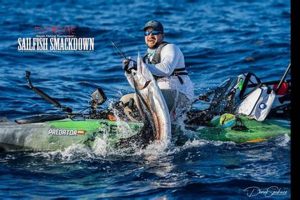
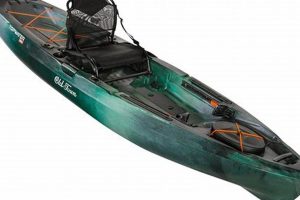
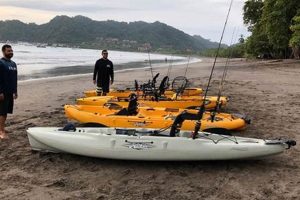
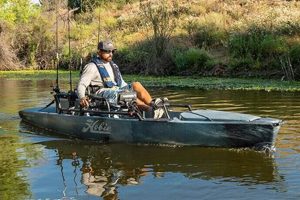
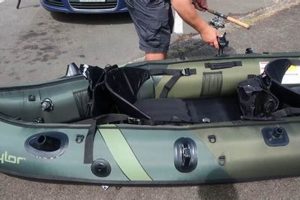
A two-person kayak designed specifically for angling offers stability and shared paddling effort, enhancing the fishing experience. These vessels typically feature specialized seating, rod holders, and storage for tackle and gear. Consider a scenario where two anglers navigate a calm lake, their vessel effortlessly gliding across the water. Equipped with purpose-built features, they can focus entirely on the pursuit of their catch, enjoying the combined benefits of companionship and efficient watercraft design.
Sharing the paddling workload allows for longer excursions and access to more distant fishing spots. The increased stability of these larger kayaks provides a secure platform for casting and reeling, even with larger fish. Historically, fishing from kayaks offered a stealthy approach to angling, getting closer to fish without disturbing them. Modern designs build upon this tradition, incorporating advanced materials and features for enhanced comfort and functionality. This evolution reflects the growing popularity of kayak fishing and its recognition as a distinct and rewarding angling discipline.
This exploration of specialized watercraft for angling will further examine key features, popular models, and essential accessories. Subsequent sections will delve into selection criteria, maintenance considerations, and safety best practices, providing a comprehensive guide for both novice and experienced anglers.
Tips for Two-Person Kayak Fishing
Proper preparation and technique enhance safety and enjoyment on the water. The following recommendations offer guidance for successful outings using two-person fishing kayaks.
Tip 1: Distribute Weight Evenly: Balanced loading is crucial for stability and efficient paddling. Gear should be distributed evenly throughout the kayak, considering both fore-and-aft and side-to-side balance. Uneven weight distribution can negatively impact tracking and maneuverability.
Tip 2: Coordinate Paddling Strokes: Synchronized paddling is essential for efficient propulsion and straight tracking. Communicate clearly to establish a rhythm and maintain a consistent pace. Practice paddling together before venturing into challenging waters.
Tip 3: Designate Roles and Responsibilities: Clearly defined roles, such as navigation and fishing management, contribute to a smoother and more enjoyable experience. One individual might focus on navigating while the other manages fishing gear and tackles changes.
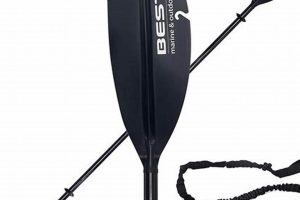
Tip 4: Choose Appropriate Paddles: Paddle length and blade shape influence paddling efficiency and comfort. Select paddles appropriate for individual height and paddling style. Consider lighter paddles for extended trips to reduce fatigue.
Tip 5: Practice Emergency Procedures: Familiarization with essential safety procedures, such as re-entry techniques and emergency communication protocols, is critical. Regularly practice these skills in a controlled environment to ensure preparedness in unexpected situations.
Tip 6: Check Weather Conditions: Prior to embarking on any fishing trip, thoroughly assess weather forecasts and water conditions. Avoid venturing out in adverse weather, strong currents, or high winds. Safety should always be the primary consideration.
Tip 7: Respect Wildlife and the Environment: Practice Leave No Trace principles by packing out all trash and minimizing disturbance to wildlife and their habitats. Responsible angling practices ensure the preservation of these natural resources for future generations.
Adhering to these guidelines promotes safe and productive fishing excursions. Careful planning, combined with proper technique, enhances the enjoyment and success of any two-person kayak fishing adventure.
This information provides a foundation for informed decision-making regarding equipment, techniques, and safety protocols. A comprehensive understanding of these elements contributes significantly to a rewarding and fulfilling experience on the water.
1. Stability

Stability is a paramount consideration in tandem fishing kayaks, directly influencing angler safety, comfort, and fishing success. A stable platform allows for confident casting, reeling, and landing fish, even in challenging conditions. This section explores key facets contributing to stability in these specialized vessels.
- Hull Design:
Hull design significantly impacts stability. Wider hulls generally provide greater initial stability, resisting tipping during casting or sudden movements. A flatter hull bottom enhances primary stability, ideal for calm waters, while a more rounded or V-shaped hull improves secondary stability the ability to recover from tipping crucial in rougher conditions. A well-designed Vibe tandem fishing kayak balances these attributes for optimal performance in diverse environments.
- Weight Capacity and Distribution:
Weight capacity and its distribution significantly affect stability. Exceeding the recommended capacity compromises stability and can lead to capsizing. Evenly distributing weight throughout the kayak, both fore-and-aft and side-to-side, is crucial for maintaining balance and preventing tipping. Understanding and adhering to weight limits ensures a safe and stable fishing experience.
- Center of Gravity:
A lower center of gravity contributes to greater stability. Sitting low in the kayak and keeping heavy items close to the bottom enhances stability by reducing the tendency to tip. Standing up in a kayak raises the center of gravity, demanding a more stable platform and careful weight management. Consider the typical fishing positions and movements when evaluating stability.
- Water Conditions:
Prevailing water conditions, including wind, waves, and currents, influence stability. Calm waters generally pose fewer stability challenges, while rougher conditions demand greater stability characteristics from the kayak. Choosing a tandem fishing kayak with appropriate stability features for the intended fishing environment is essential for safety and comfort.
These interconnected factors collectively contribute to the overall stability of a Vibe tandem fishing kayak. Careful consideration of hull design, weight management, and anticipated water conditions ensures a safe and enjoyable fishing experience, allowing anglers to focus on the pursuit of their catch with confidence.
2. Capacity

Capacity, encompassing both weight and storage, significantly influences the functionality and practicality of a Vibe tandem fishing kayak. Adequate capacity ensures comfortable accommodation of anglers, gear, and potential catches. Understanding capacity limitations is essential for safe and efficient operation.
- Weight Capacity:
Weight capacity denotes the maximum combined weight of passengers, gear, and any caught fish that the kayak can safely support. Exceeding this limit compromises stability and increases the risk of capsizing. Manufacturers specify weight capacities, and adhering to these recommendations is paramount for safe operation. For example, a kayak with a 500-pound capacity could safely accommodate two 175-pound anglers, leaving 150 pounds for gear and fish.
- Storage Capacity:
Ample storage is crucial for accommodating fishing gear, personal items, and safety equipment. Storage options include hatches, tank wells, and bungee systems. Consider the volume and accessibility of storage compartments when evaluating a tandem fishing kayak. Sufficient storage contributes to organized and efficient fishing excursions, preventing clutter and ensuring essential items are readily accessible.
- Passenger Capacity:
Tandem kayaks are specifically designed for two passengers. Consider the size and comfort of seating arrangements when evaluating capacity. Adequate space for both anglers ensures comfortable paddling and fishing, promoting a positive experience on the water.
- Gear Capacity:
Beyond personal items, consider the capacity for specialized fishing gear. Rod holders, tackle storage, and mounting points for fish finders contribute to an efficient and enjoyable fishing experience. Evaluate the availability and placement of these features to ensure compatibility with individual fishing styles and equipment needs.
Careful consideration of weight, storage, passenger, and gear capacity ensures a safe and productive fishing experience. Selecting a Vibe tandem fishing kayak with appropriate capacity for intended use enhances comfort, efficiency, and overall enjoyment on the water.
3. Fishing Features
Specialized features distinguish fishing kayaks from recreational models, enhancing angling efficiency and enjoyment. These features are integral to the design of Vibe tandem fishing kayaks, optimizing their functionality for a dedicated fishing experience. An examination of key fishing features provides insights into their practical applications and benefits.
- Rod Holders:
Rod holders secure fishing rods, allowing anglers to manage lines, change lures, or paddle without constantly holding their rods. Flush-mounted rod holders minimize interference while trolling or paddling, while adjustable rod holders offer flexibility for different fishing techniques. Multiple rod holders enable anglers to employ diverse fishing strategies simultaneously. The presence and placement of rod holders significantly impact fishing efficiency and convenience.
- Tackle Storage:
Dedicated tackle storage compartments keep essential fishing gear organized and readily accessible. These compartments vary in size, configuration, and accessibility, accommodating different tackle systems and preferences. Waterproof hatches protect sensitive items from moisture, while open storage areas provide quick access to frequently used tools and lures. Well-designed tackle storage enhances efficiency and minimizes clutter, allowing anglers to focus on fishing rather than searching for equipment.
- Fish Finders and Electronics Mounts:
Mounting points for fish finders and other electronic devices provide valuable information about water depth, fish location, and bottom structure. Integrated transducer mounts simplify installation and optimize transducer performance. Strategically placed power outlets facilitate the use of electronic devices, enhancing fishing success. These features cater to anglers who rely on technology to improve their fishing strategies.
- Other Specialized Features:
Additional features, such as anchor trolleys, paddle parks, and standing platforms, further enhance the fishing experience. Anchor trolleys allow for controlled drifting and precise positioning, while paddle parks secure paddles when not in use. Standing platforms provide stability for sight fishing and casting. These specialized features contribute to a more comfortable, efficient, and enjoyable fishing experience from a Vibe tandem fishing kayak.
The integration of these fishing features contributes to the specialized functionality of Vibe tandem fishing kayaks. These features enhance angling efficiency, comfort, and overall enjoyment on the water. Careful consideration of these features during kayak selection ensures compatibility with individual fishing styles and preferences.
4. Performance

Performance characteristics significantly influence the on-water experience provided by a Vibe tandem fishing kayak. Factors such as tracking, maneuverability, speed, and stability contribute to overall performance. Tracking, the ability to maintain a straight course, is essential for efficient paddling and covering longer distances. Maneuverability, the ease with which the kayak turns and responds to paddle input, is crucial for navigating tight spaces and changing directions quickly. Speed affects the time required to reach fishing destinations and explore different areas. Stability, as previously discussed, influences angler comfort and fishing effectiveness. These interconnected performance attributes contribute to a seamless and enjoyable fishing experience.
Consider a scenario where anglers navigate a winding river with varying currents. A kayak with excellent tracking minimizes course corrections, conserving energy and allowing anglers to focus on fishing. In contrast, superior maneuverability proves crucial when navigating through narrow channels or around obstacles. Similarly, a faster kayak reduces travel time to distant fishing spots, maximizing time spent fishing. A stable platform enhances casting accuracy and provides a secure foundation for fighting fish. Understanding the interplay of these performance attributes empowers anglers to choose a kayak suited to their specific needs and fishing environments.
Selecting a Vibe tandem fishing kayak with appropriate performance characteristics is essential for maximizing fishing enjoyment and efficiency. A balanced combination of tracking, maneuverability, speed, and stability ensures a positive on-water experience. Careful consideration of these attributes, coupled with an understanding of the intended fishing environment, empowers informed decision-making and contributes to successful fishing excursions.
5. Durability

Durability is a critical factor influencing the lifespan and overall value of a Vibe tandem fishing kayak. It directly impacts the kayak’s ability to withstand the rigors of regular use, including exposure to various environmental conditions and potential impacts. A durable kayak ensures long-term performance and minimizes the need for frequent repairs or replacements. This examination of durability considers key aspects contributing to the robustness and longevity of these specialized vessels.
- Construction Materials:
The choice of construction materials significantly influences a kayak’s durability. Common materials include polyethylene, rotomolded plastic, and composites. Polyethylene offers excellent impact resistance and UV protection, making it suitable for demanding environments. Rotomolded plastic provides a seamless, one-piece construction, enhancing durability and preventing leaks. Composites offer superior strength-to-weight ratios, but may be more susceptible to impact damage. The selection of materials reflects a balance between weight, performance, and durability.
- UV Resistance:
Exposure to ultraviolet radiation from sunlight can degrade kayak materials over time, leading to fading, cracking, and reduced structural integrity. UV-resistant coatings and additives protect against sun damage, extending the lifespan of the kayak. Regularly storing the kayak out of direct sunlight further mitigates UV degradation. Proper care and attention to UV protection contribute to long-term durability.
- Impact Resistance:
Kayaks inevitably encounter impacts from rocks, logs, and other obstacles, especially in rivers and shallow waters. Impact resistance, the ability to withstand such impacts without sustaining significant damage, is crucial for durability. Materials and construction techniques influence impact resistance. Reinforced hulls and impact-resistant materials contribute to a kayak’s ability to withstand collisions and maintain structural integrity.
- Hardware and Fittings:
The quality and durability of hardware components, such as handles, latches, and seat fittings, contribute to the overall lifespan of the kayak. Corrosion-resistant materials, such as stainless steel or marine-grade aluminum, ensure long-term functionality in harsh environments. Proper maintenance, including regular cleaning and lubrication, further extends the lifespan of hardware components. Durable hardware complements the robust construction of the kayak, ensuring reliable performance over time.
These interconnected factors collectively contribute to the overall durability of a Vibe tandem fishing kayak. Selecting a kayak constructed from durable materials, with appropriate UV protection and impact resistance, ensures long-term performance and minimizes maintenance requirements. Investing in a durable kayak provides lasting value and supports extended enjoyment on the water.
6. Comfort
Comfort plays a pivotal role in the overall enjoyment and effectiveness of extended fishing trips using a Vibe tandem fishing kayak. Discomfort can detract from the fishing experience, leading to fatigue, reduced focus, and a shortened time on the water. Conversely, a comfortable kayak promotes prolonged fishing sessions, enhanced enjoyment, and increased opportunities for angling success. Several factors contribute to comfort in these specialized vessels, impacting angler well-being and overall satisfaction. For example, adjustable seating allows individuals to customize their position, accommodating different body types and preferences. Proper back support minimizes strain during long hours on the water, preventing discomfort and fatigue. Ample legroom allows for comfortable stretching and movement, reducing stiffness and promoting circulation. These ergonomic considerations directly influence angler comfort and contribute to a positive fishing experience.
Beyond seating, other factors contribute to overall comfort. A stable hull design minimizes rocking and swaying, reducing anxiety and promoting a sense of security. Adequate storage space keeps essential gear organized and readily accessible, minimizing clutter and streamlining fishing activities. Well-placed footrests provide support and stability, enhancing paddling efficiency and reducing leg fatigue. Consider a scenario where two anglers embark on a full-day fishing excursion. A comfortable kayak allows them to focus on fishing, enjoying the experience without distractions caused by discomfort. This translates to increased enjoyment, prolonged fishing time, and potentially greater success. Conversely, an uncomfortable kayak can lead to premature fatigue, frustration, and a curtailed fishing trip.
Understanding the elements contributing to comfort in a Vibe tandem fishing kayak empowers informed decision-making during the selection process. Prioritizing comfort enhances the overall fishing experience, promoting longer, more enjoyable, and potentially more productive outings. Anglers should consider factors such as seat adjustability, back support, legroom, stability, and storage when evaluating comfort features. This holistic approach ensures a positive and rewarding experience on the water, allowing anglers to fully immerse themselves in the pursuit of their catch without the limitations imposed by discomfort.
Frequently Asked Questions
This section addresses common inquiries regarding tandem fishing kayaks, providing concise and informative responses to facilitate informed decision-making.
Question 1: What are the key advantages of a tandem fishing kayak over two solo kayaks?
Tandem kayaks offer increased stability, shared paddling effort, and often greater storage capacity compared to two solo kayaks. These advantages are particularly beneficial for longer fishing trips or when carrying heavier gear.
Question 2: How does one choose the right size paddle for a tandem fishing kayak?
Paddle length depends on individual height, torso length, and paddling style. Consulting a kayak specialist or utilizing online paddle sizing charts helps determine the appropriate length. Blade shape also influences performance, with wider blades offering more power and narrower blades prioritizing efficiency.
Question 3: What safety precautions should be taken when using a tandem fishing kayak?
Essential safety measures include wearing personal flotation devices, carrying a whistle or other signaling device, informing someone of the planned fishing location and estimated return time, checking weather forecasts before embarking, and adhering to local boating regulations.
Question 4: How is weight distributed effectively in a tandem fishing kayak?
Even weight distribution is crucial for stability and efficient paddling. Heavier items should be placed low and centrally within the kayak, while lighter items can be stored towards the ends. Balancing weight evenly between the front and rear enhances tracking and maneuverability.
Question 5: What maintenance is required for a tandem fishing kayak?
Regular maintenance includes rinsing the kayak with fresh water after each use, especially after exposure to saltwater, inspecting and cleaning hardware components, checking for any damage or wear, and storing the kayak properly in a sheltered location out of direct sunlight.
Question 6: What are the benefits of specialized fishing features in a tandem kayak?
Features like rod holders, tackle storage, and fish finder mounts enhance angling efficiency and enjoyment. Rod holders secure rods, freeing hands for other tasks, while dedicated storage keeps tackle organized. Fish finder mounts provide valuable underwater insights. These features streamline the fishing experience and contribute to greater success on the water.
Careful consideration of these frequently asked questions facilitates informed decision-making and promotes safe and enjoyable tandem kayak fishing experiences. Understanding these aspects enhances preparation, improves on-water performance, and contributes to a more rewarding pursuit of angling from a tandem kayak.
The subsequent section delves further into specific model comparisons and selection criteria, providing a comprehensive guide for choosing the right tandem fishing kayak.
Conclusion
This exploration of tandem fishing kayaks has highlighted key features contributing to successful angling excursions. Stability, capacity, specialized fishing features, performance, durability, and comfort collectively influence on-water experiences. Understanding these elements empowers informed decision-making, enabling anglers to select vessels aligned with individual needs and preferences. Furthermore, adherence to safety precautions and proper maintenance ensures long-term enjoyment and responsible use of these specialized watercraft. The analysis underscores the significance of informed selection and responsible operation for maximizing the benefits offered by these versatile fishing platforms. From calm lakes to flowing rivers, suitable tandem fishing kayaks enhance angling opportunities and contribute to rewarding experiences in diverse aquatic environments.
The evolution of kayak design continues to refine features and enhance performance, reflecting the growing popularity of this distinct angling discipline. As technology advances and angler preferences evolve, further innovations will undoubtedly shape the future of tandem fishing kayaks. Embracing these advancements, combined with responsible environmental stewardship, ensures the continued enjoyment and sustainability of this rewarding recreational pursuit.