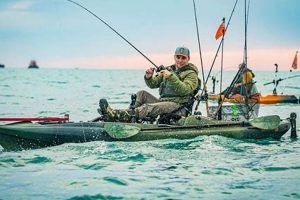
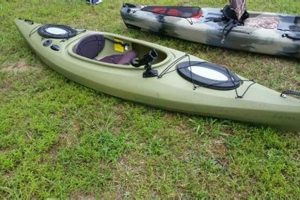
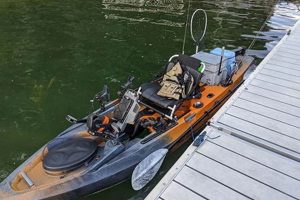
Kayaks designed with three hulls offer exceptional stability, making them a popular choice for anglers. This design provides a broader base compared to traditional single-hull kayaks, reducing the likelihood of tipping, especially in choppy waters or when casting lines. This stability also creates a comfortable platform for standing, allowing for better visibility and casting range.
The enhanced stability offered by this multi-hull design offers significant advantages for fishing activities. The reduced wobble allows for more precise casting and retrieval, while the stable platform enables anglers to stand and sight fish more effectively. This design also tends to track straighter than single-hull kayaks, reducing the need for constant correction and allowing anglers to focus on fishing. The wider platform also often provides more space for gear and accessories. While relatively new compared to traditional designs, multi-hull kayaks are rapidly gaining popularity among fishing enthusiasts for their stability and performance benefits.
The following sections will delve into specific design variations, materials used in construction, key features to consider when selecting a suitable model, and popular brands offering these specialized watercraft.
Tips for Selecting and Using a Multi-Hull Fishing Kayak
Choosing and utilizing a three-hulled fishing kayak effectively involves careful consideration of various factors. The following tips provide guidance for maximizing stability, performance, and overall fishing experience.
Tip 1: Consider Water Conditions: Stable hulls are well-suited for calm lakes and slow-moving rivers. However, their wider profile may present challenges in strong currents or open ocean conditions.
Tip 2: Evaluate Storage Capacity: Anglers often require ample storage for tackle, gear, and catches. Ensure the chosen model provides sufficient storage compartments and deck space.
Tip 3: Assess Weight Capacity: Payload capacity is crucial. The combined weight of the angler, gear, and potential catch should be well within the kayak’s specified limit.
Tip 4: Choose Appropriate Seating: Comfortable seating enhances endurance during long fishing trips. Adjustable seating systems allow for customization based on individual preferences.
Tip 5: Inspect Hull Material: Hull materials influence durability, weight, and performance. Polyethylene offers excellent impact resistance, while composite materials provide enhanced rigidity and lighter weight.
Tip 6: Consider Propulsion Options: Paddle propulsion offers excellent exercise and maneuverability. Pedal-driven systems provide hands-free operation, enabling more focused fishing.
Tip 7: Prioritize Safety: Always wear a personal flotation device (PFD). Carry essential safety equipment, including a whistle, signaling device, and first-aid kit.
Careful consideration of these factors ensures selection of a suitable vessel for individual needs and fishing style, enhancing both safety and enjoyment on the water.
These tips offer a starting point for making informed decisions regarding multi-hull fishing kayaks. Further research and consultation with experienced anglers can provide additional valuable insights.
1. Stability

Stability forms the core advantage of a tri-hull kayak design, particularly for fishing applications. The inherent wider base provided by the three hulls creates a significantly more stable platform compared to traditional single-hull designs. This stability translates into several key benefits for anglers. The reduced tendency to rock or tip enhances safety, especially in challenging conditions such as choppy water or when reeling in a large fish. This stability also facilitates standing while fishing, enabling greater casting range and improved visibility for sight fishing.
The impact of this enhanced stability extends beyond basic safety and comfort. It allows for more precise casting and lessens the likelihood of accidental capsizing due to sudden movements. Anglers can confidently shift their weight, change positions, and even stand to cast, reel, or land a fish without compromising balance. This is particularly crucial in situations involving larger fish or strong currents, where stability is essential for maintaining control and preventing accidents. For example, an angler standing in a tri-hull kayak can more effectively manage the fight with a large fish, leveraging body weight and maintaining balance while applying pressure. This stability also provides a secure platform for using fishing accessories, such as rod holders and fish finders, further enhancing the angling experience.
The enhanced stability inherent in the tri-hull design makes it a popular choice for anglers of all skill levels, particularly those seeking increased safety and comfort on the water. While maneuvering in tight spaces or achieving high speeds may require some trade-offs, the benefits of a stable platform for fishing applications are significant. This stability is a defining characteristic of tri-hull kayaks and a primary factor driving their popularity within the fishing community. It contributes directly to improved fishing performance, increased safety margins, and enhanced overall enjoyment on the water.
2. Fishing Platform

The concept of a “fishing platform” is central to the design and functionality of a tri-hull fishing kayak. Unlike traditional kayaks, which prioritize speed and maneuverability, tri-hull designs emphasize stability to create a secure and versatile platform specifically for angling activities. This platform design directly influences several aspects of the fishing experience. The wide, stable surface area provides ample space for standing, casting, and fighting fish, advantages rarely found in conventional kayaks. This stability also allows for easier and safer mounting and operation of fishing accessories such as rod holders, fish finders, and even small trolling motors. For instance, an angler can stand comfortably to cast further and cover more water, or remain seated while manipulating fishing gear without fear of tipping. This platform approach transforms the kayak from a simple mode of transportation into a dedicated fishing vessel.
The inherent stability of the tri-hull design directly enhances the effectiveness of the fishing platform. Reduced rocking and swaying translate to a more secure and comfortable experience, particularly in challenging conditions like wind or current. This allows anglers to focus on fishing rather than maintaining balance. Furthermore, the platform often provides dedicated storage areas for tackle boxes, rods, and other fishing gear, further optimizing the angling experience. Consider a scenario where an angler hooks a large fish. The stable platform allows them to manage the fight effectively, leveraging their body weight and maintaining balance while applying pressure, increasing the chances of a successful landing. This stability also provides a secure platform for using fishing accessories, such as rod holders and fish finders, further enhancing the angling experience.
The integration of a dedicated fishing platform represents a significant evolution in kayak design. By prioritizing stability and incorporating angler-specific features, tri-hull kayaks offer distinct advantages for fishing enthusiasts. While some trade-offs in speed and maneuverability may exist, the enhanced stability, increased functionality, and improved overall fishing experience provided by the platform design often outweigh these considerations for anglers prioritizing stability and a dedicated fishing space. This specialization reflects a growing trend in kayak design catering to specific activities and user needs.
3. Tracking
Tracking, the ability of a kayak to maintain a straight course with minimal corrective strokes, is a significant performance characteristic influenced by hull design. In the context of tri-hull fishing kayaks, tracking performance is directly related to fishing efficiency and ease of paddling. Understanding the factors affecting tracking is crucial for informed kayak selection.
- Hull Design Influence
The tri-hull design, with its three distinct contact points with the water, inherently provides enhanced tracking compared to traditional single-hull kayaks. The wider base creates greater stability and reduces the tendency to yaw (side-to-side movement). However, this wider profile can also increase water resistance, potentially impacting speed. The specific hull shape and length further influence tracking performance. Longer tri-hull kayaks generally track better than shorter models. For example, a longer, narrower tri-hull design may track more efficiently in open water but sacrifice some maneuverability in tight spaces.
- Water Conditions and Tracking
External factors such as wind and current significantly impact tracking. Tri-hull kayaks, due to their wider profile, can be more susceptible to wind drift compared to narrower hulls. Strong currents can also challenge tracking, requiring more frequent corrective strokes. In calm conditions, the inherent stability and tracking characteristics of the tri-hull design are advantageous, but in adverse conditions, maintaining a straight course may require increased effort. For example, in strong winds, a tri-hull kayak might require more frequent adjustments to stay on course compared to a sleeker single-hull design.
- Paddling Technique and Tracking
Efficient paddling technique plays a crucial role in maximizing tracking performance, regardless of hull design. Proper stroke mechanics and consistent paddling cadence contribute to maintaining a straight course. With tri-hull kayaks, the focus should be on smooth, powerful strokes rather than quick, shallow strokes. Utilizing a rudder or skeg system can further enhance tracking, particularly in challenging conditions. For instance, a skilled paddler can minimize corrective strokes by using proper technique and applying consistent pressure throughout the stroke cycle.
- Weight Distribution and Tracking
Proper weight distribution within the kayak significantly influences tracking. Unevenly distributed weight can lead to imbalances, affecting both stability and tracking. Distributing gear and equipment evenly within the storage compartments helps optimize tracking and overall performance. Consider the example of an angler with a heavy tackle box placed at the rear of the kayak. This uneven weight distribution could cause the bow to rise, increasing wind resistance and negatively impacting tracking.
Understanding the interplay of these factors allows for informed decisions regarding kayak selection and operation. While tri-hull designs offer inherent tracking advantages due to their stability and wider base, external factors and paddling technique play significant roles in maximizing performance on the water. The ultimate goal is to select a kayak that balances tracking performance with other desired attributes, such as stability, maneuverability, and capacity, to best suit individual needs and fishing conditions.
4. Capacity

Capacity, encompassing both weight and storage, is a critical consideration in tri-hull fishing kayak selection. Weight capacity dictates the maximum combined weight of the angler, gear, and potential catch the kayak can safely support. Exceeding this limit compromises stability and risks capsizing. Storage capacity determines the amount of gear, tackle, and supplies that can be carried onboard. These two aspects of capacity are intertwined and directly influence fishing practicality and safety. For instance, an angler planning extended trips requires sufficient storage for food, water, and camping gear, in addition to fishing equipment. Simultaneously, the kayak must possess adequate weight capacity to handle the combined load. A kayak with a high weight capacity but limited storage may be unsuitable for multi-day excursions. Conversely, a kayak with ample storage but a low weight capacity restricts the angler’s ability to carry necessary supplies or land larger fish safely.
Understanding the relationship between these two capacity aspects allows for informed decision-making. Manufacturers provide weight capacity ratings, crucial for angler safety. Storage capacity, however, often requires closer examination. While overall storage volume provides a general indication, the configuration and accessibility of storage compartments are equally important. Dedicated compartments for tackle boxes, rod storage, and dry storage for electronics enhance organization and accessibility. Consider an angler targeting large game fish. A high weight capacity is essential for handling the fish, but equally important is accessible storage for gaffs, nets, and other specialized equipment. Practical application requires considering both overall storage volume and the specific layout of compartments to ensure efficient organization and access to essential gear during the fishing trip. Careful evaluation of both weight and storage capacity ensures the kayak can handle the anticipated load and accommodates the necessary equipment for a successful and safe fishing experience.
Capacity, therefore, represents a crucial factor in tri-hull fishing kayak selection. Balancing weight capacity with appropriately configured storage is fundamental for optimizing functionality and ensuring safety. Neglecting either aspect can compromise both the effectiveness and safety of fishing excursions. Matching capacity to individual needs and anticipated fishing conditions is essential for a productive and enjoyable experience on the water. This understanding allows anglers to select a vessel that not only performs well but also prioritizes safety and facilitates a more efficient and organized approach to their fishing activities.
5. Maneuverability

Maneuverability, the ability to efficiently change direction and navigate varied water conditions, is a crucial performance attribute in kayak selection, particularly for fishing applications. In the context of tri-hull fishing kayaks, maneuverability involves a nuanced understanding of design trade-offs. While the inherent stability of these kayaks offers distinct advantages for fishing activities, it can also influence maneuverability. This section explores the multifaceted relationship between maneuverability and tri-hull kayak design.
- Turning Radius and Hull Design
The wider hull of a tri-hull kayak typically results in a larger turning radius compared to sleeker, single-hull designs. This wider profile necessitates more effort and a wider turning arc to change direction. While less agile in tight spaces or rapidly changing currents, the enhanced stability offered by the tri-hull design often outweighs this reduced turning capability for fishing purposes. Consider navigating a narrow, winding creek. A tri-hull kayak might require more deliberate maneuvering compared to a more agile single-hull design, but its stability offers a significant advantage when navigating shallows or encountering obstacles.
- Water Conditions and Maneuverability
Water conditions significantly influence maneuverability. In calm waters, the impact of the tri-hull’s wider turning radius is minimized. However, in strong currents or windy conditions, maintaining precise control and navigating effectively requires more effort and skillful paddling. For example, in swift-moving rivers, the reduced agility of a tri-hull kayak might necessitate more strategic positioning and anticipation of river bends, while its stability provides added security in turbulent waters.
- Paddling Technique and Maneuverability
Effective paddling technique plays a crucial role in maximizing maneuverability. Sweep strokes, draws, and other maneuvering strokes are essential for controlling direction and navigating efficiently. With a tri-hull kayak, these strokes require more deliberate execution due to the wider hull. Skilled paddling technique can compensate for the inherent differences in turning radius, enabling precise movements even in challenging conditions. For instance, mastering sweep strokes allows for controlled turns even in a wider, more stable tri-hull kayak.
- Stability vs. Maneuverability Trade-off
The core design principle of a tri-hull fishing kayak involves a trade-off between stability and maneuverability. The enhanced stability provided by the three hulls often comes at the expense of agility. This trade-off is generally considered acceptable for fishing applications, where stability is prioritized for casting, reeling, and landing fish. The focus shifts from rapid maneuvering to maintaining a stable platform for fishing activities. For example, while a tri-hull kayak might not be ideal for whitewater paddling, its stability offers a significant advantage for fishing in calm lakes or slow-moving rivers.
Maneuverability in tri-hull fishing kayaks represents a balance between stability and agility. While these kayaks might not offer the nimble handling of single-hull designs, their inherent stability provides a significant advantage for fishing activities. Understanding the factors influencing maneuverability and employing effective paddling techniques allows anglers to navigate effectively and maximize their fishing experience while maintaining a secure and stable platform. Ultimately, the choice between maneuverability and stability depends on individual fishing styles and the prevailing water conditions.
6. Draft
Draft, the vertical distance between the waterline and the lowest point of the hull, is a crucial factor influencing a kayak’s performance and suitability for specific water environments. In the context of tri-hull fishing kayaks, draft affects accessibility to shallow waters, maneuverability, and overall stability. Understanding the implications of draft is essential for informed kayak selection and maximizing fishing effectiveness.
- Shallow Water Access
Tri-hull kayaks, due to their wider hull design, generally exhibit a shallower draft compared to many single-hull kayaks. This reduced draft allows access to shallower areas, expanding fishing opportunities in areas inaccessible to deeper-draft vessels. For example, exploring shallow flats, navigating backwater channels, or approaching close to shorelines becomes feasible, offering distinct advantages for anglers targeting species inhabiting these environments. This shallow draft expands fishing grounds and provides tactical advantages for approaching fish in their preferred habitats.
- Stability and Draft Interplay
Draft influences stability, particularly in tri-hull kayaks. The shallower draft, combined with the wider hull, contributes to the inherent stability of these designs. However, in extremely shallow water, the reduced water contact can slightly compromise stability. Maintaining balance in such conditions requires careful weight distribution and smooth movements. For instance, standing to cast in very shallow water might require greater attention to balance compared to deeper water, where the full hull is submerged.
- Maneuverability in Shallow Water
Draft directly affects maneuverability, especially in shallow environments. While a shallower draft allows access to tight spaces, it can also influence turning performance. In very shallow water, the reduced water contact can slightly hinder turning responsiveness. Precise paddling techniques and awareness of water depth are crucial for navigating effectively. For example, executing tight turns in shallow water might require more deliberate paddling and adjustments compared to deeper water, where the hull has greater freedom of movement.
- Impact on Speed and Efficiency
Draft influences speed and paddling efficiency. Generally, shallower draft vessels encounter less water resistance, potentially leading to slightly improved speed, particularly in calm conditions. However, the wider profile of tri-hull kayaks can introduce increased drag, counteracting some of this advantage. The overall impact of draft on speed is nuanced and depends on the specific hull design and water conditions. For instance, in shallow, calm waters, the reduced draft of a tri-hull kayak might contribute to slightly improved speed compared to a deeper-draft single-hull kayak.
Draft considerations in tri-hull fishing kayaks are essential for selecting the appropriate vessel for specific fishing environments. Balancing the advantages of shallow water access with the potential impacts on maneuverability and stability requires careful evaluation. Understanding the relationship between draft and other performance characteristics allows anglers to make informed choices based on their fishing style, target species, and the prevailing water conditions. This informed approach optimizes fishing effectiveness and ensures a safe and productive experience on the water.
7. Material
Material selection significantly influences the performance, durability, and cost of a tri-hull fishing kayak. The choice of material impacts weight, resistance to impact and abrasion, maintenance requirements, and overall lifespan. Understanding the properties of common kayak construction materials is essential for informed decision-making.
- Polyethylene (HDPE)
High-density polyethylene is a widely used, durable thermoplastic known for its impact resistance, affordability, and UV resistance. HDPE kayaks are robust, capable of withstanding impacts and abrasion from rocks, logs, and other obstacles encountered in various fishing environments. Rotational molding, a common manufacturing process for HDPE kayaks, results in a seamless, one-piece hull with excellent structural integrity. For example, an angler navigating shallow, rocky rivers benefits from the impact resistance of an HDPE tri-hull kayak. While heavier than other materials, HDPE offers excellent value and longevity, making it a popular choice for recreational anglers.
- Cross-Linked Polyethylene (XLPE)
Cross-linked polyethylene is a chemically treated form of HDPE with enhanced rigidity, stiffness, and impact resistance compared to standard HDPE. This added stiffness translates to improved performance on the water, with better tracking and responsiveness. While typically more expensive than HDPE, XLPE offers enhanced performance characteristics and remains a durable option for demanding fishing conditions. For example, an angler frequently fishing in open water or challenging conditions benefits from the added stiffness and performance advantages of an XLPE tri-hull kayak.
- Composite Materials (Fiberglass, Carbon Fiber, Kevlar)
Composite materials, including fiberglass, carbon fiber, and Kevlar, offer significant weight savings compared to polyethylene while providing excellent strength and stiffness. These materials allow for more complex hull shapes, optimizing performance for specific applications. However, composite kayaks are generally more expensive and require more meticulous care to prevent damage from impacts or abrasion. For instance, an angler prioritizing speed and efficiency might choose a lightweight composite tri-hull kayak, accepting the higher cost and increased care requirements for the performance benefits. Fishing in areas with frequent contact with rocks or other hard surfaces, however, might necessitate extra caution due to the potential for damage to the composite hull.
- Thermoformed ABS
Acrylonitrile butadiene styrene (ABS) is a thermoplastic used in thermoforming, a process that heats and molds plastic sheets over a mold. ABS kayaks offer a good balance between durability, weight, and cost-effectiveness. They are lighter than polyethylene but not as stiff or impact-resistant as composite materials. ABS kayaks offer a viable alternative for anglers seeking a lighter-weight option than HDPE without the higher price tag of composite construction. For example, an angler looking for a relatively lightweight and durable kayak for calmer waters might find an ABS tri-hull kayak a suitable option. However, in more challenging environments with potential for impacts, the durability of HDPE or XLPE might be preferable.
Material selection directly impacts the performance, durability, and cost of a tri-hull fishing kayak. Understanding the advantages and disadvantages of various materials, combined with an assessment of individual fishing needs and budget constraints, allows anglers to select the optimal material for their specific requirements. This informed decision ensures a kayak not only meets performance expectations but also provides lasting value and enhances the overall fishing experience.
Frequently Asked Questions
This section addresses common inquiries regarding tri-hull fishing kayaks, providing concise and informative responses to facilitate informed decision-making.
Question 1: How does the stability of a tri-hull kayak compare to other kayak types?
Tri-hull kayaks offer exceptional primary stability (initial resistance to tipping) due to their wider base. However, their secondary stability (resistance to tipping once tilted) might be less than some single-hull designs.
Question 2: Are tri-hull kayaks suitable for ocean fishing?
While their stability is advantageous, the wider profile of tri-hull kayaks can make them more susceptible to wind drift and challenging to manage in rough ocean conditions. They are generally better suited for calmer waters.
Question 3: How does the speed of a tri-hull kayak compare to other kayak types?
Tri-hull kayaks are not designed for speed. The wider hull creates greater water resistance, resulting in slower speeds compared to narrower, more streamlined kayak designs. They prioritize stability over speed.
Question 4: What are the typical weight capacities of tri-hull fishing kayaks?
Weight capacities vary by model and manufacturer but generally range from 300 to 500 pounds. It is essential to verify the specified weight capacity of a specific model before purchase and ensure it aligns with individual needs.
Question 5: Are tri-hull kayaks difficult to transport?
Due to their wider beam, transporting tri-hull kayaks may require specialized roof racks or trailers. Their weight, often greater than single-hull kayaks, should also be considered when choosing a transportation method.
Question 6: What maintenance is required for a tri-hull fishing kayak?
Maintenance requirements are similar to other kayak types. Regular cleaning, proper storage, and occasional inspection for damage contribute to the longevity of the kayak. Specific maintenance needs may vary depending on the hull material.
Careful consideration of these frequently asked questions empowers potential buyers to make informed decisions based on individual needs and intended usage. Understanding the inherent design trade-offs of tri-hull kayaks is crucial for selecting the appropriate vessel for specific fishing environments and preferences.
For further inquiries or more detailed information, consult specialized kayak retailers or experienced anglers familiar with tri-hull kayak performance characteristics.
Tri-Hull Fishing Kayaks
Tri-hull fishing kayaks present a unique blend of stability and specialized design features catering to anglers. Their exceptional stability creates a secure platform for casting, reeling, and landing fish, even in challenging conditions. This stability, however, influences maneuverability and speed, requiring careful consideration of intended fishing environments. Material selection further impacts performance, durability, and cost, with options ranging from robust polyethylene to lightweight composites. Capacity considerations, encompassing both weight and storage, are crucial for practical fishing applications. Understanding the interplay of these factorsstability, maneuverability, material, capacity, and draftempowers informed decision-making.
The selection of a fishing kayak necessitates careful evaluation of individual needs and priorities. While tri-hull designs excel in stability, optimizing the fishing experience requires a comprehensive assessment of intended usage, target species, and prevailing water conditions. Informed selection ensures a harmonious balance between stability, performance, and overall fishing effectiveness, maximizing enjoyment and success on the water.