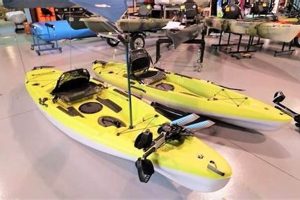
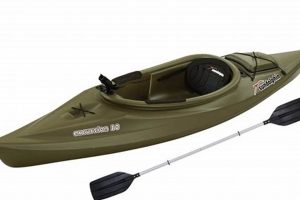
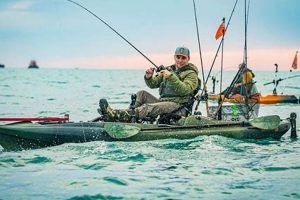
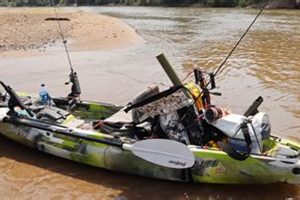
This type of watercraft, constructed as a single, unified piece from materials like high-density polyethylene, offers a durable and stable platform designed specifically for angling. One-piece construction kayaks are often favored for their robust nature, making them suitable for navigating various water conditions, from calm lakes to shallow rivers.
The inherent rigidity of these molded watercraft contributes to efficient paddling and precise maneuvering, beneficial for tracking fish and maintaining position in currents. This stability also provides a secure platform for casting and reeling. Historically, fishing from small, maneuverable boats has been a common practice. Modern advancements in materials and manufacturing have led to purpose-built designs that cater to the specific needs of anglers, offering features like rod holders, storage compartments, and even live wells.
Further exploration of this topic will cover key aspects such as material selection, construction techniques, design features, and performance characteristics, offering a complete understanding of the advantages and disadvantages of this specialized vessel.
Tips for Selecting a Suitable Watercraft for Angling
Choosing the right vessel for fishing requires careful consideration of various factors to ensure optimal performance, stability, and comfort.
Tip 1: Consider the fishing environment. Different hull designs perform better in specific water conditions. A shorter, wider hull offers greater stability in calm lakes and ponds, while a longer, narrower hull is better suited for navigating rivers and open water.
Tip 2: Evaluate weight capacity. Ensure the watercraft can comfortably support the angler’s weight, along with gear and potential catches, to maintain stability and prevent tipping.
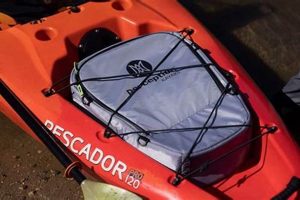
Tip 3: Prioritize storage options. Ample storage space is essential for carrying tackle, safety equipment, and personal belongings. Consider built-in compartments, hatches, and bungee cords for securing gear.
Tip 4: Assess seating comfort. Long hours on the water demand a comfortable seating arrangement. Look for adjustable seats with adequate back support and padding.
Tip 5: Examine the features designed for fishing. Rod holders, paddle clips, and anchor trolleys are valuable additions that enhance the fishing experience.
Tip 6: Research material durability. Select a durable material that can withstand impacts and abrasion. High-density polyethylene is a popular choice for its robustness and resistance to UV damage.
Tip 7: Factor in transportation and storage. Consider the vessel’s size and weight regarding transportation and storage limitations. Roof racks, trailers, or dedicated storage space may be necessary.
Careful consideration of these factors will ensure selection of a vessel optimized for stability, performance, and a comfortable fishing experience.
By understanding the nuances of watercraft selection, anglers can enhance their time on the water and focus on the pursuit of their catch.
1. Durability

Durability is a paramount consideration when selecting a fishing kayak, directly influencing its lifespan and resilience against various environmental factors and potential impacts. A durable vessel ensures reliable performance over extended periods, reducing the need for frequent repairs and replacements. This section explores key facets contributing to the overall durability of these watercraft.
- Material Selection
The primary material used in construction significantly impacts durability. High-density polyethylene (HDPE) is a common choice due to its impact resistance, UV stability, and overall robustness. Other materials, such as rotomolded plastic, also offer excellent durability. For example, HDPE kayaks can withstand impacts from rocks and submerged obstacles, ensuring structural integrity in challenging environments. Choosing a suitable material is the foundation of a long-lasting kayak.
- Construction Methods
The manufacturing process plays a crucial role in determining the kayak’s structural integrity. Rotational molding creates a seamless, one-piece hull with uniform thickness, minimizing weak points and enhancing overall durability. This method eliminates seams that could potentially leak or fail under stress. The construction method directly impacts the vessel’s resistance to wear and tear.
- UV Resistance
Exposure to sunlight can degrade certain materials over time. UV-resistant coatings and additives protect the kayak from the damaging effects of ultraviolet radiation, preventing fading, cracking, and weakening of the hull. This protection is essential for maintaining long-term durability, especially in regions with intense sunlight. A kayak with high UV resistance will retain its structural integrity and color for extended periods.
- Impact and Abrasion Resistance
Fishing kayaks often encounter rocks, logs, and other potential hazards. A durable kayak must withstand impacts and abrasion without sustaining significant damage. The thickness and inherent properties of the material contribute to its ability to resist these forces. For instance, thicker hulls generally offer greater impact resistance, while specialized coatings or additives can enhance abrasion resistance. This resilience ensures the kayak can withstand the rigors of diverse fishing environments.
The combined influence of material selection, construction techniques, UV resistance, and impact/abrasion resistance determines the overall durability of a fishing kayak. A durable vessel provides a reliable platform for anglers, ensuring extended lifespan and minimizing the risk of damage from environmental factors and potential impacts encountered during fishing excursions. This resilience translates to a greater return on investment and enhances the overall fishing experience.
2. Stability
Stability is a critical performance attribute in fishing kayaks, directly influencing angler safety, comfort, and fishing effectiveness. A stable platform provides a secure base for casting, reeling, and landing fish, minimizing the risk of capsizing, especially in challenging conditions such as currents or windy environments. This stability is achieved through a combination of design elements inherent in solid fishing kayaks. The hull design, including width, shape, and depth, plays a significant role. Wider hulls generally offer greater initial stability, resisting tipping, while specific hull shapes, like pontoon or tunnel hulls, can enhance secondary stability, recovering balance after initial tilting. For example, a wider, flatter hull provides a stable platform for standing casting, while a kayak with a pronounced keel offers better tracking in moving water, though potentially at the expense of some initial stability. The weight distribution within the kayak also influences stability. A lower center of gravity contributes to enhanced stability, while proper weight distribution of gear and angler within the vessel further optimizes balance.
The inherent rigidity of solid, one-piece construction kayaks contributes significantly to their stability. Unlike inflatable or folding kayaks, solid kayaks maintain their shape consistently, providing a predictable and reliable platform. This rigidity translates to better performance in various water conditions, allowing anglers to confidently navigate choppy water or strong currents without compromising stability. The construction material also plays a role; denser materials like high-density polyethylene (HDPE) contribute to a lower center of gravity, further enhancing stability. In practical application, a stable fishing kayak allows anglers to focus on fishing rather than constantly adjusting their balance. This is particularly crucial in situations requiring precise boat control, such as sight fishing or maneuvering in tight spaces around structure. Furthermore, enhanced stability provides a secure platform for activities like mounting electronics or using specialized fishing equipment, enhancing the overall angling experience.
In summary, stability in a solid fishing kayak is a multifaceted attribute determined by a combination of hull design, weight distribution, material selection, and construction technique. A stable platform enhances angler safety, comfort, and fishing effectiveness by providing a secure base for various angling activities. Understanding the factors that contribute to stability empowers informed decision-making when selecting a kayak suited to individual needs and fishing environments, ultimately contributing to a more enjoyable and successful angling experience.
3. Maneuverability
Maneuverability is a critical performance characteristic in solid fishing kayaks, directly influencing angling effectiveness and overall on-the-water experience. Precise and responsive handling enables anglers to navigate diverse water environments, position the kayak effectively for casting, and respond efficiently to changing conditions or fish movement. This section explores the key facets contributing to maneuverability in solid fishing kayaks.
- Hull Design
The hull design plays a pivotal role in determining a kayak’s maneuverability. Shorter kayaks with a flatter hull tend to turn more quickly, ideal for navigating tight spaces and complex shorelines. Longer kayaks with a more defined keel track better in open water and offer superior speed but may sacrifice some turning agility. For example, a shorter, wider kayak excels in navigating slow-moving streams and ponds, while a longer, narrower kayak is better suited for covering distance on larger lakes or coastal waters. The specific hull shape influences how the kayak responds to paddle strokes and currents, directly impacting turning radius and overall maneuverability.
- Length and Width
The kayak’s dimensions directly affect its handling characteristics. Shorter kayaks are generally more maneuverable, allowing for quick turns and adjustments in position. Longer kayaks offer better tracking and speed but require more effort to turn. Width also plays a role; narrower kayaks tend to be more responsive to paddle input, while wider kayaks offer enhanced stability but may require more effort to maneuver. The optimal length and width depend on the intended fishing environment and angler preferences, balancing maneuverability with other performance characteristics like stability and speed.
- Waterline Length
The length of the hull in contact with the water significantly influences maneuverability. A longer waterline typically results in better tracking and speed, while a shorter waterline enhances turning ability. The waterline length can vary depending on the kayak’s design and how it sits in the water, impacted by factors like the angler’s weight and gear load. Understanding the relationship between waterline length and maneuverability helps anglers choose a kayak suited to their specific needs and fishing style.
- Rudder or Skeg
Some fishing kayaks incorporate a rudder or skeg to enhance directional control and maneuverability. A rudder provides active control over steering, allowing for precise adjustments to the kayak’s course, particularly helpful in windy conditions or moving water. A skeg, on the other hand, provides passive directional stability, enhancing tracking and reducing the need for constant corrective strokes. The presence and type of steering system impact the kayak’s overall maneuverability and ease of control, offering distinct advantages in specific fishing scenarios.
The interplay of these factors determines a solid fishing kayak’s overall maneuverability. Selecting a kayak with the appropriate balance of maneuverability, stability, and speed is crucial for optimizing the fishing experience. A highly maneuverable kayak allows anglers to efficiently navigate diverse environments, position themselves effectively for casting, and respond quickly to changing conditions or fish activity, ultimately contributing to a more successful and enjoyable angling experience. Understanding these factors empowers informed decision-making and ensures alignment between kayak selection and individual fishing needs.
4. Storage Capacity
Storage capacity is a crucial factor in solid fishing kayaks, directly impacting their practicality and the overall fishing experience. Sufficient storage enables anglers to carry essential gear, tackle, safety equipment, and personal belongings comfortably and securely. This section explores the key facets of storage capacity in these specialized vessels.
- Types of Storage
Solid fishing kayaks offer various storage options, each designed for specific purposes. These include dedicated compartments for tackle boxes, hatches for larger items like dry bags or coolers, and bungee cords for securing items on deck. For example, recessed tackle trays keep lures and tools organized and readily accessible, while larger hatches accommodate essential gear like extra clothing, food, and safety equipment. The variety and placement of storage options contribute significantly to on-the-water organization and efficiency.
- Capacity and Accessibility
The overall storage volume and ease of access are crucial considerations. Ample storage space allows anglers to carry everything needed for a successful fishing trip without feeling cramped or restricted. Easy access to stored items is equally important, allowing for quick retrieval of essential gear without disrupting the fishing process. Well-designed hatches and compartments with convenient access points enhance on-the-water efficiency and minimize disruptions during critical moments.
- Weight Distribution and Stability
Proper weight distribution within the kayak is essential for maintaining stability and optimal performance. Distributing gear evenly throughout the storage compartments helps prevent imbalances that could compromise stability, especially in challenging conditions. Understanding the kayak’s weight capacity and distributing gear accordingly is crucial for safe and efficient operation. Overloading the kayak can negatively impact stability and maneuverability, hindering the overall fishing experience.
- Waterproofing and Protection
Protecting gear from water damage is paramount, particularly in fishing environments. Watertight hatches and sealed compartments safeguard sensitive items from splashes, rain, and even accidental submersion. Dry bags and waterproof containers provide additional protection for essential electronics, documents, and other valuables. Effective waterproofing ensures gear remains dry and functional, contributing to a more successful and enjoyable outing.
The storage capacity of a solid fishing kayak directly influences its practicality and the overall angling experience. Adequate and well-designed storage solutions allow for organized gear management, efficient access to essential items, and protection from water damage. Careful consideration of storage options during kayak selection empowers anglers to choose a vessel that meets their specific needs and enhances their time on the water.
5. Fishing Features

Specialized features distinguish fishing kayaks from recreational models, optimizing them for angling effectiveness and convenience. These integrated features enhance functionality and overall on-the-water experience, allowing anglers to focus on the pursuit of their target species. The following facets explore key fishing-specific features commonly found in solid fishing kayaks.
- Rod Holders
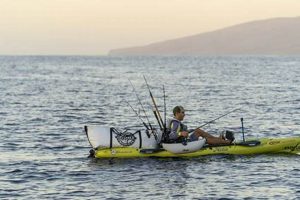
Rod holders are fundamental features, providing secure storage and convenient access to fishing rods. Various types exist, including flush-mounted, adjustable, and rotating rod holders. Flush-mounted holders offer a streamlined profile, minimizing interference while paddling. Adjustable holders allow for customized rod positioning, optimizing angles for trolling or specific fishing techniques. Rotating holders enable quick adjustments to rod orientation, facilitating efficient lure retrieval and fish fighting. The number and type of rod holders influence angling versatility and efficiency.
- Tackle Storage
Dedicated tackle storage compartments keep lures, hooks, lines, and other essential fishing accessories organized and readily accessible. These compartments may include removable trays, drawers, or sealed containers, protecting tackle from water damage and facilitating efficient organization. Well-designed tackle storage systems streamline the fishing process, minimizing time spent searching for specific items and maximizing time spent fishing. The capacity and configuration of tackle storage influence overall on-the-water efficiency.
- Mounting Systems
Integrated mounting systems provide attachment points for fish finders, GPS units, cameras, and other electronic accessories. These systems typically utilize tracks, rails, or inserts, allowing for customized placement and secure mounting of essential electronics. Strategically positioned electronics enhance situational awareness, navigation, and fish finding capabilities, contributing to a more informed and successful angling experience. The versatility and compatibility of mounting systems influence the integration of essential electronic accessories.
- Other Specialized Features
Additional features further enhance the fishing experience. Anchor trolleys facilitate controlled drifting and precise positioning in current. Paddle parks or clips secure the paddle when not in use, preventing accidental loss or interference during fishing. Live wells provide temporary holding for live bait or caught fish. These specialized features contribute to overall angling efficiency and convenience, optimizing the kayak’s functionality for specific fishing techniques and scenarios. The presence and design of these features influence the kayak’s suitability for particular fishing styles and target species.
The integration of these fishing-specific features significantly enhances the functionality and overall performance of solid fishing kayaks. These features contribute to angler efficiency, convenience, and success on the water by providing dedicated solutions for rod management, tackle organization, electronics integration, and specialized fishing techniques. Careful consideration of these features during kayak selection ensures alignment between vessel capabilities and individual angling needs and preferences.
6. Weight Capacity

Weight capacity is a critical factor influencing the performance, safety, and suitability of a solid fishing kayak. It represents the maximum combined weight of the angler, gear, and any potential catch the kayak can safely support without compromising stability or structural integrity. Understanding weight capacity is crucial for informed kayak selection, ensuring safe and efficient operation on the water.
- Maximum Load
The maximum load specification, typically provided by the manufacturer, indicates the absolute weight limit the kayak can safely carry. Exceeding this limit can lead to decreased stability, reduced freeboard (the distance between the waterline and the top of the kayak’s side), and potential swamping or capsizing, posing significant safety risks. For example, a kayak with a maximum load of 350 lbs. can safely accommodate a 200 lb. angler, 50 lbs. of fishing gear, and a 100 lb. catch. Accurately assessing anticipated weight loads is essential for selecting a kayak with appropriate capacity.
- Performance Impact
Weight influences kayak performance. A kayak loaded near its maximum capacity will sit lower in the water, increasing drag and reducing speed and maneuverability. Conversely, underloading a kayak designed for heavier weights can result in inefficient paddling and reduced tracking. Optimizing the load relative to the kayak’s weight capacity ensures efficient performance and optimal handling characteristics. For example, a heavily loaded kayak may require more effort to paddle and turn, while a lightly loaded kayak might feel unstable or unresponsive in windy conditions. Balancing the load with the kayak’s design specifications is essential for optimal performance.
- Stability Considerations
Weight distribution significantly impacts kayak stability. Evenly distributing weight within the kayak, both fore and aft, and keeping heavier items low in the hull enhances stability and minimizes the risk of tipping. Concentrating weight in one area can create instability, particularly in challenging conditions like rough water or strong currents. Proper weight management is essential for maintaining balance and ensuring a safe and predictable on-the-water experience. For instance, placing heavier items like tackle boxes or coolers near the center of the kayak and distributing lighter items like clothing and dry bags evenly throughout the storage compartments optimizes weight distribution and stability.
- Structural Integrity
Continuously exceeding the weight capacity can stress the kayak’s structure, potentially leading to hull deformation, weakened seams, or even structural failure over time. Operating within the specified weight limits preserves the kayak’s structural integrity, ensuring its longevity and maintaining safe operating conditions. Respecting the manufacturer’s weight recommendations is essential for preserving the kayak’s structural integrity and ensuring long-term durability. Repeated overloading can compromise the kayak’s structural integrity, leading to premature wear and tear and potentially jeopardizing safety.
Weight capacity is an integral consideration in solid fishing kayak selection, influencing performance, stability, and safety. Understanding the relationship between weight, performance, and structural integrity empowers informed decision-making, ensuring a safe, efficient, and enjoyable angling experience. Choosing a kayak with adequate weight capacity for the intended use, distributing weight evenly, and operating within the specified limits are crucial for optimal performance and long-term kayak durability.
Frequently Asked Questions
This section addresses common inquiries regarding solid fishing kayaks, providing concise and informative responses to facilitate informed decision-making and enhance understanding of these specialized vessels.
Question 1: What advantages do solid fishing kayaks offer over inflatable or folding kayaks for angling?
Solid kayaks provide superior stability, durability, and tracking, crucial for fishing activities. Their inherent rigidity enhances performance in various water conditions, offering a more stable platform for casting, reeling, and landing fish. The robust construction of solid kayaks also makes them more resistant to punctures and damage from underwater obstacles.
Question 2: How does hull design impact the performance of a solid fishing kayak?
Hull design significantly influences stability, maneuverability, and tracking. Wider hulls generally offer greater stability, while longer, narrower hulls enhance speed and tracking. Specialized hull designs, such as pontoon or tunnel hulls, provide varying degrees of stability and maneuverability, catering to specific fishing environments and preferences. Careful consideration of hull design is essential for selecting a kayak optimized for intended use.
Question 3: What factors should be considered when determining the appropriate weight capacity for a fishing kayak?
Weight capacity should accommodate the combined weight of the angler, all gear, and potential catches. Exceeding the specified weight limit compromises stability and performance, potentially leading to safety risks. Accurately assessing anticipated weight loads is crucial for selecting a kayak with adequate capacity.
Question 4: What are the key features that distinguish a fishing kayak from a recreational kayak?
Fishing kayaks typically incorporate specialized features like rod holders, tackle storage compartments, mounting systems for electronics, and anchor trolleys. These features enhance angling convenience, efficiency, and overall on-the-water experience. The presence and design of these features differentiate fishing kayaks from recreational models, optimizing them for specific angling needs.
Question 5: What materials are commonly used in the construction of solid fishing kayaks, and how do they impact durability?
High-density polyethylene (HDPE) is a prevalent material due to its durability, impact resistance, and UV stability. Other materials, such as rotomolded plastic, also offer excellent durability and performance characteristics. Material selection directly influences the kayak’s resistance to wear and tear, impacting its lifespan and overall value.
Question 6: How does one maintain and care for a solid fishing kayak to ensure its longevity?
Regular cleaning with mild soap and water removes dirt, grime, and saltwater residue, preventing material degradation. Storing the kayak out of direct sunlight, preferably in a covered area, protects it from UV damage. Proper maintenance preserves the kayak’s appearance and structural integrity, extending its lifespan and ensuring optimal performance.
Understanding these key aspects of solid fishing kayaks empowers informed purchasing decisions and enhances the overall angling experience. Careful consideration of individual needs, fishing style, and target environment ensures selection of the most suitable vessel.
The subsequent section delves further into specific kayak models and manufacturers, providing a comprehensive overview of available options within the market.
Conclusion
This exploration has provided a comprehensive overview of the essential attributes that define a suitable watercraft for angling. From the durability and stability inherent in their construction to the specialized features that enhance fishing functionality, these vessels offer a unique blend of performance and practicality. Key considerations such as hull design, storage capacity, weight capacity, and maneuverability have been examined, highlighting their influence on the overall angling experience. The integration of fishing-specific features like rod holders, tackle storage, and mounting systems further distinguishes these specialized kayaks, optimizing them for diverse fishing styles and environments.
Careful consideration of these factors empowers informed decision-making, ensuring alignment between individual angling needs and vessel capabilities. The selection of an appropriate watercraft significantly contributes to not only fishing success but also safety and overall enjoyment on the water. Ultimately, the pursuit of angling excellence relies on a harmonious balance between angler expertise and the vessel that serves as an extension of their angling aspirations.