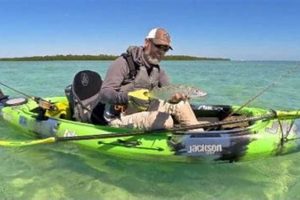
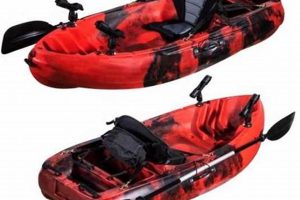
This inflatable watercraft, manufactured by Sevylor, is designed for anglers seeking a stable and portable fishing platform. Typically constructed from durable PVC or similar materials, it features multiple air chambers for safety and often includes specialized features like rod holders, adjustable seats, and storage compartments. The Tahiti model is a popular choice for its balance of affordability and functionality.
Portable and lightweight, these vessels offer convenient access to a variety of fishing locations, from calm lakes and rivers to sheltered coastal areas. Their compact nature allows for easy transport and storage, eliminating the need for trailers or roof racks often required for traditional kayaks. The incorporated fishing-specific features enhance angling experiences, providing designated spaces for rods and tackle, promoting organization and efficient fishing practices. This type of inflatable kayak provides an accessible entry point for individuals new to kayak fishing due to its relative ease of use and lower price point compared to hard-shell kayaks.
The subsequent sections will delve deeper into specific aspects of this particular model, including construction, performance, key features, user experiences, and a comparative analysis against similar options available on the market.
Tips for Inflatable Kayak Fishing
Proper preparation and technique enhance safety and enjoyment on the water. The following tips offer guidance for maximizing fishing excursions.
Tip 1: Inflate to the Recommended Pressure: Proper inflation ensures optimal performance and stability. Consult the manufacturer’s guidelines for precise pressure recommendations and utilize a pressure gauge for accurate inflation.
Tip 2: Distribute Weight Evenly: Balanced weight distribution is crucial for stability and efficient paddling. Position gear and tackle thoughtfully to maintain an even keel.
Tip 3: Practice Paddling and Maneuvering: Familiarize oneself with paddling techniques and maneuvering characteristics in calm water before venturing into more challenging conditions. This improves control and confidence on the water.
Tip 4: Utilize Appropriate Safety Gear: Always wear a personal flotation device (PFD). Carry a whistle, signaling device, and essential safety equipment, including a first-aid kit and repair kit.
Tip 5: Check Weather Conditions: Prior to embarking on any fishing trip, thoroughly assess weather forecasts and avoid venturing out in unfavorable conditions such as high winds or storms.
Tip 6: Secure Gear Properly: Utilize onboard storage compartments and secure loose items to prevent loss or damage. Employ dry bags for sensitive electronic devices and essential gear.
Tip 7: Be Mindful of the Environment: Respect wildlife and natural habitats. Adhere to “Leave No Trace” principles by packing out all trash and minimizing environmental impact.
Adhering to these guidelines promotes safer and more successful fishing experiences, allowing anglers to focus on enjoying time on the water.
By understanding these fundamental principles, individuals can improve their inflatable kayak fishing experience and ensure preparedness for a variety of on-the-water scenarios.
1. Portability

Portability is a defining characteristic of the Sevylor Tahiti fishing kayak, significantly influencing its appeal and practicality. This feature distinguishes it from traditional hard-shell kayaks, broadening accessibility and facilitating transport to diverse fishing locations.
- Compact Storage
When deflated and folded, the kayak occupies minimal storage space. This compact form allows for convenient storage in vehicles, closets, or garages, eliminating the need for dedicated storage solutions required for rigid kayaks. This characteristic benefits individuals with limited storage capacity.
- Ease of Transport
The lightweight nature of the inflatable design simplifies transportation. The deflated kayak can be easily carried by hand or in a carrying bag, eliminating the need for roof racks or trailers often necessary for transporting hard-shell kayaks. This facilitates access to remote fishing locations or areas with limited vehicle access.
- Inflatable Design
The inflatable design contributes directly to portability. Rapid inflation and deflation are facilitated by readily available pumps, enabling quick setup and pack-down at the fishing destination. This reduces preparation time and enhances overall convenience.
- Travel Considerations
The portability of this kayak extends to travel scenarios. Its compact and lightweight nature makes it suitable for airline travel or transport in smaller vehicles, expanding fishing opportunities beyond local waterways. This feature appeals to individuals who enjoy fishing while traveling or exploring different fishing destinations.
The portability of the Sevylor Tahiti fishing kayak directly contributes to its versatility and ease of use. This key feature expands accessibility to various fishing locations, simplifies storage, and makes transport significantly more convenient compared to traditional hard-shell alternatives. The ability to quickly inflate and deflate the kayak further enhances its practicality, allowing anglers to focus on the fishing experience rather than logistical challenges.
2. Stability

Stability is a critical performance attribute for fishing kayaks, directly impacting angler safety, comfort, and fishing effectiveness. For the Sevylor Tahiti fishing kayak, stability considerations are particularly relevant due to its inflatable design. Understanding the factors contributing to its stability is essential for informed usage and maximizing on-the-water performance.
- Wide Beam Design
The Tahiti’s wide beam (typically around 36 inches) contributes significantly to primary stability, resisting initial tipping motions. This broader base provides a stable platform for casting, reeling, and landing fish. While a wider beam might slightly compromise maneuverability in narrow waterways, it significantly enhances stability, a crucial factor for fishing activities.
- Multiple Air Chambers
Multiple air chambers contribute to both stability and safety. Should one chamber be punctured, the remaining chambers maintain sufficient buoyancy and stability to prevent capsizing, allowing the angler to return to shore safely. This feature is particularly important in inflatable kayaks, providing redundancy and enhancing overall safety.
- Low Center of Gravity
The kayak’s inflatable design naturally results in a lower center of gravity compared to hard-shell kayaks. This lower center of gravity improves secondary stability, the ability to recover from larger tilting forces. Anglers can confidently shift weight or lean to one side without risking capsize, enhancing stability during fishing maneuvers.
- Inflated Floor Design
The inflatable floor contributes to both comfort and stability. The inflated floor provides a rigid platform, reducing flex and enhancing overall stability. The firm footing also improves angler comfort, particularly during longer fishing trips. This design element contributes significantly to the kayak’s overall performance and user experience.
The combined effect of the wide beam, multiple air chambers, low center of gravity, and inflated floor contributes significantly to the Sevylor Tahiti’s overall stability. While inherent limitations exist due to its inflatable nature compared to rigid kayaks, the design considerations implemented by Sevylor provide a stable and secure platform suitable for a variety of fishing conditions. Understanding these factors allows anglers to maximize their fishing effectiveness and prioritize safety on the water.
3. Fishing Features

Dedicated fishing features distinguish the Sevylor Tahiti from recreational kayaks, optimizing its utility for angling. These integrated elements enhance functionality and improve the overall fishing experience. The inclusion of specialized features demonstrates a design focus catering specifically to anglers’ needs, separating the Tahiti from general-purpose inflatable kayaks.
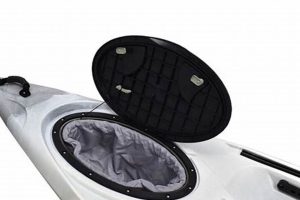
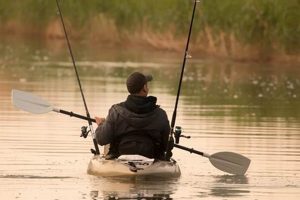
Several key features contribute to the kayak’s fishing-specific functionality. Integrated rod holders provide secure storage and quick access to fishing rods, freeing hands for paddling and other tasks. Adjustable seats offer customized comfort and support, crucial for extended fishing trips. Often, dedicated storage compartments offer organized storage for tackle boxes, gear, and personal items, maximizing onboard space and promoting efficient fishing practices. These features collectively enhance convenience, organization, and overall fishing effectiveness. For instance, the readily accessible rod holders enable anglers to quickly switch between techniques or respond to fish strikes efficiently. Similarly, ample storage space allows for carrying a variety of lures and tackle, optimizing preparedness for diverse fishing scenarios.
The presence and thoughtful integration of fishing-specific features directly impact the Sevylor Tahiti’s value proposition. These features transform a standard inflatable kayak into a specialized fishing platform, increasing its practicality and appeal to anglers. While specific features may vary depending on the model year and configuration, the emphasis on fishing functionality remains a core differentiator within the inflatable kayak market. Understanding these features and their practical applications enhances user experience and allows for informed purchasing decisions based on individual angling needs and preferences.
4. Durability
Durability is a critical factor influencing the lifespan and overall value of the Sevylor Tahiti fishing kayak. Constructed from heavy-duty PVC or similar materials, the kayak is designed to withstand the rigors of on-water use, including abrasion from rocks, logs, and other potential hazards. Reinforced seams and multiple air chambers further enhance durability and contribute to puncture resistance. This robust construction enables the kayak to endure regular use in various freshwater and saltwater environments, contributing to its longevity and overall value proposition.
The practical implications of durability are readily apparent in real-world scenarios. The ability to withstand minor impacts and abrasions minimizes the risk of punctures and leaks, ensuring uninterrupted fishing trips. This inherent robustness allows anglers to confidently navigate shallow waters, rocky shorelines, and other potentially challenging environments without compromising the kayak’s structural integrity. The durable construction also translates to a longer lifespan, reducing the need for frequent replacements and maximizing the return on investment. For example, the heavy-duty PVC construction resists punctures from fish hooks and sharp objects commonly encountered during fishing excursions. The reinforced seams maintain their integrity even under stress, ensuring the kayak remains watertight and functional over extended periods.
Durability directly contributes to the Sevylor Tahiti fishing kayak’s suitability for diverse fishing applications. The robust construction instills confidence in anglers, allowing them to focus on fishing rather than worrying about potential damage to the kayak. This durability factor, combined with portability and fishing-specific features, positions the Tahiti as a practical and reliable option for anglers seeking a versatile and long-lasting inflatable fishing platform. Regular maintenance, including proper cleaning and storage, further enhances durability and prolongs the kayak’s lifespan, maximizing its overall value and ensuring continued performance in demanding fishing environments.
5. Affordability

Affordability is a key factor contributing to the Sevylor Tahiti fishing kayak’s popularity, positioning it as an accessible entry point into kayak fishing. Its price point often significantly lower than that of comparable hard-shell kayaks, makes it an attractive option for budget-conscious anglers or those exploring the sport. Analyzing the components contributing to this affordability provides insights into its value proposition within the broader kayak market.
- Materials and Manufacturing
The use of durable PVC and other readily available materials contributes to the kayak’s affordability. Manufacturing processes for inflatable kayaks generally involve lower production costs compared to the complex molding and finishing required for hard-shell kayaks. This cost efficiency translates to a lower retail price, making the Tahiti accessible to a wider range of consumers.
- Simplified Design
The Tahiti’s relatively simple design, while incorporating essential fishing features, avoids overly complex components or premium materials that would drive up costs. This streamlined approach to design prioritizes functionality and affordability, striking a balance between performance and price. For example, while offering comfortable seating and essential storage, the design avoids unnecessary embellishments that add cost without significantly enhancing functionality.
- Target Market
The Tahiti is strategically positioned within the entry-level to mid-range kayak market, targeting recreational anglers and those seeking an affordable option for exploring kayak fishing. This targeted approach allows Sevylor to optimize production and pricing strategies to meet the needs of this specific consumer segment. The affordability factor expands the potential user base, making kayak fishing accessible to individuals who might not consider higher-priced alternatives.
- Value Proposition
The Tahiti’s affordability, combined with its portability, stability, and fishing-specific features, creates a compelling value proposition. It offers a balanced combination of functionality, durability, and accessibility, providing significant value for the price. This combination of factors allows anglers to experience the benefits of kayak fishing without a substantial financial investment, contributing to its appeal among both novice and experienced anglers.
The affordability of the Sevylor Tahiti fishing kayak is a result of strategic decisions regarding materials, manufacturing processes, design, and target market. This cost-effectiveness enhances its accessibility, opening up kayak fishing to a broader audience. While affordability often implies trade-offs in certain areas, the Tahiti effectively balances cost with performance and features, providing a viable and attractive option for anglers seeking a budget-friendly entry point into the sport. By understanding the components contributing to its affordability, consumers can make informed purchasing decisions based on individual budgetary constraints and desired features.
6. Inflatable Design

The inflatable design inherent to the Sevylor Tahiti fishing kayak fundamentally distinguishes it from traditional hard-shell kayaks, impacting portability, storage, and overall user experience. Constructed from durable materials like PVC, the kayak utilizes multiple air chambers to provide buoyancy and structural rigidity. This design choice presents specific advantages and disadvantages relevant to anglers considering this type of watercraft.
The primary advantage of the inflatable design lies in its portability. Deflated, the kayak occupies minimal storage space, facilitating transport in vehicles without requiring specialized racks or trailers. This portability expands access to remote fishing locations or areas with limited vehicle access. Rapid inflation and deflation, typically achieved with readily available pumps, further enhance convenience. For example, anglers can easily transport the deflated kayak in a backpack or carry bag, hiking to otherwise inaccessible fishing spots. Conversely, hard-shell kayaks present significant logistical challenges for such scenarios.
However, the inflatable design also presents certain limitations. Performance characteristics, including speed and tracking, may differ from hard-shell kayaks. Durability, while generally adequate for intended use, requires attention to avoid punctures or abrasions. Proper inflation is crucial for maintaining optimal performance and structural integrity. While the inflatable design offers clear advantages regarding portability and storage, understanding its performance implications is essential for informed decision-making. Selecting appropriate fishing locations, adhering to manufacturer usage guidelines, and prioritizing proper maintenance practices mitigate potential drawbacks and maximize the benefits of the inflatable design.
Frequently Asked Questions
This section addresses common inquiries regarding the Sevylor Tahiti fishing kayak, providing concise and informative responses to facilitate informed purchasing decisions and optimal usage.
Question 1: How durable is an inflatable kayak like the Tahiti for fishing?
Constructed from durable PVC or similar materials, these kayaks are designed to withstand typical fishing conditions. Reinforced seams and multiple air chambers enhance puncture resistance. However, care should be taken to avoid sharp objects and abrasive surfaces.
Question 2: How stable is the Tahiti on the water, especially for casting and reeling?
The wide beam design and low center of gravity contribute significantly to stability. While not as stable as a hard-shell kayak, the Tahiti offers sufficient stability for most fishing activities in calm to moderate conditions. Balanced weight distribution enhances stability further.
Question 3: What are the key fishing-specific features offered by the Tahiti?
Features may vary by model year but often include integrated rod holders, adjustable seats, and dedicated storage compartments for tackle and gear. These features enhance angler convenience and organization on the water.
Question 4: How easy is it to transport and store an inflatable fishing kayak?
Portability is a key advantage. Deflated, the kayak is compact and lightweight, easily fitting in vehicle trunks or storage spaces. No specialized racks or trailers are required for transport. This feature enhances accessibility to various fishing locations.
Question 5: What type of water is the Tahiti best suited for?
Designed primarily for calm lakes, slow-moving rivers, and sheltered coastal waters, the Tahiti is generally not recommended for challenging whitewater conditions or open ocean environments. Always assess weather conditions and choose appropriate fishing locations.
Question 6: How long does it take to inflate and deflate the Tahiti?
Inflation and deflation times vary depending on pump type and user experience. Typically, the process takes between 5 to 10 minutes with a suitable hand or electric pump. Practice ensures efficient setup and pack-down at the fishing destination.
Addressing these common inquiries provides a foundational understanding of the Sevylor Tahiti fishing kayaks key attributes, advantages, and limitations. Further research and consultation with experienced anglers can supplement this information to facilitate informed purchasing decisions and optimal usage based on individual needs and fishing preferences.
The subsequent section will delve deeper into user experiences and comparative analyses, providing further insights into the Tahitis performance and value proposition within the inflatable fishing kayak market.
Conclusion
This exploration of the Sevylor Tahiti fishing kayak encompassed key aspects relevant to prospective purchasers and current owners. Portability, stability, fishing-specific features, durability, affordability, and the inflatable design itself were examined in detail. The kayak’s strengths lie in its convenient transport and storage, dedicated fishing features, and accessible price point. Limitations primarily relate to performance characteristics inherent to inflatable designs and considerations regarding appropriate usage environments. Addressing common questions provided further clarification regarding practical usage and maintenance.
The Sevylor Tahiti presents a viable option for individuals seeking an affordable and portable entry point into kayak fishing. Careful consideration of individual needs, fishing styles, and intended usage environments remains crucial for maximizing the kayak’s potential and ensuring a safe and enjoyable fishing experience. Further research and comparison with alternative inflatable and hard-shell kayaks can provide additional context for informed purchasing decisions within the broader kayak fishing landscape.