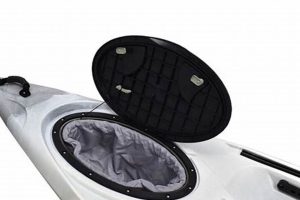
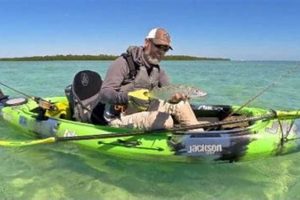
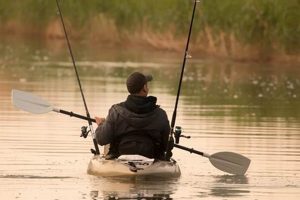
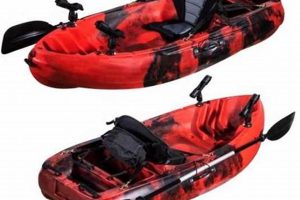
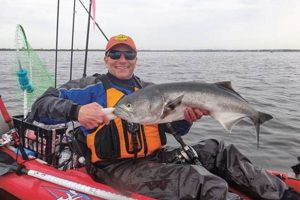
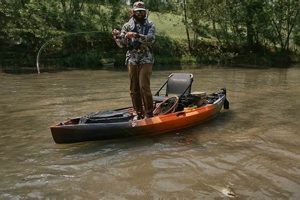
This specialized vessel, designed for angling in coastal waters, combines the stability of a kayak with features tailored for fishing. Imagine a compact, self-propelled watercraft equipped with rod holders, storage for tackle, and often an anchor system this exemplifies the concept. These vessels provide anglers access to shallows, reefs, and other near-shore areas often inaccessible by larger boats.
The increasing popularity of this type of angling reflects its advantages. Improved maneuverability in surf and shallows, combined with stealthy approach capabilities, enhances fishing success. Moreover, the relatively low cost and ease of transport compared to motorized boats expands fishing opportunities for a wider audience. Historically, kayaks have served various coastal communities for transportation and fishing, but the modern iteration, purpose-built for angling, represents a relatively recent evolution.
This foundational understanding allows for a deeper exploration of various aspects, such as selecting the right vessel, essential gear, effective techniques, and important safety considerations.
Tips for Coastal Kayak Angling
Successful fishing from this type of watercraft requires careful planning and execution. The following tips offer guidance for a safe and productive experience.
Tip 1: Stability is Paramount: Vessel stability significantly impacts safety and fishing effectiveness. Consider wider, flatter-bottomed designs for enhanced stability, especially in surf or choppy conditions. Shorter vessels offer increased maneuverability, while longer ones provide better tracking in open water.
Tip 2: Essential Gear Selection: Rod holders, a paddle leash, and an anchor trolley system are crucial. A well-organized tackle box containing lures, hooks, and line appropriate for the target species streamlines the fishing process. Dry bags protect essential items like phones and wallets from water damage.
Tip 3: Understanding Tides and Currents: Knowledge of local tidal patterns and currents is fundamental. Fishing during slack tide, when water movement is minimal, often proves more productive. Consulting tide charts and local resources provides valuable insights.
Tip 4: Safety First: Wearing a personal flotation device (PFD) is non-negotiable. Carrying a whistle and a communication device ensures prompt assistance in emergencies. Checking weather conditions before embarking is crucial for a safe excursion.
Tip 5: Launch and Landing Techniques: Launching and landing through surf require practice and awareness of wave patterns. Entering and exiting perpendicular to the waves minimizes the risk of capsizing. Maintaining momentum during launch and landing is also essential.
Tip 6: Respecting the Environment: Adhering to local fishing regulations and practicing catch-and-release principles promotes sustainable fishing practices. Proper disposal of fishing line and other waste minimizes environmental impact.
Tip 7: Paddle and Pedal Selection: Choosing the appropriate propulsion system enhances efficiency and enjoyment. Paddle kayaks require physical exertion, while pedal-driven versions offer hands-free fishing and greater range. Selecting the right option depends on individual preferences and physical capabilities.
By incorporating these tips, anglers can maximize their chances of success and ensure a safer, more enjoyable experience on the water. Preparation and informed decision-making are key to successful coastal kayak angling.
This guidance sets the stage for a more in-depth discussion on advanced techniques and specialized equipment.
1. Kayak Selection

Appropriate vessel selection is paramount for successful and safe beach fishing kayak angling. The kayak acts as the angler’s primary platform and its characteristics significantly influence fishing effectiveness, access to fishing grounds, and overall safety. Careful consideration of various factors ensures optimal performance in the dynamic coastal environment.
- Hull Design:
Hull design directly impacts stability and maneuverability. A wider, flatter hull, like those found in sit-on-top kayaks, provides enhanced stability, particularly beneficial in surf and choppy conditions. Conversely, a longer, narrower hull, common in sit-inside kayaks, offers better tracking and speed in calmer waters but sacrifices stability. Selecting a hull design aligned with the intended fishing environment is essential.
- Length and Width:
Kayak dimensions play a crucial role in performance. Shorter kayaks (under 12 feet) offer superior maneuverability in tight spaces and surf zones, while longer kayaks (over 12 feet) track better in open water and cover distance more efficiently. Width influences stability, with wider kayaks being more stable, especially for standing while casting. Balancing maneuverability and stability based on anticipated fishing conditions is key.
- Propulsion System:
Kayak propulsion significantly impacts the fishing experience. Paddle kayaks provide a traditional, cost-effective approach, relying on upper body strength for movement. Pedal kayaks offer hands-free fishing and greater speed and range, allowing for covering more water. Electric-motor kayaks offer a combination of ease and range, particularly useful in larger bodies of water or against strong currents. Selecting a propulsion system aligns with physical capabilities, fishing style, and target locations.
- Features and Accessories:
Purpose-built fishing kayaks often incorporate features like rod holders, tackle storage compartments, anchor trolleys, and even fish finders. These features enhance fishing efficiency and organization on the water. Evaluating these features based on individual fishing needs and preferences contributes to a more customized and effective fishing platform.
These facets of kayak selection are interconnected and influence the overall effectiveness and safety of beach fishing kayak angling. A thorough assessment of individual fishing style, target locations, and physical capabilities facilitates informed decision-making. Choosing the right kayak is the foundation for a successful and enjoyable experience on the water. Selecting a kayak optimized for stability in surf, for example, may compromise speed in open water, highlighting the importance of prioritizing selection criteria based on individual needs.
2. Essential Gear

The effectiveness and safety of beach fishing kayak angling hinges directly upon the selection and utilization of essential gear. This equipment serves specific functions, enabling anglers to target species effectively, navigate challenging coastal environments, and prioritize safety. Understanding the purpose and application of each component is fundamental to a successful and safe fishing experience. The symbiotic relationship between the angler, the specialized vessel, and the essential gear creates a cohesive system optimized for coastal angling.
Several core components define essential gear. A well-chosen paddle, appropriate for the angler’s physique and kayaking style, provides efficient propulsion and maneuverability. Rods and reels, selected based on target species and fishing techniques, form the foundation of the angling system. A carefully curated tackle box containing lures, hooks, lines, and terminal tackle tailored to the target species and local conditions ensures angling versatility. Safety equipment, including a personal flotation device (PFD), a whistle, and a communication device, are non-negotiable components prioritizing personal safety. Additional gear such as a fish finder, GPS device, and anchor trolley system enhance fishing efficiency and navigational capabilities. For instance, a kayak angler targeting nearshore reef species might select a medium-heavy spinning rod and reel combination paired with appropriate lures and terminal tackle for those specific fish.
Careful consideration of these essential gear components contributes significantly to the overall effectiveness and safety of beach fishing kayak angling. Each piece of equipment plays a specific role, contributing to the angler’s ability to navigate, fish effectively, and prioritize safety. Neglecting these essential elements compromises the angler’s ability to interact successfully with the dynamic coastal fishing environment. The practical application of this understanding empowers anglers to optimize their fishing experience, ensuring both productivity and safety. The challenges posed by the coastal environment, such as changing tides, currents, and weather conditions, underscore the importance of properly selected and utilized essential gear.
3. Safety Equipment

The inseparable link between safety equipment and beach fishing kayaks stems from the inherent risks associated with navigating coastal waters. These risks, ranging from unpredictable weather patterns and changing tides to the potential for capsizing and encounters with marine hazards, necessitate a proactive approach to safety. Safety equipment, therefore, transitions from optional accessories to essential components for responsible coastal kayak angling. This proactive approach distinguishes recreational paddling from the specialized activity of fishing from a kayak in the dynamic coastal environment.
Several categories of safety equipment warrant specific consideration. Personal flotation devices (PFDs), designed for comfort and mobility while providing essential buoyancy in the event of capsize, remain paramount. Communication devices, such as VHF radios or waterproofed cell phones, facilitate emergency contact should the need arise. Visual signaling devices, including flares and whistles, increase visibility and aid in attracting attention in distress situations. Navigation lights, especially crucial during low-light conditions, enhance visibility and prevent collisions with other vessels. A first-aid kit, equipped to address common injuries encountered in the marine environment, provides immediate care until professional medical assistance can be obtained. A practical example of the critical role of safety equipment arises in a scenario where a kayak capsizes in rough surf; a properly fitted PFD provides immediate flotation and increases the chances of self-rescue or timely assistance. Similarly, a VHF radio allows for rapid communication with the Coast Guard or other emergency responders in a distress situation.
A comprehensive understanding of safety equipment and its appropriate application underscores the critical role of preparedness in mitigating risks associated with beach fishing kayaks. The inherent unpredictability of the coastal environment necessitates proactive safety measures. This proactive approach distinguishes informed, responsible kayak anglers from those who underestimate the potential hazards. Neglecting safety protocols not only jeopardizes personal well-being but also places undue burden on rescue services. The consistent application of safety measures elevates the activity from a recreational pastime to a practice grounded in responsible decision-making. This proactive stance differentiates beach fishing kayaking from less demanding forms of recreational paddling, highlighting the specific safety demands of this activity.
4. Launch/Landing

Launching and landing a beach fishing kayak represent critical phases directly impacting the overall safety and success of the fishing expedition. These transitional moments between land and water present unique challenges distinct from open-water kayaking. The dynamic nature of the surf zone, characterized by breaking waves, shifting sands, and fluctuating water levels, necessitates specific techniques and considerations. Successful execution of launch and landing procedures minimizes the risk of capsizing, equipment damage, and personal injury. This specialized knowledge distinguishes experienced coastal kayak anglers from those less familiar with the nuances of the surf zone. Launching through oncoming waves, for example, requires precise timing and paddle strokes to maintain control and avoid broaching. Conversely, landing requires anticipating wave sets and utilizing the momentum of a wave to ride smoothly onto the beach.
The practical application of effective launch and landing techniques involves several key steps. Prior to launch, assessing surf conditions, identifying potential hazards like submerged rocks or strong currents, and selecting an appropriate entry/exit point contribute significantly to a smooth transition. During launch, maintaining a perpendicular angle to the waves minimizes the risk of capsizing. A firm, controlled paddle stroke provides forward momentum, countering the force of breaking waves. Similarly, during landing, anticipating wave sets allows the angler to ride the back of a wave onto the beach, minimizing the impact of the surf. A timely exit from the kayak, once grounded on the beach, prevents the receding wave from pulling the vessel back into the surf. These techniques illustrate the intricate interplay between the kayak angler, the vessel, and the dynamic coastal environment.
Mastery of launch and landing techniques underscores the specialized skill set required for successful beach fishing kayak angling. These procedures are not merely entry and exit points but integral components of the overall fishing experience. Effective execution enhances safety, preserves equipment, and maximizes fishing time by minimizing delays and potential mishaps. This understanding elevates the activity beyond basic paddling skills, highlighting the specialized knowledge and practiced techniques associated with coastal kayak fishing. The ability to confidently and safely navigate the surf zone during launch and landing distinguishes proficient kayak anglers and contributes significantly to a positive and productive fishing experience. This specialized knowledge directly influences the anglers ability to access prime fishing grounds, safely return to shore, and maintain the integrity of their equipment.
5. Fishing Techniques
Effective fishing techniques from a beach fishing kayak necessitate adapting traditional angling methods to the unique challenges and opportunities presented by the coastal environment. These adaptations consider the kayak’s mobility, the dynamic nature of the surf zone, and the specific target species inhabiting nearshore waters. Understanding these specialized techniques is crucial for maximizing fishing success and distinguishes coastal kayak angling from shore-based or boat-based fishing. The angler becomes an integrated part of the kayak-fishing system, requiring a nuanced understanding of both the vessel and the surrounding marine environment.
- Drift Fishing:
Drift fishing from a kayak leverages natural currents and tidal flows to present bait or lures effectively. This technique allows for covering a wider area and targeting species holding in specific current lines or structure. A controlled drift, maintained by subtle paddle adjustments or deployment of a drift sock, keeps the angler’s presentation in the target zone. For example, drifting a live bait along a nearshore reef can effectively target species like snapper or grouper.
- Trolling:
Trolling from a kayak involves dragging lures or bait behind the vessel while paddling or pedaling. This technique covers a significant amount of water, allowing anglers to locate active fish and explore various depths. Varying trolling speed and lure selection allows for targeting different species. Trolling a diving plug or spoon, for instance, can effectively attract pelagic species like mackerel or bluefish.
- Anchoring and Casting:
Anchoring in a strategic location, such as near a reef, structure, or drop-off, allows for focused fishing efforts. This technique allows for presenting baits or lures precisely within a targeted zone, maximizing chances of attracting fish holding in specific areas. Casting artificial lures or bottom fishing with bait can effectively target species inhabiting structured environments. For example, anchoring near a wreck and casting jigs can attract bottom-dwelling species like cod or sea bass.
- Sight Casting:
Sight casting from a kayak involves actively searching for fish and presenting lures directly to visible targets. This technique requires keen observation skills and quick reflexes to capitalize on opportunities presented by cruising or schooling fish in shallow water. The kayak’s low profile and maneuverability provide distinct advantages for sight casting in the coastal environment. Sight casting a fly or surface lure to a cruising redfish in shallow flats exemplifies this technique.
These specialized techniques, adapted to the unique platform of the beach fishing kayak, exemplify the interconnectedness between vessel, angler, and the marine environment. Successful kayak anglers leverage these techniques to exploit the specific opportunities offered by the coastal ecosystem. Understanding the nuances of these fishing methods significantly increases the likelihood of a successful and rewarding fishing experience, reinforcing the notion that successful coastal kayak angling requires specialized knowledge and a well-developed skill set.
Successful beach fishing kayak angling hinges on a fundamental understanding of navigation and tidal influences. These factors directly impact access to fishing grounds, the behavior of target species, and the overall safety of the kayaking experience. Knowledge of tides, currents, and navigational techniques allows anglers to optimize fishing efforts and mitigate potential hazards. This understanding distinguishes experienced kayak anglers from those less familiar with the dynamic coastal environment. Ignoring tidal patterns, for example, could lead an angler into dangerously shallow water or strong currents, hindering fishing success and compromising safety.
- Tidal Currents:
Tidal currents, the horizontal movement of water caused by rising and falling tides, significantly influence fish behavior and feeding patterns. Understanding these currents allows anglers to position themselves strategically, presenting baits or lures in areas where fish are likely to concentrate. For example, fishing near inlets or channels during an outgoing tide can concentrate baitfish and predatory species, creating prime fishing opportunities.
- Tide Stages:
Different stages of the tide, from high to low and the transitions between, impact water depth, access to fishing areas, and the activity levels of target species. Certain species may prefer feeding during specific tide stages, making knowledge of these patterns crucial for successful angling. Fishing shallow flats during a high tide, for instance, can provide access to areas inaccessible during low tide, potentially uncovering feeding grounds for species like redfish or snook.
- Navigation Techniques:
Effective navigation, encompassing chart reading, compass use, and GPS technology, ensures safe and efficient travel to and from fishing destinations. These skills are particularly crucial in unfamiliar waters or during periods of reduced visibility. Utilizing GPS waypoints to mark productive fishing spots or navigate through a complex estuary exemplifies the importance of navigational skills.
- Safety Considerations:
Navigational awareness contributes significantly to safety in the dynamic coastal environment. Understanding tidal flows helps avoid being swept into hazardous areas, while knowledge of local navigation markers ensures safe passage through channels and around obstacles. Recognizing the potential impact of changing tides on launch and landing sites is also crucial for a safe return to shore. For instance, attempting to launch or land during a strong ebb tide can create hazardous conditions in the surf zone.
The integration of navigation and tidal knowledge distinguishes beach fishing kayak angling as a specialized activity requiring more than basic paddling skills. Successful anglers recognize the interconnectedness of these factors, leveraging their understanding to enhance fishing success and prioritize safety. The ability to interpret tidal charts, predict current flows, and navigate effectively transforms the kayak angler from a passive participant to an active interpreter of the coastal environment, ultimately maximizing the potential for a productive and safe fishing experience. This proactive engagement with the coastal environment distinguishes experienced kayak anglers and contributes to a deeper appreciation of the intricate interplay between tides, currents, and marine life.
7. Environmental Awareness

The intersection of environmental awareness and beach fishing kayak angling represents a critical aspect of responsible and sustainable fishing practices. Coastal ecosystems, characterized by their dynamic and often fragile nature, face increasing pressures from human activities. Kayak anglers, operating within these sensitive environments, bear a direct responsibility for minimizing their impact and contributing to the preservation of these valuable resources. This responsibility extends beyond mere compliance with regulations to a proactive engagement with conservation principles. This proactive approach distinguishes environmentally conscious anglers from those less attuned to the ecological implications of their activities.
- Leave No Trace Principles:
Adhering to Leave No Trace principles minimizes the physical impact of kayak angling on the coastal environment. Packing out all trash, avoiding disturbing vegetation or wildlife, and minimizing disturbance to sensitive habitats like seagrass beds are fundamental practices. For example, properly disposing of fishing line prevents entanglement of marine animals and preserves the aesthetic integrity of the coastal landscape.
- Sustainable Fishing Practices:
Practicing catch and release for non-target species or fish exceeding legal size limits contributes to the long-term health of fish populations. Utilizing appropriate fishing gear and techniques minimizes stress on captured fish, increasing their chances of survival upon release. Employing circle hooks, for example, reduces the likelihood of deep hooking, improving post-release survival rates.
- Respect for Wildlife:
Maintaining a respectful distance from marine mammals, seabirds, and other wildlife minimizes disturbance and stress. Avoiding areas where animals are breeding or nesting protects vulnerable populations. For instance, observing a safe distance from nesting shorebirds protects their eggs and chicks from unintentional disturbance.
- Habitat Conservation:
Understanding the importance of various coastal habitats, such as mangroves, salt marshes, and seagrass beds, fosters a sense of stewardship. Avoiding anchoring in these sensitive areas or disturbing bottom structures preserves essential habitat for a variety of marine species. Educating oneself about the ecological role of these habitats fosters a deeper appreciation of their importance and encourages responsible behavior.
The integration of environmental awareness into beach fishing kayak angling elevates the activity beyond a recreational pursuit. It transforms the angler into a steward of the coastal environment, actively contributing to its preservation. This mindful approach ensures the sustainability of the sport and protects the delicate balance of coastal ecosystems for future generations. The cumulative impact of environmentally responsible actions by individual kayak anglers contributes significantly to the overall health and resilience of these valuable natural resources, distinguishing this activity from less environmentally conscious forms of recreational fishing. This commitment to conservation ultimately enriches the fishing experience, fostering a deeper connection between the angler and the natural world.
Frequently Asked Questions
This section addresses common inquiries regarding beach fishing kayaks, providing concise and informative responses to clarify potential uncertainties and misconceptions.
Question 1: What are the primary advantages of fishing from a kayak compared to shore fishing or using a motorized boat?
Kayaks offer enhanced access to shallow-water and near-shore areas often inaccessible to larger vessels. Their quiet operation allows for a stealthier approach, minimizing disturbance to fish. Compared to shore fishing, kayaks expand the angler’s range and provide greater flexibility in targeting different locations.
Question 2: What type of kayak is best suited for beach fishing?
Sit-on-top kayaks are generally preferred for beach fishing due to their self-bailing capabilities and inherent stability. Wider, shorter hulls offer enhanced stability in surf conditions, while longer kayaks provide better tracking in open water. Consider fishing style and target locations when selecting length and width.
Question 3: What essential safety equipment should always be carried on a beach fishing kayak?
A personal flotation device (PFD) is paramount. A whistle, communication device (VHF radio or waterproofed cell phone), and visual signaling devices (flares or mirror) are crucial for emergency situations. A first-aid kit and navigation lights further enhance safety.
Question 4: What are the key considerations for launching and landing a kayak through surf?
Assessing surf conditions and selecting an appropriate launch/landing point are crucial initial steps. Entering and exiting perpendicular to the waves minimizes the risk of capsizing. Maintaining momentum during launch and landing helps navigate breaking waves effectively.
Question 5: What fishing techniques are most effective from a beach fishing kayak?
Effective techniques include drift fishing, trolling, anchoring and casting, and sight casting. The choice of technique depends on target species, water conditions, and location. Adapting traditional fishing methods to the kayak platform is key to maximizing success.
Question 6: How do tides and currents influence beach fishing kayak angling?
Understanding tidal patterns and currents helps predict fish movement and locate productive fishing areas. Fishing during slack tide often proves advantageous, while incoming and outgoing tides can concentrate fish in specific locations. Knowledge of tides is also crucial for safe navigation and launch/landing.
These responses offer a foundational understanding of key aspects related to beach fishing kayaks. Further research and practical experience enhance proficiency and safety in this specialized angling pursuit.
This FAQ section sets the stage for a detailed exploration of specific kayak models, accessories, and advanced fishing techniques.
Conclusion
This exploration has provided a comprehensive overview of the specialized activity of beach fishing kayak angling. From vessel selection and essential gear to safety protocols and specialized fishing techniques, the multifaceted nature of this pursuit requires careful consideration of various interconnected elements. Understanding tidal influences, navigating the dynamic coastal environment, and embracing environmentally responsible practices further distinguishes proficient and ethical kayak anglers. The synthesis of these elements forms the foundation for successful and sustainable coastal kayak fishing.
The future of this evolving angling discipline rests upon continued education, responsible practices, and a commitment to preserving the delicate balance of coastal ecosystems. Informed decision-making, coupled with a proactive approach to safety and conservation, ensures the continued enjoyment and sustainability of beach fishing kayak angling for generations to come. The potential for discovery and connection with the natural world inherent in this activity underscores its enduring appeal and necessitates a mindful approach to its practice.