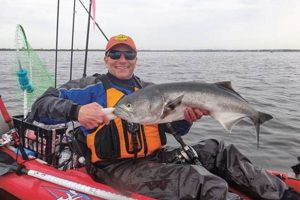
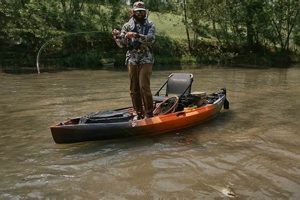
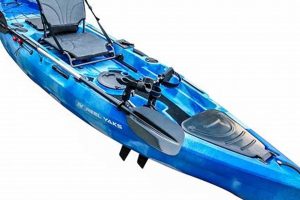
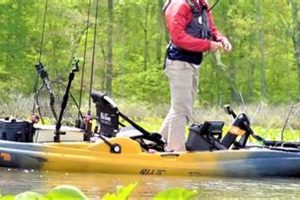
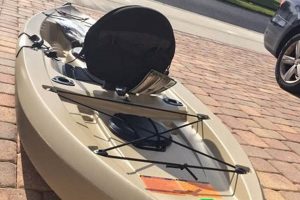
Compact, shorter-than-average kayaks designed specifically for angling offer a unique blend of portability and fishability. These vessels typically feature specialized design elements like rod holders, storage compartments for tackle, and often a stable hull design to facilitate casting and reeling. A typical example might be a sit-on-top model measuring between 8 and 10 feet in length.
Smaller-scale fishing vessels offer distinct advantages, particularly for anglers seeking access to smaller bodies of water like ponds, creeks, and protected bays. Their reduced size and weight contribute to easier transportation and storage, eliminating the need for large vehicles or specialized trailers. Historically, kayak fishing evolved from traditional paddling practices, with anglers recognizing the stealth and maneuverability afforded by these small craft. This allowed for closer approaches to fish and exploration of shallow, inaccessible areas, ultimately contributing to the development of specialized fishing kayaks.
This article will delve further into the advantages and disadvantages of these compact fishing platforms, exploring key factors such as stability, maneuverability, storage capacity, and transport considerations. Furthermore, various types and features will be examined to provide a comprehensive guide for potential purchasers.
Tips for Utilizing Compact Fishing Kayaks
Proper utilization of compact fishing kayaks enhances safety and maximizes fishing success. The following tips offer guidance for effective use of these specialized vessels.
Tip 1: Prioritize Stability: Select a wider, flatter hull design for enhanced stability, particularly important when casting or landing fish. Consider adding outriggers for increased stability in challenging conditions.
Tip 2: Maximize Storage Efficiency: Utilize waterproof bags and tackle boxes to organize gear within limited storage space. Prioritize essential equipment and minimize unnecessary items.
Tip 3: Practice Paddling Technique: Develop efficient paddling strokes to conserve energy and navigate effectively. Short kayaks can be more susceptible to wind and current, necessitating precise paddle control.
Tip 4: Choose Appropriate Waters: Smaller vessels are best suited for calm, protected waters. Avoid open ocean or large bodies of water prone to strong winds or currents.
Tip 5: Understand Weight Capacity: Adhere to the manufacturer’s specified weight capacity to ensure safe and stable operation. Factor in the combined weight of the angler, gear, and potential catch.
Tip 6: Invest in Safety Equipment: Carry essential safety gear including a personal flotation device (PFD), whistle, and signaling device. A leash connecting the paddle to the kayak prevents loss in case of capsize.
Tip 7: Plan Fishing Locations Strategically: Research potential fishing spots accessible by smaller vessels. Shallow-water areas and protected coves often offer excellent fishing opportunities.
Adhering to these guidelines enhances angler safety and allows for a more productive and enjoyable fishing experience. Proper planning and preparation contribute significantly to successful outings on compact fishing platforms.
By understanding the nuances of these specialized watercraft, anglers can make informed decisions and fully appreciate the advantages offered by compact fishing kayaks.
1. Portability

Portability stands as a defining characteristic of mini fishing kayaks, significantly influencing their appeal and practicality. Ease of transport and storage directly impacts accessibility and usability, making it a critical factor for anglers.
- Transportation Methods
Transporting a mini fishing kayak often requires minimal effort. Roof racks on standard vehicles suffice for many models, eliminating the need for trailers. Some designs even allow transport in the back of a truck or SUV. This ease of transport expands access to diverse fishing locations, including those inaccessible with larger vessels.
- Storage Solutions
Compact dimensions simplify storage. Garages, sheds, or even apartments can comfortably accommodate these kayaks. Some models disassemble for even more compact storage, further enhancing convenience and minimizing storage space requirements.
- Weight Considerations
Reduced weight, often between 30 and 50 pounds, facilitates handling and maneuvering. Carrying the kayak short distances, launching from remote locations, or navigating obstacles becomes considerably easier. This lightweight nature significantly reduces the physical demands associated with kayak fishing.
- Navigating Challenging Terrain
Portability extends beyond transport and storage to encompass navigating challenging terrain. Carrying a lightweight kayak over short portages, through wooded areas, or down steep banks to access secluded fishing spots becomes a feasible option. This advantage opens up fishing opportunities unavailable to anglers limited by heavier, less portable vessels.
The portability inherent in mini fishing kayaks significantly broadens angling opportunities. From simplified transport and storage to accessing remote fishing locations, portability contributes substantially to the versatility and appeal of these compact vessels. This key feature allows anglers greater flexibility and expands the range of fishable waters, ultimately enhancing the overall fishing experience.
2. Stability

Stability represents a critical performance attribute in mini fishing kayaks, directly influencing angler safety and fishing effectiveness. A stable platform provides a secure foundation for casting, reeling, and landing fish, while also mitigating the risk of capsizing, particularly important in dynamic fishing environments. Hull design plays a pivotal role in determining stability. Wider, flatter hulls generally offer greater primary stability (resistance to initial tipping), while longer, narrower hulls might provide better secondary stability (resistance to capsize once tipped beyond the initial point). The trade-off between these two types of stability often dictates the suitability of a kayak for specific fishing conditions.
Consider a scenario where an angler hooks a large fish in a mini fishing kayak. A stable hull allows the angler to maintain balance and control during the fight, minimizing the risk of capsize. Conversely, a less stable kayak might become precarious, increasing the likelihood of losing the fish or even ending up in the water. Practical examples such as this illustrate the direct correlation between stability and successful angling. Adding accessories like outriggers or stabilizers can enhance stability, particularly beneficial for anglers fishing in rougher waters or those who prioritize a highly stable platform. Understanding the factors contributing to stability empowers informed decision-making when selecting a mini fishing kayak, enabling anglers to choose a vessel appropriate for their individual needs and fishing style.
Selecting a mini fishing kayak with appropriate stability characteristics is essential for both safety and fishing success. Evaluating hull design, considering potential fishing conditions, and exploring stability-enhancing accessories allows anglers to optimize their on-the-water experience. Prioritizing stability ultimately ensures a secure and productive fishing platform, fostering confidence and enhancing angling enjoyment.
3. Storage Capacity

Storage capacity presents a significant consideration in mini fishing kayaks due to their inherently compact design. Effective gear management and organization become crucial for maximizing fishing efficiency and overall enjoyment. Understanding the limitations and leveraging available storage solutions directly impacts the practicality of these smaller vessels.
- Built-in Storage Compartments
Many mini fishing kayaks feature integrated storage compartments, including hatches, tank wells, and recessed areas. These dedicated spaces offer protected storage for essential gear such as tackle boxes, dry bags containing clothing or electronics, and smaller fishing accessories. A well-designed hatch, for example, allows quick access to frequently used items while keeping them secure and dry. Analyzing the size, location, and accessibility of these compartments is vital during kayak selection.
- Bungee Cord Systems
Bungee cord systems provide versatile external storage options for items requiring quick access or those that might not fit within internal compartments. Securing a spare paddle, a landing net, or even a small cooler beneath strategically placed bungee cords maximizes deck space and keeps essential gear readily available. Consider the placement and capacity of bungee systems when assessing a mini fishing kayaks storage capabilities.
- Gear Organization Strategies
Effective gear organization optimizes limited storage space. Utilizing waterproof bags, smaller tackle boxes, and specialized organizers helps maximize storage efficiency. Prioritizing essential items and minimizing unnecessary gear also contributes significantly to effective storage management. Careful planning and strategic packing become especially important in mini fishing kayaks.
- Weight Distribution and Balance
Proper weight distribution maintains kayak stability and maneuverability. Distributing gear evenly throughout the kayak, rather than concentrating it in one area, prevents imbalances that could compromise performance. Consider the impact of gear placement on the kayak’s center of gravity, particularly when loading heavier items. Careful attention to weight distribution contributes to a safer and more efficient fishing experience.
The storage capacity of a mini fishing kayak directly influences its practicality and overall effectiveness as a fishing platform. Understanding the available storage options, employing effective organization strategies, and maintaining balanced weight distribution contribute significantly to a successful and enjoyable fishing experience. Careful evaluation of these factors empowers informed purchasing decisions and maximizes on-the-water efficiency.
4. Maneuverability
Maneuverability represents a key advantage of mini fishing kayaks, enabling access to shallow, confined waters often inaccessible to larger vessels. This agility translates to enhanced fishing opportunities, allowing anglers to navigate complex waterways and position themselves strategically for optimal casting. Understanding the factors contributing to maneuverability informs effective kayak selection and on-the-water performance.
- Hull Design and Length
Shorter hulls generally contribute to increased maneuverability, allowing for tighter turns and quicker directional changes. A shorter kayak responds more rapidly to paddle strokes, facilitating navigation through tight spaces such as narrow creeks, weed beds, or shallow coves. This agility provides a distinct advantage when pursuing fish in confined environments. For example, a shorter kayak can easily navigate a winding creek choked with fallen trees, whereas a longer kayak might struggle. This advantage allows anglers to explore areas teeming with fish but inaccessible to less maneuverable vessels.
- Waterline Length and Tracking
While shorter waterline length enhances turning capability, it can sometimes compromise tracking (the ability to maintain a straight course). Mini fishing kayaks often prioritize maneuverability over straight-line speed, recognizing that agility is paramount in many fishing scenarios. Anglers seeking enhanced tracking might consider designs incorporating features like a retractable skeg or rudder, which improves directional stability without significantly compromising turning performance. For instance, a kayak with a retractable skeg can paddle efficiently in open water when deployed and then retract for enhanced maneuverability in tighter spaces.
- Paddle Type and Technique
Paddle choice and paddling technique significantly influence maneuverability. A shorter, wider paddle blade offers greater leverage for quick turns, while proper paddling technique, including sweep strokes and draws, enhances directional control. Efficient paddling maximizes maneuverability, allowing anglers to position the kayak precisely for optimal casting angles and presentations. Practicing different paddle strokes in various conditions improves control and responsiveness.
- Impact of Wind and Current
Smaller kayaks can be more susceptible to wind and current, requiring precise paddle control to maintain desired positioning. Understanding the influence of these external forces is crucial for effective maneuvering. In windy conditions, for example, angling the kayak slightly into the wind minimizes drift and maintains better control. Anticipating and compensating for wind and current enhances maneuverability and ensures a more productive fishing experience.
The maneuverability of mini fishing kayaks opens up a world of fishing opportunities in otherwise inaccessible waters. By understanding the interplay of hull design, paddling technique, and environmental factors, anglers can maximize the agility of these specialized vessels, enhancing their fishing effectiveness and overall enjoyment on the water.
5. Fishing Features

Specialized fishing features distinguish mini fishing kayaks from recreational models, enhancing their functionality and effectiveness as angling platforms. These integrated features directly impact fishing success and overall on-the-water experience. Flush-mounted rod holders, for example, secure fishing rods while paddling or when not actively in use, freeing hands for other tasks and preventing rod loss. Similarly, integrated tackle storage compartments offer readily accessible organization for lures, hooks, and other essential fishing gear, eliminating the need for cumbersome external storage solutions. These features streamline the fishing process and contribute to a more efficient and enjoyable experience. Consider an angler navigating a narrow creek; readily accessible tackle within a dedicated compartment allows quick lure changes without disrupting paddling rhythm or compromising stability, a critical advantage in challenging environments.
Further enhancing functionality, some mini fishing kayaks incorporate specialized features such as anchor trolleys, allowing controlled drift fishing, and transducer mounts for fish finders, providing crucial underwater insights. These advanced features expand fishing capabilities and cater to specific angling techniques. An angler utilizing an anchor trolley system can precisely control drift speed and position, optimizing lure presentation in moving water, while a fish finder provides real-time information on water depth, structure, and fish location, enhancing the likelihood of a successful catch. These specialized features transform the mini fishing kayak into a versatile and effective fishing platform capable of supporting various angling styles and techniques.
The integration of fishing-specific features directly contributes to the effectiveness and overall utility of mini fishing kayaks. From basic rod holders and tackle storage to advanced features like anchor trolleys and transducer mounts, these design elements cater specifically to the needs of anglers. Understanding the functionality and benefits of these features empowers informed purchasing decisions, ensuring that the selected kayak aligns with individual fishing preferences and maximizes on-the-water success. Selecting a kayak equipped with appropriate features enhances fishing efficiency, improves catch rates, and contributes to a more productive and enjoyable angling experience.
6. Affordability
Affordability often plays a significant role in the appeal of mini fishing kayaks, expanding accessibility to a wider range of anglers. Cost considerations influence purchasing decisions, and understanding the factors affecting price allows for informed evaluation and selection. Examining the relationship between cost and features provides valuable insights for prospective buyers.
- Initial Purchase Price
Mini fishing kayaks generally occupy a lower price point compared to larger, feature-rich fishing kayaks. This lower initial investment makes them an attractive option for budget-conscious anglers or those new to the sport. For example, a basic mini fishing kayak might cost significantly less than a high-end, fully equipped larger model. This price difference can be substantial, making entry into kayak fishing more accessible.
- Reduced Accessory Costs
The compact size of mini fishing kayaks often translates to lower accessory costs. Smaller paddles, life vests, and storage solutions are typically less expensive than their full-sized counterparts. This cost savings further contributes to the overall affordability of owning and operating a mini fishing kayak. For instance, a smaller paddle designed for a mini kayak might cost considerably less than a longer, heavier paddle designed for a larger vessel.
- Transportation and Storage Savings
The inherent portability of mini fishing kayaks often eliminates the need for expensive trailers or specialized storage solutions. Transporting a mini kayak on a standard vehicle roof rack or storing it in a garage or shed reduces ongoing costs associated with ownership. This contrasts with larger kayaks, which might require trailers for transport and dedicated storage facilities, adding to the overall expense.
- Maintenance and Repairs
Simpler designs and smaller surface areas often result in lower maintenance and repair costs for mini fishing kayaks. Fewer moving parts and reduced material requirements generally translate to lower expenses for upkeep and repairs compared to more complex larger kayaks. This simplified maintenance contributes to long-term affordability. For instance, repairing minor damage to a smaller hull might be significantly less expensive than repairing similar damage to a larger hull.
The affordability of mini fishing kayaks contributes significantly to their popularity, opening up the sport to a broader audience. By understanding the various factors contributing to lower overall costs, prospective buyers can make informed decisions and find a mini fishing kayak that aligns with both their budget and fishing needs. This accessibility expands the kayaking community and allows more individuals to experience the joys of fishing from a kayak.
Frequently Asked Questions
This section addresses common inquiries regarding compact fishing kayaks, providing concise and informative responses to facilitate informed decision-making.
Question 1: What differentiates a mini fishing kayak from a standard fishing kayak?
Key distinctions include shorter length (typically under 12 feet), lighter weight, and enhanced portability. Design often prioritizes maneuverability in confined waters over open-water tracking. Storage capacity is generally reduced, necessitating strategic gear selection.
Question 2: Are compact fishing kayaks suitable for larger individuals?
Weight capacity varies significantly among models. Carefully review manufacturer specifications to ensure compatibility with individual weight and gear requirements. Exceeding weight limits compromises stability and performance.
Question 3: What are the primary advantages of using a smaller fishing kayak?
Principal advantages include enhanced portability, allowing easier transport and storage, and superior maneuverability in shallow or confined waters. These smaller vessels often provide access to fishing locations inaccessible to larger kayaks.
Question 4: Do compact fishing kayaks sacrifice stability for maneuverability?
Not necessarily. While hull design influences both stability and maneuverability, some compact kayaks achieve a balance of both. Wider, flatter hulls generally offer greater stability. Evaluating design features and manufacturer specifications provides insights into a kayak’s stability characteristics.
Question 5: What essential safety precautions should be taken when using a compact fishing kayak?
Always wear a personal flotation device (PFD). Carry a whistle, signaling device, and paddle leash. Inform someone of planned fishing locations and estimated return time. Check weather forecasts prior to departure and avoid venturing out in hazardous conditions. Adherence to these precautions significantly enhances on-the-water safety.
Question 6: Are compact fishing kayaks suitable for ocean use?
While some compact kayaks can handle calm, protected bays or estuaries, most are not designed for open ocean conditions. Strong currents, waves, and unpredictable weather pose significant risks in smaller vessels. Carefully assess intended fishing locations and select a kayak appropriate for the environment.
Understanding the capabilities and limitations of compact fishing kayaks is crucial for a safe and enjoyable experience. Careful consideration of individual needs, fishing style, and intended fishing locations facilitates informed purchasing decisions.
This concludes the frequently asked questions section. The following section will explore advanced techniques for maximizing fishing success from a compact fishing kayak.
Mini Fishing Kayak
Compact fishing kayaks offer a unique blend of portability, maneuverability, and affordability, making them an attractive option for anglers seeking access to smaller bodies of water or prioritizing ease of transport and storage. This exploration has highlighted the key aspects of these specialized vessels, including design considerations, performance characteristics, and essential features impacting fishing effectiveness. Understanding hull design’s influence on stability and maneuverability, the importance of weight capacity and storage solutions, and the benefits of integrated fishing features empowers informed purchasing decisions. Furthermore, recognizing the inherent limitations of compact kayaks regarding open-water suitability and storage capacity ensures realistic expectations.
The increasing popularity of compact fishing kayaks reflects a growing appreciation for their specialized capabilities and the unique angling experiences they offer. As technology continues to advance and design innovations emerge, the future of compact fishing kayaks promises further enhancements in performance, features, and overall fishing utility. Careful consideration of individual needs, fishing style, and intended fishing environments remains paramount for maximizing the benefits and enjoyment derived from these versatile and increasingly popular vessels. Ultimately, selecting the appropriate compact fishing kayak unlocks new angling possibilities and fosters a deeper connection with the aquatic environment.