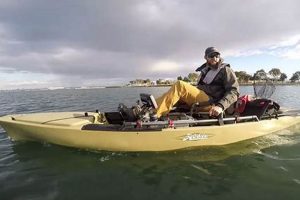
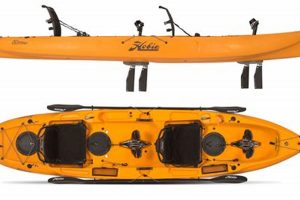
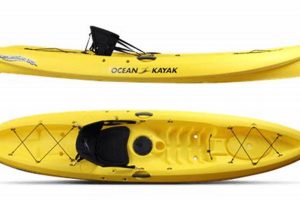
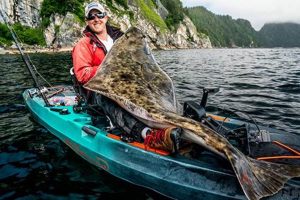
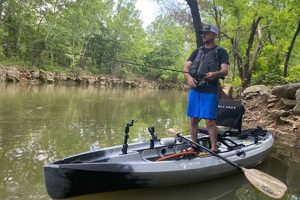
Angling from brightly colored, small watercraft offers a unique blend of recreation and sport. This approach allows close-to-water experiences, facilitating access to shallow or otherwise difficult-to-reach fishing grounds. This method can be particularly effective for targeting species such as bass, trout, and panfish in rivers, lakes, and calm coastal waters. The vibrant hull colors often associated with these vessels can add an element of visibility and enjoyment to the experience.
This style of fishing promotes maneuverability and a light environmental footprint. The compact nature of these watercraft reduces disturbance to aquatic ecosystems compared to larger motorized boats. Furthermore, the physical activity involved provides a healthy form of exercise. Historically, small boats have played a significant role in fishing practices worldwide, demonstrating a long-standing connection between humans and their aquatic resources. Modern iterations, crafted from durable yet lightweight materials, offer enhancements in portability and durability.
The subsequent sections will delve into specific techniques for maximizing angling success from these vessels, covering equipment selection, location scouting, and responsible angling practices. Additionally, discussions on safety considerations and the evolving landscape of recreational fishing will be addressed.
Tips for Kayak Fishing
Optimizing angling success from a kayak requires careful planning and execution. The following tips offer guidance for enhancing the experience and improving catch rates.
Tip 1: Stability is Paramount: Prioritize stability when selecting a kayak. Wider hulls provide greater stability, especially for beginners. Consider a sit-on-top design for easier re-entry after an accidental capsize.
Tip 2: Essential Gear Selection: Equip the kayak with essential gear, including a paddle leash, rod holders, and a waterproof storage compartment for tackle and personal items. A fish finder and anchor trolley system can be valuable additions.
Tip 3: Location Scouting: Research potential fishing spots beforehand. Look for areas with calm water, structure like submerged logs or vegetation, and known fish habitats. Online maps and local fishing reports can provide helpful insights.
Tip 4: Paddle Proficiency: Mastering basic paddling techniques is crucial for efficient navigation and precise positioning. Practice maneuvering in various wind and current conditions before venturing into prime fishing areas.
Tip 5: Safety First: Always wear a personal flotation device (PFD). Inform someone of your fishing plans, including location and estimated return time. Check weather forecasts before departing and be prepared for changing conditions.
Tip 6: Respectful Angling Practices: Adhere to catch-and-release guidelines when appropriate. Minimize disturbance to the environment by properly disposing of fishing line and other waste. Respect wildlife and other anglers.
Tip 7: Streamlined Tackle Management: Organize tackle efficiently to minimize clutter and maximize access. Use tackle boxes with compartments and labeling systems. Keep frequently used items within easy reach.
By implementing these strategies, anglers can enhance their kayak fishing experience, improve their chances of success, and promote responsible enjoyment of aquatic resources.
The concluding section will offer insights into further resources for kayak fishing enthusiasts, including online communities, educational materials, and conservation initiatives.
1. Visual Appeal

The visual appeal of a kayak plays a significant role in the overall fishing experience, influencing not only personal enjoyment but also practical aspects such as visibility and even fish attraction. In the context of brightly colored kayaks, this element takes on particular relevance.
- Enhanced Visibility and Safety
Bright colors, particularly those found in the typical “rainbow” spectrum, offer increased visibility on the water. This heightened visibility can be a crucial safety factor, making the kayak more easily spotted by other boaters, especially in challenging conditions such as fog or low light. This increased visibility contributes to safer navigation and reduces the risk of collisions.
- Psychological Impact and Enjoyment
The aesthetics of a brightly colored kayak can contribute positively to the overall fishing experience. Vibrant colors can evoke feelings of excitement and enjoyment, enhancing the recreational aspect of the activity. This psychological impact can improve focus and contribute to a more positive and engaging time on the water.
- Potential Influence on Fish Behavior
While research on this topic is ongoing, some anglers believe that certain colors may attract or repel specific fish species. The effectiveness of color in attracting fish is likely dependent on water clarity, depth, and the species being targeted. Further research is needed to fully understand the impact of kayak color on fish behavior.
- Personalization and Expression
Choosing a brightly colored kayak allows for personal expression and customization. The wide range of available colors allows anglers to select a kayak that reflects their individual style and preferences. This element of personalization can further enhance the overall enjoyment and sense of ownership associated with kayak fishing.
The visual appeal of a rainbow kayak, therefore, extends beyond mere aesthetics. It encompasses practical safety considerations, potential impacts on fish behavior, and the psychological benefits of personalization and enjoyment. These factors combine to create a more engaging and potentially successful fishing experience. Further investigation into color preferences among different fish species and the impact of light conditions on color perception underwater could yield valuable insights for anglers.
2. Shallow Water Access

Shallow water zones often harbor a rich diversity of fish species, making these areas prime targets for anglers. However, accessing these shallows can be challenging with traditional motorized boats due to draft restrictions and potential environmental disturbance. Kayaks, particularly those designed for fishing, offer a distinct advantage in navigating these shallow water environments. Their compact size and minimal draft allow access to areas inaccessible to larger vessels, opening up a wider range of fishing opportunities. This advantage is particularly relevant in pursuing species such as bass, panfish, and trout, which frequently inhabit shallow, vegetated areas.
The ability to navigate shallow water expands the range of fishing techniques available to kayak anglers. Techniques like sight fishing, where the angler visually locates and targets individual fish, become more feasible in clear, shallow water. Furthermore, kayaks permit quieter approaches, minimizing disturbance and increasing the likelihood of a successful catch. For example, in estuarine environments, kayaks allow anglers to silently approach shallow flats frequented by redfish and speckled trout, maximizing catch potential while minimizing environmental impact. Similarly, navigating shallow, weedy areas in lakes or ponds provides opportunities to target bass and other species that seek refuge in such habitats.
Effective shallow water fishing from a kayak requires understanding the specific challenges and opportunities these environments present. Maneuvering in shallow water often necessitates specialized paddling techniques and awareness of potential obstacles such as submerged logs or rocks. Furthermore, utilizing appropriate tackle and fishing strategies optimized for shallow water conditions significantly enhances success. The benefits of shallow water access provided by kayaks underscore the versatility and effectiveness of this fishing platform, enabling anglers to explore a wider range of aquatic environments and pursue a greater diversity of fish species.
3. Targeted Species
The effectiveness of angling from a kayak is often linked to the specific species targeted. Kayaks offer distinct advantages for pursuing certain fish due to their maneuverability, shallow water access, and stealth. Understanding the habitat preferences and behavioral patterns of targeted species enhances angling success from these versatile vessels.
- Bass
Bass, both largemouth and smallmouth, are popular targets for kayak anglers. Kayaks allow access to shallow, vegetated areas where bass often ambush prey. Techniques like flipping and pitching, effectively executed from a kayak, prove highly effective for targeting bass in these environments. The quiet approach afforded by a kayak minimizes disturbance, increasing the likelihood of enticing strikes from wary bass.
- Panfish
Species like crappie, bluegill, and perch, collectively known as panfish, are readily accessible from kayaks. These fish frequently inhabit shallow, near-shore areas easily reached by kayak. Light tackle and simple fishing techniques, well-suited for kayak fishing, often yield productive results when targeting panfish. Their abundance and willingness to bite make them ideal targets for novice kayak anglers.
- Trout
Kayaks offer a unique approach to trout fishing in rivers, lakes, and ponds. The ability to navigate shallow, clear water allows anglers to sight fish for trout, presenting flies or lures with precision. Kayaks also facilitate access to remote sections of rivers and streams, where larger boats cannot navigate, expanding opportunities for targeting trout in less pressured environments.
- Inshore Saltwater Species
In coastal areas, kayaks provide access to shallow flats, estuaries, and backwater channels, prime habitats for species such as redfish, speckled trout, and flounder. The stealthy nature of a kayak allows anglers to approach these fish without spooking them, increasing the chances of a successful hookup. Kayak fishing in saltwater environments requires specialized tackle and consideration of tidal currents and weather conditions.
The targeted species influences equipment choices, fishing techniques, and location selection for kayak anglers. Matching the kayak’s capabilities with the specific target species optimizes the angling experience and increases the potential for success. Understanding the ecological role of these species within their respective ecosystems further enhances the angler’s appreciation of the sport and promotes responsible fishing practices.
4. Maneuverability

Maneuverability represents a critical advantage in kayak fishing, particularly when utilizing brightly colored vessels in diverse aquatic environments. The ability to precisely position and control the kayak enhances angling effectiveness and allows access to areas often unreachable by larger craft. This agility is particularly relevant in navigating complex shorelines, dense vegetation, and swift currents often encountered while pursuing various fish species from a kayak.
- Navigating Complex Structures
Kayaks excel in navigating intricate environments like fallen trees, submerged logs, and rocky outcrops. Their compact size and responsive handling allow anglers to weave through tight spaces, accessing prime fishing locations often inaccessible to larger boats. This maneuverability is crucial for targeting species that seek refuge in such complex structures.
- Precision Boat Control
Maintaining precise boat control is essential for effective angling. Kayaks offer superior control compared to larger, less agile vessels. This precision allows anglers to hold position in currents, approach fish stealthily, and execute specialized casting techniques with accuracy, maximizing the chances of a successful presentation and hookset.
- Current Management
Kayaks, due to their smaller profile and maneuverability, handle currents effectively. Anglers can utilize eddy currents and backflows to their advantage, maintaining position and presenting lures or bait naturally within the current. This capability is particularly important in river fishing, where current management is essential for successful angling.
- Shallow Water Prowess
Maneuverability is directly linked to shallow water access. The minimal draft and responsive handling of kayaks allow navigation in extremely shallow water, expanding fishing opportunities in areas inaccessible to larger craft. This shallow water capability opens up a wide range of habitats, enabling anglers to target species that frequent these shallow zones.
The inherent maneuverability of kayaks significantly enhances the effectiveness and enjoyment of fishing from these versatile vessels. This attribute, combined with the visibility offered by bright hull colors, enables anglers to explore diverse aquatic environments, target specific species in their preferred habitats, and ultimately increase their chances of angling success while minimizing environmental disturbance.
5. Lightweight Portability

Lightweight portability is a defining characteristic of kayaks and a significant factor contributing to their popularity for fishing. This attribute directly influences accessibility, transportability, and overall ease of use, making kayaks a practical choice for anglers seeking diverse fishing opportunities. The reduced weight simplifies handling and transport, expanding the range of accessible fishing locations, especially those requiring portages or challenging terrain. This ease of transport is particularly relevant for anglers without access to boat ramps or large vehicles typically required for transporting larger vessels.
- Simplified Transport
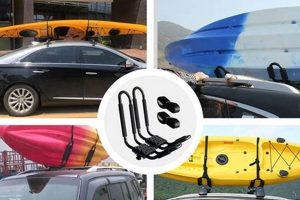
The lightweight nature of many kayaks, especially those constructed from materials like rotomolded polyethylene or composites, allows for easy transport on roof racks, in truck beds, or even by hand for shorter distances. This ease of transport expands fishing location options to include remote ponds, small streams, and areas inaccessible by larger boats. This portability opens a world of angling possibilities, enabling exploration of diverse aquatic environments.
- Easy Launching and Retrieval
Lightweight kayaks simplify the launching and retrieval process. Their reduced weight makes them easier to handle at the water’s edge, reducing strain and simplifying solo launching. This ease of handling is particularly beneficial for anglers fishing alone or in areas with limited launch infrastructure. The convenience of quick and effortless launching and retrieval maximizes time spent fishing.
- Accessibility to Remote Locations
Lightweight portability grants access to remote fishing spots often unreachable by larger boats. Kayaks can be easily portaged over land, allowing anglers to bypass obstacles and access secluded waters. This accessibility opens up opportunities for fishing in pristine environments with less angling pressure, potentially yielding more rewarding catches and a closer connection with nature.
- Storage Convenience
The lightweight design simplifies storage when not in use. Kayaks can be easily stored in garages, sheds, or even apartments, requiring minimal space compared to larger boats. This ease of storage makes kayak ownership more practical for individuals with limited storage space, contributing to the accessibility and popularity of kayak fishing.
The lightweight portability of kayaks enhances their versatility as a fishing platform. This attribute expands access to a wider range of fishing locations, simplifies transport and storage, and ultimately contributes to the growing popularity of kayak angling. The combination of lightweight portability with the visibility afforded by bright hull colors characteristic of “rainbow kayaks” creates a unique and effective platform for exploring diverse aquatic environments and pursuing a variety of fish species.
Frequently Asked Questions
This section addresses common inquiries regarding angling from brightly colored kayaks, providing concise and informative responses to clarify potential uncertainties and enhance understanding of this specialized fishing approach.
Question 1: What are the primary advantages of fishing from a brightly colored kayak?
Enhanced visibility on the water improves safety, while the lighter weight facilitates easier transport and maneuverability compared to larger vessels. Bright colors can also enhance personal enjoyment and potentially influence fish behavior, although further research is needed on the latter.
Question 2: Are brightly colored kayaks suitable for all fishing environments?
While suitable for many environments, brightly colored kayaks excel in calm waters such as lakes, ponds, and slow-moving rivers. Ocean kayaking requires specialized kayaks and consideration of sea conditions. The angler’s skill level should also match the chosen environment.
Question 3: What safety precautions should one take when kayak fishing?
Always wear a personal flotation device (PFD). Inform someone of fishing plans, including location and estimated return time. Check weather forecasts prior to departure. Carry essential safety equipment such as a whistle, signaling mirror, and first-aid kit.
Question 4: Does the color of the kayak impact fishing success?
While anecdotal evidence suggests certain colors may attract or repel specific fish species, scientific consensus remains inconclusive. Water clarity, depth, and targeted species likely influence color effectiveness. Visibility and angler preference remain key considerations.
Question 5: What essential gear is recommended for kayak fishing?
Essential gear includes a paddle, PFD, rod holders, tackle box, and appropriate fishing rods and reels. Additional accessories such as a fish finder, anchor trolley system, and dry storage compartments enhance the experience. Equipment choice depends on targeted species and fishing style.
Question 6: How does one choose the right brightly colored kayak for fishing?
Consider factors such as stability, hull design (sit-on-top versus sit-in), storage capacity, and intended use. Research various kayak models and manufacturers, comparing features and specifications to match individual needs and preferences. Prioritize stability, especially for beginners.
Careful consideration of these frequently asked questions contributes to a safer, more informed, and ultimately more rewarding kayak fishing experience. Prioritizing safety, selecting appropriate gear, and understanding the nuances of this specialized fishing style maximizes enjoyment and angling success.
The concluding section will offer a summary of key takeaways and recommendations for further exploration of kayak fishing resources.
Conclusion
Angling from brightly colored kayaks offers a unique blend of recreation, sport, and connection with aquatic environments. The versatility of these vessels, combined with their vibrant visibility, provides distinct advantages for navigating shallow waters, targeting specific fish species, and enjoying the tranquility of nature. Careful consideration of equipment, safety precautions, and responsible angling practices contributes to a rewarding and sustainable approach to this specialized fishing style. The exploration of specific techniques, targeted species considerations, and the emphasis on maneuverability and lightweight portability underscores the distinct advantages offered by this approach. Understanding these elements enhances angling effectiveness and fosters a deeper appreciation for the interplay between human recreation and the natural world.
The future of recreational fishing hinges on responsible engagement with aquatic ecosystems. Continued exploration of innovative and sustainable fishing practices, like those facilitated by brightly colored kayaks, will play a crucial role in preserving these valuable resources for future generations. Anglers bear a responsibility to minimize their environmental impact, promote conservation efforts, and contribute to the long-term health and vitality of aquatic environments. Embracing sustainable practices ensures the continued enjoyment of this rewarding pastime for years to come. Further research into the impacts of human interaction on aquatic ecosystems will continue to inform best practices and promote responsible stewardship of these vital natural resources.