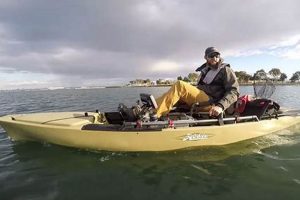
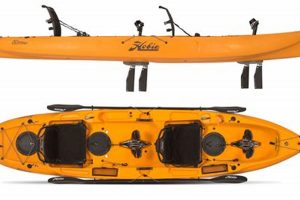
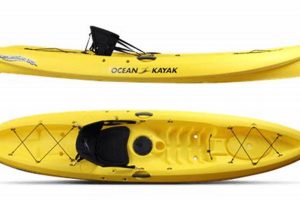
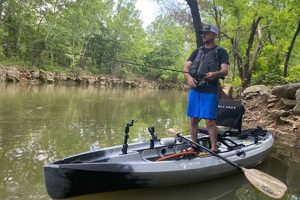
Anglers seeking specialized watercraft for the 2024 season will find a range of options designed to enhance their fishing experience. These vessels typically incorporate features like rod holders, tackle storage, and comfortable seating tailored for extended periods on the water. An example would be a sit-on-top model equipped with a built-in fish finder and ample storage for gear.
Purpose-built watercraft offer several advantages over general-purpose boats. Stability, maneuverability in shallow waters, and hands-free fishing options contribute to a more efficient and enjoyable angling experience. The evolution of these specialized vessels reflects ongoing advancements in materials and design, leading to lighter, more durable, and feature-rich options for anglers. This ongoing development is driven by consumer demand and technological innovations within the recreational fishing industry.
This article will further explore key aspects of specialized angling watercraft for the upcoming season, delving into specific features, popular models, and emerging trends. Topics covered will include an analysis of hull designs, propulsion systems, and technological integrations impacting the modern fishing experience.
Tips for Selecting a Fishing Kayak in 2024
Choosing appropriate angling watercraft requires careful consideration of various factors. The following tips offer guidance for making informed decisions tailored to individual needs and preferences.
Tip 1: Consider Hull Design: Hull design significantly impacts stability and maneuverability. A wider, flatter hull provides greater stability, ideal for calm waters and stand-up fishing. A longer, narrower hull offers better tracking and speed, suited for traversing larger bodies of water.
Tip 2: Evaluate Propulsion Systems: Paddle propulsion offers excellent exercise and control in shallow water, while pedal-powered systems allow for hands-free fishing and increased speed. Motorized options provide the greatest range and speed but require additional maintenance and cost.
Tip 3: Assess Storage Capacity: Ample storage is crucial for carrying tackle, safety gear, and personal items. Consider the type and amount of gear typically carried to ensure sufficient space.
Tip 4: Prioritize Comfort and Ergonomics: A comfortable seat and adjustable features contribute to a more enjoyable experience, especially during long fishing trips. Consider adjustable footrests, backrests, and rod holders for optimal comfort.
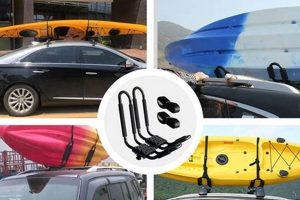
Tip 5: Factor in Weight and Portability: The weight and portability of the vessel determine ease of transport and launching. Lighter models are easier to handle but may compromise stability. Consider transport options and launch sites when evaluating weight and portability.
Tip 6: Research Materials and Durability: Different materials offer varying levels of durability and resistance to damage. Polyethylene is a common choice for its durability and affordability, while composite materials offer lighter weight and increased performance.
Tip 7: Set a Budget: Angling watercraft range in price depending on features and materials. Establish a budget early in the selection process to narrow down options.
Tip 8: Test Before Purchasing: If possible, test different models before making a purchase. This allows for firsthand evaluation of stability, comfort, and maneuverability.
By carefully considering these factors, anglers can select watercraft optimized for their specific fishing styles and needs, ultimately contributing to a more successful and rewarding experience on the water.
These tips provide a starting point for selecting the right fishing kayak in 2024. The following sections will delve deeper into specific features, popular models, and current market trends.
1. Stability

Stability is a paramount consideration when selecting a fishing kayak for the 2024 season. A stable platform is essential not only for angler safety but also for effective casting, retrieval, and landing of fish. Compromised stability can lead to frustrating spills and lost catches, especially in challenging conditions such as windy days or when battling larger fish. This section explores the key facets contributing to stability in modern fishing kayaks.
- Hull Design:
Hull design plays a critical role in determining a kayak’s stability. Wider, flatter hulls provide a larger surface area in contact with the water, resulting in increased primary stability (initial resistance to tipping). Pontoon-style hulls offer exceptional stability, making them ideal for stand-up fishing. Conversely, narrower hulls, while offering greater speed and maneuverability, sacrifice some stability. Modern designs often incorporate features like chines (angled edges along the hull) to enhance secondary stability (the ability to resist capsizing when leaned).
- Center of Gravity:
A lower center of gravity contributes significantly to stability. Kayak design, seating position, and weight distribution all influence the center of gravity. Sitting lower in the kayak improves stability, as does distributing weight evenly. Adding weight low in the hull, such as tackle stored beneath the seat, can further enhance stability.
- Water Conditions:
Calm, flat water presents fewer stability challenges compared to choppy or windy conditions. Kayaks designed for rougher waters often feature enhanced stability features, but even the most stable kayak can be challenging to manage in extreme conditions. Anglers should always assess water conditions and choose a kayak appropriate for the anticipated environment.
- Angler Behavior:
Angler movements, such as casting, retrieving, and landing fish, can impact stability. Smooth, controlled movements are essential for maintaining balance. Standing up in a kayak significantly raises the center of gravity and requires a stable platform and careful weight shifting. Practicing basic maneuvers in calm water can improve an angler’s ability to maintain stability in various situations.
Ultimately, the desired level of stability depends on the individual angler’s needs and fishing style. Anglers who prioritize stability over speed and maneuverability should opt for wider, flatter hulls and consider features like outriggers or stabilizers. Those seeking a balance between stability and performance may find designs incorporating chines and a lower center of gravity more suitable. Careful consideration of these factors will lead to the selection of a 2024 fishing kayak that provides the optimal balance of stability, performance, and safety for a successful fishing experience.
2. Maneuverability

Maneuverability represents a critical performance attribute in fishing kayaks designed for the 2024 season. Efficient navigation through diverse water environments, including tight creeks, shallow flats, and open water, directly impacts angling success. Factors influencing maneuverability include hull design, length, and propulsion system. Shorter kayaks with rounded or shallow-V hulls generally offer greater maneuverability in confined spaces, enabling anglers to navigate complex waterways and access secluded fishing spots. Longer kayaks with deeper-V hulls excel in tracking and speed across open water but may be less agile in tight turns.
Consider a scenario where an angler targets fish in a mangrove-lined creek. A highly maneuverable kayak allows precise navigation through narrow passages and around submerged obstacles, maximizing access to prime fishing locations. Conversely, a less maneuverable kayak could hinder progress and limit fishing opportunities. The choice of propulsion system also affects maneuverability. Paddle propulsion offers excellent control and responsiveness, particularly in shallow water or tight quarters. Pedal-driven systems provide hands-free operation but may sacrifice some maneuverability compared to paddles, especially in confined areas. Motorized kayaks offer speed and range but require careful consideration of waterway regulations and environmental impact.
Understanding the relationship between maneuverability and specific fishing environments is crucial for informed kayak selection. Anglers frequently fishing in confined spaces will prioritize maneuverability, potentially sacrificing some tracking performance in open water. Those primarily fishing larger bodies of water may prioritize speed and tracking, accepting reduced agility in tight areas. Careful consideration of these trade-offs, combined with an assessment of target fishing environments, enables informed decisions aligned with individual angling needs and preferences. This understanding contributes significantly to a more effective and enjoyable fishing experience, ultimately maximizing angling success in the 2024 season.
3. Storage Capacity

Storage capacity significantly impacts the functionality and effectiveness of fishing kayaks designed for the 2024 season. Adequate storage facilitates organized transport of essential gear, including tackle boxes, rods, safety equipment, and personal items. Insufficient storage can lead to cluttered decks, hindering movement and potentially compromising safety. Conversely, well-designed storage solutions enhance angler efficiency and overall fishing experience. Dedicated compartments for specific gear types, such as tackle trays or rod holders, contribute to a streamlined and organized on-the-water experience.
Consider a scenario where an angler embarks on a multi-day fishing expedition. Ample storage accommodates provisions, camping gear, and multiple rods, enabling extended trips without compromising comfort or safety. Conversely, limited storage restricts trip duration and necessitates careful gear selection, potentially impacting angling versatility. Modern fishing kayak designs often incorporate innovative storage solutions, such as integrated hatches, recessed compartments, and bungee systems, maximizing available space and ensuring gear security. The location and accessibility of storage compartments also influence functionality. Easily accessible storage within reach of the seated angler allows for efficient gear retrieval and adjustments without disrupting fishing activities.
Evaluating storage capacity necessitates consideration of individual fishing styles and target species. Anglers targeting larger game fish may require more robust rod holders and storage for heavier tackle. Those pursuing smaller species in calmer waters may prioritize smaller, more lightweight storage solutions. Understanding these specific needs and matching them to available storage options enhances the overall fishing experience. Effective storage solutions contribute to a more organized, efficient, and ultimately successful angling experience in 2024. Prioritizing storage capacity during kayak selection ensures anglers possess the necessary space and organization to pursue their chosen fishing styles with confidence and efficiency.
4. Propulsion Systems
Propulsion systems represent a defining characteristic of fishing kayaks designed for the 2024 season, directly influencing speed, range, and overall fishing experience. The choice of propulsion significantly impacts an angler’s ability to cover water efficiently, access desired fishing locations, and adapt to varying conditions. Traditional paddle propulsion offers excellent control, affordability, and quiet operation, ideal for stealthy approaches in shallow waters or navigating confined spaces. However, paddling can be physically demanding, particularly during longer trips or against strong currents, potentially limiting fishing time and effectiveness. This physical exertion can also detract from casting accuracy and responsiveness when engaging fish.
Pedal-driven systems offer distinct advantages, particularly for hands-free fishing. Anglers can maintain position and maneuver while simultaneously casting and retrieving, increasing efficiency and responsiveness. Pedal drives typically provide greater speed and range compared to paddles, enabling access to more distant fishing grounds. However, pedal kayaks often come at a higher price point and can be slightly heavier than paddle kayaks. Furthermore, pedal drives may be less effective in extremely shallow water or areas with dense vegetation, limiting their versatility in certain environments. Motorized kayaks represent another propulsion option, offering the greatest speed and range. Electric motors provide quiet operation and eliminate physical exertion, enabling anglers to cover vast distances effortlessly. However, motorized kayaks require battery management and may be subject to specific waterway regulations.
Selecting an appropriate propulsion system necessitates careful consideration of individual fishing styles, target species, and prevailing water conditions. Anglers prioritizing stealth and maneuverability in shallow water might opt for paddle propulsion. Those seeking hands-free fishing and increased range may prefer pedal drives. Anglers prioritizing speed and covering large distances, particularly in open water, might opt for motorized kayaks. Understanding the advantages and limitations of each propulsion system, coupled with an assessment of personal fishing preferences and target environments, empowers informed decisions, contributing to a more effective and enjoyable fishing experience in 2024.
5. Technological Integration

Technological integration significantly enhances the capabilities and overall experience associated with fishing kayaks designed for the 2024 season. Advanced electronics seamlessly integrate with modern kayak designs, providing anglers with real-time data, enhanced navigation capabilities, and improved fish-finding accuracy. These advancements contribute to a more informed, efficient, and ultimately successful angling experience.
- Fish Finders and GPS:
Integrated fish finders utilize sonar technology to provide detailed underwater imagery, revealing bottom structure, fish location, and depth information. GPS systems pinpoint angler location and facilitate navigation to preferred fishing spots. Combined, these technologies enable anglers to locate fish precisely and navigate efficiently, particularly in unfamiliar waters. Modern units often feature chartplotting capabilities, allowing anglers to mark waypoints and track their movements over time. This data-driven approach enhances fishing effectiveness and strategic decision-making. For example, an angler targeting specific underwater structures can utilize a fish finder to identify promising locations, then use GPS to mark these spots for future visits.
- Motorized and Pedal-Assist Systems:
Technological advancements extend to propulsion systems. Electric motors offer enhanced speed and range, while pedal-assist systems provide supplemental power and hands-free operation. Integrated controls and displays provide real-time data on speed, battery life, and other performance metrics. These advancements reduce physical exertion and enhance angler efficiency, enabling longer fishing trips and broader exploration. For example, an angler using a motorized kayak can quickly reach distant fishing grounds, conserving energy for actual fishing activity. Integrated GPS with autopilot further automates navigation, maximizing efficiency and convenience.
- Connectivity and Communication:
Modern fishing kayaks often integrate communication and connectivity features. Built-in USB ports and power outlets allow for charging electronic devices, while Bluetooth connectivity enables seamless integration with smartphones and other devices. This connectivity allows anglers to access real-time weather information, communicate with others on the water, and even stream live video of their fishing experience. These features enhance safety, convenience, and social engagement while on the water. For example, an angler can receive weather alerts directly to their kayak, ensuring safety and preparedness for changing conditions.
- Lighting and Safety Systems:
Integrated lighting systems improve visibility in low-light conditions, enhancing safety during early morning or evening fishing trips. Navigation lights aid in compliance with boating regulations and increase visibility to other vessels. Some models incorporate lighting systems specifically designed to attract fish or enhance nighttime fishing activities. These features contribute to a safer and more versatile fishing experience, expanding angling opportunities beyond daylight hours. For example, integrated LED lights mounted beneath the hull can attract baitfish and increase visibility of fishing lines in low-light scenarios.
These technological integrations represent a significant evolution in fishing kayak design. By seamlessly incorporating advanced electronics and enhancing core functionalities, these innovations empower anglers with unprecedented levels of control, efficiency, and situational awareness. These advancements contribute not only to increased fishing success but also to a safer, more informed, and ultimately more enriching on-the-water experience in the 2024 season and beyond.
Frequently Asked Questions about Fishing Kayaks (2024 Models)
This section addresses common inquiries regarding fishing kayaks anticipated in the 2024 model year, providing clarity on key features, selection considerations, and emerging trends.
Question 1: What key features distinguish fishing kayaks from recreational kayaks?
Fishing kayaks typically incorporate specialized features like rod holders, tackle storage compartments, anchor systems, and enhanced stability designs. These features cater specifically to the needs of anglers, optimizing functionality and on-the-water efficiency.
Question 2: How does hull design impact stability and performance?
Wider, flatter hulls generally offer greater stability, ideal for calm waters and stand-up fishing. Longer, narrower hulls prioritize speed and tracking, suitable for traversing larger bodies of water. Understanding these design trade-offs is crucial for selecting a kayak aligned with specific fishing environments and angler preferences.
Question 3: What propulsion options are available for fishing kayaks in 2024?
Propulsion options include traditional paddle power, pedal-driven systems for hands-free fishing, and electric motors for increased speed and range. Each system presents unique advantages and limitations regarding cost, maintenance, and suitability for specific fishing environments.
Question 4: What role does technological integration play in modern fishing kayaks?
Integrated fish finders, GPS systems, and other electronic devices enhance angling efficiency and situational awareness. These technologies provide real-time data on fish location, underwater terrain, and navigation, empowering anglers with informed decision-making capabilities.
Question 5: How does one determine the appropriate size and weight capacity for a fishing kayak?
Appropriate kayak size and weight capacity depend on angler size, anticipated gear load, and target fishing environment. Careful consideration of these factors ensures stability, comfort, and efficient performance on the water.
Question 6: What safety considerations are essential for fishing kayak use?
Essential safety precautions include wearing a personal flotation device (PFD), carrying appropriate safety equipment (whistle, signaling device, first-aid kit), informing someone of fishing plans, and checking weather conditions before embarking on any fishing trip. Adhering to these safety guidelines mitigates risks and promotes responsible on-the-water practices.
Careful consideration of these frequently asked questions provides a comprehensive understanding of key factors influencing fishing kayak selection and usage in 2024. Informed decision-making based on individual needs, fishing styles, and target environments ensures a safe, efficient, and rewarding angling experience.
The subsequent sections delve deeper into specific models, emerging trends, and expert recommendations for the upcoming fishing season.
Fishing Kayak 2024
This exploration of fishing kayaks for the 2024 season has highlighted key aspects impacting angler performance and overall experience. Hull design, propulsion systems, storage capacity, and technological integrations represent crucial considerations influencing kayak selection. Careful evaluation of these features, coupled with an understanding of individual fishing styles and target environments, empowers informed purchasing decisions. The information presented provides a comprehensive overview of factors contributing to a safe, efficient, and rewarding fishing experience.
The ongoing evolution of fishing kayak design reflects continuous innovation and adaptation to angler needs. As technology advances and fishing techniques evolve, further refinement and specialization within the fishing kayak market are anticipated. An informed approach to kayak selection, grounded in a thorough understanding of key features and personal requirements, ensures anglers are well-equipped to maximize their on-the-water success in 2024 and beyond. This proactive approach to gear selection positions anglers to fully embrace the evolving landscape of fishing kayak technology and maximize enjoyment on the water.