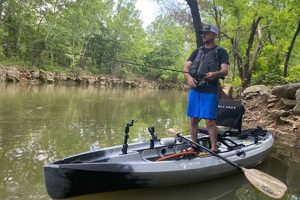
This activity involves angling from a small, human-powered watercraft during nighttime hours. It typically involves specialized equipment and techniques adapted to low-light conditions, such as navigation lights, headlamps, and lures designed to attract fish in darkness. Anglers often target species known for nocturnal feeding patterns.
The pursuit offers a unique angling experience, often resulting in increased catches of certain species due to their heightened activity at night. The cooler temperatures and reduced boat traffic can also create a more serene and immersive experience. This practice has evolved alongside advancements in kayak design and fishing technology, making it increasingly accessible and popular.
The following sections will explore essential equipment, safety precautions, effective techniques, and popular target species for this specialized form of angling.
Tips for Nocturnal Kayak Angling
Preparation and awareness are crucial for a safe and successful experience on the water after dark. The following tips offer guidance for maximizing effectiveness and ensuring angler well-being.
Tip 1: Prioritize Safety Equipment: Navigation lights, a personal flotation device, and a whistle are essential. A headlamp with red and white light options helps preserve night vision while maintaining visibility. A fully charged communication device allows for emergency contact if needed.
Tip 2: Plan and Share Trip Details: Always inform someone of the intended fishing location, planned return time, and emergency contacts. This ensures a timely response should unforeseen circumstances arise.
Tip 3: Master Kayak Control in Daylight: Thoroughly practice maneuvering and controlling the kayak in daylight before attempting nighttime excursions. Familiarity with the vessel’s handling characteristics is critical in low-light conditions.
Tip 4: Understand Local Regulations: Research and adhere to all local boating and fishing regulations specific to nighttime activities. These may include lighting requirements and restricted areas.
Tip 5: Utilize Low-Light Navigation Techniques: Employ GPS devices and charts designed for nighttime use. Familiarize oneself with local landmarks and navigation markers to maintain orientation in darkness.
Tip 6: Choose Appropriate Fishing Gear: Select lures and bait designed for attracting fish in low-light environments. Consider using glow-in-the-dark or reflective fishing line for enhanced visibility.
Tip 7: Respect Wildlife and the Environment: Minimize noise and light pollution to avoid disturbing nocturnal wildlife. Properly dispose of all fishing line and tackle to preserve the aquatic ecosystem.
Adhering to these guidelines will enhance safety and increase the likelihood of a productive and enjoyable nocturnal fishing experience. Careful planning and execution contribute significantly to success on the water after dark.
By prioritizing safety and employing effective techniques, anglers can maximize their chances of success and create a memorable experience.
1. Safety
Safety is paramount in kayak night fishing, presenting unique challenges compared to daytime excursions. Reduced visibility significantly amplifies risks, demanding heightened awareness and specific precautions. The following facets are crucial for mitigating potential hazards and ensuring a secure experience.
- Visibility
Darkness drastically reduces visibility, making navigation and hazard identification difficult. Reflective gear and strategically positioned lighting on the kayak and angler are crucial. Without adequate illumination, obstacles like submerged debris, rocks, or other vessels become significantly more dangerous. Impaired visibility also hinders the ability to accurately gauge distances and react effectively to changing conditions.
- Navigation
Navigating in darkness requires specialized tools and techniques. GPS devices with nighttime settings and familiarity with local waterways are essential. Pre-planning routes and marking potential hazards on charts can prevent disorientation. The absence of visual landmarks readily apparent in daylight increases the risk of becoming lost or straying into dangerous areas.
- Emergency Preparedness
Rapid response to emergencies is crucial, yet more challenging at night. Carrying a fully charged communication device, a whistle, and signaling devices is vital. Informing someone onshore of trip plans, including intended location and return time, allows for prompt assistance if needed. The reduced visibility and potential for cooler temperatures at night underscore the importance of swift action in emergencies.
- Cold Water Risks
Nighttime air and water temperatures are often significantly lower than during the day. Cold water immersion can rapidly lead to hypothermia, especially in the absence of immediate rescue. Wearing appropriate insulating layers and a personal flotation device is crucial for mitigating these risks. The combined challenges of darkness and cold significantly elevate the dangers of water exposure.
These interconnected safety considerations are fundamental to responsible kayak night fishing. Neglecting these aspects can severely compromise angler well-being. Careful planning, appropriate equipment, and continuous vigilance are essential for a safe and enjoyable nocturnal experience.
2. Planning
Meticulous planning is paramount for successful and safe kayak night fishing. Unlike daytime excursions, nighttime trips introduce a layer of complexity that necessitates careful consideration of several factors. The absence of natural light significantly alters navigation, safety considerations, and environmental awareness. A well-structured plan mitigates potential risks and enhances the overall experience.
Several key elements comprise a comprehensive plan. A detailed assessment of weather conditions, including wind speed, direction, and precipitation, is crucial. Nighttime weather changes can create hazardous conditions on the water, impacting visibility and kayak stability. Choosing appropriate launch and landing sites with clear access and minimal obstacles is essential, especially in darkness. Informing a trusted contact about trip details, including intended location and estimated return time, provides an added safety measure should unforeseen circumstances arise. Pre-planning fishing locations based on species activity and known nocturnal feeding patterns increases the likelihood of success. Mapping out routes and identifying potential hazards on charts, accounting for nighttime navigation challenges, minimizes the risk of disorientation or collisions.
Failing to adequately plan can have significant consequences. Unexpected weather changes can lead to dangerous situations, especially in low-light conditions. Poorly chosen launch sites can create difficulties accessing the water safely in darkness. Lack of communication with onshore contacts can delay assistance in case of emergencies. Without pre-determined fishing locations, anglers may waste valuable time searching for productive areas. Inadequate route planning can lead to disorientation and increase the risk of encountering unseen obstacles. Thorough planning directly contributes to a safer, more productive, and ultimately more enjoyable kayak night fishing experience.

Navigation plays a critical role in kayak night fishing, presenting distinct challenges absent during daylight hours. Reduced visibility necessitates heightened reliance on alternative methods and technologies to maintain orientation and ensure safe passage. Effective nighttime navigation is essential not only for reaching desired fishing locations but also for returning safely. Understanding and implementing appropriate navigational strategies are crucial for a successful and safe experience.
- GPS and Chartplotting
GPS devices and chartplotters become indispensable tools in the absence of visual landmarks readily apparent in daylight. These electronic aids provide real-time location information, allowing anglers to track their position, follow pre-planned routes, and identify potential hazards. Modern chartplotters offer specialized nighttime display modes that enhance visibility and reduce glare, crucial for preserving night vision. Investing in quality GPS equipment specifically designed for marine environments is essential for accurate and reliable navigation in darkness.
- Compass and Traditional Navigation
While electronic navigation aids are valuable, understanding basic compass and traditional navigation techniques provides a crucial backup. Knowing how to orient a map and compass, account for magnetic declination, and estimate distances traveled can prove invaluable if electronic systems fail. These foundational skills provide an independent means of navigation and enhance overall situational awareness, crucial in low-light environments where disorientation can occur easily.
- Knowledge of Local Waterways
Intimate familiarity with the chosen fishing area is paramount for safe and effective navigation at night. Understanding the layout of the waterways, including channels, shorelines, and potential hazards like submerged rocks or shallow areas, is crucial. Pre-trip scouting during daylight hours can identify landmarks and create mental maps that aid navigation in darkness. Local knowledge complements electronic navigation tools and provides a deeper understanding of the environment.
- Navigation Lights and Markers
Recognizing and interpreting navigation lights and markers is crucial for avoiding collisions and maintaining safe passage at night. Understanding the meaning of different buoy shapes, colors, and light patterns helps identify channels, hazards, and restricted areas. Carrying a nautical chart or guide detailing local aids to navigation can assist in interpreting these signals. Properly illuminating one’s own kayak with navigation lights ensures visibility to other vessels, preventing potentially dangerous encounters.
These interconnected navigational aspects contribute significantly to the safety and success of kayak night fishing. Mastering these techniques enables anglers to confidently navigate unfamiliar waters in darkness, reach their intended fishing destinations, and return safely. Neglecting these elements can increase the risk of disorientation, collisions, and other hazards. Proficient navigation is fundamental to a rewarding and secure nocturnal angling experience.
4. Equipment

Specialized equipment plays a crucial role in kayak night fishing, enhancing both safety and effectiveness. Unlike daytime excursions, the absence of natural light necessitates gear specifically designed for low-light conditions. Proper equipment selection significantly impacts navigation, visibility, and the ability to target fish effectively in darkness. The following facets outline essential gear for a successful and safe nocturnal angling experience.
- Lighting
Adequate lighting is paramount for safe navigation and effective fishing in darkness. Navigation lights, required by law in many areas, ensure visibility to other vessels, preventing collisions. A headlamp with red and white light options provides essential illumination for rigging tackle, landing fish, and navigating in close proximity. Red light preserves night vision while white light offers greater clarity when needed. Choosing waterproof, durable lighting equipment designed for marine environments ensures reliable performance in challenging conditions.
- Safety Gear
Standard safety equipment assumes even greater importance during nighttime excursions. A personal flotation device (PFD) is essential in case of capsizing, providing buoyancy and increasing visibility in darkness. A whistle enables signaling for assistance in emergencies, while a waterproof communication device allows for direct contact with emergency services or onshore contacts. Carrying a first-aid kit equipped to handle common fishing-related injuries is also recommended. These safety essentials contribute significantly to mitigating potential risks associated with nighttime kayaking.
- Fishing Tackle
Specialized fishing tackle enhances angling success at night. Lures designed to reflect light or produce sound attract fish in low-light conditions. Glow-in-the-dark or reflective fishing line increases visibility, allowing anglers to monitor line movement and detect bites. Rod holders designed for kayak use keep gear organized and readily accessible in the confined space of a kayak. Selecting tackle appropriate for target species and nocturnal feeding patterns increases the likelihood of successful catches.
- Navigation and Electronics
Electronic devices aid navigation and enhance situational awareness in darkness. A GPS unit or chartplotter with nighttime display settings provides crucial location information and guidance. A fish finder equipped with sonar technology helps locate fish and identify underwater structures in low-light conditions. Carrying spare batteries or a portable power source ensures these essential electronics remain functional throughout the fishing trip. These technological aids contribute significantly to both safety and angling success during nighttime excursions.
Careful selection and proper utilization of this specialized equipment are crucial for a safe and productive kayak night fishing experience. These items enhance visibility, improve navigation, and increase the likelihood of angling success while mitigating potential risks associated with nighttime activities on the water. The combined use of appropriate gear contributes significantly to an enjoyable and rewarding nocturnal angling adventure.
5. Technique

Technique in kayak night fishing differs significantly from daytime practices, demanding adaptations to low-light conditions and altered fish behavior. Effective nocturnal angling requires adjustments in lure presentation, retrieval methods, and overall approach. These specialized techniques maximize angling success while ensuring safety and minimizing environmental impact.
- Lure Presentation
Nocturnal fish behavior often necessitates modifications in lure presentation. Slower retrieves and subtle movements can be more effective than aggressive daytime tactics. Utilizing lures with enhanced visibility or sound-producing capabilities can attract fish in darkness. Understanding how light and shadows affect lure presentation is crucial for maximizing effectiveness. For example, employing pauses and twitches in dimly lit areas can mimic the movement of injured prey, enticing strikes from predatory fish.
- Sensory Awareness
Heightened sensory awareness compensates for reduced visibility at night. Anglers must rely more on sound and tactile feedback to detect fish activity. Listening for subtle splashes or surface disturbances can indicate fish presence, while feeling for light taps or changes in line tension can signal bites. This increased reliance on non-visual cues distinguishes night fishing from daytime angling and demands a more attuned approach. Recognizing the distinct sounds of different species further enhances angling effectiveness.
- Stealth and Approach
Minimizing noise and disturbance is crucial for approaching fish at night. Paddling quietly and avoiding sudden movements prevents spooking fish, especially in shallow water or calm conditions. Using a drift sock to control kayak movement allows for a more natural presentation and reduces the likelihood of detection. Careful maneuvering and deliberate actions contribute significantly to angling success in darkness, where fish are often more sensitive to disturbances.
- Adaptability and Patience
Night fishing often requires greater adaptability and patience. Fish behavior can be unpredictable in darkness, and anglers must be prepared to adjust techniques based on prevailing conditions. Experimenting with different lure types, retrieves, and fishing locations increases the likelihood of finding active fish. Persistence and a willingness to adapt are key attributes for successful nocturnal angling, as conditions and fish activity can change rapidly throughout the night.
These specialized techniques are essential for successful kayak night fishing. Adapting to the unique challenges of darkness, from altered fish behavior to reduced visibility, allows anglers to maximize their chances of success while maintaining safety and minimizing environmental impact. Mastering these techniques unlocks the full potential of nocturnal angling, providing a rewarding and unique experience on the water.
6. Legality

Understanding the legal framework governing kayak night fishing is crucial for ensuring a responsible and lawful experience. Regulations vary significantly by jurisdiction and often differ from daytime rules. Ignoring these specific regulations can lead to fines, legal repercussions, and potential conflicts with law enforcement. Compliance ensures the sustainability of the activity and contributes to the overall safety of all waterway users.
- Licensing and Registration
Many jurisdictions require specific licenses for night fishing, distinct from standard daytime fishing permits. Additionally, kayak registration or displaying navigation lights may be mandatory. Regulations often stipulate specific lighting colors, visibility distances, and mounting locations. Failure to comply with licensing and registration requirements can result in penalties. Checking local regulations before embarking on a night fishing trip is crucial for avoiding legal issues.
- Permitted Areas and Times
Certain areas may be restricted for night fishing due to ecological sensitivity, safety concerns, or private property boundaries. Time restrictions, such as designated hours during which night fishing is permitted, may also apply. These regulations aim to minimize disturbance to wildlife, protect vulnerable habitats, and prevent conflicts with other waterway users. Consulting official resources or contacting local authorities provides clarity on permitted areas and times.
- Species Regulations and Limits
Specific regulations regarding catch limits, size restrictions, and permitted fishing methods often differ between day and night. Some species may be protected during nighttime hours due to spawning behaviors or vulnerability. Understanding these specific regulations ensures compliance and contributes to the sustainable management of fish populations. Referencing local fishing regulations or consulting with wildlife agencies provides accurate information on species-specific rules.
- Safety Equipment Requirements
Legal requirements for safety equipment during night fishing often exceed daytime mandates. Carrying specific signaling devices, such as whistles or flares, may be compulsory. Enhanced lighting requirements, exceeding basic navigation lights, may also apply. These regulations aim to increase visibility and enhance safety in low-light conditions. Verifying local safety equipment mandates ensures compliance and contributes to angler well-being.
Adhering to these legal frameworks is essential for responsible kayak night fishing. Ignorance of these regulations is no excuse for non-compliance. Checking local ordinances before venturing out ensures a lawful and ethical fishing experience. Responsible angling contributes to the preservation of aquatic ecosystems and ensures the continued enjoyment of this activity for future generations.
7. Etiquette

Etiquette in kayak night fishing centers on minimizing disturbance and maximizing respect for both the environment and fellow anglers. The nocturnal environment amplifies the impact of noise and light, necessitating a heightened awareness of one’s actions. Considerate behavior preserves the tranquility of the experience for all and contributes to the long-term health of the ecosystem. For instance, minimizing headlamp use near other anglers prevents disrupting their night vision and fishing experience. Excessive noise from splashing paddles or loud conversations can also disturb nearby wildlife and anglers. Respectful angling involves maintaining appropriate distances from other boats and avoiding encroaching on established fishing spots.
Practical applications of this understanding extend beyond simple courtesy. Respectful etiquette fosters a positive atmosphere amongst anglers, creating a sense of camaraderie and shared enjoyment. Minimizing light and noise pollution reduces stress on nocturnal wildlife, contributing to a healthier ecosystem. Leaving no trace, by packing out all trash and fishing line, demonstrates responsible stewardship of the environment. For example, properly disposing of used fishing line prevents entanglement hazards for birds and aquatic life. These actions reflect a commitment to preserving the natural environment and ensuring the sustainability of the sport. Furthermore, adhering to established norms of etiquette enhances safety by reducing potential conflicts and promoting harmonious interactions among anglers sharing limited space on the water.
In summary, etiquette in kayak night fishing transcends mere politeness; it represents a commitment to responsible angling practices. Respectful behavior demonstrates consideration for fellow anglers, minimizes environmental impact, and enhances the overall experience. This understanding fosters a positive angling community, preserves the natural environment, and ensures the long-term sustainability of this unique pursuit. Ultimately, proper etiquette contributes significantly to the enjoyment and preservation of kayak night fishing for all.
Frequently Asked Questions
This section addresses common inquiries regarding kayak night fishing, offering clarity on safety concerns, equipment choices, and effective techniques.
Question 1: Is kayak night fishing safe?
While inherently riskier than daytime angling, proper planning and preparation mitigate potential hazards. Essential safety measures include using appropriate lighting, wearing a personal flotation device, carrying communication devices, and informing someone of trip details. Adhering to established safety protocols significantly reduces risks.
Question 2: What essential equipment is needed?
Necessary equipment includes navigation lights, a headlamp with red and white light options, a personal flotation device, a whistle, a fully charged communication device, and appropriate fishing tackle designed for low-light conditions. Specialized gear enhances both safety and angling effectiveness.
Question 3: How does one navigate in darkness?
Effective navigation relies on GPS devices, chartplotters with nighttime settings, and familiarity with local waterways. Understanding basic compass and traditional navigation techniques provides a valuable backup should electronic systems fail. Pre-trip scouting and route planning are crucial for safe navigation.
Question 4: What techniques are effective for night fishing?
Effective techniques include using lures designed for low-light conditions, employing slower retrieves and subtle movements, relying on heightened sensory awareness, and minimizing noise and disturbance. Adaptability and patience are key attributes for successful nocturnal angling.
Question 5: Are there specific legal considerations?
Regulations regarding licensing, permitted areas, fishing times, and safety equipment requirements often differ from daytime rules and vary by jurisdiction. Checking local ordinances before embarking on any night fishing trip ensures compliance and avoids potential legal issues.
Question 6: What etiquette should be observed?
Proper etiquette includes minimizing light and noise pollution, respecting other anglers’ space and fishing locations, and adhering to leave-no-trace principles. Responsible behavior preserves the tranquility of the experience and contributes to the long-term health of the environment.
Careful consideration of these frequently asked questions enhances preparedness, promotes safety, and increases the likelihood of a successful and enjoyable kayak night fishing experience.
The following section offers a concluding perspective on the allure and rewards of nocturnal kayak angling.
Kayak Night Fishing
This exploration has delved into the multifaceted nature of kayak night fishing, encompassing safety, planning, navigation, equipment, technique, legality, and etiquette. Each aspect contributes significantly to a successful and responsible nocturnal angling experience. The challenges posed by reduced visibility and altered fish behavior necessitate specialized knowledge and preparation. Adherence to safety protocols and legal regulations ensures angler well-being and contributes to the sustainability of the activity. Effective techniques, informed by an understanding of nocturnal fish behavior and environmental factors, maximize angling success. Respectful etiquette preserves the tranquility of the experience for all and minimizes environmental impact.
Kayak night fishing offers a unique and rewarding angling experience, distinct from daytime pursuits. The tranquility of the nocturnal environment, combined with the thrill of encountering nocturnal species, creates an unforgettable connection with nature. However, the inherent challenges necessitate careful planning and a commitment to responsible angling practices. By embracing these principles, anglers can unlock the full potential of this specialized pursuit, ensuring its continued enjoyment for generations to come.