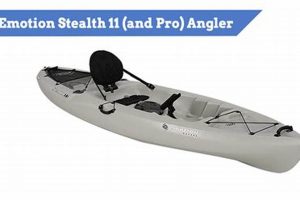
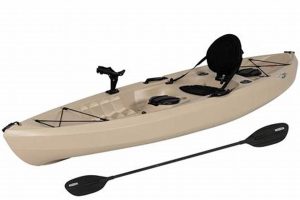
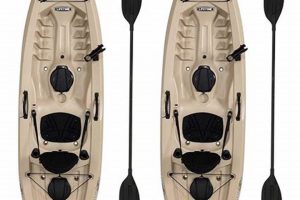
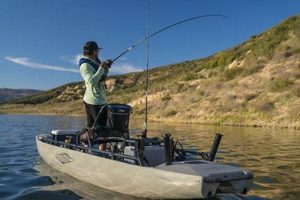
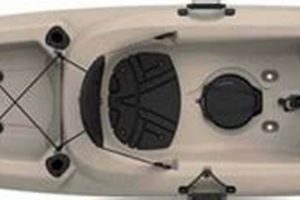
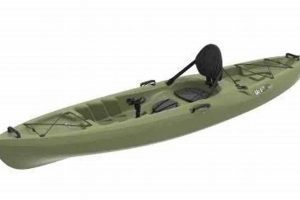
This sit-on-top fishing kayak, manufactured by Ozark Trail, is designed for anglers seeking a stable and feature-rich platform for freshwater or saltwater adventures. Measuring 12 feet in length, it offers ample storage for tackle and gear, along with specialized features like rod holders and often a comfortable, adjustable seat. This type of kayak generally prioritizes stability over speed, making it ideal for casting lines and reeling in catches.
Stable platforms of this size contribute significantly to angler success by enabling comfortable, extended fishing trips. The inclusion of integrated features, such as rod holders and storage compartments, allows for hands-free fishing and organized gear management, maximizing fishing efficiency. Historically, anglers relied on less specialized watercraft. The development of purpose-built fishing kayaks like this represents a substantial advancement in angling technology, providing enhanced stability, increased storage, and improved overall fishing experiences.
This discussion will further explore key aspects of this type of watercraft, including design features, performance characteristics, and potential advantages for various fishing styles and environments.
Tips for Utilizing a 12-Foot Sit-On-Top Fishing Kayak
Effective use of a 12-foot sit-on-top fishing kayak requires attention to several key factors that contribute to both safety and successful angling.
Tip 1: Pre-Trip Planning: Thorough planning is essential. Checking weather forecasts, familiarizing oneself with planned waterways, and informing someone of the trip itinerary enhances safety and preparedness. Packing essential safety gear, such as a personal flotation device (PFD), a whistle, and a first-aid kit, is crucial.
Tip 2: Proper Weight Distribution: Distributing weight evenly within the kayak enhances stability. Gear should be strategically placed to maintain balance and prevent tipping. Understanding the kayak’s weight capacity is vital to prevent overloading.
Tip 3: Paddle Selection and Technique: Choosing an appropriately sized paddle contributes to efficient paddling. Utilizing proper paddling techniques minimizes fatigue and maximizes forward momentum. Practicing different paddling strokes allows for maneuverability in various water conditions.
Tip 4: Anchoring and Positioning: Mastering anchoring techniques allows anglers to maintain a desired position in the water, particularly in currents or windy conditions. Selecting an appropriate anchor system and understanding how to deploy it effectively is critical for a successful fishing experience.
Tip 5: Tackle and Gear Management: Organizing tackle and gear prior to launching streamlines the fishing process. Utilizing storage compartments and readily accessible tackle boxes minimizes time spent searching for equipment, maximizing fishing time and efficiency.
Tip 6: Safety Considerations: Wearing a PFD at all times is paramount for safety. Understanding local boating regulations and navigational markers ensures compliance and safe operation. Carrying communication devices, such as a VHF radio or a waterproof cell phone, enables communication in case of emergencies.
By adhering to these guidelines, individuals can enhance their safety, improve their fishing effectiveness, and maximize their enjoyment on the water.
This information serves as a practical foundation for a rewarding and secure fishing kayak adventure. Subsequent sections will delve into specific techniques and strategies for various fishing environments.
1. Sit-on-top Design

The sit-on-top design is a defining characteristic of the Ozark Trail Pro Angler 12-foot fishing kayak, significantly impacting its functionality and suitability for angling. This design choice directly influences stability, comfort, and overall fishing experience.
- Enhanced Stability:
Sit-on-top kayaks generally offer greater initial stability compared to sit-inside designs. The wider hull and higher center of gravity contribute to this stability, making them less prone to tipping, particularly beneficial for anglers casting lines and reeling in fish. This design feature is particularly advantageous for novice kayakers or those fishing in challenging conditions.
- Self-Bailing System:
Most sit-on-top kayaks feature scupper holes that allow water to drain off the deck, preventing water accumulation and maintaining buoyancy. This self-bailing system is crucial for fishing in rougher waters or when encountering unexpected splashes. It eliminates the need for manual bailing, allowing anglers to focus on fishing.
- Ease of Entry and Exit:
The open design of sit-on-top kayaks simplifies entry and exit, especially from the water. This is particularly advantageous for anglers who may need to re-enter the kayak after a swim or when fishing in shallow waters. The ease of access also makes these kayaks more accessible to individuals with mobility limitations.
- Comfort and Versatility:
The open deck provides greater freedom of movement, allowing anglers to adjust their position and stretch their legs during extended fishing trips. This increased comfort is crucial for longer outings. Additionally, the open design readily accommodates various fishing accessories, like rod holders and fish finders, further enhancing angling versatility.
The sit-on-top design of the Ozark Trail Pro Angler 12-foot fishing kayak contributes significantly to its suitability for angling. The inherent stability, self-bailing capability, and ease of access combine to create a versatile and user-friendly platform for a range of fishing experiences, from calm lakes to more challenging coastal waters.
2. Twelve-foot length

The 12-foot length of the Ozark Trail Pro Angler kayak represents a crucial design element influencing its performance characteristics and suitability for specific angling scenarios. This length contributes significantly to the kayak’s balance of stability, tracking, maneuverability, and storage capacity. Understanding the implications of this length is essential for maximizing its on-the-water effectiveness.
- Tracking and Speed:
Longer kayaks generally track straighter and glide more efficiently than shorter models. A 12-foot length provides reasonable tracking performance, allowing the kayak to maintain its course with less effort. While not as fast as longer touring kayaks, it offers adequate speed for covering distances across lakes and rivers, reaching fishing spots efficiently. This length proves effective for anglers seeking a balance between speed and maneuverability.
- Stability and Capacity:
The 12-foot length contributes to lateral stability, reducing the likelihood of tipping, a critical factor for anglers casting lines and reeling in fish. This length also offers sufficient volume for adequate weight capacity, accommodating anglers, fishing gear, and potential catches comfortably. The increased stability enhances angler confidence and allows for more comfortable movement within the kayak.
- Maneuverability and Storage:
While longer kayaks generally track better, shorter kayaks often exhibit superior maneuverability in tight spaces or around obstacles. A 12-foot kayak represents a compromise, offering reasonable maneuverability while maintaining acceptable tracking performance. This length also generally allows for ample storage space for fishing gear and tackle, contributing to a more organized and efficient fishing experience.
- Portability and Transportation:
The 12-foot length presents some challenges regarding portability and transportation. While smaller than dedicated touring kayaks, it requires appropriate roof racks or trailers for transport. Storage considerations are also relevant, requiring adequate space in garages or sheds. Understanding these logistical aspects is essential for ownership and ensures convenient transport to and from fishing locations.
The 12-foot length of the Ozark Trail Pro Angler kayak positions it as a versatile option for diverse fishing environments. Balancing tracking, stability, maneuverability, and storage capacity, this length caters to anglers seeking a practical and efficient fishing platform. This characteristic length, in conjunction with other design features, contributes to its overall suitability for a variety of angling styles and locations.
3. Fishing-Specific Features
Dedicated fishing features distinguish the Ozark Trail Pro Angler 12-foot fishing kayak from recreational kayak models. These integrated elements enhance angling functionality, efficiency, and overall on-the-water experience. Understanding these features and their practical applications is crucial for maximizing the kayak’s potential as a fishing platform.
- Rod Holders:
Integrated rod holders, typically flush-mounted or adjustable, secure fishing rods while paddling or when actively fishing. Multiple rod holders accommodate different fishing techniques and allow for quick transitions between setups. Securely stowed rods prevent loss or damage during transit and maximize deck space. The number, type, and placement of rod holders directly influence fishing versatility and efficiency.
- Tackle Storage:
Dedicated storage compartments, often located within easy reach of the angler, provide organized storage for tackle boxes, lures, and other fishing essentials. Dry storage compartments protect sensitive electronics and personal items from water damage. Efficient tackle management streamlines the fishing process, minimizing time spent searching for equipment and maximizing fishing time. The size, accessibility, and configuration of storage compartments contribute significantly to overall fishing organization and efficiency.
- Paddle Parks/Clips:
Paddle parks or clips secure the paddle when not in use, freeing hands for fishing and preventing accidental paddle loss. Secure paddle storage ensures easy access when needed and prevents interference with fishing lines. These seemingly minor features contribute significantly to a streamlined and uninterrupted fishing experience.
- Other potential features:
While varying across specific models, other fishing-oriented features may include anchor trolleys for controlled drift fishing, mounting plates for fish finders or other electronics, and specialized seating systems designed for angler comfort during extended fishing trips. These additional features further enhance the kayak’s specialization and adaptability to various fishing techniques and environments.
These specialized features collectively contribute to the Ozark Trail Pro Angler 12-foot fishing kayaks effectiveness as a dedicated fishing platform. The integration of these elements differentiates it from standard recreational kayaks, providing anglers with essential tools and functionalities for a more productive and enjoyable fishing experience. The specific configuration of these features influences its suitability for various fishing styles and environments, from stillwater angling to coastal fishing.
4. Stability and Maneuverability

Stability and maneuverability represent critical performance characteristics for fishing kayaks, directly influencing angling effectiveness and overall on-the-water experience. For the Ozark Trail Pro Angler 12-foot fishing kayak, the interplay of these two factors determines its suitability for various fishing environments and techniques. Examining these attributes provides insights into its potential performance in diverse conditions.
- Initial Stability:
Initial stability refers to the kayak’s resistance to tipping when at rest. A wider hull and lower center of gravity contribute to greater initial stability. This characteristic is crucial for anglers engaging in activities like casting, reeling, and landing fish, where sudden movements or shifts in weight distribution could potentially compromise balance. The Ozark Trail Pro Angler, with its sit-on-top design and relatively wide beam, typically exhibits good initial stability, making it suitable for less experienced paddlers and those fishing in calmer waters.
- Secondary Stability:
Secondary stability describes the kayak’s ability to remain stable when tilted or leaned. This becomes relevant when navigating turns, encountering waves or wakes, or maneuvering in currents. While a wider hull enhances initial stability, it can sometimes compromise secondary stability. The Ozark Trail Pro Angler’s design generally provides a moderate level of secondary stability, allowing for some leaning and turning while maintaining a reasonable margin of safety. This balance makes it adaptable to moderately challenging conditions but might limit its performance in rougher waters.
- Tracking:
Tracking refers to the kayak’s ability to maintain a straight course with minimal corrective paddling. Longer kayaks generally track better than shorter ones. The 12-foot length of the Ozark Trail Pro Angler contributes to decent tracking performance, allowing anglers to cover distances efficiently. However, its relatively wide beam might introduce some susceptibility to wind drift, requiring occasional corrective strokes, especially in windy conditions.
- Maneuverability:
Maneuverability describes the kayak’s responsiveness to turning strokes and its ability to navigate tight spaces or around obstacles. Shorter kayaks are typically more maneuverable than longer ones. While the 12-foot length of the Ozark Trail Pro Angler provides a compromise between tracking and maneuverability, its wider hull might slightly reduce its agility in confined areas. This factor becomes more pronounced in environments with dense vegetation or complex shorelines.
The Ozark Trail Pro Angler’s stability and maneuverability profile makes it a versatile option for a range of fishing scenarios. Its inherent stability caters to novice kayakers and those prioritizing a secure platform for casting and reeling. While not as maneuverable as shorter kayaks or as fast as longer touring models, its balanced performance characteristics make it a practical choice for anglers seeking a stable and reasonably efficient fishing platform in calm to moderately challenging waters.
5. Durable Construction

Durable construction is a critical factor influencing the lifespan and overall value of the Ozark Trail Pro Angler 12-foot fishing kayak. A kayak’s ability to withstand the rigors of regular use, including impacts, UV exposure, and varying water conditions, directly impacts its long-term performance and cost-effectiveness. Examining the elements contributing to durable construction provides insights into the kayak’s anticipated longevity and suitability for sustained use.
- Material Selection:
The primary material used in the kayak’s construction significantly influences its durability. High-density polyethylene (HDPE) is commonly employed due to its impact resistance, UV resistance, and relatively low cost. HDPE kayaks can withstand minor collisions with rocks, logs, or other obstacles encountered in various aquatic environments. Material selection dictates the kayak’s resistance to wear and tear, contributing directly to its overall lifespan.
- Construction Process:
The manufacturing process employed, whether single-piece rotomolding or multi-piece construction, impacts the kayak’s structural integrity. Rotomolded kayaks, typically constructed as a single piece, offer superior strength and durability compared to those assembled from multiple pieces. Seams and joints in multi-piece kayaks can represent potential weak points susceptible to leaks or structural failures over time. Construction methods directly correlate with the kayak’s ability to withstand stress and maintain its structural integrity over its lifespan.
- UV Resistance:
Exposure to ultraviolet radiation from sunlight can degrade the materials used in kayak construction, leading to fading, cracking, and reduced structural integrity. UV-resistant additives incorporated into the plastic during manufacturing mitigate these effects, prolonging the kayak’s lifespan and maintaining its aesthetic appeal. Adequate UV protection ensures the kayak can withstand prolonged sun exposure without significant degradation.
- Hardware and Fittings:
The quality and durability of hardware components, such as handles, latches, and D-rings, contribute to the kayak’s overall resilience. Corrosion-resistant materials like stainless steel or marine-grade plastics are essential for long-term durability in saltwater or other corrosive environments. Robust hardware ensures reliable functionality and prevents premature failure of critical components.
Durable construction directly correlates with the long-term value and performance of the Ozark Trail Pro Angler 12-foot fishing kayak. Selecting appropriate materials, employing robust construction methods, incorporating UV protection, and utilizing high-quality hardware contribute to a kayak capable of withstanding the demands of regular use in diverse environments. The level of durability influences the kayak’s ability to provide reliable service over an extended period, maximizing its return on investment and ensuring consistent performance for anglers.
6. Ozark Trail Branding

Ozark Trail branding plays a significant role in the market positioning and consumer perception of the Ozark Trail Pro Angler 12-foot fishing kayak. As a private label brand owned by Walmart, Ozark Trail represents a value-oriented proposition, offering outdoor gear at competitive price points. This branding strategy directly influences consumer expectations regarding product features, performance, and overall quality. The association with Walmart provides widespread accessibility and distribution, making Ozark Trail products readily available to a broad consumer base. This accessibility contributes to market saturation and brand recognition, influencing purchase decisions within the budget-conscious segment of the recreational kayaking market. Essentially, Ozark Trail branding signifies affordability and accessibility, impacting consumer perceptions of the Pro Angler 12-foot fishing kayak within the broader context of the outdoor recreation market.
The impact of Ozark Trail branding extends beyond price point and accessibility. Consumer perception of quality and durability is also influenced by brand association. While often perceived as offering entry-level products, Ozark Trail leverages its association with Walmart to convey reliability and value. This perception, combined with readily available customer reviews and online discussions, shapes consumer expectations regarding the kayak’s performance and lifespan. Real-life examples of individuals utilizing Ozark Trail kayaks for fishing and recreational paddling contribute to a growing body of user-generated content, further influencing perceptions and purchase decisions. The brand’s emphasis on value and accessibility resonates with a specific consumer segment, establishing a niche within the competitive kayaking market. This targeted approach contributes to brand loyalty and repeat purchases within this demographic.
Understanding the connection between Ozark Trail branding and the Pro Angler 12-foot fishing kayak provides valuable insights into product positioning and consumer behavior. The brand’s focus on affordability and accessibility influences purchase decisions, while its association with Walmart contributes to perceptions of reliability and value. Recognizing this interplay between branding and product perception is crucial for evaluating the kayak’s market position and understanding its appeal to a specific consumer segment. This understanding allows for informed purchase decisions and clarifies the kayak’s intended role within the broader recreational kayaking landscape. The Ozark Trail brand, while not synonymous with premium performance, effectively caters to a significant portion of the market seeking accessible and budget-friendly outdoor recreation equipment.
Frequently Asked Questions
This section addresses common inquiries regarding the Ozark Trail Pro Angler 12-foot fishing kayak, providing concise and informative responses to facilitate informed purchase decisions and optimal product utilization.
Question 1: What is the weight capacity of this kayak?
Weight capacity varies slightly between specific models but generally ranges from 350 to 400 pounds. Consulting the manufacturer’s specifications for the specific model in question is recommended.
Question 2: Is this kayak suitable for saltwater fishing?
While primarily designed for freshwater use, it can be used in saltwater environments with proper care and maintenance. Thorough rinsing after saltwater exposure is crucial to prevent corrosion of hardware and degradation of materials.
Question 3: What type of paddle is recommended for this kayak?
An appropriately sized kayak paddle, typically between 230 and 260 centimeters in length, is recommended. Paddle length selection depends on individual height and paddling style. Consulting paddle sizing charts or experienced kayak retailers can assist in determining the optimal paddle length.
Question 4: How stable is this kayak for standing and fishing?
While the kayak offers reasonable stability, standing and fishing should be approached with caution. Individuals new to kayak fishing are advised to practice in calm, shallow water before attempting to stand in more challenging conditions. The kayak’s inherent stability facilitates seated fishing effectively, enhancing casting and reeling comfort.
Question 5: What accessories are recommended for this kayak?
Recommended accessories include a personal flotation device (PFD), a paddle leash, an anchor system, and appropriate storage solutions for tackle and gear. Additional accessories like fish finders, rod holders, and kayak carts enhance fishing functionality and convenience.
Question 6: What maintenance is required for this kayak?
Regular rinsing with fresh water after each use, especially after saltwater exposure, is essential. Storing the kayak out of direct sunlight when not in use helps prevent material degradation. Periodic inspection of hardware and fittings for signs of wear or corrosion is recommended.
Addressing these common inquiries clarifies key aspects of the Ozark Trail Pro Angler 12-foot fishing kayak, facilitating informed decisions and promoting optimal usage practices.
Further sections will delve into specific usage scenarios, offering practical tips and techniques for maximizing the kayak’s potential in various fishing environments.
Conclusion
This exploration of the Ozark Trail Pro Angler 12-foot fishing kayak has provided a comprehensive overview of its key features, performance characteristics, and suitability for various angling scenarios. From its sit-on-top design and specialized fishing features to its stability and maneuverability profile, this analysis has highlighted the kayak’s strengths and limitations within the context of recreational fishing. Discussion of durable construction, brand positioning, and common inquiries has further illuminated its value proposition and potential applications for diverse angling pursuits.
The Ozark Trail Pro Angler 12-foot fishing kayak represents a viable option for anglers seeking a stable, feature-rich, and budget-friendly platform for on-the-water adventures. Its accessibility and integrated fishing-specific features contribute to its appeal for both novice and experienced anglers alike. Careful consideration of individual needs, fishing styles, and target environments will ultimately determine its suitability as a valuable tool for enhancing angling experiences. Continued exploration of kayak fishing techniques and responsible on-the-water practices will further contribute to successful and enjoyable angling pursuits.