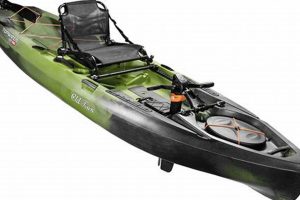
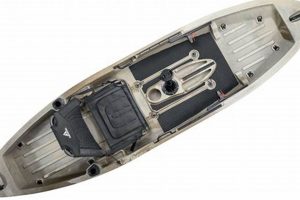
This sit-on-top vessel, manufactured by Old Town, is a popular choice for anglers. The 12-foot length offers a balance of stability and maneuverability, ideal for navigating various waterways, from ponds and lakes to slow-moving rivers. Its design prioritizes fishing features, incorporating rod holders, tackle storage, and often a comfortable, elevated seat.
The combination of stability, specialized features, and manageable size makes this type of kayak an attractive option for both novice and experienced anglers. It provides a stable platform for casting and reeling, allowing fishers to focus on their technique and the surrounding environment. The hands-free nature of kayaking also allows anglers to access areas otherwise difficult to reach by shore or larger boat, expanding fishing opportunities. This style of watercraft has become increasingly popular as a fishing platform due to its affordability and ease of transport compared to traditional motorized boats.
This discussion will further explore specific design elements, performance characteristics, user experiences, and potential accessories related to this category of fishing kayak.
Tips for Kayak Fishing Success
Effective angling from a kayak requires preparation and technique. The following tips offer guidance for a safe and productive fishing experience.
Tip 1: Prioritize Safety Equipment: Always wear a personal flotation device (PFD). Carry a whistle for signaling, a first-aid kit for emergencies, and a communication device in case of unexpected situations. Inform someone of your fishing plans, including location and expected return time.
Tip 2: Balance and Stability: Practice entering and exiting the kayak in shallow water to gain confidence. Distribute weight evenly within the vessel to maintain stability. Avoid sudden movements or leaning too far to one side, particularly when casting or reeling.
Tip 3: Paddle and Navigation: Learn basic paddling strokes for efficient movement and maneuvering. Familiarize oneself with local water conditions, currents, and potential hazards before venturing out. Carry a map or chart and compass, or a GPS device, for navigation, especially in unfamiliar waters.
Tip 4: Fishing Gear Organization: Organize tackle and equipment within easy reach to minimize movement and maintain balance. Utilize designated storage compartments and rod holders effectively. Keep essential tools, such as pliers and line cutters, readily accessible.
Tip 5: Anchor Positioning: Employ an anchor system suitable for the fishing environment. A drift chute can control drift speed in moving water. Consider anchor placement strategically to optimize fishing presentation and avoid snags.
Tip 6: Respectful Angling Practices: Adhere to local fishing regulations and licensing requirements. Practice catch-and-release techniques when appropriate for conservation. Minimize environmental impact by properly disposing of fishing line and other waste.
Tip 7: Weather Awareness: Check weather forecasts before departing and be prepared for changing conditions. Avoid fishing in thunderstorms or high winds. Dress appropriately for anticipated temperatures and potential water exposure.
By following these guidelines, anglers can enhance their safety, improve their fishing effectiveness, and contribute to responsible enjoyment of the sport.
These tips offer a starting point for successful kayak fishing. Further exploration of specific techniques, regional considerations, and advanced equipment can deepen one’s knowledge and skill in this rewarding outdoor activity.
1. Sit-on-top Design

The Old Town Sportsman 120 fishing kayak utilizes a sit-on-top design, a key feature influencing its functionality and suitability for angling. This design contrasts with traditional sit-inside kayaks, where the user’s lower body is enclosed within the hull. The sit-on-top configuration places the angler above the deck, offering several advantages for fishing applications.
This elevated position improves visibility, allowing for better observation of the surrounding water and potential fishing targets. The open design also facilitates easier casting and reeling, as anglers are not restricted by a cockpit rim. Furthermore, the sit-on-top design enhances stability, particularly beneficial for activities like standing casting, a common practice in kayak fishing. Self-bailing scupper holes, standard in sit-on-top kayaks, drain water that splashes onto the deck, contributing to overall stability and preventing water accumulation. In the event of capsizing, recovery is generally easier with a sit-on-top design. The angler can simply remount the kayak from the water, a significant safety advantage. This characteristic proves valuable in fishing scenarios where maneuvering in challenging conditions or encountering unexpected obstacles increases the risk of capsizing.
The sit-on-top design contributes significantly to the Sportsman 120’s effectiveness as a fishing platform. It affords anglers greater freedom of movement, enhanced stability, and improved safety, all crucial elements for a positive and productive fishing experience. This design choice reflects a prioritization of functionality and user experience, aligning with the kayak’s intended purpose as a specialized fishing vessel.
2. Stability

Stability represents a critical performance characteristic in the Old Town Sportsman 120 fishing kayak, directly influencing its suitability for angling activities. A stable platform allows anglers to cast, retrieve, and land fish effectively, while also contributing to overall safety and comfort on the water. Several design elements contribute to the Sportsman 120’s stability. The hull design, featuring a relatively wide beam and a flat bottom profile, provides inherent stability. This broader base reduces rocking motion, especially in calm water conditions. The sit-on-top configuration also plays a role. By positioning the angler above the waterline, the center of gravity is raised, enhancing stability. This higher vantage point facilitates casting and other fishing activities requiring balance.
Consider a scenario where an angler hooks a large fish. The inherent stability of the Sportsman 120 allows the angler to manage the fight without excessive rocking or the risk of capsizing. Similarly, navigating through choppy water or encountering unexpected wakes from passing boats presents less of a stability challenge compared to a less stable kayak design. The stable platform afforded by the Sportsman 120 enables anglers to focus on fishing rather than constantly managing balance. This enhanced stability also allows for activities like standing casting, which provides a greater range of motion and improved sight lines for spotting fish. However, stability can be affected by factors such as weight distribution and water conditions. Unevenly distributed weight within the kayak can compromise stability. Similarly, strong winds or currents can create challenging conditions that require careful maneuvering and attention to balance, even in a stable kayak like the Sportsman 120.
The Sportsman 120s focus on stability reinforces its utility as a dedicated fishing platform. Understanding the factors contributing to stability and their practical implications allows anglers to maximize their performance and safety on the water. While the kayak offers inherent stability, anglers must still consider weight distribution and environmental conditions to maintain a safe and effective fishing experience. This balance of design and user awareness contributes to the Sportsman 120s overall success as a popular choice among kayak anglers.
3. Fishing-Specific Features

The Old Town Sportsman 120 fishing kayak distinguishes itself through an array of features specifically designed to enhance angling effectiveness and user experience. These integrated elements contribute directly to the kayak’s functionality as a dedicated fishing platform. Understanding these features allows anglers to maximize their potential on the water.
- Rod Holders:
Multiple flush-mounted rod holders provide secure storage and quick access to fishing rods. These designated holders keep rods organized and readily available for various fishing techniques, preventing tangling and minimizing the risk of damage. Their strategic placement allows anglers to maintain balance and control while managing multiple rods. The Sportsman 120 typically incorporates both forward-facing and rear-facing rod holders, accommodating different fishing styles and preferences.
- Tackle Storage:
Dedicated storage compartments offer organized space for tackle boxes, lures, and other essential fishing gear. These compartments often feature water-resistant seals to protect contents from splashes and inclement weather. The readily accessible storage allows anglers to maintain a streamlined and efficient fishing setup. A well-organized tackle system minimizes time spent searching for equipment, maximizing time spent fishing.
- Paddle Holder:
A designated paddle holder secures the paddle when not in use, keeping it out of the way during fishing activities. This feature prevents the paddle from drifting away and eliminates the need to place it on the deck where it could interfere with casting or reeling. The secure paddle storage allows for uninterrupted focus on fishing techniques and minimizes distractions.
- Anchor Trolley System:
Many models feature an anchor trolley system, enabling controlled anchoring from various positions on the kayak. This system allows anglers to adjust their position relative to current or structure, optimizing fishing presentation. The controlled anchoring facilitates precise positioning and drift control, crucial elements in successful fishing strategies.
These integrated fishing-specific features differentiate the Old Town Sportsman 120 from recreational kayaks, solidifying its role as a purpose-built fishing platform. The combination of rod holders, tackle storage, paddle management, and anchor control contributes to an efficient and productive fishing experience. These features allow anglers to focus on their technique and the pursuit of fish, enhancing the overall enjoyment and success of their angling endeavors.
4. Maneuverability
Maneuverability represents a critical performance attribute in kayak fishing, particularly in environments requiring precise boat control. Its relevance to the Old Town Sportsman 120 fishing kayak lies in the vessel’s ability to navigate diverse water conditions and access productive fishing areas. Examining the factors influencing maneuverability provides insights into the kayak’s suitability for specific fishing scenarios.
- Hull Design:
The Sportsman 120’s hull design, often featuring a moderate rocker profile and a defined keel line, contributes to its maneuverability. The rocker, or upward curve of the hull at the bow and stern, influences how easily the kayak turns. A moderate rocker balances maneuverability with tracking performance. The keel line, a longitudinal ridge along the bottom of the hull, enhances tracking and directional stability, contributing to predictable handling. This combination allows for controlled turns and adjustments in position, essential for navigating tight spaces or targeting specific fish-holding locations.
- Length:
The twelve-foot length of the Sportsman 120 positions it within a range considered maneuverable for kayak fishing. Shorter kayaks generally turn more quickly, while longer kayaks offer greater tracking performance. The Sportsman 120’s length represents a compromise, providing reasonable maneuverability in confined areas while maintaining sufficient tracking efficiency in open water. This balance makes it suitable for diverse fishing environments, from navigating narrow creeks to traversing larger lakes.
- Water Conditions:
Maneuverability can be influenced by prevailing water conditions. Calm, flat water presents minimal resistance, allowing for easy turning and directional changes. However, strong currents or windy conditions can impact maneuverability, requiring greater effort and paddling technique to maintain desired course and position. Understanding these external influences allows anglers to anticipate and adjust their approach based on the prevailing environment. In windy situations, maintaining an appropriate angle to the wind can enhance control. In currents, strategic use of paddle strokes and rudder systems (if equipped) becomes crucial for maneuvering effectively.
- User Skill:
An angler’s paddling technique and experience significantly affect realized maneuverability. Efficient paddle strokes, including sweep strokes and draw strokes, are essential for precise turning and positional adjustments. Experience in varying water conditions allows anglers to anticipate the kayak’s response and make appropriate adjustments. Developing proficiency in these skills enhances the kayak’s inherent maneuverability, translating to greater control and efficiency on the water.
The interplay of these factors contributes to the Old Town Sportsman 120’s overall maneuverability profile. While the hull design and length provide a foundation for maneuverable performance, external factors like water conditions and user skill play significant roles in the kayak’s responsiveness on the water. Recognizing these influences allows anglers to adapt their techniques and maximize the kayak’s potential in diverse fishing scenarios. This understanding contributes to a more informed and effective approach to kayak angling, enhancing both the experience and the likelihood of success.
5. Twelve-foot length
The 12-foot length of the Old Town Sportsman 120 fishing kayak represents a deliberate design choice, balancing competing performance characteristics crucial for its intended purpose. This length influences several key aspects of the kayak’s behavior on the water, affecting maneuverability, stability, and tracking. Understanding the implications of this length contributes to informed decision-making for anglers considering this model.
Compared to shorter kayaks, the 12-foot length provides enhanced tracking, meaning it maintains a straighter course with less effort. This characteristic proves beneficial when paddling longer distances or in open water conditions where maintaining direction is paramount. Conversely, shorter kayaks typically offer greater maneuverability in tight spaces, such as navigating narrow creeks or maneuvering around obstacles. The 12-foot length of the Sportsman 120 represents a compromise between these two attributes. It offers reasonable maneuverability for a kayak of its size while still delivering adequate tracking performance for open water excursions. This balance makes it suitable for a range of fishing environments, from smaller ponds and rivers to larger lakes. For example, navigating a winding river channel requires sufficient maneuverability to negotiate bends and turns. The Sportsman 120’s length allows for such navigation without sacrificing stability, which is often compromised in shorter, more maneuverable kayaks. Similarly, paddling across a larger lake benefits from the tracking efficiency offered by the 12-foot length, minimizing the need for constant course correction. Consider a scenario where an angler targets fish near a specific shoreline structure. The Sportsman 120’s length allows for efficient paddling to the target area while retaining the maneuverability to position the kayak effectively for casting and retrieving.
The 12-foot length of the Old Town Sportsman 120 contributes significantly to its versatility as a fishing platform. It represents a balance between maneuverability and tracking performance, making it suitable for a variety of fishing environments. Recognizing the practical implications of this length allows anglers to assess its suitability for their specific needs and fishing style. The thoughtful consideration of length within the overall design contributes to the Sportsman 120’s effectiveness and popularity among kayak anglers.
Frequently Asked Questions
This section addresses common inquiries regarding the Old Town Sportsman 120 fishing kayak, providing concise and informative responses.
Question 1: What is the weight capacity of the Sportsman 120?
The weight capacity typically ranges from 425 to 500 pounds, depending on the specific model year and configuration. Consulting manufacturer specifications is recommended for precise figures.
Question 2: Is the Sportsman 120 suitable for use in saltwater environments?
Yes, it is designed for use in both freshwater and saltwater. Proper rinsing and maintenance after saltwater exposure are crucial for longevity.
Question 3: Can a motor be added to the Sportsman 120?
Certain models are compatible with trolling motors. Compatibility and installation guidelines should be confirmed through manufacturer resources.
Question 4: What is the typical storage capacity for fishing gear?
Storage capacity varies by model year, but generally includes dedicated compartments for tackle boxes and other essential gear. Manufacturer specifications provide detailed information on storage dimensions.
Question 5: How does the Sportsman 120 perform in windy conditions?
While stable, wind can impact tracking and maneuverability. Use of a rudder or drift chute can improve performance in windy conditions. Anglers should always consider weather conditions before venturing out.
Question 6: What maintenance is required for the Sportsman 120?
Regular rinsing, especially after saltwater use, is essential. Periodic inspection of hull and fittings for damage is recommended. Consult the owner’s manual for detailed maintenance guidelines.
Understanding these aspects contributes to informed decisions regarding the suitability of the Old Town Sportsman 120 for individual angling needs and preferences. Thorough research and consideration of personal requirements are essential for a satisfying ownership experience.
Further exploration of specific features, user reviews, and comparisons with other kayak models can provide additional insights for prospective buyers.
Conclusion
The Old Town Sportsman 120 fishing kayak presents a compelling option for anglers seeking a dedicated fishing platform. Its blend of stability, specialized features, and maneuverability caters to diverse fishing styles and environments. From its sit-on-top design facilitating ease of entry and enhanced visibility to its integrated rod holders and ample storage, the Sportsman 120 prioritizes functionality for the angling experience. The twelve-foot length balances tracking performance with maneuverability, rendering it suitable for both open water and more confined areas. An understanding of its performance characteristics, including stability and maneuverability, empowers anglers to maximize its potential on the water.
Potential users are encouraged to consider individual needs and preferences, including fishing style, target species, and typical fishing environment. Careful evaluation of these factors, coupled with research into specific model configurations and available accessories, ensures a well-informed purchase decision. The Old Town Sportsman 120 stands as a testament to the evolution of kayak fishing, offering a specialized platform for anglers seeking to explore the water and pursue their passion.