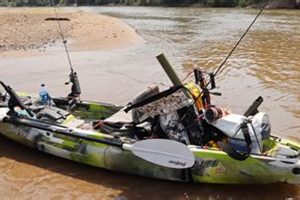
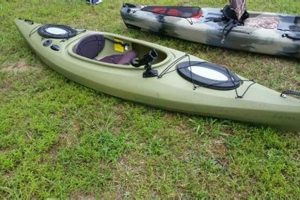
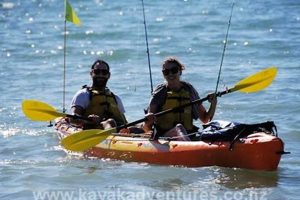
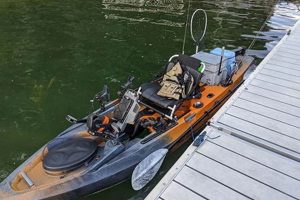
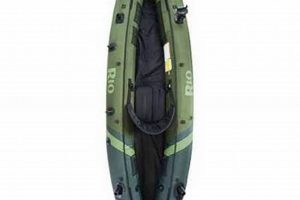
Specialized equipment designed for angling from a kayak in open ocean environments typically includes a sit-on-top vessel for stability, a high-visibility personal flotation device, and specialized rods, reels, and tackle suited to saltwater species and the unique challenges of fishing from a small, mobile platform. A selection of lures and baits appropriate for target species, along with essential safety equipment such as a VHF radio, GPS, and signaling devices, are also crucial components. Proper storage solutions like waterproof bags and crates are vital for keeping gear organized and dry in demanding offshore conditions.
Effective equipment enhances safety and improves angling success in the demanding ocean environment. The proper vessel, safety gear, and fishing tackle allow anglers to reach productive fishing grounds safely and efficiently, while also providing the means to handle larger pelagic species. Historically, advancements in kayak design and materials, coupled with the development of specialized fishing gear, have opened up new possibilities for offshore angling, making it accessible to a wider range of enthusiasts.
The following sections will explore the essential components of a comprehensive ocean kayak fishing setup in detail, including kayak selection, safety equipment, rod and reel choices, tackle recommendations, and best practices for organization and storage.
Ocean Kayak Fishing Tips
Preparation and proper equipment selection are essential for a successful and safe ocean kayaking fishing experience. The following tips provide valuable insights for anglers venturing offshore.
Tip 1: Prioritize Safety: A properly fitted and high-visibility personal flotation device is paramount. Carry a VHF radio, signaling devices (flares, whistle), and a GPS. Inform someone of your fishing plan, including location and expected return time.
Tip 2: Choose the Right Kayak: A sit-on-top kayak designed for stability in offshore conditions is recommended. Consider features like rod holders, ample storage space, and rudder systems.
Tip 3: Select Appropriate Tackle: Saltwater-rated rods, reels, and lines are essential. Choose tackle appropriate for target species and the specific fishing techniques employed.
Tip 4: Pack Essential Gear: Carry a first-aid kit, sunscreen, a hat, and polarized sunglasses. Pack plenty of water and high-energy snacks.
Tip 5: Understand Weather Conditions: Check marine forecasts before heading out. Be aware of changing weather patterns and sea conditions. Avoid fishing in strong winds or rough seas.
Tip 6: Practice Proper Kayak Handling: Develop proficiency in paddling and maneuvering a kayak in various sea conditions. Learn self-rescue techniques.
Tip 7: Respect the Environment: Practice catch-and-release whenever possible. Adhere to local fishing regulations and dispose of waste responsibly.
Tip 8: Secure Gear Properly: Utilize waterproof bags and storage compartments to protect electronic devices and other essential items from saltwater exposure.
Adhering to these guidelines enhances angler safety and contributes to a more productive and enjoyable ocean kayak fishing experience.
By understanding the importance of these preparatory steps, anglers can confidently venture offshore, equipped to handle the challenges and rewards of ocean kayak fishing.
1. Kayak Selection

Appropriate kayak selection is fundamental to successful and safe ocean kayak fishing. The vessel serves as the angler’s primary platform and must meet specific criteria to handle the demands of the offshore environment. Choosing the right kayak directly impacts stability, maneuverability, and the ability to transport necessary gear.
- Hull Design:
Sit-on-top kayaks are preferred for ocean fishing due to their self-bailing design and inherent stability. Wider hulls generally offer greater stability, while longer kayaks track better in open water. Specialized hull designs, such as those with pronounced chines or a shallow-V shape, can influence performance in various sea conditions. A wide, stable hull contributes significantly to angler safety and comfort, particularly when fighting larger fish or encountering challenging waves.
- Length and Weight Capacity:
Longer kayaks typically provide more storage space and track more efficiently, while shorter kayaks are easier to maneuver. Weight capacity is crucial, considering the combined weight of the angler, fishing gear, and potential catch. Exceeding the recommended weight capacity can compromise stability and performance. A kayak with sufficient length and weight capacity ensures safe handling and efficient transport of essential gear.
- Features and Accessories:
Integrated rod holders, rudder systems, and ample storage compartments are valuable features. Rod holders provide convenient access to fishing rods, while rudders aid in maintaining course in windy or current-prone areas. Dry storage compartments protect electronic devices and other sensitive items from saltwater exposure. These features enhance angling efficiency and overall safety on the water. For instance, multiple rod holders allow anglers to troll various lures simultaneously, maximizing fishing opportunities.
- Material and Construction:
Kayaks constructed from durable, UV-resistant materials such as polyethylene or composite materials are well-suited to the harsh marine environment. Rotomolded polyethylene kayaks offer excellent impact resistance, while composite kayaks are lighter and offer improved performance. Selecting a kayak made from high-quality materials ensures longevity and reliable performance in demanding conditions. Durable construction minimizes the risk of damage from impacts with rocks or other obstacles encountered in the ocean environment.
Careful consideration of these factors ensures the chosen kayak complements other essential ocean kayak fishing gear, contributing to a safe, efficient, and enjoyable fishing experience. A well-chosen kayak provides a stable platform for anglers to confidently navigate the open ocean, access productive fishing grounds, and effectively target desired species while prioritizing safety and maximizing their angling success. Choosing a kayak tailored to individual needs and target fishing conditions is crucial for a productive and enjoyable experience.
2. Safety Equipment

Safety equipment forms a critical component of ocean kayak fishing gear, directly impacting angler well-being in the unpredictable offshore environment. The inherent risks associated with open-water kayaking, including changing weather conditions, vessel instability, and potential interactions with marine life, necessitate a comprehensive approach to safety. Utilizing appropriate safety equipment mitigates these risks, enabling a more secure and enjoyable fishing experience.
A key element of ocean kayak fishing safety is a properly fitted, high-visibility personal flotation device (PFD). PFDs provide essential buoyancy in the event of capsizing or accidental immersion. Carrying a VHF radio allows direct communication with the Coast Guard and other vessels, enabling rapid response in emergencies. Visual signaling devices, such as flares and a whistle, further enhance visibility and aid in attracting attention if assistance is required. A waterproof GPS unit provides accurate location information, crucial for navigation and rescue efforts. For instance, a sudden change in weather conditions can disorient kayakers; a GPS facilitates safe return to shore. Similarly, if an angler experiences equipment failure or a medical emergency miles offshore, a VHF radio becomes indispensable for summoning help. These elements work synergistically to establish a robust safety network.
Prioritizing safety equipment demonstrates a proactive approach to risk management, contributing significantly to a positive outcome in unforeseen circumstances. Integrating safety measures into pre-fishing preparations, including checking weather forecasts and informing someone of the fishing plan, further enhances preparedness. Challenges such as equipment cost and potential discomfort can be overcome by selecting high-quality, ergonomically designed gear and recognizing the significant long-term benefits of prioritizing safety. The understanding and consistent utilization of appropriate safety equipment transforms ocean kayak fishing from a potentially hazardous activity into a safer and more rewarding pursuit.
3. Rods and Reels
Rods and reels constitute a crucial component of ocean kayak fishing gear, directly influencing an angler’s ability to target and successfully land desired species in the demanding offshore environment. Proper selection considers factors such as target species, fishing techniques, and the unique challenges presented by fishing from a kayak. The interplay between rod action, reel capacity, and line strength significantly impacts angling effectiveness and overall fishing experience. Choosing appropriate rods and reels enhances the angler’s control, improves hook-setting power, and increases the chances of successfully landing a fish.
- Rod Action and Power:
Rod action, referring to the rod’s flexibility, and power, indicating the rod’s lifting strength, are critical considerations. Fast-action rods with heavy power are well-suited for targeting larger pelagic species, providing the backbone to handle powerful runs and effectively set hooks. Conversely, slower action rods with medium power offer greater sensitivity for detecting subtle bites and are better suited for smaller fish or finesse fishing techniques. For example, a heavy-power, fast-action rod paired with a high-capacity reel is ideal for trolling for large tuna, while a medium-power, moderate-action rod is more appropriate for bottom fishing for snapper. Selecting appropriate rod action and power directly impacts the angler’s ability to control the fish during the fight and ultimately land the catch successfully.
- Reel Type and Capacity:
Spinning, conventional, and baitcasting reels each offer distinct advantages for ocean kayak fishing. Spinning reels are versatile and user-friendly, suitable for a variety of techniques. Conventional reels offer greater cranking power and line capacity, making them ideal for targeting larger species. Baitcasting reels provide enhanced casting accuracy and control, beneficial for specific presentations. Reel capacity, measured in line weight and length, must be sufficient to handle the target species and fishing conditions. A high-capacity reel spooled with heavy-duty braided line provides the necessary strength and length to battle powerful offshore fish.
- Line Selection:
Braided fishing line is often preferred for ocean kayak fishing due to its high tensile strength, minimal stretch, and excellent abrasion resistance. These characteristics allow anglers to feel even the slightest bites, maintain direct contact with the fish, and effectively pull fish away from structure. Fluorocarbon leader material can be added to enhance abrasion resistance and provide near-invisibility in clear water. Matching the line strength to the target species and fishing conditions is critical for preventing line breakage and lost fish.
- Rod and Reel Maintenance:
Saltwater environments are particularly corrosive to fishing equipment. Regular rinsing of rods and reels with fresh water after each trip helps remove salt deposits and prolong their lifespan. Periodic lubrication of moving parts and inspection for wear and tear are essential maintenance practices that ensure optimal performance and prevent unexpected equipment failures during critical moments. Proper maintenance safeguards the investment in quality equipment and ensures reliable operation in challenging saltwater conditions.
The selection and maintenance of rods and reels directly influence the success and enjoyment of ocean kayak fishing. Choosing equipment appropriate for the target species, fishing techniques, and the demanding offshore environment ensures anglers are well-equipped to handle the challenges and rewards of this exciting pursuit. Properly maintained and balanced rod and reel combinations enhance angling performance and contribute to a more productive and rewarding fishing experience, maximizing the chances of landing trophy fish and creating lasting memories on the water.
4. Tackle and Bait

Tackle and bait selection are integral components of ocean kayak fishing gear, directly influencing angling success in the offshore environment. The chosen tackle must withstand the rigors of saltwater fishing and be appropriate for the target species. Bait selection considers local fish preferences and prevalent forage. Effective pairings of tackle and bait maximize the chances of attracting and hooking desired fish, contributing significantly to a productive fishing trip. For example, using heavy-duty hooks and wire leaders is essential when targeting toothy pelagic species like mackerel or barracuda. Live bait, such as pilchards or squid, often proves effective for these predatory fish, while cut bait or chum might be more suitable for attracting bottom-dwelling species like grouper or snapper.
Matching tackle to specific fishing techniques further enhances effectiveness. Trolling requires lures or baits that effectively attract fish while being pulled through the water. Bottom fishing necessitates weighted rigs and durable hooks designed to withstand contact with the seafloor. Jigging employs specialized lures designed to mimic the movement of injured baitfish, attracting predatory species. Understanding the interplay between tackle, bait, and fishing technique allows anglers to optimize their presentations, increasing the likelihood of enticing a strike. For instance, using brightly colored lures with reflective properties can be highly effective when trolling in deeper water where light penetration is limited. Similarly, employing circle hooks when bottom fishing minimizes the chances of deep-hooking fish, increasing the chances of successful catch and release.
Choosing appropriate tackle and bait directly impacts the success and overall enjoyment of ocean kayak fishing. Understanding fish behavior, local fishing conditions, and the limitations imposed by fishing from a kayak informs effective tackle and bait selection. Addressing challenges like limited storage space and the need for readily accessible gear encourages strategic decision-making in selecting and organizing tackle and bait. This preparedness enhances the angler’s ability to adapt to changing conditions and maximize their chances of success on the water. The thoughtful selection of tackle and bait demonstrates a proactive approach to ocean kayak fishing, increasing the likelihood of a rewarding experience and contributing to the overall enjoyment of this demanding yet fulfilling pursuit.
5. Storage Solutions

Effective storage solutions are crucial for organizing and protecting ocean kayak fishing gear in the demanding offshore environment. Limited space and exposure to saltwater necessitate careful consideration of storage strategies. Proper organization enhances efficiency, prevents equipment damage, and contributes to a safer and more enjoyable fishing experience. Well-designed storage systems maintain order, maximize available space, and safeguard valuable equipment from the corrosive effects of saltwater.
- Dry Bags and Boxes:
Waterproof dry bags and boxes protect sensitive items like electronics, cameras, and first-aid kits from saltwater intrusion. Various sizes accommodate different gear types, ensuring comprehensive protection. Durable construction and reliable sealing mechanisms maintain dryness even in challenging conditions, safeguarding essential equipment from damage. For instance, a waterproof phone case ensures communication capabilities are maintained, while a larger dry bag protects spare clothing and emergency supplies. These storage solutions contribute significantly to safety and preparedness on the water.
- Tackle Management Systems:
Specialized tackle boxes or trays with compartments and dividers organize lures, hooks, weights, and other small fishing accessories. Efficient tackle organization streamlines lure changes, reduces tangles, and maximizes fishing time. Dedicated compartments for different lure types prevent damage and ensure quick access to the appropriate tackle. Efficient tackle management systems enhance angling efficiency, contributing to a more productive fishing experience.
- Rod Holders and Storage:
Securely mounted rod holders keep rods organized and readily accessible while paddling or fishing. Rod leashes prevent loss in the event of capsizing. Dedicated rod storage compartments within the kayak protect rods from damage during transport and storage. Effective rod management systems enhance safety and prevent equipment loss, preserving valuable fishing gear. Securely stored rods minimize the risk of entanglement and facilitate efficient lure changes, optimizing fishing time and enhancing overall angling success.
- Kayak-Specific Storage:
Many kayaks feature built-in storage compartments, including hatches, tank wells, and bungee systems. These dedicated spaces provide convenient storage for larger items like paddle floats, bilge pumps, and safety equipment. Utilizing these built-in features maximizes available space and maintains a balanced load distribution within the kayak, contributing to stability and maneuverability. Proper utilization of kayak-specific storage enhances safety and contributes to a more organized and efficient fishing experience.
Implementing effective storage solutions transforms limited kayak space into an organized and efficient system, crucial for successful ocean kayak fishing. Dry storage protects sensitive equipment, specialized tackle systems streamline lure changes, and rod management solutions enhance safety and accessibility. By prioritizing storage solutions, anglers maintain order, maximize available space, and protect their investment in essential gear. These practical considerations significantly enhance safety, efficiency, and overall enjoyment on the water, contributing to a more successful and rewarding ocean kayak fishing experience.

Navigation tools are essential components of ocean kayak fishing gear, enabling safe and efficient travel in the dynamic offshore environment. These tools facilitate accurate positioning, route planning, and informed decision-making regarding changing weather conditions or unforeseen circumstances. Effective navigation enhances safety, maximizes fishing time, and contributes significantly to a successful and enjoyable experience. Reliance on these tools mitigates risks associated with open-water navigation and allows anglers to confidently explore productive fishing grounds.
- Global Positioning System (GPS) Units:
GPS units provide precise location information, crucial for navigating to desired fishing spots, tracking drift, and ensuring safe return to shore. Modern GPS units often include mapping capabilities, allowing anglers to identify potential fishing areas based on bathymetry, reefs, or other underwater structures. Integrated waypoint functionality allows marking productive fishing locations or points of interest for future reference. Waterproof and floating designs ensure functionality even in challenging marine environments. A GPS becomes invaluable when navigating in fog, darkness, or unfamiliar waters, providing a critical safety net. For example, marking waypoints at the beginning of a drift allows anglers to accurately retrace their path, particularly beneficial in areas with strong currents or changing tides.
- Chartplotters:
Chartplotters combine GPS functionality with electronic nautical charts, providing a comprehensive navigational view. These devices display real-time boat position overlaid on detailed charts, offering valuable information about water depth, hazards, and navigation aids. Chartplotters assist in route planning, avoiding shallow areas or reefs, and navigating safely through complex waterways. Larger displays enhance visibility and ease of use in demanding conditions. Integration with sonar technology further enhances situational awareness by providing real-time information about the underwater environment. Chartplotters become especially useful when navigating in unfamiliar waters or areas with complex shorelines and potential hazards. They enhance situational awareness and contribute to safer navigation practices.
- Compass:
A compass provides a reliable directional reference, independent of electronic devices. While GPS and chartplotters offer precise location data, a compass remains a valuable backup navigation tool, especially in situations of electronic failure or battery depletion. Understanding basic compass navigation principles complements electronic navigation methods, enhancing overall navigational competency. A compass serves as a reliable, self-contained directional guide, ensuring anglers can maintain their bearings even in challenging circumstances. For example, in the event of a GPS malfunction, a compass can help maintain course or navigate towards a known landmark, enhancing safety and preventing disorientation.
- VHF Radio:
While primarily a safety device, a VHF radio also contributes to navigational awareness. Monitoring weather channels provides updates on changing conditions, allowing anglers to make informed decisions about continuing to fish or returning to shore. Communicating with other vessels enhances situational awareness, particularly in areas with high boat traffic. In emergencies, a VHF radio becomes a lifeline, enabling direct communication with the Coast Guard and other potential rescuers. Carrying a VHF radio and understanding proper communication protocols significantly enhances safety in the offshore environment. Regular monitoring of weather broadcasts enables proactive responses to changing conditions, minimizing exposure to potentially hazardous situations.
These navigation tools, when integrated effectively with other ocean kayak fishing gear, enhance both safety and fishing success. Understanding the capabilities and limitations of each tool, coupled with proficient use and regular maintenance, allows anglers to confidently navigate the open ocean, explore productive fishing grounds, and prioritize safety in the dynamic marine environment. Proper utilization of navigation tools empowers informed decision-making, enhances situational awareness, and contributes to a more rewarding and secure ocean kayak fishing experience.
7. Apparel and Accessories

Apparel and accessories play a vital role in ocean kayak fishing, bridging the gap between angler comfort and safety in the demanding offshore environment. Appropriate clothing provides protection from the elements, enhances performance, and contributes significantly to overall well-being during extended fishing trips. Consideration of factors like sun exposure, water temperature, and potential for inclement weather informs effective apparel choices, maximizing both comfort and safety on the water.
Protection from the sun’s harmful ultraviolet rays is paramount in the open ocean environment. Lightweight, long-sleeved shirts and wide-brimmed hats minimize direct sun exposure, reducing the risk of sunburn and long-term skin damage. Polarized sunglasses enhance vision by reducing glare and improving clarity, aiding in spotting fish and navigating shallow areas. Furthermore, specialized fishing gloves protect hands from line cuts, fish handling, and the abrasive nature of saltwater environments. These seemingly small considerations significantly impact long-term health and well-being, enabling anglers to focus on fishing rather than discomfort. For example, wearing a breathable, quick-drying shirt wicks away perspiration, enhancing comfort during strenuous paddling or fighting fish. Similarly, high-quality polarized sunglasses improve visibility in challenging light conditions, allowing for better fish spotting and safer navigation.
Appropriate apparel choices enhance safety and contribute to a more productive fishing experience. Wearing a brightly colored personal flotation device (PFD) increases visibility, crucial for safety in the event of an emergency. Waterproof and windproof outerwear protects against unexpected weather changes, maintaining core body temperature and preventing hypothermia. Non-slip footwear improves stability and footing on a wet kayak deck, minimizing the risk of slips and falls. These practical considerations enhance safety and comfort, allowing anglers to focus on the task at hand and maximizing their chances of success. Addressing challenges like limited storage space and the need for readily accessible gear encourages careful selection and organization of apparel and accessories. This preparedness enables anglers to adapt to changing conditions and maximize their time on the water. Understanding the critical role of apparel and accessories in ocean kayak fishing ensures angler comfort, enhances safety, and contributes to a more rewarding and enjoyable experience in the demanding offshore environment. Appropriate gear selection and meticulous preparation transform potential discomfort into a manageable aspect of the experience, allowing anglers to fully appreciate the challenges and rewards of ocean kayak fishing.
Frequently Asked Questions
This section addresses common inquiries regarding specialized equipment for angling from kayaks in open ocean environments.
Question 1: What type of kayak is best suited for ocean fishing?
Sit-on-top kayaks are generally recommended due to their self-bailing design and inherent stability. Longer kayaks offer increased storage and better tracking, while shorter kayaks provide enhanced maneuverability.
Question 2: What essential safety gear should be carried?
Essential safety equipment includes a properly fitted, high-visibility personal flotation device (PFD), a VHF radio, signaling devices (flares, whistle), and a GPS. A first-aid kit, sunscreen, a hat, and polarized sunglasses are also recommended.
Question 3: What type of rod and reel is best for ocean kayak fishing?
Rod and reel selection depends on target species and fishing techniques. Saltwater-rated rods and reels are essential. Fast-action rods with heavy power are suitable for larger pelagic species, while slower action rods with medium power are better for smaller fish.
Question 4: What are the essential items to include in a tackle box?
Essential tackle items include a variety of hooks, weights, swivels, lures, leader material, and pliers or cutters. Selection should be based on target species and preferred fishing methods.
Question 5: How should gear be stored and organized on a kayak?
Waterproof dry bags and boxes protect sensitive items from saltwater. Tackle boxes with compartments organize lures and hooks. Rod holders and leashes secure rods. Utilizing built-in kayak storage maximizes space and maintains balance.
Question 6: How does one choose appropriate apparel for ocean kayak fishing?
Apparel choices should prioritize sun protection, including long-sleeved shirts, wide-brimmed hats, and polarized sunglasses. Waterproof and windproof outerwear provides protection from the elements. Non-slip footwear enhances safety on a wet kayak deck.
Careful consideration of these frequently asked questions enhances preparedness and contributes to a safer and more rewarding ocean kayak fishing experience. Appropriate gear selection, combined with a proactive approach to safety, maximizes enjoyment and angling success.
Further exploration of specific gear categories and techniques will be provided in subsequent sections.
Conclusion
Specialized equipment designed for angling from kayaks in the ocean represents a confluence of safety, functionality, and adaptability. Careful selection of a suitable vessel, appropriate rods and reels, effective tackle and bait, reliable safety equipment, efficient storage solutions, precise navigation tools, and protective apparel contributes significantly to a successful and safe fishing experience. Each component plays a crucial role in mitigating inherent risks and maximizing angling opportunities in the demanding offshore environment. The synergy between these elements empowers anglers to confidently navigate the open ocean, access productive fishing grounds, and target desired species while prioritizing safety and efficiency.
Mastery of specialized equipment elevates ocean kayak fishing from a recreational pursuit to a rewarding engagement with the marine environment. Preparation and informed decision-making empower anglers to embrace the challenges and reap the rewards of this unique angling experience. The future of ocean kayak fishing lies in continued innovation in gear design and a growing appreciation for the delicate balance between angler, equipment, and the ocean ecosystem. This pursuit offers a unique blend of challenge, adventure, and connection with the natural world, rewarding those who embrace its demands with careful preparation and a deep respect for the marine environment.