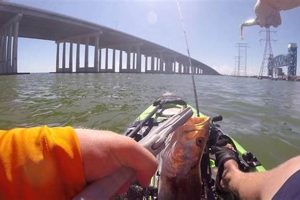
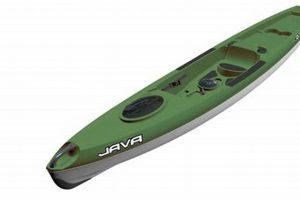
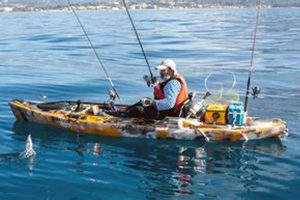
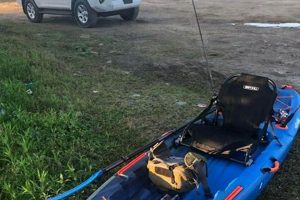
Fishing rods designed for use in kayaks prioritize compact length, balanced action, and durability suitable for confined spaces and the unique challenges of angling from a small watercraft. These specialized rods often feature shorter lengths for easier maneuverability and casting within the kayak’s cockpit, while their construction emphasizes robust materials to withstand the rigors of kayak fishing environments.
Specialized fishing equipment enhances angling effectiveness and enjoyment by catering to specific fishing styles and environments. The development of purpose-built gear reflects an evolution in angling practices, driven by the pursuit of improved performance and adaptation to diverse fishing scenarios. Choosing appropriate gear can significantly improve casting accuracy, fish-fighting control, and overall success on the water.
The following sections delve into specific aspects of rod selection, techniques, and strategies relevant to this specialized form of fishing, offering a comprehensive guide to enhancing one’s kayak angling experience.
Tips for Kayak Fishing Rod Selection and Use
Selecting and utilizing appropriate fishing rods significantly enhances kayak angling effectiveness and safety.
Tip 1: Prioritize Shorter Rod Lengths: Rods ranging from six to seven and a half feet offer optimal control and maneuverability within the limited space of a kayak cockpit. Longer rods can be cumbersome and increase the risk of entanglement.
Tip 2: Consider Rod Action: A medium to medium-heavy action provides versatility for various fish species and lure types commonly targeted from kayaks. Fast action rods facilitate more precise casts and improved hooksets.
Tip 3: Choose Durable Rod Materials: Graphite composite or fiberglass blanks offer a balance of strength, sensitivity, and affordability, making them well-suited to the demands of kayak fishing.
Tip 4: Match Rod Power to Target Species: Lighter power rods suffice for smaller fish like panfish or trout, while heavier power is necessary for larger species such as bass or saltwater fish.
Tip 5: Opt for Collapsible or Two-Piece Rods: These designs enhance portability and storage convenience, essential considerations for kayak anglers.
Tip 6: Secure Rods Properly When Not in Use: Utilize rod holders or leashes to prevent loss or damage during navigation or unexpected kayak movements.
Tip 7: Practice Casting Techniques Specific to Kayaks: Adapt casting motions to the confined space and seated position, focusing on accuracy and control to avoid snags or tangles.
Adhering to these guidelines ensures proper equipment selection and safe handling practices, contributing to a more productive and enjoyable kayak fishing experience.
These tips provide a solid foundation for selecting and using fishing rods in a kayak. The concluding section will reiterate key takeaways and offer further resources for enhancing kayak angling proficiency.
1. Length

Rod length significantly influences kayak angling effectiveness. Shorter rods, typically ranging from 6 to 7.5 feet, are generally preferred for kayak fishing due to the confined cockpit space and the need for close-quarters casting. Longer rods, while offering increased casting distance in open-water situations, become cumbersome and difficult to manage within the limited confines of a kayak. The reduced casting arc inherent in kayak fishing further necessitates shorter rods to prevent interference with the kayak’s structure or surrounding obstacles. For example, when targeting fish close to the kayak or under overhanging branches, a shorter rod provides the necessary precision and control.
The relationship between rod length and kayak dimensions is crucial. Kayaks vary in width and length, influencing the angler’s casting range of motion. A shorter rod in a narrower kayak facilitates more comfortable and efficient casting. Conversely, a longer rod might be manageable in a wider, more stable kayak but could prove impractical in a smaller vessel. Maneuvering a hooked fish also presents challenges with longer rods in a kayak, as the limited space restricts angler movement and increases the risk of line tangling or rod breakage. Shorter rods offer greater control during the fight, minimizing the chances of losing a fish due to equipment limitations.
Selecting the appropriate rod length directly impacts casting accuracy, fish-fighting control, and overall angler comfort in a kayak. Careful consideration of kayak dimensions and target fishing style should guide length selection. Balancing casting distance with maneuverability within the confined cockpit environment optimizes angling success and safety. Prioritizing a rod length suitable for kayak fishing ensures an efficient and enjoyable experience on the water.
2. Action
Rod action, referring to the rod’s bending curve under pressure, plays a crucial role in kayak fishing effectiveness. Fast action rods bend primarily in the top portion, offering advantages for precise casting and quick hooksets, particularly important in close-quarters kayak fishing scenarios. This rapid responsiveness allows for immediate reaction to strikes, increasing hook-up ratios. A moderate action, bending in the mid-section, provides a balance between casting distance and fish-fighting control, suitable for a wider range of species and fishing techniques from a kayak. Slower action rods, bending closer to the handle, offer greater shock absorption and are better suited for larger fish and heavier lines, although their slower response may be less ideal for the quick reactions often required in kayak fishing. For instance, when using lightweight lures or finesse techniques, a fast action rod allows for greater sensitivity and control of the presentation.
Matching rod action to target species and fishing style is essential for optimizing angling outcomes from a kayak. A fast action rod excels with techniques requiring precise lure control or quick hooksets, such as topwater fishing or jigging. Moderate action rods offer versatility for various techniques and species, providing a good balance between casting and fish-fighting capabilities. This versatility is valuable in kayak fishing where anglers may encounter diverse species and fishing situations. Slower action rods are less common in kayak fishing due to their slower response and larger bend radius, which can be cumbersome in the confined space of a kayak. However, in specific situations targeting larger, stronger fish, a slower action might be beneficial for absorbing powerful runs and preventing line breakage. Choosing the appropriate rod action based on the intended fishing application significantly influences angling success from a kayak.
Selecting the correct rod action contributes significantly to an angler’s success and overall experience when fishing from a kayak. The action determines the rod’s sensitivity, casting performance, and fish-fighting control. Understanding these relationships enables anglers to select the optimal action based on their target species, fishing techniques, and the specific demands of the kayak fishing environment. The correct action facilitates more accurate casts, better hooksets, and increased control during the fight, leading to higher catch rates and a more rewarding angling experience. This careful consideration of rod action ultimately enhances efficiency and enjoyment on the water.
3. Power

Rod power, a measure of a fishing rod’s lifting strength, is a critical factor in kayak fishing. It dictates the size and weight of lures and lines a rod can effectively handle, as well as the size of fish it can manage. Lighter power rods are suitable for smaller fish and lighter lures, offering greater sensitivity for detecting subtle bites. Medium power rods provide versatility for a range of species and techniques commonly used in kayak fishing. Heavier power rods are necessary for larger fish and heavier tackle, enabling anglers to handle stronger fights and challenging conditions. For example, a light power rod might be ideal for targeting panfish with small jigs, while a medium-heavy power rod would be more suitable for battling larger bass or inshore saltwater species. Choosing the incorrect power can lead to lost fish, broken lines, or even rod damage. An ultralight rod would be inadequate for handling a large catfish, just as an extra-heavy rod would be overly cumbersome for catching small trout.
The relationship between rod power and target species is paramount in kayak fishing. Matching the rod’s power to the anticipated fish size ensures efficient hooksets, controlled fights, and minimized risk of equipment failure. Targeting smaller fish with a heavy power rod sacrifices sensitivity and fighting enjoyment, while attempting to land a large fish with a light power rod risks rod breakage or line failure. Understanding the target species’ average size and fighting characteristics informs appropriate power selection. For instance, fishing for speckled trout in a saltwater marsh requires a different power rod compared to targeting largemouth bass in a freshwater lake. The trout’s smaller size and less aggressive fight allow for a lighter power rod, while the bass’s larger size and stronger fight necessitate a medium or medium-heavy power rod.
Appropriate rod power selection directly impacts angling success and equipment longevity in kayak fishing. Balancing the rod’s lifting strength with target species and fishing conditions optimizes performance and minimizes risks. Anglers must consider the target species’ size and fighting characteristics, as well as the types of lures and lines they intend to use. This ensures effective hooksets, manageable fights, and reduced risk of equipment failure. Careful consideration of rod power contributes to a more successful and enjoyable kayak fishing experience.
4. Material
Rod material significantly influences performance characteristics crucial for kayak angling. The material impacts the rod’s weight, durability, sensitivity, and action, all of which affect its suitability for the specific demands of fishing from a kayak. Selecting the appropriate material contributes to a balanced and effective fishing setup.
- Graphite
Graphite rods are lightweight, sensitive, and offer excellent casting performance. Their responsiveness transmits subtle bites, a significant advantage in kayak fishing where anglers are often closer to the water and can detect fainter takes. However, graphite can be more brittle than other materials, making it susceptible to damage from impacts or high-stress situations. Higher-modulus graphite offers increased sensitivity and lighter weight, but at a higher price point.
- Fiberglass
Fiberglass rods are known for their durability and affordability. They are more resistant to impacts and bending stresses compared to graphite, making them well-suited for challenging kayak fishing environments. While generally heavier and less sensitive than graphite, fiberglass offers greater strength, making them a reliable choice for targeting larger, more powerful fish.
- Composite
Composite rods blend materials, often fiberglass and graphite, to combine the benefits of both. These rods offer a balance of sensitivity, durability, and affordability, making them a versatile option for kayak anglers. The specific blend of materials influences the rod’s overall performance characteristics. For example, a rod with a higher graphite content will be lighter and more sensitive, while a rod with a higher fiberglass content will be more durable.
- Other Materials
Other materials, such as bamboo or other specialty composites, are less common in kayak fishing rods but offer unique properties. Bamboo provides a classic aesthetic and distinct action, while other advanced composites may offer enhanced strength or sensitivity. These specialized materials often come at a premium price point and cater to niche angling preferences.
Careful material selection contributes significantly to a kayak angler’s effectiveness and enjoyment on the water. Balancing factors such as sensitivity, durability, weight, and cost enables anglers to choose a rod best suited to their target species, fishing style, and budget. The optimal material choice enhances performance, improves fish-fighting control, and ensures equipment longevity in the demanding kayak fishing environment.
5. Portability

Portability is a paramount consideration for kayak fishing rods due to the inherent limitations of space and mobility in a kayak. Transporting, storing, and utilizing fishing gear within a kayak’s confined environment necessitates compact and easily manageable equipment. Rod portability directly influences angler efficiency and overall fishing experience.
- Collapsed Length
The collapsed length of a fishing rod, particularly relevant for multi-piece or telescopic rods, dictates ease of transport and storage within a kayak. Shorter collapsed lengths allow for convenient stowage within the kayak’s hull or dedicated storage compartments, minimizing clutter and maximizing available space. For example, a four-piece rod that collapses to 18 inches offers significantly greater portability than a two-piece rod collapsing to 4 feet. This compact size reduces the risk of rod damage during transport or while navigating through tight spaces.
- Weight
Rod weight influences angler fatigue and overall kayak maneuverability. Lighter rods reduce strain during casting and retrieving, particularly during extended fishing trips. A lightweight rod also contributes to a more balanced kayak setup, enhancing stability and responsiveness. For instance, a 5-ounce rod presents less fatigue and strain compared to a 10-ounce rod, especially when fishing for extended periods. This reduced weight enhances overall comfort and allows for more precise rod control.
- Case or Storage Solutions
Protective cases or storage solutions further enhance rod portability and prevent damage during transport and storage. Dedicated rod sleeves or hard cases offer organized storage and safeguard against impacts or tangles. These solutions are especially important when transporting multiple rods or navigating through dense vegetation. A well-designed rod case can protect valuable fishing equipment and ensure its readiness for use upon reaching the fishing destination.
- Rod Design for Kayak Use
Rods specifically designed for kayak fishing often incorporate features that enhance portability, such as shorter overall lengths and collapsible designs. These specialized rods prioritize maneuverability and balance within a kayak’s limited space. They may also incorporate features like detachable handles or shorter butts to further reduce their footprint within the kayak. This specialized design optimizes rod performance and angler comfort in the kayak fishing environment.
Prioritizing rod portability directly enhances the kayak fishing experience by maximizing space efficiency, minimizing angler fatigue, and protecting valuable equipment. The ability to transport, store, and utilize fishing rods effectively within the confines of a kayak contributes to a more organized, comfortable, and ultimately successful angling outing. Selecting rods designed for portability optimizes the overall kayak fishing experience.
6. Durability
Durability is a critical attribute for kayak fishing rods, given the demanding conditions they frequently encounter. These rods are subjected to impacts, abrasion, and exposure to the elements, including saltwater, UV radiation, and fluctuating temperatures. A durable rod ensures reliable performance and longevity, minimizing the risk of breakage or failure during critical moments. Construction materials, reinforcement techniques, and overall build quality directly influence a rod’s ability to withstand these challenges. For example, a rod constructed with high-quality graphite and reinforced ferrules will be significantly more resistant to damage compared to a rod made with lower-grade materials and lacking reinforcement. The angler’s investment in a durable rod safeguards against equipment failure and ensures consistent performance over time.
The practical implications of rod durability extend beyond mere longevity. A durable rod contributes to angler confidence and safety, particularly when battling strong fish in challenging environments. The ability to rely on equipment integrity during critical moments minimizes the risk of losing a trophy fish or encountering a hazardous situation. Consider a scenario where an angler hooks a powerful fish near submerged obstacles. A durable rod provides the necessary strength and resilience to steer the fish away from danger and ultimately land it successfully. Conversely, a less durable rod might break under the strain, resulting in a lost fish and potentially compromising the angler’s safety. Durability also reduces maintenance and replacement costs, contributing to long-term cost-effectiveness. Choosing a durable rod from the outset represents a sound investment that pays dividends over time.
In conclusion, rod durability represents a critical factor in kayak fishing. It directly influences a rod’s ability to withstand the rigors of the kayak fishing environment, contributing to reliable performance, angler safety, and long-term cost-effectiveness. Prioritizing durability ensures consistent performance, minimizes the risk of equipment failure, and enhances the overall angling experience. Investing in a well-constructed, durable rod safeguards against unforeseen challenges and ensures the angler’s preparedness for any fishing scenario. This focus on durability ultimately empowers anglers to confidently pursue their passion in the demanding kayak fishing environment.
7. Sensitivity
Rod sensitivity plays a crucial role in kayak fishing success, particularly given the angler’s proximity to the water and the often subtle nature of fish strikes. A sensitive rod transmits vibrations and feedback from the line and lure to the angler’s hand, allowing for detection of light bites, subtle changes in lure action, and bottom composition. This heightened awareness enhances angling effectiveness by enabling quicker hooksets, improved lure control, and a more informed understanding of the underwater environment. A sensitive rod effectively extends the angler’s tactile perception below the surface, maximizing the chances of detecting and reacting to fish activity.
- Blank Material and Construction
The rod blank’s material and construction significantly influence sensitivity. Higher-modulus graphite, known for its stiffness and responsiveness, transmits vibrations more effectively than fiberglass or lower-grade graphite. Blank construction techniques, such as thinner wall thicknesses and advanced resin systems, further enhance sensitivity by minimizing energy dissipation. For instance, a high-modulus graphite rod with a thin wall and advanced resin system will transmit even the slightest nibble from a cautious fish, whereas a fiberglass rod might dampen those subtle vibrations. Choosing a rod built with sensitivity-enhancing materials and construction techniques is crucial for maximizing performance in kayak fishing scenarios.
- Rod Guides and Tip
Rod guides and the tip top play a vital role in transmitting vibrations along the rod blank. Lightweight, low-friction guides, such as those made from titanium or high-quality ceramic, minimize interference with line movement and enhance sensitivity. The rod tip, being the primary point of contact with the line, must be sensitive enough to detect even the subtlest of bites. A well-designed tip, often featuring a smaller diameter and specialized material, amplifies vibrations and provides crucial feedback to the angler. For example, a rod equipped with micro guides and a sensitive graphite tip will transmit subtle line movements and vibrations more effectively than a rod with larger, heavier guides and a less refined tip.
- Line and Lure Choice
While not directly related to the rod itself, line and lure choices significantly impact the overall sensitivity experienced by the angler. Braided lines, known for their low stretch and direct contact, transmit vibrations more effectively than monofilament or fluorocarbon. Lure selection also influences sensitivity; certain lures, like crankbaits or spinnerbaits, transmit vibrations and feedback more readily than others. The combined effect of a sensitive rod, braided line, and a vibration-transmitting lure creates a highly responsive system, maximizing the angler’s awareness of underwater activity. For instance, using a braided line with a sensitive crankbait on a graphite rod allows the angler to feel the lure’s action, detect changes in bottom structure, and perceive even the slightest touch from a fish.
- Angler Experience and Technique
While a sensitive rod enhances the potential for detecting subtle bites, the angler’s experience and technique play a crucial role in interpreting and reacting to that feedback. Experienced anglers develop a heightened sense of touch and an understanding of how different vibrations translate to underwater events. Proper rod handling techniques, such as maintaining a light but firm grip, further enhance sensitivity by maximizing the transmission of vibrations to the angler’s hand. An experienced angler can differentiate between a fish bite, a snag, and changes in bottom composition, allowing for more informed decisions and quicker reactions.
In summary, rod sensitivity is a crucial factor in kayak fishing success. By carefully considering the blank material, guides, tip, line choice, lure selection, and refining personal technique, kayak anglers can maximize their ability to detect subtle bites, understand underwater conditions, and ultimately enhance their catch rates. A sensitive rod, combined with angler expertise, becomes a powerful tool for navigating the challenges and maximizing the rewards of kayak fishing.
Frequently Asked Questions
This section addresses common inquiries regarding fishing rods suitable for kayak angling.
Question 1: What rod length is optimal for kayak fishing?
Rods ranging from 6 to 7.5 feet are generally recommended for kayak fishing. This length balances maneuverability within the kayak’s confined space with adequate casting distance and leverage for fighting fish. Longer rods can be cumbersome and difficult to manage, while significantly shorter rods may sacrifice casting performance.
Question 2: What rod action is best suited for kayak fishing?
Medium to medium-heavy action rods offer versatility for various kayak fishing techniques and target species. Fast action rods provide advantages for precise casts and quick hooksets, while moderate action rods offer a balance between casting and fish-fighting capabilities. The optimal action depends on specific fishing styles and target species.
Question 3: What rod power is recommended for kayak fishing?
Rod power should align with the target species and fishing conditions. Lighter power rods are suitable for smaller fish and lighter lures, while heavier power rods are necessary for larger fish and heavier tackle. Matching rod power to the anticipated fish size ensures efficient hooksets and minimizes the risk of equipment failure.
Question 4: What materials are commonly used in kayak fishing rods?
Graphite composite and fiberglass are popular choices for kayak fishing rods. Graphite offers sensitivity and lightweight performance, while fiberglass provides durability and affordability. Composite rods blend these materials to combine their respective benefits. Material selection influences rod weight, sensitivity, durability, and cost.
Question 5: What features should one look for in a kayak fishing rod handle?
Kayak fishing rod handles should prioritize comfort and grip, especially in wet conditions. Shorter handles are often preferred for maneuverability within the kayak. Materials like cork or EVA foam provide a secure and comfortable grip. A split grip design can reduce weight and enhance sensitivity.
Question 6: How should kayak fishing rods be stored and transported?
Kayak fishing rods should be stored and transported securely to prevent damage. Rod holders, leashes, and protective cases or sleeves help safeguard rods during transport and while on the water. Proper storage prevents breakage and ensures rods remain in optimal condition for fishing.
Addressing these common questions provides a foundational understanding for selecting appropriate fishing rods for kayak angling. Careful consideration of rod length, action, power, material, handle design, and storage practices contributes significantly to angling success and enjoyment on the water.
The subsequent section will offer concluding thoughts and recommendations for optimizing kayak fishing experiences.
Conclusion
Careful consideration of rod attributes like length, action, power, material, and portability is essential for optimizing kayak angling effectiveness. Selecting appropriate gear tailored to specific fishing conditions, target species, and kayak dimensions enhances performance and enjoyment on the water. Understanding the interplay of these factors empowers anglers to make informed decisions regarding equipment choices, contributing to a more successful and rewarding kayak fishing experience. The correct equipment improves casting accuracy, fish-fighting control, and overall angler comfort within the confined kayak environment.
Enhancing angling proficiency through informed equipment choices and refined techniques represents a continuous journey. Adapting to evolving fishing conditions and exploring innovative gear contributes to long-term angling success. The pursuit of knowledge and practical experience remains paramount for maximizing enjoyment and achieving desired outcomes in the dynamic world of kayak fishing. Continued exploration of specialized equipment and techniques promises to further refine angling practices and unlock new possibilities within this specialized pursuit.