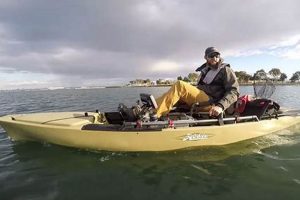
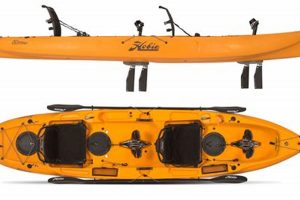
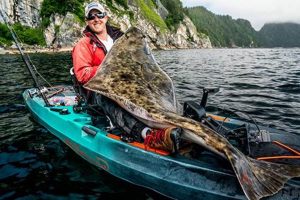
Constructing a personalized watercraft designed for angling involves a multifaceted process encompassing design, material selection, and fabrication techniques. This can range from adapting an existing kayak with fishing-specific modifications to building a completely new vessel from scratch, tailored to individual needs and preferences. An example would be outfitting a recreational kayak with rod holders, anchor trolleys, and storage compartments, or building a specialized fishing kayak from a kit or raw materials like wood, fiberglass, or plastic.
The advantages of a custom-built or modified fishing kayak lie in the ability to optimize stability, maneuverability, and storage capacity for specific fishing styles and environments. A well-designed fishing kayak enhances angler performance by providing a stable platform for casting, reeling, and landing fish, while offering efficient movement through the water. Historically, fishing from small, human-powered watercraft has been a practice across cultures, evolving from simple dugout canoes to the sophisticated fishing kayaks of today. This evolution reflects a continuous drive to improve fishing efficiency and access to waterways.
This article will explore the key aspects of kayak construction and modification for fishing purposes, including design considerations, material selection, necessary tools and equipment, and step-by-step guidance for the process. Further sections will delve into outfitting options and safety precautions for anglers using these specialized watercraft.
Tips for Kayak Fishing Success
Careful planning and execution are crucial for a successful kayak fishing experience. The following tips offer guidance for constructing or modifying a fishing kayak and optimizing its performance on the water.
Tip 1: Stability is Paramount: Kayak stability is fundamental for safe and effective fishing. A wider hull generally offers greater initial stability, while a longer hull improves tracking in a straight line. Consider the intended fishing environment (calm lakes versus moving rivers) when determining the desired level of stability.
Tip 2: Material Selection Matters: The choice of material impacts durability, weight, and performance. Polyethylene kayaks are durable and affordable, while composites like fiberglass or Kevlar offer lighter weight and greater stiffness, though at a higher cost. Wood offers a classic aesthetic and can be customized extensively.
Tip 3: Prioritize Comfort and Ergonomics: A comfortable seating position and readily accessible gear contribute to a more enjoyable and productive fishing trip. Ensure adequate legroom and consider adjustable seating options for optimal comfort.
Tip 4: Plan Storage Strategically: Efficient storage solutions are essential for organizing tackle, rods, and other fishing gear. Consider incorporating built-in compartments, dry hatches, and strategically placed bungee cords.
Tip 5: Accessorize for Enhanced Functionality: Rod holders, anchor trolleys, fish finders, and GPS units can significantly improve fishing efficiency and overall experience. Select accessories based on specific fishing needs and target species.
Tip 6: Safety First: Always prioritize safety by wearing a personal flotation device (PFD), carrying a whistle, and informing someone of fishing plans. Be mindful of weather conditions and water hazards.
Tip 7: Practice Makes Perfect: Before venturing into open water, practice maneuvering and controlling the kayak in a safe and controlled environment. Familiarize oneself with the kayak’s handling characteristics and stability limitations.
By adhering to these guidelines, anglers can maximize their chances of a successful and enjoyable kayak fishing experience. These considerations contribute to both safety and efficiency on the water.
The next section will provide detailed instructions on constructing a fishing kayak, covering various materials and construction methods.
1. Planning and Design

The foundation of a successful fishing kayak build lies in meticulous planning and design. This crucial initial stage dictates the kayak’s final dimensions, hull shape, material requirements, and integrated features. A well-defined plan streamlines the construction process, minimizes errors, and ensures the finished product aligns with the angler’s specific needs and fishing style. For instance, a kayak designed for river fishing will require a different hull shape and stability profile compared to one intended for calm lakes or ocean bays. The planning phase involves careful consideration of factors like desired length, width, depth, and weight capacity, all influencing maneuverability, stability, and storage space. Detailed sketches or 3D models aid in visualizing the final product and identifying potential design flaws before construction begins. This proactive approach prevents costly rework and ensures a functional and efficient fishing platform.
The design phase further refines the initial plan, focusing on specific features that enhance fishing functionality. This includes strategically placed rod holders, integrated tackle storage compartments, anchor trolley systems, and mounting points for fish finders or GPS units. Consideration should be given to the angler’s preferred fishing techniques and target species. A kayak designed for trolling, for example, may benefit from rod holders positioned for optimal line retrieval, while a kayak for fly fishing might prioritize a stable casting platform and ample storage for fly boxes. Careful design choices maximize efficiency on the water, allowing anglers to focus on fishing rather than managing gear or struggling with an unstable platform. For example, integrating a livewell into the design requires careful consideration of plumbing and water circulation to maintain the health of the catch.
In conclusion, the planning and design phase represents a critical investment in the overall success of a fishing kayak project. Thorough consideration of dimensions, features, and intended use ensures the finished product meets the angler’s specific requirements. A well-defined plan, coupled with a thoughtful design, ultimately translates to a more efficient, enjoyable, and productive fishing experience. Challenges in this phase often revolve around balancing desired features with practical limitations like weight, cost, and construction complexity. Overcoming these challenges requires careful analysis and compromise to achieve a balanced and functional design.
2. Material Selection
Material selection significantly influences the performance, durability, and cost of a fishing kayak. The chosen materials dictate the vessel’s weight, resistance to impact and abrasion, and overall lifespan. Careful consideration of material properties is essential for constructing a kayak suited to specific fishing environments and angler preferences.
- Durability and Impact Resistance:
The kayak’s construction material must withstand impacts from rocks, submerged obstacles, and general wear and tear. Polyethylene offers excellent impact resistance and durability, making it suitable for challenging environments. Composites like fiberglass and Kevlar provide high strength-to-weight ratios but can be more susceptible to cracking or puncture damage. Wood, while aesthetically pleasing and customizable, requires careful maintenance and protection from moisture and UV exposure. The choice depends on the anticipated usage and environmental conditions.
- Weight and Portability:
Kayak weight influences ease of transport and maneuverability on the water. Lighter materials like composites allow for easier car-topping, carrying to launch sites, and maneuvering through shallow water or tight spaces. Polyethylene kayaks tend to be heavier but offer increased stability. Wood kayaks can vary significantly in weight depending on the type of wood and construction methods employed. Weight considerations are crucial for anglers who frequently transport their kayaks or fish in areas requiring portaging.
- Cost and Budget Considerations:
Material cost represents a significant factor in kayak construction. Polyethylene offers an economical option, while composite materials typically command a higher price. Wood can range from affordable to expensive, depending on the species and quality of the lumber. Building a kayak from a kit often reduces material costs compared to sourcing individual components. Budget constraints influence material choices and impact the overall project scope.
- Maintenance and Repair:
Different materials require varying levels of maintenance. Polyethylene requires minimal upkeep, while wood necessitates regular sealing and varnishing to protect against moisture damage. Composite materials may require specialized repairs in case of cracks or delamination. The chosen material impacts the long-term maintenance requirements and associated costs. Ease of repair and availability of replacement parts also influence material selection. For example, polyethylene repairs can often be performed with readily available adhesives and patching materials, while composite repairs might necessitate specialized resins and fiberglass cloth.
The interplay of these material characteristics directly impacts the functionality and longevity of a fishing kayak. Balancing durability, weight, cost, and maintenance requirements is crucial for selecting the most appropriate material for a specific build. A thorough understanding of material properties empowers informed decision-making and contributes to a successful kayak fishing experience. For instance, choosing a lightweight composite material for a kayak intended for long-distance paddling expeditions prioritizes efficiency and reduces fatigue, while selecting a robust polyethylene kayak for rocky river environments prioritizes durability and impact resistance.
3. Construction Techniques

Construction techniques employed in building a fishing kayak directly influence its structural integrity, performance, and longevity. The chosen method dictates the kayak’s ability to withstand stress, maintain watertightness, and resist damage from impacts and environmental exposure. Appropriate construction techniques are fundamental to creating a safe and functional vessel. For example, stitch-and-glue construction, commonly used with plywood, involves stitching panels together with wire and then reinforcing the seams with fiberglass tape and epoxy resin. This technique creates a lightweight yet durable hull. Alternatively, rotomolding, often used for polyethylene kayaks, involves melting plastic pellets and molding them into the desired kayak shape. This process produces a seamless, highly durable hull.
The selection of construction techniques should align with the chosen material and the desired performance characteristics. Skin-on-frame construction, utilizing a wooden or aluminum frame covered with a flexible skin, offers a lightweight and highly customizable option. However, this method requires specialized skills and meticulous attention to detail. Fiberglass layup over a mold allows for complex hull shapes and high strength but demands precise resin application and careful curing processes. Each technique presents unique advantages and challenges, requiring builders to assess their skill level and available resources. Consider, for example, the difference between building a strip-built kayak, which involves meticulously gluing thin strips of wood together over a form, and assembling a kayak from a pre-fabricated kit. The former requires advanced woodworking skills and significant time investment, while the latter simplifies the process and reduces the required skill level.
Mastery of appropriate construction techniques is essential for ensuring the kayak’s seaworthiness and longevity. Improperly executed joints, inadequate sealing, or insufficient reinforcement can compromise structural integrity, leading to leaks, cracks, or even catastrophic failure. Understanding the principles of each technique and adhering to best practices are crucial for creating a robust and reliable fishing platform. Challenges can include achieving uniform resin distribution in fiberglass layups, ensuring tight seams in stitch-and-glue construction, or maintaining consistent tension in skin-on-frame builds. Addressing these challenges requires careful planning, precise execution, and meticulous attention to detail. Ultimately, the selected construction techniques, when executed correctly, translate directly into a durable, high-performing, and safe fishing kayak, contributing significantly to a positive on-the-water experience.
4. Outfitting and Accessories

Outfitting and accessorizing a fishing kayak represent crucial steps in transforming a basic hull into a specialized fishing platform. The strategic selection and integration of accessories directly impact functionality, efficiency, and overall fishing success. Appropriate outfitting enhances angler comfort, improves gear organization, and facilitates specific fishing techniques. This stage of the build process tailors the kayak to individual needs and preferences, optimizing its performance on the water.
- Rod Holders:
Rod holders provide secure storage and quick access to fishing rods, freeing hands for paddling, maneuvering, and landing fish. Various types exist, including flush-mount, adjustable, and rotating rod holders. Selecting the appropriate type and placement depends on the angler’s preferred fishing style and target species. For example, trolling requires rod holders positioned for optimal line retrieval, while kayak anglers targeting larger game fish might opt for heavy-duty rod holders capable of withstanding significant stress. Proper rod holder placement minimizes line tangling and maximizes fishing efficiency.
- Storage Solutions:
Efficient storage solutions are essential for organizing tackle, safety gear, and personal items. Integrated hatches, dry bags, and tackle boxes maintain order and protect gear from water damage. Customizing storage compartments allows anglers to tailor the kayak to their specific needs and preferences. Examples include dedicated compartments for tackle trays, waterproof storage for electronics, and accessible storage for frequently used items like pliers and line cutters. Well-organized storage enhances efficiency and reduces clutter on the fishing platform.
- Anchor Systems:
Anchor systems allow anglers to maintain position in specific locations, crucial for fishing in current or targeting structure. Anchor trolleys facilitate controlled drifting and precise positioning. Selecting the appropriate anchor type and deployment method depends on the fishing environment and bottom composition. For example, a lightweight folding anchor suits shallow-water fishing, while a heavier grapple anchor is more effective in deeper water or strong currents. Proper anchor deployment ensures stability and maximizes fishing effectiveness.
- Electronics and Navigation:
Fish finders, GPS units, and other electronic devices provide valuable information about water depth, fish location, and navigation. Integrating these devices into the kayak’s outfitting enhances fishing success and improves safety. Mounting options include flush-mounted displays, RAM mounts, and transducer scupper mounts. Proper installation ensures clear visibility and protects sensitive electronics from water damage. For example, integrating a fish finder with GPS capabilities allows anglers to mark productive fishing spots and navigate back to them efficiently.
The careful selection and integration of these outfitting components transform a standard kayak hull into a purpose-built fishing machine. These additions enhance functionality, improve angler comfort, and ultimately contribute to a more successful and enjoyable fishing experience. Furthermore, the chosen accessories reflect individual fishing styles and preferences, demonstrating the highly customizable nature of kayak fishing. The interplay between kayak design, material selection, construction techniques, and outfitting culminates in a personalized vessel tailored to specific fishing needs and environments. For example, a kayak designed for offshore fishing might prioritize stability and storage capacity for larger gear, while a kayak intended for small streams might emphasize maneuverability and a minimalist outfitting approach.
5. Safety and Testing
Safety and testing are paramount in making a fishing kayak, representing the critical final stages before deployment on the water. These processes ensure structural integrity, assess performance characteristics, and identify potential safety hazards. Rigorous testing validates design choices and construction techniques, ultimately contributing to a safe and reliable fishing platform. Neglecting these crucial steps can compromise angler safety and jeopardize the kayak’s performance in real-world conditions. A thorough evaluation of stability, watertightness, and handling characteristics is essential for a successful and safe fishing experience.
- Stability Assessment:
Stability testing evaluates the kayak’s resistance to capsizing and its ability to recover from destabilizing forces. This involves both primary (initial stability) and secondary (stability at increasing angles of lean) stability assessments. Methods include controlled tilting tests and simulated on-water scenarios, such as sudden weight shifts or wave impacts. Adequate stability is crucial for angler safety, particularly when casting, reeling, or landing fish. For example, a kayak designed for ocean fishing requires greater stability than one intended for calm lakes. Understanding stability characteristics empowers informed decision-making regarding kayak usage and environmental suitability.
- Watertightness Evaluation:
Watertightness testing verifies the kayak’s ability to prevent water ingress, crucial for maintaining buoyancy and preventing equipment damage. This involves thorough inspection of seams, hatches, and through-hull fittings. Tests include water spray tests, submersion tests, and extended floatation tests. Identifying and addressing leaks before deployment prevents potentially dangerous situations on the water. For instance, a leak in the hull can compromise buoyancy and stability, increasing the risk of capsizing. Thorough watertightness evaluation ensures a safe and dry fishing experience.
- On-Water Performance Testing:
On-water testing assesses the kayak’s handling characteristics, maneuverability, and tracking performance. This involves paddling the kayak in various conditions, including calm water, wind, and currents. Evaluating speed, turning radius, and responsiveness provides valuable insights into the kayak’s performance capabilities. This testing phase allows for fine-tuning adjustments to rudder systems, paddle selection, and seating position. For example, a kayak designed for river fishing requires greater maneuverability than one intended for open ocean touring. Understanding on-water performance characteristics allows anglers to optimize their paddling technique and maximize fishing efficiency.
- Load Capacity and Stress Testing:
Load capacity and stress testing determine the kayak’s safe carrying capacity and its ability to withstand stress under load. This involves loading the kayak with weight and observing its performance and structural integrity. Stress tests can include simulated impact scenarios and fatigue testing to evaluate long-term durability. Understanding load capacity is essential for safe operation and prevents overloading, which can compromise stability and lead to structural failure. For example, exceeding the recommended load capacity can submerge the scupper holes, increasing the risk of swamping. Stress testing ensures the kayak can handle the anticipated loads and stresses encountered during typical fishing excursions.
These interconnected safety and testing procedures are essential for ensuring a safe and functional fishing kayak. Thorough evaluation and refinement contribute to a reliable and seaworthy vessel, maximizing angler safety and optimizing on-water performance. These final stages of the building process represent a critical investment in the overall success and longevity of the finished product. The results of these tests inform final adjustments and modifications, ensuring the kayak meets the demands of its intended use and provides a safe and enjoyable fishing platform.
Frequently Asked Questions
This section addresses common inquiries regarding the construction and utilization of fishing kayaks, providing concise and informative responses to facilitate informed decision-making and enhance understanding.
Question 1: What are the primary advantages of a purpose-built fishing kayak over a recreational kayak?
Purpose-built fishing kayaks offer enhanced stability, specialized storage for fishing gear, and integrated features like rod holders and anchor trolleys, optimizing angling efficiency and comfort compared to recreational kayaks.
Question 2: Which hull design is most suitable for ocean fishing?
Longer kayaks with a pronounced keel and greater width generally provide enhanced stability and tracking in offshore conditions, crucial for navigating ocean currents and swells.
Question 3: What materials are commonly used in fishing kayak construction, and what are their respective advantages?
Polyethylene offers durability and affordability, while composite materials like fiberglass or Kevlar provide lighter weight and increased stiffness. Each material presents distinct performance characteristics and cost considerations.
Question 4: How does one determine the appropriate kayak length and width for individual needs?
Kayak dimensions should align with angler size, weight, intended fishing environment, and storage requirements. Longer kayaks generally track better, while wider kayaks offer increased stability.
Question 5: What safety precautions should one take when fishing from a kayak?
Wearing a personal flotation device (PFD), carrying a whistle, informing someone of fishing plans, and checking weather conditions are essential safety practices for kayak anglers.
Question 6: What are the key considerations when outfitting a fishing kayak with accessories?
Accessory selection should align with specific fishing techniques and target species. Rod holders, storage solutions, anchor systems, and electronic devices enhance functionality and efficiency on the water.
Understanding these key aspects of fishing kayak construction, utilization, and safety contributes to a more informed and successful angling experience.
The subsequent section will delve into advanced techniques for customizing fishing kayaks to specific angling styles and preferences.
Conclusion
Constructing a fishing kayak represents a multifaceted endeavor encompassing meticulous planning, informed material selection, precise construction techniques, strategic outfitting, and rigorous testing. Each stage significantly influences the final product’s performance, durability, and safety. From initial design considerations to final on-water evaluations, attention to detail and adherence to best practices are essential for creating a functional and reliable fishing platform. Understanding the interplay of these elements empowers informed decision-making, resulting in a personalized vessel tailored to specific angling needs and preferences.
The pursuit of crafting a personalized fishing kayak extends beyond mere vessel construction; it embodies a dedication to optimizing the angling experience. A well-designed and properly constructed fishing kayak unlocks new possibilities on the water, enhancing both efficiency and enjoyment. This process empowers anglers to connect more intimately with their aquatic environment while pursuing their passion. The continued evolution of kayak design and construction promises further advancements in performance, customization, and sustainability, enriching the future of kayak fishing for generations to come.