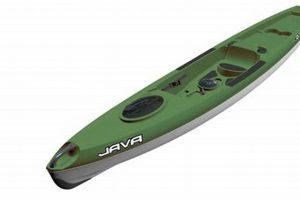
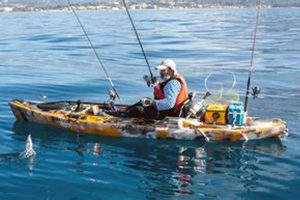
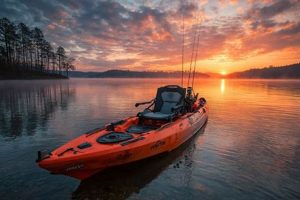
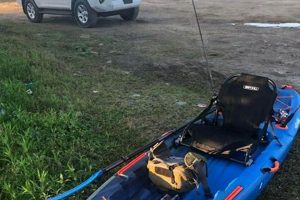
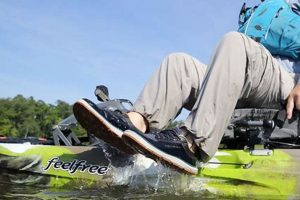
This specific model denotes a fishing kayak designed for the next generation of anglers. It represents a culmination of design and technology aimed at enhancing the fishing experience from a kayak. An example would be a kayak equipped with advanced features like a pedal-powered propulsion system, integrated fish finders, and specialized storage for fishing gear.
Such vessels offer improved stability, speed, and hands-free operation compared to traditional paddle kayaks. This allows anglers to cover more water, focus on fishing techniques, and ultimately increase their chances of success. The evolution of fishing kayaks reflects the growing demand for specialized watercraft that cater to the specific needs of anglers. These advancements contribute to a more comfortable, efficient, and enjoyable fishing experience.
This article will further explore the key features, advantages, and potential drawbacks of this type of advanced fishing kayak, providing prospective buyers with the information they need to make informed decisions. Topics will include an in-depth look at construction materials, propulsion systems, technological integrations, and overall performance on the water.
Tips for Utilizing Advanced Fishing Kayaks
Maximizing the potential of a technologically advanced fishing kayak requires understanding key operational and safety procedures. The following tips offer guidance for enhancing fishing success and ensuring a safe experience on the water.
Tip 1: Master the Propulsion System: Familiarization with the kayak’s propulsion system, whether pedal-driven or motorized, is crucial. Practice maneuvering in calm waters before venturing into more challenging conditions. This allows anglers to develop efficient control and responsiveness.
Tip 2: Utilize Integrated Technology Effectively: Modern fishing kayaks often feature integrated fish finders and GPS systems. Learning to interpret the data from these tools enhances the ability to locate fish and navigate effectively. Regularly update software and charts for optimal performance.
Tip 3: Prioritize Safety Equipment: Always wear a personal flotation device (PFD) and carry essential safety gear, including a whistle, signaling device, and first-aid kit. Check local regulations for specific safety requirements.
Tip 4: Plan and Research Fishing Locations: Thorough research of potential fishing spots, including water depth, currents, and potential hazards, is essential. Utilize online resources and local knowledge to identify productive areas.
Tip 5: Practice Proper Kayak Handling Techniques: Understanding proper launching, landing, and re-entry techniques ensures a safe and efficient experience on the water. Consider taking a kayaking safety course for advanced instruction.
Tip 6: Organize and Secure Fishing Gear: Proper organization and secure storage of fishing rods, tackle boxes, and other equipment prevent loss and interference with kayak operation. Utilize specialized storage compartments and bungee cords for optimal organization.
Tip 7: Respect Wildlife and the Environment: Practice catch-and-release whenever possible and adhere to local fishing regulations. Dispose of waste responsibly and minimize environmental impact.
By following these guidelines, anglers can significantly improve their fishing success and overall safety while utilizing the advanced capabilities of modern fishing kayaks. Preparation and responsible operation contribute to a more rewarding and sustainable fishing experience.
The following section will offer concluding thoughts on the evolution and future of fishing kayaks and their impact on the sport of angling.
1. Advanced Hull Design

Advanced hull design stands as a cornerstone of the “kayak to fish nextgen 10” concept, directly influencing performance, stability, and the overall angling experience. Understanding the nuances of this design philosophy is critical for appreciating the capabilities of these specialized fishing kayaks.
- Hydrodynamic Efficiency
Modern fishing kayaks utilize hull designs optimized for reduced drag and increased speed, allowing anglers to cover more water with less effort. Features like a streamlined profile and carefully positioned chines contribute to efficient movement through the water. This translates to more time fishing and less time paddling, particularly beneficial in larger bodies of water or against currents. The “nextgen 10” kayak benefits significantly from these advancements, enabling anglers to reach distant fishing spots quickly and efficiently.
- Stability and Tracking
Hull design plays a crucial role in kayak stability, a critical factor for anglers casting lines and reeling in fish. Features like a wider beam, a flatter bottom, and strategically placed fins or tracking keels contribute to enhanced stability and prevent tipping. This is especially important in challenging conditions such as windy days or choppy water. The “nextgen 10” design prioritizes stability to provide a secure and comfortable fishing platform.
- Maneuverability and Control
While stability is paramount, maneuverability remains crucial for navigating tight spots, approaching fish subtly, and adjusting to changing water conditions. Features such as a defined keel, rocker profile, and rudder systems contribute to responsive handling and precise control. The “nextgen 10” balances stability with maneuverability, allowing anglers to navigate diverse environments effectively.
- Material Selection and Construction
Hull material directly impacts durability, weight, and performance. Modern fishing kayaks utilize materials like high-density polyethylene (HDPE), fiberglass, or composites, each offering distinct advantages in terms of strength, weight, and impact resistance. The selection of materials in “nextgen 10” kayaks reflects a focus on durability and performance in demanding environments.
These facets of advanced hull design converge to create fishing kayaks that excel in performance, stability, and overall fishing effectiveness. The “kayak to fish nextgen 10” embodies these principles, representing a significant advancement in fishing kayak technology and design. The result is a vessel optimized for the demands of modern anglers seeking a superior on-the-water experience.
2. Pedal Propulsion System

The pedal propulsion system represents a significant advancement in fishing kayak technology, directly addressing the limitations of traditional paddle-powered kayaks. Its integration into the “kayak to fish nextgen 10” paradigm significantly enhances the angling experience by providing hands-free operation and increased efficiency on the water.
- Hands-Free Fishing
Pedal propulsion allows anglers to maintain constant forward momentum and precise positioning without using their hands. This is crucial for casting, retrieving lures, and fighting fish, significantly improving angling efficiency. The freedom from paddling allows for greater focus on fishing techniques and quicker response times to fish activity.
- Increased Speed and Range
Pedal-powered systems generally offer higher speeds and greater range compared to paddling, particularly over longer distances. This enables anglers to cover more water, explore distant fishing spots, and spend less time traveling between locations. This expanded range and speed contribute to a more productive fishing experience.
- Improved Maneuverability and Control
Modern pedal propulsion systems often integrate rudder controls, providing precise maneuverability and directional stability. This is essential for navigating complex waterways, approaching fish stealthily, and maintaining position in currents or windy conditions. The enhanced control allows anglers to target specific areas with greater precision.
- Physical Considerations and Ergonomics
Pedal kayaks offer a different physical engagement compared to paddling, potentially reducing strain on the upper body while engaging leg muscles. The ergonomic design of pedal systems is a key consideration for comfort and efficiency during extended fishing trips. Proper seating position and adjustable pedal configurations contribute to a more comfortable and less fatiguing experience.
The integration of a pedal propulsion system significantly enhances the capabilities of the “kayak to fish nextgen 10,” offering a distinct advantage over traditional paddle kayaks. This advancement contributes to a more efficient, comfortable, and ultimately more successful fishing experience by freeing up the angler’s hands, expanding their range, and providing precise control on the water.
3. Integrated Technology
Integrated technology forms a core component of the “kayak to fish nextgen 10” concept, transforming the angling experience by providing real-time data, enhanced navigation capabilities, and improved fish-finding efficiency. This fusion of technology and kayak design significantly elevates the potential for angling success and contributes to a more informed and strategic approach to fishing.
Fish finders represent a key technological integration, utilizing sonar to create underwater maps, locate fish, and identify underwater structures. GPS systems provide precise location data, enabling navigation to specific coordinates, tracking routes, and marking productive fishing spots. Integration with smartphones and tablets allows anglers to access real-time weather information, tide charts, and fishing regulations. These technological advancements create a synergistic effect, providing anglers with a comprehensive understanding of the underwater environment and enhancing their ability to locate and target fish effectively. Examples include chartplotters displaying navigational charts overlaid with fish finder data or mobile apps providing remote control of trolling motors. The practical significance lies in informed decision-making, leading to increased fishing success and a more engaging experience.
Integration requires careful consideration of user interface and power management. Displays must be sunlight-readable and controls easily accessible while kayaking. Power sources must be reliable and long-lasting to support extended trips. Addressing these challenges optimizes the utility of integrated technology, ensuring a seamless and beneficial experience. The future of “kayak to fish nextgen 10” likely involves further integration of smart technology, automation, and data analysis, potentially including underwater cameras, AI-powered fish identification, and automated fishing assistance. These developments promise to further revolutionize the sport of angling, increasing efficiency and accessibility while requiring anglers to develop new skills in utilizing these advanced tools effectively.
4. Enhanced Stability
Enhanced stability represents a critical advancement within the “kayak to fish nextgen 10” framework. Stability directly influences angler safety and fishing effectiveness. A stable platform provides a secure foundation for casting, reeling, and landing fish, particularly crucial when handling larger fish or fishing in challenging conditions like windy or choppy water. Reduced wobble or tipping risk allows anglers to focus on fishing techniques rather than maintaining balance, thus enhancing overall performance. Consider, for example, sight fishing in shallow water; a stable kayak allows an angler to stand and cast with greater accuracy and control, significantly increasing the likelihood of success. Conversely, a less stable kayak would hinder performance and potentially compromise safety in such situations. This underscores the importance of stability as a key component of the “nextgen 10” concept.
Several design elements contribute to enhanced stability in modern fishing kayaks. Wider hulls provide a larger base of support, while flatter hull bottoms enhance initial stability. Features like outriggers or pontoon systems further increase stability, particularly helpful for anglers who prefer to stand while fishing. Weight distribution also plays a crucial role; a lower center of gravity improves stability, making it essential to distribute gear evenly within the kayak. Understanding these design elements and their impact on stability empowers anglers to make informed decisions when selecting a “nextgen 10” kayak suited to their specific needs and fishing style. The practical significance of enhanced stability extends beyond simply preventing capsizing. It translates to increased confidence on the water, improved casting accuracy, and a more comfortable and enjoyable fishing experience.
In summary, enhanced stability serves as a foundational element of the “kayak to fish nextgen 10” philosophy. It directly impacts angler safety, fishing effectiveness, and overall enjoyment on the water. Understanding the factors that contribute to stability, such as hull design and weight distribution, allows anglers to make informed decisions and maximize their performance. While advancements in stability contribute significantly to improved fishing experiences, ongoing design innovation continues to explore new approaches to further enhance stability and angler performance in diverse fishing environments.
5. Specialized Storage

Specialized storage solutions represent a defining characteristic of the “kayak to fish nextgen 10” philosophy. Effective organization of fishing gear directly impacts angling efficiency and safety. Dedicated compartments, rod holders, and tackle storage systems maintain order and accessibility, allowing anglers to focus on fishing rather than searching for equipment. Consider a scenario where an angler hooks a large fish; readily accessible pliers or a net, stored within easy reach, can be crucial for a successful landing. Conversely, a disorganized kayak can lead to tangled lines, lost equipment, and potentially hazardous situations. Specialized storage, therefore, contributes significantly to a more streamlined and productive fishing experience. Examples include recessed tackle trays that prevent gear from shifting during movement, vertical rod holders that secure rods while paddling, and dry storage compartments for electronics and personal items.
Practical applications of specialized storage extend beyond mere convenience. Securely stored gear minimizes the risk of losing valuable equipment, particularly in rough conditions. Dedicated compartments for specific items, such as lures or bait, facilitate quick changes and adjustments to fishing techniques. Proper weight distribution within storage compartments also contributes to kayak stability and balance, enhancing overall performance and safety. Furthermore, specialized storage promotes a more organized and less cluttered fishing environment, reducing stress and allowing for greater focus on the task at hand. This contributes to a more enjoyable and ultimately more successful fishing experience. The evolution of kayak design has led to increasingly innovative storage solutions, reflecting a growing understanding of angler needs and the demands of the sport.
In summary, specialized storage serves as an integral component of the “kayak to fish nextgen 10” concept. It transcends mere convenience, directly impacting angling efficiency, safety, and overall enjoyment. The ability to quickly locate and access necessary equipment contributes to a more streamlined and productive fishing experience. Understanding the practical applications and benefits of specialized storage empowers anglers to make informed decisions when selecting a fishing kayak and optimizing its use on the water. This focus on efficient organization underscores the broader trend within fishing kayak design towards maximizing functionality and angler performance.
Frequently Asked Questions
This section addresses common inquiries regarding “nextgen 10” fishing kayaks, providing concise and informative responses to assist prospective buyers in making informed decisions.
Question 1: What are the primary advantages of a “nextgen 10” fishing kayak over a traditional paddle kayak?
Key advantages include hands-free propulsion, increased speed and range, enhanced stability, and integrated technology for improved fish finding and navigation. These features contribute to a more efficient and enjoyable fishing experience.
Question 2: How does the pedal propulsion system impact fishing performance?
Pedal propulsion frees the angler’s hands for casting and reeling, allowing for quicker reactions to fish activity and improved lure presentation. This hands-free operation significantly enhances fishing efficiency.
Question 3: What types of integrated technology are typically found in these kayaks?
Common integrations include fish finders, GPS systems, and connectivity with smartphones or tablets. These technologies provide real-time data on fish location, underwater structures, navigation routes, and weather conditions, enhancing angling success.
Question 4: How does the hull design contribute to stability and maneuverability?
Features like wider beams, flatter bottoms, and strategically placed fins or keels enhance stability, while a defined keel and rocker profile contribute to maneuverability. This balance allows for both a secure platform and responsive handling.
Question 5: What are the key considerations regarding specialized storage in a fishing kayak?
Factors to consider include the type and quantity of storage compartments, their accessibility, and their impact on weight distribution and kayak balance. Efficient storage solutions optimize organization and contribute to a more productive fishing experience.
Question 6: What maintenance is required for a “nextgen 10” fishing kayak?
Regular maintenance includes rinsing with fresh water after each use, periodic inspection of the hull and propulsion system, and proper storage to protect against UV damage. Following manufacturer guidelines ensures optimal performance and longevity.
Careful consideration of these frequently asked questions provides a comprehensive understanding of the key features and benefits of “nextgen 10” fishing kayaks. This knowledge equips prospective buyers with the information necessary to make informed decisions aligned with individual fishing needs and preferences.
The subsequent section will delve into a detailed comparison of various “nextgen 10” models available on the market.
Conclusion
This exploration of the “kayak to fish nextgen 10” concept has highlighted its transformative impact on the angling experience. Advanced hull designs, coupled with pedal-powered propulsion systems, provide enhanced speed, maneuverability, and hands-free operation. Integrated technology, including fish finders and GPS, empowers anglers with real-time data and navigation capabilities. Specialized storage solutions optimize organization and efficiency on the water. Enhanced stability ensures a secure and comfortable platform, even in challenging conditions. These advancements collectively contribute to a more productive, enjoyable, and accessible fishing experience.
The “kayak to fish nextgen 10” represents a significant evolution in angling technology, offering a compelling alternative to traditional fishing methods. Its potential to further enhance fishing experiences remains significant, with ongoing innovations promising further improvements in performance, functionality, and integration with emerging technologies. As the sport of angling continues to evolve, embracing these advancements promises to unlock new possibilities for anglers seeking to maximize their time on the water.