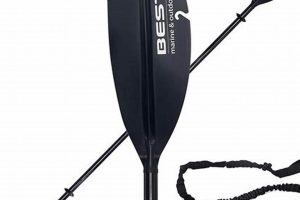
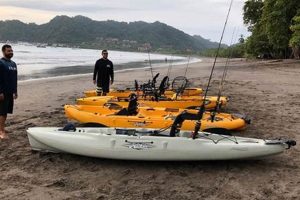
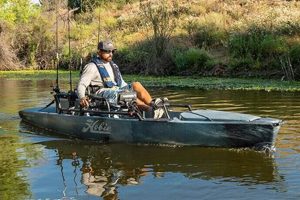
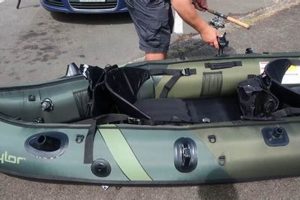
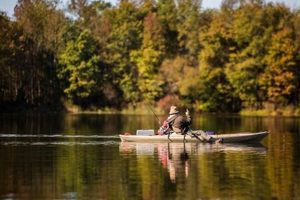
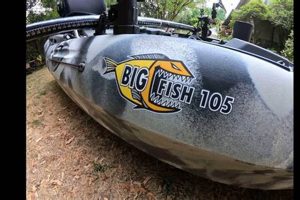
Essential gear for angling from a kayak encompasses safety equipment, such as a personal flotation device and a whistle, alongside fishing-specific items like rods, reels, tackle, and appropriate attire. A well-equipped angler might also include a fish finder, GPS device, and dry storage for electronics and personal belongings. For example, a basic setup could include a paddle kayak, a life vest, a short fishing rod, a tackle box with lures and hooks, and a dry bag.
Appropriate equipment enhances safety and improves the chances of a successful fishing trip. Historically, kayak fishing has evolved from a basic means of sustenance to a popular recreational activity. Modern advancements in kayak design and fishing technology have allowed anglers to access previously unreachable fishing spots and employ more sophisticated techniques. This specialized equipment improves comfort, efficiency, and the overall fishing experience. Having the right gear is crucial for angler safety, especially in remote locations or challenging weather conditions.
This article will further explore essential categories of kayak fishing gear, offering detailed recommendations for selection and usage. Topics covered will include safety equipment, kayak selection, fishing rods and reels, tackle choices, electronic devices, and storage solutions. The goal is to provide readers with a comprehensive guide to equipping themselves properly for this unique and rewarding angling experience.
Essential Kayak Fishing Tips
Careful planning and preparation contribute significantly to a safe and productive kayak fishing experience. The following tips offer guidance for anglers of all skill levels.
Tip 1: Prioritize Safety Gear: A personal flotation device (PFD) is non-negotiable. A whistle, signaling mirror, and first-aid kit are also crucial for emergencies. Registering float plans with a trusted contact ensures someone knows one’s location and expected return time.
Tip 2: Choose the Right Kayak: Kayak selection depends on individual needs and fishing styles. Sit-on-top kayaks offer stability and ease of access, while sit-inside kayaks provide better protection from the elements. Pedal-driven kayaks allow hands-free fishing.
Tip 3: Pack Light and Efficiently: Limited storage space necessitates careful packing. Dry bags protect essential gear from water damage. Rod leashes prevent loss of equipment. Distributing weight evenly enhances kayak stability.
Tip 4: Master Basic Kayak Maneuvers: Practice paddling, turning, and maintaining balance before venturing into open water. Understanding how the kayak handles different conditions ensures safer navigation and more effective fishing.
Tip 5: Utilize Appropriate Fishing Gear: Shorter rods and reels are generally preferable for kayak fishing. Selecting tackle appropriate for the target species maximizes fishing success. A landing net facilitates bringing fish onboard safely.
Tip 6: Respect the Environment: Proper disposal of fishing line and other waste minimizes environmental impact. Adhering to catch and release guidelines helps preserve fish populations. Awareness of local regulations ensures responsible fishing practices.
Tip 7: Check Weather Conditions: Avoid fishing in adverse weather such as strong winds, thunderstorms, or fog. Checking forecasts before departure and monitoring conditions throughout the trip enhances safety.
Tip 8: Dress for the Occasion: Wear appropriate clothing for sun protection, wind, and water conditions. Non-slip footwear improves stability on a wet kayak surface. Consider polarized sunglasses to reduce glare and improve underwater visibility.
Implementing these tips contributes significantly to a safe, enjoyable, and successful kayak fishing experience. Preparation and awareness are crucial for maximizing both safety and angling opportunities.
The following section will offer a concluding perspective on the key considerations discussed throughout this article.
1. Safety Gear

Safety gear represents a critical component of kayak fishing necessities. The inherent risks associated with on-water activities, compounded by the often remote nature of kayak fishing locations, necessitate a serious approach to safety precautions. A failure to prioritize safety equipment can lead to dire consequences, ranging from minor injuries to life-threatening situations. For example, an angler capsizing without a personal flotation device (PFD) in cold water faces significant risk of hypothermia and drowning. Similarly, a lack of signaling devices, such as a whistle or mirror, can impede rescue efforts if an angler becomes stranded or injured.
Several factors underscore the importance of safety gear as an integral part of kayak fishing necessities. Kayaks, being relatively small vessels, are more susceptible to capsizing than larger boats. The presence of fishing gear, often with sharp hooks and treble points, increases the risk of injury during a capsize or unexpected movement. Furthermore, kayak anglers frequently venture into shallow waters, near reefs, or around submerged obstacles, increasing the possibility of collisions or entanglement. Carrying essential safety gear, such as a first-aid kit equipped to address common fishing-related injuries (e.g., hook removals, line cuts), can significantly mitigate the severity of such incidents. A waterproof VHF radio allows communication with emergency services or other boaters, crucial for summoning assistance when beyond cell phone range. A float plan filed with a responsible individual ashore provides an additional layer of security, enabling prompt search and rescue operations if the angler fails to return as scheduled.
In conclusion, understanding the direct link between safety gear and kayak fishing necessities is paramount for mitigating risks and ensuring a positive angling experience. While focusing on catching fish is a natural objective, prioritizing safety equips anglers to handle unforeseen circumstances effectively. This proactive approach not only protects individual well-being but also fosters a responsible and sustainable approach to enjoying this popular recreational activity.
2. Kayak Selection

Kayak selection represents a pivotal aspect of kayak fishing necessities. The chosen vessel directly impacts stability, maneuverability, and overall fishing efficacy. A kayak ill-suited to the intended fishing environment or angler’s needs can compromise safety and diminish the angling experience. For example, attempting offshore fishing in a short, recreational kayak designed for calm lakes presents significant safety risks due to reduced stability in open water and rough conditions. Conversely, using a large, ocean-going kayak in a small, heavily vegetated pond hinders maneuverability and limits access to prime fishing spots. Appropriate kayak selection hinges on factors such as water conditions (calm lakes versus open ocean), target fish species (requiring specialized setups for trolling or sight fishing), and angler preferences (regarding comfort and desired features). This informed decision-making process underscores the crucial link between kayak selection and kayak fishing necessities.
Several factors influence optimal kayak selection within the context of kayak fishing necessities. Hull design plays a significant role in stability and tracking. Wider, flatter hulls provide enhanced stability, particularly beneficial for stand-up fishing, while longer, narrower hulls offer better tracking and speed, advantageous for covering greater distances. Sit-on-top kayaks offer superior stability and ease of re-entry after a capsize, a critical safety consideration. Sit-inside kayaks offer better protection from the elements and often feature more storage space for gear. Propulsion methods, including paddle, pedal, and motor drives, further influence kayak selection. Paddle kayaks offer affordability and simplicity, while pedal-drive systems allow hands-free fishing and enhanced maneuverability. Motorized kayaks provide greater range and speed but often come with increased weight and cost. Understanding these factors enables anglers to align kayak selection with specific fishing needs and overall kayak fishing necessities.
In conclusion, kayak selection acts as a cornerstone of successful kayak fishing experiences. Aligning kayak choice with individual fishing styles, target species, and prevailing water conditions maximizes both safety and angling effectiveness. Careful consideration of hull design, propulsion methods, and available features ensures that the chosen kayak seamlessly integrates with other essential gear, forming a cohesive and efficient system. This informed approach to kayak selection reinforces its vital connection to the broader concept of kayak fishing necessities.
3. Fishing Tackle

Fishing tackle represents a crucial component of kayak fishing necessities. Tackle selection directly influences angling success and overall enjoyment on the water. An inappropriate or inadequate tackle selection can lead to missed opportunities, lost fish, and frustration. For example, using heavy offshore tackle in a freshwater lake targeting panfish proves cumbersome and ineffective. Conversely, employing light freshwater tackle against powerful saltwater species risks line breakage and equipment failure. Effective tackle selection considers target species, fishing techniques, and prevailing water conditions. This informed approach underscores the direct link between fishing tackle and kayak fishing necessities.
Several factors contribute to effective tackle selection within the context of kayak fishing necessities. Rod and reel combinations should match the target species and fishing style. Shorter rods offer advantages in the confined space of a kayak, providing better control and maneuverability. Spinning reels generally provide versatility for various fishing techniques, while baitcasting reels offer increased power and control for larger fish. Line selection considers breaking strength, abrasion resistance, and visibility. Using a line too heavy for the target species can deter bites, while a line too light risks breakage during a fight. Lure selection depends on the target species’ feeding habits and the prevailing water conditions. Understanding these factors allows anglers to tailor their tackle selection to specific kayak fishing scenarios, optimizing their chances of success.
In conclusion, fishing tackle acts as a critical link in the chain of kayak fishing necessities. A well-chosen tackle selection enhances angling effectiveness, minimizes frustration, and maximizes enjoyment on the water. Careful consideration of rod and reel combinations, line selection, and lure choices empowers anglers to adapt to various fishing situations and target species effectively. This informed approach to tackle selection reinforces its vital connection to the broader concept of kayak fishing necessities. Further exploration of specific tackle recommendations for various kayak fishing scenarios can provide anglers with valuable insights for enhancing their angling success.

Navigation aids constitute a critical aspect of kayak fishing necessities. These tools enhance safety and improve angling efficacy by enabling precise positioning, efficient route planning, and enhanced situational awareness. Disorientation or an inability to navigate effectively can jeopardize angler safety, particularly in challenging weather conditions or unfamiliar waters. For example, losing bearings in dense fog or encountering unexpected currents without proper navigation aids can lead to disorientation and potentially dangerous situations. Integrating appropriate navigation aids into a kayak fishing setup allows anglers to explore further with confidence, maximize fishing time, and prioritize safe navigation.
- GPS Devices
GPS devices provide real-time location information, enabling anglers to mark productive fishing spots, track routes, and navigate safely to and from designated locations. Modern GPS units often integrate mapping capabilities, displaying charts, water depths, and potential hazards. For example, marking a submerged reef or a productive drop-off on a GPS allows anglers to return to these locations precisely on subsequent trips. GPS technology significantly enhances situational awareness and contributes to efficient route planning, crucial components of safe and effective kayak fishing.
- Chartplotters
Chartplotters combine GPS functionality with electronic charts, providing detailed visual representations of waterways, including depths, navigational markers, and potential hazards. These devices offer a comprehensive navigational overview, enabling anglers to understand their position relative to surrounding features and plan routes accordingly. Chartplotters prove invaluable in complex navigational environments, such as coastal areas with intricate channels or large bodies of water with numerous islands or submerged structures. This real-time visual representation of navigational data significantly contributes to both safety and efficient fishing location identification.
- Compass
A compass, while a seemingly simple instrument, provides a reliable directional reference independent of electronic systems. This self-contained navigation aid proves invaluable in situations where electronic devices malfunction or battery power is depleted. Maintaining a basic understanding of compass navigation allows anglers to establish bearings, maintain course in limited visibility, and navigate safely back to shore in emergency situations. The simplicity and reliability of a compass reinforce its importance as a backup navigation tool within kayak fishing necessities.
- VHF Radio
A VHF radio provides a crucial communication link for kayak anglers, enabling contact with other boaters, marinas, and, importantly, emergency services. In situations requiring assistance, a VHF radio can transmit distress calls and relay precise location information. Furthermore, monitoring weather forecasts and navigational warnings broadcast over VHF radio channels enhances situational awareness and allows anglers to make informed decisions regarding safety and fishing plans. The communication capabilities of a VHF radio significantly contribute to angler safety and underscore its importance as a component of kayak fishing necessities.
In conclusion, integrating appropriate navigation aids into a kayak fishing setup elevates both safety and angling effectiveness. GPS devices and chartplotters provide precise positioning and detailed navigational information, while a compass serves as a reliable backup tool. VHF radio facilitates crucial communication, enabling access to emergency services and enhancing situational awareness. These tools, collectively, empower kayak anglers to explore further, navigate safely, and maximize their time on the water. Prioritizing navigation aids as an integral part of kayak fishing necessities fosters a responsible and well-prepared approach to this rewarding recreational pursuit.
5. Storage Solutions
Storage solutions represent a crucial aspect of kayak fishing necessities. Limited space inherent to kayaks necessitates efficient organization and readily accessible essential gear. Inadequate storage can lead to cluttered decks, tangled lines, and difficulty locating crucial items, compromising both safety and fishing effectiveness. Effective storage solutions maximize available space, protect gear from water damage, and streamline the fishing experience. For example, attempting to manage fishing rods, tackle boxes, and safety equipment without designated storage areas creates a chaotic and potentially hazardous environment on a kayak. Conversely, implementing well-designed storage solutions transforms the kayak into a streamlined and efficient fishing platform, enhancing both safety and angling success.
- Dry Bags & Boxes
Dry bags and boxes provide waterproof protection for essential gear, safeguarding electronics, clothing, and other sensitive items from water damage. These storage solutions come in various sizes and configurations, allowing anglers to customize storage based on specific needs. Dry bags offer flexibility for storing irregularly shaped items, while rigid dry boxes provide robust protection for fragile electronics or valuable equipment. For example, storing a cell phone, VHF radio, or camera in a dry bag ensures functionality even in the event of a capsize or unexpected wave splash. The waterproof protection offered by dry bags and boxes elevates their importance as essential components of kayak fishing storage solutions.
- Tackle Boxes & Trays
Tackle boxes and trays provide organized storage for fishing lures, hooks, weights, and other small essentials. Compartmentalized trays keep items separated and readily accessible, streamlining lure changes and preventing tangles. Specialized tackle boxes designed for kayak fishing often feature compact designs and secure closures to prevent spills and maximize space utilization. Efficient tackle organization enhances fishing efficiency, minimizing time spent searching for specific lures and maximizing time spent fishing. This streamlined approach to tackle management solidifies the role of tackle boxes and trays as integral components of kayak fishing storage solutions.
- Rod Holders & Leashes
Rod holders secure fishing rods while not in use, preventing loss or damage and freeing up deck space. Rod leashes provide an additional layer of security, preventing rods from being swept overboard during a capsize or unexpected wave. Various rod holder designs cater to different kayak configurations and fishing styles, including flush-mount, adjustable, and rotating options. Securely storing rods enhances safety by minimizing clutter on the deck and preventing entanglement. This practical approach to rod management underscores the importance of rod holders and leashes within kayak fishing storage solutions.
- Milk Crates & Customized Storage
Milk crates and other adaptable containers offer versatile storage options for kayak anglers. These readily available and affordable containers can be secured to the kayak deck and customized with inserts, dividers, and other accessories to accommodate specific storage needs. Anglers often utilize milk crates to store tackle boxes, safety gear, or even live bait wells. The adaptability and affordability of these customized storage solutions make them valuable additions to kayak fishing necessities, particularly for anglers seeking cost-effective and personalized storage options.
In conclusion, efficient storage solutions constitute a crucial element of kayak fishing necessities. Maximizing limited space through organized storage enhances both safety and fishing effectiveness. Dry bags and boxes protect essential gear from water damage, while specialized tackle boxes and trays streamline lure management. Rod holders and leashes secure fishing rods, preventing loss and minimizing deck clutter. Adaptable containers, such as milk crates, offer further customization options for storing various items. By prioritizing effective storage solutions, kayak anglers create a streamlined and organized on-water experience, maximizing both safety and enjoyment while pursuing their passion.
Frequently Asked Questions about Kayak Fishing Essentials
This section addresses common inquiries regarding essential gear for kayak angling, aiming to provide clear and concise information for anglers of all experience levels.
Question 1: What constitutes essential safety equipment for kayak fishing?
Essential safety equipment includes a properly fitted personal flotation device (PFD), a whistle, a visual signaling device (such as a mirror or flare), and a first-aid kit. A VHF radio and a float plan filed with a trusted contact are also highly recommended.
Question 2: How does one select an appropriate kayak for fishing?
Kayak selection depends on intended fishing locations, target species, and angler preferences. Factors to consider include hull design (stability vs. speed), propulsion method (paddle, pedal, or motor), and available storage space.
Question 3: What are the key considerations for choosing fishing rods and reels for kayak fishing?
Shorter rods generally offer better maneuverability in a kayak. Reel choice depends on target species and fishing techniques. Spinning reels provide versatility, while baitcasting reels offer increased power and control.
Question 4: How does one organize and store essential gear effectively in a kayak?
Utilizing dry bags and boxes protects sensitive items from water damage. Tackle boxes and trays organize fishing tackle. Rod holders and leashes secure rods and prevent loss. Milk crates and other adaptable containers offer further storage customization.
Question 5: Why are navigation aids important for kayak fishing?
Navigation aids, such as GPS devices, chartplotters, and compasses, enhance safety and improve fishing efficiency. These tools allow anglers to mark productive fishing spots, navigate safely in challenging conditions, and maintain situational awareness.
Question 6: What are common misconceptions about kayak fishing necessities?
A common misconception is that high-end, specialized gear is always necessary. While specialized gear can enhance the experience, focusing on essential safety equipment and selecting appropriate, durable gear within one’s budget often proves sufficient for enjoyable and productive kayak fishing.
Careful consideration of these frequently asked questions equips anglers with the knowledge to make informed decisions about essential gear, enhancing both safety and enjoyment on the water.
The subsequent section will offer concluding remarks and summarize key takeaways regarding kayak fishing necessities.
Kayak Fishing Necessities
Kayak fishing necessities encompass a range of equipment crucial for both safety and angling success. This article has explored essential gear categories, including safety equipment, kayak selection, fishing tackle, navigation aids, and storage solutions. Prioritizing safety remains paramount. Appropriate personal flotation devices, signaling devices, and a well-stocked first-aid kit are non-negotiable components of responsible kayak angling. Kayak selection should align with intended fishing locations and angler preferences, considering factors such as hull design, propulsion method, and storage capacity. Fishing tackle choices depend on target species and fishing techniques, emphasizing the importance of selecting appropriate rod and reel combinations, lines, and lures. Navigation aids, including GPS devices, chartplotters, and compasses, enhance safety and improve angling efficiency by enabling precise positioning and route planning. Efficient storage solutions maximize limited space on a kayak, ensuring readily accessible gear and a streamlined fishing experience. Understanding these interconnected elements optimizes preparedness and enhances the overall kayak fishing experience.
Effective preparation through the acquisition and understanding of kayak fishing necessities empowers anglers to enjoy this rewarding activity safely and responsibly. Informed decision-making regarding essential gear fosters a confident and successful approach to kayak angling, contributing to both personal enjoyment and the preservation of aquatic environments. Continued learning and adaptation to evolving technologies and techniques will further enhance the kayak fishing experience for future generations.