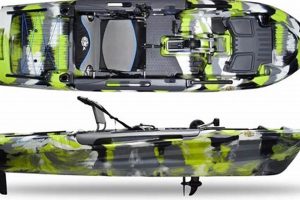
A protective lid designed for crates commonly used in kayak angling safeguards stored equipment from water, sun, and impact damage. These crates often hold tackle, safety gear, and other essentials, making a well-fitted cover crucial for maintaining organization and functionality. For example, a typical unit might be constructed from durable, waterproof fabric and feature secure fastening systems to prevent contents from shifting or spilling during transit or rough water conditions.
Maintaining dry and organized gear contributes significantly to a safe and efficient fishing experience. Protection from the elements extends the lifespan of valuable equipment and prevents malfunctions. Historically, anglers improvised with various methods to protect their gear, but the development of purpose-built crate covers has provided a more streamlined and effective solution. This shift reflects a broader trend in angling toward specialization and the optimization of equipment for specific fishing styles.
Further exploration will delve into the different types of materials used in construction, the varied designs available to accommodate diverse crate sizes and shapes, and the key features that contribute to optimal performance in various fishing environments.
Tips for Selecting and Using Protective Crate Lids for Kayak Angling
Choosing and utilizing a suitable protective crate lid contributes significantly to a successful kayak fishing experience. The following tips provide guidance for maximizing the benefits of this essential piece of equipment.
Tip 1: Consider Crate Dimensions: Accurate measurement of the crate ensures a proper fit, preventing slippage and maximizing protection. Internal dimensions are most critical, but external measurements help determine compatibility with kayak storage areas.
Tip 2: Evaluate Material Durability: Opt for heavy-duty, waterproof fabrics resistant to tearing, UV damage, and mildew. Marine-grade materials typically offer superior performance in harsh aquatic environments.
Tip 3: Prioritize Secure Fastening: Look for robust fastening systems such as heavy-duty zippers, buckles, or straps. Secure closures prevent accidental opening and loss of contents during transport or rough water conditions.
Tip 4: Assess Storage Capacity: Evaluate the storage capacity of the crate and the cover’s design for compatibility with the intended gear. Some covers offer additional pockets or compartments for enhanced organization.
Tip 5: Check for Drainage Features: Integrated drainage features, such as grommets or mesh panels, allow water to escape, preventing accumulation within the crate and protecting sensitive equipment.
Tip 6: Consider Color and Visibility: Brightly colored covers increase visibility, enhancing safety and making it easier to locate the crate in low-light conditions or cluttered storage areas.
Tip 7: Inspect for Reinforcement: Reinforced corners and stitching enhance durability and resistance to abrasion, prolonging the lifespan of the cover.
Implementing these tips ensures the chosen crate lid provides optimal protection and functionality, contributing to a more efficient and enjoyable kayak fishing experience.
By considering these factors, anglers can make informed decisions regarding crate lid selection and usage, maximizing their effectiveness on the water.
1. Protection

Protection from the elements and potential damage is a primary function of a well-designed crate cover in kayak fishing. Safeguarding equipment within the crate ensures functionality and longevity, contributing to a more successful and enjoyable angling experience. Various factors contribute to the overall protective capabilities of these specialized covers.
- Water Resistance:
A waterproof cover prevents water intrusion, protecting sensitive equipment like electronics, tackle boxes, and first-aid supplies from damage. Durable, waterproof fabrics and sealed seams are essential for maintaining dryness in wet conditions, including rain, splashes, and accidental submersion. Examples include PVC-coated nylon and specialized marine-grade fabrics.
- UV Protection:
Prolonged sun exposure can degrade fishing lines, lures, and plastic tackle boxes. A UV-resistant cover mitigates these effects, extending the lifespan of equipment. This protection is particularly important in sunny climates where UV radiation is intense. Many high-quality covers incorporate UV inhibitors in their construction to prevent fading and material breakdown.
- Impact Resistance:
A robust cover provides a layer of cushioning against impacts and abrasions that can occur during transport or on the water. Reinforced corners and padding protect the crate and its contents from damage caused by bumps, drops, or shifting cargo. This can be especially beneficial in challenging environments where the kayak may encounter rocks or other obstacles.
- Secure Closure:
Secure fastening mechanisms, such as heavy-duty zippers or buckles, prevent the cover from opening accidentally and spilling contents. This protects gear from loss and prevents items from becoming entangled in the kayak’s rigging. Reliable closure systems also ensure that the cover remains in place during rough conditions, providing consistent protection.
These combined protective features ensure that gear remains dry, functional, and readily accessible, contributing significantly to a safe and efficient kayak fishing experience. Investing in a high-quality cover designed for the specific demands of kayak angling provides long-term value by protecting valuable equipment and enhancing overall fishing performance.
2. Organization
Effective organization is paramount in kayak fishing, where limited space and the dynamic nature of the environment necessitate efficient gear management. A well-designed crate cover plays a crucial role in maintaining order, directly impacting fishing efficiency and safety. By providing designated compartments and facilitating a systematic arrangement of equipment, these covers transform a simple storage container into a streamlined organizational tool.
Consider the scenario of needing a specific lure quickly while battling a strong current. Rummaging through a disorganized crate wastes valuable time and can compromise stability. A crate cover with dedicated compartments for different lure types, tools, and other essentials allows rapid retrieval, minimizing disruption and maximizing fishing time. This organizational structure also prevents tangles and damage to delicate equipment, preserving its functionality and longevity. Furthermore, a well-organized crate contributes to a safer environment by reducing clutter and the risk of tripping or entanglement.
The practical significance of this organizational approach extends beyond individual items to overall trip preparedness. Anglers can pre-pack crates for specific fishing scenarios, ensuring all necessary gear is readily available. This level of organization streamlines the packing process, reduces pre-fishing stress, and allows for a more focused and productive experience on the water. Ultimately, a well-organized crate facilitated by a purpose-built cover enhances both the efficiency and enjoyment of kayak fishing, demonstrating the crucial link between organization and success in this demanding angling discipline.
3. Durability

Durability is a critical factor for kayak fishing crate covers, directly impacting their lifespan and protective capabilities. These covers face harsh conditions, including exposure to saltwater, UV radiation, and physical abrasion. A durable cover safeguards stored equipment against these elements, ensuring its functionality and longevity. For example, a cover constructed from abrasion-resistant, UV-stabilized marine-grade fabric withstands the rigors of regular use, providing consistent protection over extended periods. Conversely, a cover made from inferior materials may tear, fade, or become brittle, compromising its protective qualities and requiring frequent replacement.
The practical implications of durability extend beyond the cover itself. A robust cover protects valuable fishing equipment, including rods, reels, tackle boxes, and electronics, from damage. This protection translates to cost savings over time by reducing the need for replacements. Furthermore, a durable cover maintains its functionality in demanding conditions, ensuring anglers have access to essential gear when needed. Consider a scenario where an angler encounters rough water or adverse weather. A durable cover ensures the contents of the crate remain secure and protected, minimizing disruptions and allowing the angler to focus on fishing. This reliability contributes significantly to safety and overall fishing success.
In conclusion, durability is an essential characteristic of effective kayak fishing crate covers. Investing in a high-quality, durable cover provides long-term value by protecting equipment, ensuring functionality in challenging environments, and minimizing the need for replacements. This contributes not only to cost savings but also to enhanced safety and a more enjoyable and productive fishing experience. The choice of materials, construction techniques, and fastening systems directly influences a cover’s durability and its ability to withstand the specific demands of kayak angling.
4. Fit
Precise fit is paramount for kayak fishing crate covers. A properly fitted cover maximizes functionality and safety, while an ill-fitting cover presents several drawbacks that can compromise the angling experience. A cover designed specifically for the crate’s dimensions ensures secure placement, preventing slippage or movement during paddling and maneuvering. This stability safeguards stored equipment and prevents unwanted shifts in the kayak’s center of gravity, which could impact stability, especially in challenging conditions. For example, a loose cover might shift in rough water, potentially obstructing access to essential safety gear or creating an imbalance that affects the kayak’s handling. Conversely, a snug-fitting cover remains securely in place, maintaining organization and accessibility while contributing to a stable and predictable paddling experience.
Beyond stability, proper fit enhances the cover’s protective capabilities. A well-fitted cover effectively seals the crate, preventing water intrusion and protecting contents from the elements. This is particularly crucial for sensitive electronic devices, tackle boxes, and other items susceptible to water damage. An improperly fitted cover, however, may allow water to seep in, compromising the integrity of stored equipment and potentially leading to malfunctions or costly replacements. Consider a scenario where an angler encounters unexpected rain or a large wave washes over the kayak. A tightly fitted cover acts as a barrier, safeguarding valuable gear, while a loose or ill-fitting cover provides inadequate protection, potentially resulting in significant damage. Therefore, precise fit directly influences the cover’s effectiveness in protecting equipment from environmental hazards.
In summary, the importance of proper fit for kayak fishing crate covers cannot be overstated. A well-fitted cover enhances stability, maximizes protective capabilities, and streamlines gear organization. These factors contribute significantly to both safety and fishing efficiency, allowing anglers to focus on the task at hand without the distractions and potential hazards posed by an ill-fitting cover. Prioritizing fit when selecting a crate cover is a practical investment that enhances the overall kayak fishing experience.
5. Security
Security, in the context of kayak fishing crate covers, encompasses both the protection of equipment from loss and the prevention of unauthorized access. A secure cover safeguards valuable fishing gear from theft or accidental loss overboard, contributing to peace of mind and uninterrupted angling. Robust fastening mechanisms, such as heavy-duty zippers, buckles, or straps, play a crucial role in maintaining security. For example, a cover secured with high-quality buckles and straps remains firmly attached to the crate even during challenging conditions, such as navigating rough water or traversing portages. Conversely, a cover with inadequate fastening systems might detach unexpectedly, resulting in the loss of valuable equipment and potentially creating a hazardous situation. Consider a scenario where an angler encounters strong winds or a sudden wave. A securely fastened cover ensures the crate and its contents remain intact, while a loosely secured cover risks detachment and subsequent loss of essential gear.
Beyond physical security, some covers incorporate features designed to deter theft. These might include lockable zippers or compatibility with cable locks, allowing anglers to secure their crates to the kayak or a fixed object when unattended. Such features are particularly beneficial in areas with higher theft risk or when leaving the kayak temporarily. While a determined thief might still overcome these measures, they provide a deterrent effect and offer an added layer of protection. Furthermore, a secure cover prevents accidental access by children or pets, safeguarding both individuals and equipment. This can be particularly important when transporting the kayak with passengers or when fishing in areas frequented by wildlife.
In summary, security is a critical aspect of kayak fishing crate cover design. Robust fastening systems, coupled with theft-deterrent features, protect valuable equipment from loss and unauthorized access. This contributes to peace of mind, allowing anglers to focus on fishing without the distraction of worrying about their gear. Furthermore, a secure cover enhances safety by preventing accidental access and ensuring equipment remains contained during transport and on the water. Prioritizing security when selecting a crate cover is a practical measure that enhances the overall kayak fishing experience.
6. Accessibility

Accessibility, in the context of kayak fishing crate covers, refers to the ease and speed with which anglers can access stored equipment. Efficient access is crucial for maintaining fishing momentum and responding effectively to changing conditions or opportunities. A well-designed cover facilitates quick retrieval of necessary gear without disrupting the angler’s balance or compromising safety. This streamlined access contributes significantly to a more efficient and enjoyable fishing experience.
- Lid Design and Opening Mechanisms:
The design of the lid and its opening mechanism significantly impact accessibility. Covers with wide openings and robust zippers or buckles allow quick access to the crate’s contents. For example, a cover with a hinged lid and dual zippers allows for single-handed operation, enabling anglers to access gear quickly while maintaining control of the kayak. Conversely, a cover with a small opening or a cumbersome closure system can hinder access, particularly in challenging conditions. Efficient lid design minimizes disruptions and maximizes fishing time.
- Compartmentalization and Organization:
Internal compartments and organizers within the crate and incorporated into the cover further enhance accessibility. Dividers, pockets, and specialized compartments allow for strategic organization of tackle, tools, and other essentials, enabling anglers to locate specific items quickly without rummaging. For instance, a crate with dedicated compartments for different lure types allows for rapid retrieval, minimizing disruption and maximizing fishing time. Organized storage promotes efficiency and prevents tangles, ensuring gear remains readily available when needed.
- Placement and Positioning within the Kayak:
The placement of the crate within the kayak and the cover’s design influence accessibility. Crates positioned within easy reach and covers that open away from the angler minimize the need for awkward reaching or twisting, which could compromise balance. Consider a scenario where an angler needs to access a specific lure quickly. A crate positioned within arm’s reach and a cover that opens smoothly allow for efficient retrieval without disrupting the angler’s position or balance. Strategic crate placement and cover design contribute to seamless access and enhance overall safety.
- Visibility and Identification:
Clear labeling and visual cues on the cover and within the crate further enhance accessibility. Labeling compartments or using color-coded containers allows anglers to quickly identify and retrieve specific items without visual inspection. For example, labeling compartments for different fishing line weights or lure types eliminates the need for time-consuming searches, particularly in low-light conditions. Enhanced visibility streamlines gear retrieval and contributes to a more efficient and organized fishing experience.
In conclusion, accessibility is a crucial consideration for kayak fishing crate covers. Efficient access to gear enhances fishing efficiency, safety, and overall enjoyment. By prioritizing features that promote quick and easy retrieval, anglers can optimize their time on the water and focus on the task at hand. Factors such as lid design, compartmentalization, crate placement, and clear labeling all contribute to a seamless and efficient access experience, ultimately enhancing the overall kayak fishing experience.
Frequently Asked Questions
This section addresses common inquiries regarding protective crate lids used in kayak angling.
Question 1: What are the primary benefits of using a specialized crate cover for kayak fishing?
Specialized covers offer superior protection from the elements, maintain gear organization, and contribute to overall safety by preventing equipment loss and ensuring easy access to essential items. These factors enhance fishing efficiency and enjoyment.
Question 2: How does one choose the correct size cover for a fishing crate?
Accurate measurement of the crate’s internal and external dimensions is crucial. Consulting manufacturer specifications or measuring the crate directly ensures a proper fit, preventing slippage and maximizing protection. Consideration should also be given to the kayak’s storage area dimensions.
Question 3: What materials offer the best durability and protection in saltwater environments?
Marine-grade fabrics, such as PVC-coated nylon or solution-dyed polyester, offer superior resistance to UV damage, saltwater corrosion, and mildew. Reinforced stitching and heavy-duty zippers further enhance durability.
Question 4: Are there specific features to look for that enhance organization within the crate?
Integrated compartments, dividers, and pockets within the cover or crate itself facilitate organized storage of tackle, tools, and other essentials. These features enhance efficiency by allowing quick access to specific items.
Question 5: How do drainage features contribute to the cover’s functionality?
Grommets or mesh panels allow water to drain from the crate, preventing accumulation that could damage sensitive equipment. This is particularly important in wet conditions or if the crate is accidentally submerged.
Question 6: Can these covers be secured to prevent theft or accidental loss?
Many covers feature robust fastening systems, including heavy-duty zippers, buckles, or straps, that secure the cover to the crate and prevent accidental opening. Some models offer lockable zippers or compatibility with cable locks for added security.
Careful consideration of these frequently asked questions provides valuable insights for selecting and using a protective crate cover that optimizes the kayak fishing experience. Addressing these common concerns ensures anglers can make informed decisions that enhance safety, efficiency, and overall enjoyment on the water.
Further exploration will delve into specific product recommendations and comparisons to assist anglers in making informed purchasing decisions.
Kayak Fishing Crate Cover
Exploration of protective lids for kayak fishing crates reveals their significant contribution to a streamlined and efficient angling experience. Key factors discussed include protection from the elements, enhanced organization, durability in demanding environments, the importance of proper fit, security against loss or theft, and accessibility of essential gear. Each aspect contributes to the overall effectiveness of these specialized covers, demonstrating their value beyond simple storage solutions.
Strategic selection and utilization of a well-designed crate cover elevates kayak angling preparedness and performance. The investment in quality construction and thoughtful design yields significant returns in terms of equipment protection, optimized organization, and enhanced safety. This attention to detail allows anglers to focus on the essential aspects of fishing, maximizing enjoyment and success on the water. The evolution and refinement of these specialized covers reflect a broader trend within angling toward specialized equipment designed to meet the unique demands of specific fishing styles.