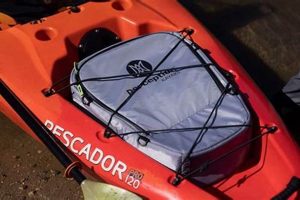
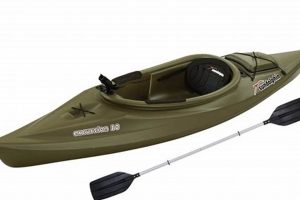
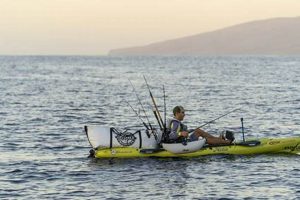
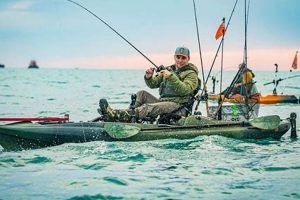
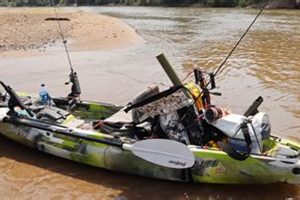
This activity involves angling from a small, human-powered watercraft under the cover of darkness. It offers a unique blend of challenges and rewards distinct from daytime fishing. For example, certain fish species become more active after sunset, creating exciting opportunities for anglers. Specialized equipment, including navigation lights and headlamps, is often employed.
The pursuit offers several advantages. Cooler temperatures and diminished boat traffic can create a more peaceful and productive fishing experience. Nocturnal feeding patterns of various fish species often lead to increased catch rates. Historically, fishing under the stars has been a practice in many cultures, utilizing the natural light of the moon to illuminate the water. The modern iteration with specialized kayaks and gear allows anglers to access areas previously difficult or impossible to reach in darkness.
The following sections will delve into essential aspects of this specialized angling method, including safety precautions, recommended equipment, and effective techniques for a successful and enjoyable experience.
Tips for Nocturnal Kayak Angling
Preparation and careful consideration are crucial for a safe and successful experience on the water after dark. The following tips offer guidance for anglers venturing out at night.
Tip 1: Check Navigation Lights. Ensure all required navigation lights are functioning correctly and are visible from all angles. This is critical for avoiding collisions with other vessels.
Tip 2: Share Float Plans. Inform someone on shore of the intended fishing location, planned return time, and emergency contacts. This allows for quicker response in case of unforeseen circumstances.
Tip 3: Pack Redundant Lighting. Carry backup headlamps, flashlights, and batteries. A sudden loss of light can create disorientation and safety hazards.
Tip 4: Utilize a Fish Finder with GPS. A fish finder equipped with GPS capabilities aids in locating fish and navigating in low-light conditions. Marking waypoints allows for safe return to launch points.
Tip 5: Understand Local Regulations. Familiarize oneself with all applicable boating and fishing regulations specific to night fishing in the chosen location. These may differ from daytime rules.
Tip 6: Dress for Immersion. Wear appropriate clothing for the water temperature, considering the possibility of accidental immersion. Multiple layers are recommended, and avoid cotton which retains water.
Tip 7: Minimize Noise and Light Pollution. Excessive noise and bright lights can disrupt fish activity and negatively impact the nocturnal environment. Reduce ambient light and movement on the kayak.
Adhering to these guidelines enhances angler safety and contributes to a more productive and enjoyable nocturnal fishing experience.
By incorporating these practices, anglers can confidently navigate the challenges and reap the rewards of fishing from a kayak after sunset.
1. Safety

Safety is paramount in nocturnal kayak angling. Darkness obscures potential hazards, amplifies the consequences of accidents, and necessitates heightened vigilance. Reduced visibility impairs navigation and collision avoidance. Disorientation can occur more easily, especially in unfamiliar waters. Lower temperatures increase the risk of hypothermia if an angler capsizes. A lack of ambient light makes it harder for others to locate a kayaker in distress. For example, a brightly colored kayak with reflective tape becomes significantly less visible in low light, underscoring the need for active lighting like navigation lights. Another example is the importance of carrying a whistle or air horn; these auditory signals carry farther than shouting in darkness and can alert other boaters or people on shore in an emergency.
Several factors contribute to safe nocturnal kayak fishing. Pre-trip planning, including checking weather forecasts and informing someone of the intended route and return time, is crucial. Proper safety equipment, such as a personal flotation device (PFD), navigation lights, and a communication device (e.g., VHF radio, charged mobile phone in a waterproof case), is essential. Thorough knowledge of the area, including potential obstacles and currents, reduces the risk of navigation errors. Regular practice of self-rescue techniques is also vital, as conditions at night can make self-recovery more challenging. Carrying a first-aid kit and knowing basic first-aid procedures can also prove invaluable.
Neglecting safety precautions can lead to serious consequences, including capsizing, collisions, and hypothermia. Proactive safety measures significantly mitigate these risks. Careful preparation, appropriate equipment, and a heightened awareness of the surrounding environment contribute to a more enjoyable and incident-free nocturnal kayaking experience. Thorough planning and adherence to best practices transform potential risks into manageable challenges, ultimately enhancing the experience rather than detracting from it.
2. Equipment
Specialized equipment plays a crucial role in successful and safe kayak fishing after dark. Standard daytime gear often proves inadequate for the unique challenges and opportunities presented by nocturnal conditions. Proper equipment enhances visibility, improves navigation, and increases angling effectiveness, while also contributing significantly to angler safety.
- Navigation Lights
Navigation lights are legally mandated in many jurisdictions and essential for preventing collisions with other vessels in low-light conditions. These lights signal a kayak’s presence and direction of travel to other boaters. A white stern light visible from 360 degrees is typically required, along with red and green sidelights. Kayak anglers often opt for powered navigation lights, ensuring consistent visibility throughout the fishing trip. Insufficient or malfunctioning navigation lights drastically increase the risk of nighttime collisions, posing significant danger.
- Headlamps and Flashlights
Headlamps and flashlights provide essential illumination for tasks such as tying knots, changing lures, and handling fish. A headlamp allows hands-free operation, crucial when maneuvering in a kayak. Waterproof models designed for marine environments are recommended. Different light colors serve various purposes. For example, red light preserves night vision while white light offers greater overall illumination. A backup flashlight provides redundancy in case of primary light failure.
- Fish Finders and GPS
Fish finders equipped with GPS capabilities are invaluable tools for nocturnal kayak angling. Sonar technology helps locate fish in darkness, while GPS functionality aids navigation and ensures safe return to the launch point. Chartplotters integrated with fish finders provide real-time location data overlaid on nautical charts, enhancing situational awareness. Marking waypoints of productive fishing areas allows anglers to revisit these locations easily. Modern units offer features like side-scan and down-scan imaging, providing detailed underwater views that are particularly advantageous in low-light environments.
- Safety Gear
Essential safety gear takes on added importance during nighttime excursions. A personal flotation device (PFD) is paramount, providing buoyancy in case of capsize. A whistle or air horn allows for signaling in emergencies. A waterproof communication device, such as a VHF radio or a mobile phone in a waterproof case, enables contact with emergency services or shore support. A first-aid kit equipped to handle common fishing injuries is also recommended. Carrying spare batteries for electronic devices ensures continued operation throughout the night.
These equipment choices significantly impact the overall experience of kayak fishing at night. Proper preparation and selection of specialized gear enhance safety, improve fishing effectiveness, and allow anglers to fully enjoy the unique challenges and rewards of this nocturnal pursuit.
3. Location
Location selection significantly influences the success and safety of nocturnal kayak angling. Factors such as fish behavior, water conditions, and accessibility assume heightened importance under the cover of darkness. Careful consideration of these elements is essential for a productive and safe fishing experience. Choosing a suitable location requires analyzing several key factors. Areas with known nocturnal fish activity, like shallow flats or drop-offs where baitfish congregate, offer higher chances of success. Understanding tidal flows and currents is crucial, as these can impact both fish behavior and kayak navigation in low-light conditions. Accessibility, including safe launch and landing points, becomes paramount at night. For example, a rocky shoreline that is easily navigable during daylight may present significant hazards in darkness. Similarly, a shallow, weedy area might hold fish but could prove difficult to navigate by kayak at night. Evaluating these factors in advance is essential for a successful outing.
Several practical applications of location-based knowledge enhance nocturnal kayak fishing. Utilizing nautical charts, satellite imagery, and local fishing reports can help identify promising areas. Mobile apps providing real-time tide data and weather forecasts contribute to informed decision-making. Consulting with experienced local anglers can offer valuable insights into productive nighttime fishing spots. Exploring potential locations during daylight hours allows for assessment of underwater structures, potential hazards, and suitable launch points. This pre-trip scouting significantly reduces risks and enhances the chances of a successful nighttime excursion. For instance, identifying a sheltered cove near a known feeding area could provide a safe and productive fishing location, while avoiding areas with strong currents or known boating traffic minimizes risks after dark.
In summary, thoughtful location selection is paramount for nocturnal kayak fishing. Understanding the interplay of fish behavior, water conditions, and accessibility allows for informed decisions. Utilizing available resources, conducting pre-trip scouting, and prioritizing safety considerations contribute significantly to a productive and enjoyable experience. Failing to adequately account for location-specific factors can lead to unproductive fishing, navigational challenges, and potentially hazardous situations. Careful planning and informed decision-making transform potential risks into manageable challenges, ultimately enriching the experience.
4. Technique
Technique adaptations are essential for effective kayak fishing at night. Fish behavior, feeding patterns, and environmental conditions change under the cover of darkness, necessitating adjustments to angling approaches. While some daytime techniques remain applicable, specific modifications often prove crucial for maximizing success and minimizing disruption to the nocturnal environment. For example, slower retrieves and more subtle presentations can entice wary nocturnal predators. Artificial lures that generate vibrations or bioluminescence can be particularly effective in attracting fish in low-light conditions. Live bait, presented with minimal disturbance near likely ambush points, can also yield positive results. Understanding these nuanced differences between daytime and nighttime fishing significantly influences catch rates.
Several factors necessitate technique adjustments for night fishing. Reduced visibility affects both predator and prey behavior, requiring anglers to adapt their approaches. Fish may rely more on their lateral line and other senses in darkness, making subtle presentations more effective. Noise discipline becomes crucial, as excessive sounds can spook fish in the quiet of night. Light management is equally important. While some light can attract baitfish and subsequently predators, excessive or improperly directed illumination can deter fish. For instance, shining a bright light directly into the water can scare fish away. Using a dimmer red light to preserve night vision while rigging or handling fish can be more effective. Adapting to these specific conditions through refined techniques maximizes chances of success.
In summary, mastering specialized techniques is crucial for successful kayak fishing at night. Adapting to changes in fish behavior, light conditions, and ambient noise levels significantly impacts results. Refined approaches enhance lure presentation, minimize disturbance, and maximize opportunities for hooking nocturnal species. Neglecting these considerations can lead to frustratingly low catch rates, even in areas known to hold fish. Strategic application of appropriate techniques allows anglers to effectively target nocturnal species and fully enjoy the unique challenges and rewards of fishing under the stars.
5. Regulations

Adhering to local regulations is paramount for responsible and legal kayak fishing at night. These regulations vary by jurisdiction and are often distinct from daytime rules. Ignorance of these specific regulations is not a valid defense against penalties. Understanding and complying with these rules ensures the sustainability of fish populations, protects the environment, and promotes safe interactions among those sharing the waterways after dark. Non-compliance can result in fines, confiscation of equipment, and suspension of fishing privileges.
- Lighting Requirements
Regulations often stipulate specific lighting configurations for vessels operating at night. Kayaks typically require a 360-degree white stern light and red and green sidelights. These lights must meet specific visibility and brightness standards to ensure other boaters can readily identify and avoid kayaks in low-light conditions. Failure to display proper navigation lights can lead to collisions and legal repercussions. For example, some areas mandate specific light intensities or require lights to be visible from certain distances. Understanding these nuances ensures compliance and enhances safety.
- Licensing and Permits
Specific licenses and permits may be required for night fishing, separate from standard daytime fishing licenses. These permits often fund conservation efforts and support fisheries management programs. Anglers must possess the appropriate licenses and permits for the targeted species and location, ensuring legal compliance. For instance, some areas might require a separate night fishing permit in addition to a regular fishing license. Additionally, specific endorsements might be necessary for fishing in certain protected areas or for targeting specific species during nighttime hours. Checking local regulations beforehand prevents legal issues.
- Area Restrictions
Certain areas may be designated as off-limits to fishing at night, either permanently or seasonally. These restrictions often aim to protect sensitive habitats or vulnerable fish populations during spawning periods. Accessing restricted areas, even inadvertently, can result in penalties. For example, some estuaries or sections of rivers might be closed to all fishing activity during specific months to protect juvenile fish. Other areas might be permanently off-limits to night fishing due to navigational hazards or ongoing conservation efforts. Respecting these closures is crucial for ecosystem preservation and legal compliance.
- Gear Restrictions
Regulations may also dictate permissible fishing gear and methods during nighttime hours. Restrictions on the number of lines, hook sizes, or specific bait types might apply. These regulations aim to prevent overfishing and ensure fair angling practices. For example, limitations on the use of treble hooks or specific net types might be in place to minimize the impact on certain species or habitats. Understanding and adhering to these gear restrictions promotes responsible fishing and protects the long-term health of the fishery.
Careful consideration of and adherence to all applicable regulations is essential for responsible nocturnal kayak fishing. These rules protect both the environment and the anglers themselves. Checking local regulations before embarking on a night fishing trip ensures compliance, avoids legal issues, and promotes a sustainable and enjoyable experience for all. Failure to comply with these regulations can have significant consequences, impacting both individual anglers and the overall health of the aquatic environment. By understanding and respecting these rules, anglers contribute to the preservation of aquatic ecosystems and ensure the continued enjoyment of this unique and rewarding activity.
Frequently Asked Questions
This section addresses common inquiries regarding nocturnal kayak angling, offering practical insights and clarifying potential misconceptions.
Question 1: Is specialized equipment necessary for night fishing from a kayak?
While some daytime equipment can be adapted, specialized gear significantly enhances safety and effectiveness. Navigation lights are crucial for visibility, while headlamps facilitate hands-free operation in low-light conditions. Fish finders with GPS capabilities aid navigation and fish location. Appropriate safety gear, including a PFD and communication device, becomes even more critical at night.
Question 2: What safety precautions should be taken when kayak fishing at night?
Several precautions are essential for safe nocturnal kayak fishing. Filing a float plan with someone on shore is crucial. Checking weather forecasts and understanding local water conditions minimize unforeseen risks. Wearing appropriate clothing for the water temperature and carrying a first-aid kit are essential. Regularly practicing self-rescue techniques is also recommended.
Question 3: Are there specific regulations regarding kayak fishing after dark?
Regulations vary by location and often differ from daytime rules. Researching local regulations regarding lighting requirements, licensing, area restrictions, and gear limitations is crucial for legal compliance. Ignorance of these regulations does not exempt anglers from penalties.
Question 4: What techniques are most effective for catching fish from a kayak at night?
Nocturnal fish behavior often necessitates adjustments to angling techniques. Slower retrieves, more subtle presentations, and lures that generate vibrations or bioluminescence can be effective. Minimizing noise and light pollution also increases the likelihood of success.
Question 5: How does location selection impact night fishing success?
Choosing appropriate locations is paramount for nocturnal kayak fishing. Areas with known night fish activity, such as shallow flats or drop-offs, offer higher chances of success. Considering accessibility, water conditions, and potential hazards is essential for both safety and productivity.
Question 6: What are the advantages of kayak fishing at night?
Nocturnal kayak fishing offers several advantages. Cooler temperatures, diminished boat traffic, and the active feeding patterns of certain fish species can create a more productive and enjoyable experience. Accessing areas less pressured during daylight hours can also increase catch rates.
Careful consideration of these frequently asked questions contributes to safer, more productive, and legally compliant nocturnal kayak fishing experiences. Thorough preparation and a proactive approach to safety enhance enjoyment and minimize potential risks.
The next section delves into advanced techniques for [mention the next section topic, e.g., “targeting specific nocturnal species” or “choosing the right lures for night fishing”].
Kayak Fishing at Night
This exploration of nocturnal kayak angling has highlighted key aspects of this specialized pursuit. Safe practices, including navigation light usage and float plan filing, are paramount. Specialized equipment, from headlamps to fish finders, enhances both safety and effectiveness. Location selection, based on fish behavior and accessibility, significantly impacts success. Technique adaptations, such as slow retrieves and subtle presentations, are crucial for enticing nocturnal species. Adherence to local fishing regulations ensures legal compliance and responsible angling. Each element contributes to a successful and rewarding experience.
Nocturnal kayak angling offers a unique blend of challenges and rewards. Careful preparation, informed decision-making, and a respect for the environment are essential for maximizing enjoyment and minimizing risks. Through continued learning and responsible practices, this distinct angling pursuit can provide fulfilling experiences for years to come. The future of this activity relies on angler stewardship and a commitment to preserving the delicate balance of nocturnal aquatic ecosystems.