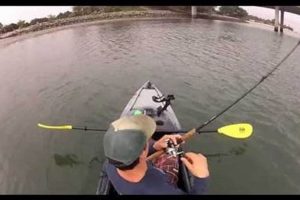
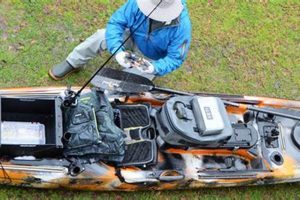
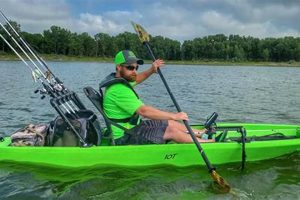
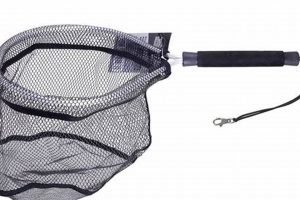
Accessories designed to enhance the angling experience from a kayak can range from simple rod holders and anchor trolleys to sophisticated fish finders and electric motors. These modifications transform a standard kayak into a specialized fishing platform.
Equipping a kayak for fishing dramatically increases efficiency and enjoyment on the water. Anglers benefit from improved organization, hands-free operation, and access to features specifically designed for fishing. This specialized equipment allows for better control of the kayak, easier fish detection, and safer handling of catches. The development of such accessories has mirrored the increasing popularity of kayak fishing, driven by its affordability, accessibility, and stealthy approach compared to larger motorized boats.
This article will explore various equipment categories essential for outfitting a fishing kayak, from basic necessities to advanced electronics. Specific products will be examined, considering their functionality, advantages, and potential drawbacks. Further discussion will cover installation considerations, safety precautions, and tips for choosing appropriate gear based on individual fishing styles and target species.
Tips for Equipping a Fishing Kayak
Careful selection and strategic placement of accessories are essential for a productive and enjoyable kayak fishing experience. The following tips offer guidance on optimizing a fishing kayak setup.
Tip 1: Prioritize Stability: Begin with accessories that enhance stability, such as outriggers or wider hulls, especially for anglers new to kayak fishing or those fishing in rougher waters. Increased stability creates a safer and more comfortable fishing platform.
Tip 2: Consider Anchor Placement: An anchor trolley system allows for controlled anchoring from various positions on the kayak, crucial for maintaining position in currents or wind. Consider the typical fishing environment when selecting an anchor type and trolley design.
Tip 3: Rod Holders and Organization: Rod holders keep rods secure and readily accessible, preventing loss or damage. Choose holders appropriate for the types of rods used and consider their placement for efficient retrieval.
Tip 4: Essential Safety Gear: A personal flotation device (PFD) is paramount. Other essential safety items include a whistle, signaling devices, and a first-aid kit. Ensure these items are readily accessible and in good working order.
Tip 5: Fish Finder Selection: Fish finders provide valuable underwater insights, aiding in locating fish and understanding the underwater terrain. Select a model with features appropriate for the target species and fishing environment, considering factors like screen size, transducer type, and GPS capabilities.
Tip 6: Paddle and Propulsion Choices: A comfortable and efficient paddle is crucial. Consider a paddle leash to prevent loss. For larger bodies of water or specific fishing styles, explore alternative propulsion options, such as pedal drives or electric motors.
Tip 7: Storage Solutions: Dry storage compartments protect essential gear from water damage. Tackle boxes and crates help organize fishing equipment for quick access. Consider specialized storage solutions for specific items, such as lures and bait.
By implementing these tips, anglers can optimize their kayak fishing setup for efficiency, safety, and overall enjoyment on the water. A well-equipped kayak provides a significant advantage in pursuing targeted fish species.
This article concludes with a summary of key considerations and encourages readers to tailor their setups to individual preferences and fishing goals.
1. Rod Holders

Rod holders constitute an essential component within the broader category of kayak fishing accessories. Their primary function is to secure fishing rods, freeing the angler’s hands for other tasks such as paddling, landing fish, or adjusting tackle. This functionality directly impacts fishing efficiency and safety. Without rod holders, anglers face the constant challenge of managing rods while maneuvering a kayak, increasing the risk of losing rods overboard or becoming entangled in lines. Dedicated rod holders mitigate these risks, allowing for a more focused and productive fishing experience.
Various rod holder designs cater to different fishing styles and kayak configurations. Flush-mount rod holders offer a streamlined profile and minimize interference with paddling, while adjustable rod holders allow for precise angling of rods, beneficial for techniques like trolling or drift fishing. Rail-mounted rod holders provide versatility for kayaks equipped with accessory rails. Selecting appropriate rod holders depends on factors such as the type of fishing pursued, the size and type of rods used, and the available mounting space on the kayak. For example, a kayak angler targeting larger pelagic species might opt for heavy-duty rod holders with gimbal mounts, while an angler focused on inshore fishing might prefer lighter, more compact rod holders.
Proper installation and positioning of rod holders are crucial for maximizing their effectiveness. Strategic placement allows for easy access to rods without compromising stability or paddling efficiency. Anglers should consider factors like reach, line tangling potential, and the ability to quickly grab a rod when a fish strikes. Secure mounting hardware ensures that rod holders can withstand the stresses of fighting fish and navigating various water conditions. Understanding the connection between rod holders and the overall kayak fishing system enhances angling performance and contributes to a safer and more enjoyable experience on the water.
2. Fish Finders
Fish finders represent a significant advancement in kayak fishing technology, transitioning the activity from reliance on traditional methods to a more data-driven approach. Integrating a fish finder into a kayak setup provides anglers with real-time underwater insights, dramatically impacting fishing success.
- Species Identification and Location
Fish finders utilize sonar technology to locate fish and often provide information about their size and depth. This eliminates guesswork, allowing anglers to focus efforts on areas with higher probabilities of success. Distinguishing between individual fish and schools, or even identifying bottom-dwelling species versus those suspended mid-water, becomes possible, enhancing strategic decision-making.
- Understanding Underwater Terrain
Beyond locating fish, fish finders map the underwater environment. They reveal bottom structure, including drop-offs, ledges, and vegetationkey features often associated with fish habitats. This detailed mapping allows anglers to understand the underwater landscape and choose fishing locations based on topographical features attractive to target species.
- GPS Integration and Navigation
Many modern fish finders incorporate GPS technology. This integration provides precise location data, enabling navigation to specific fishing spots, marking waypoints for future reference, and tracking drift patterns. This navigational aid proves especially valuable in unfamiliar waters or when returning to productive fishing grounds.
- Transducer Selection and Mounting
The transducer, a critical component of the fish finder system, emits and receives sonar signals. Various transducer types exist, each designed for specific applications. Kayak anglers must consider factors like hull shape and fishing style when selecting and mounting a transducer. Proper installation optimizes sonar performance and ensures accurate readings.
The integration of fish finders into kayak fishing setups represents a pivotal shift toward more informed and efficient angling. By understanding underwater environments and fish behavior, anglers significantly improve their chances of success. The choice of fish finder and transducer should align with individual fishing styles and target species, further maximizing the benefits of this valuable technology within the broader context of kayak fishing accessories.
3. Anchor Systems

Anchor systems are crucial kayak fishing add-ons, providing stability and positional control, essential for techniques like still fishing or targeting specific structures. Effective anchoring prevents unwanted drift caused by wind or current, maximizing fishing efficiency.
- Anchor Types
Various anchor types suit different kayak fishing environments. Folding grapnel anchors excel in rocky or weedy bottoms, while fluke or claw anchors hold well in sand or mud. Drift socks or sea anchors control drift speed in open water, offering alternative anchoring solutions. Anchor weight selection depends on kayak size and prevailing conditions.
- Anchor Trolley Systems
Anchor trolleys enhance anchoring versatility, allowing anglers to position the anchor at various points along the kayak. This adjustability enables optimized boat positioning relative to current, wind, and fishing targets. Trolley systems typically involve a line running along the kayak’s gunwales, with the anchor line attached via a pulley or ring, providing controlled anchor deployment and retrieval from different angles.
- Anchor Deployment and Retrieval
Proper deployment and retrieval techniques are essential for safe and efficient anchor management. Deploying the anchor from the bow or stern, depending on conditions, minimizes kayak swing and ensures optimal hold. Controlled retrieval prevents line tangles and ensures the anchor is stowed securely when not in use.
- Integration with Other Kayak Features
Integrating the anchor system with other kayak features, such as rod holders and storage compartments, maximizes space efficiency and maintains a clutter-free fishing platform. Careful planning and strategic placement of anchor trolley components prevent interference with paddling and other fishing activities.
A well-chosen and properly implemented anchor system significantly enhances kayak fishing effectiveness. Selecting the appropriate anchor type and trolley system, coupled with practiced deployment and retrieval techniques, optimizes boat control, allowing anglers to focus on fishing rather than managing drift. Understanding the interplay between the anchor system and other kayak add-ons contributes to a more streamlined and productive fishing experience.
4. Storage Solutions

Effective storage solutions are integral to successful kayak fishing, directly impacting organization, efficiency, and safety. A well-organized kayak allows for quick access to essential gear, maximizing fishing time and minimizing distractions. Proper storage also protects equipment from water damage and prevents clutter, contributing to a safer and more enjoyable fishing experience.
- Tackle Management
Specialized tackle boxes or trays designed for kayak fishing offer organized compartments for lures, hooks, weights, and other small items. These systems keep tackle readily accessible and prevent loss or damage. Modular designs allow for customization based on individual fishing styles and target species. Secure lids and waterproof seals protect tackle from the elements.
- Dry Storage Compartments
Protecting essential gear like phones, wallets, and electronics from water damage requires dedicated dry storage compartments. These compartments, often integrated into the kayak’s hull or deck, provide waterproof seals and latches. Various sizes accommodate different items, ensuring valuable belongings remain dry and functional throughout the fishing trip.
- Rod and Paddle Storage
Secure storage for rods and paddles while not in use is essential for preventing loss and maintaining a clutter-free deck. Dedicated rod holders and paddle clips keep these items within easy reach but out of the way, reducing the risk of entanglement and maximizing fishing space. Elasticated straps or bungee cords provide additional security.
- Gear Crates and Bags
Gear crates and waterproof bags provide versatile storage options for larger items like clothing, food, and safety equipment. Securing these items prevents shifting during transit and protects them from splashes or submersion. Stackable crates and collapsible bags maximize space efficiency and allow for flexible organization based on individual needs.
Strategic storage solutions transform a kayak into a well-equipped fishing platform. Efficient organization enhances fishing efficiency, maximizes safety, and contributes to a more enjoyable experience on the water. Selecting appropriate storage solutions depends on individual fishing styles, target species, and the type and quantity of gear carried. A well-organized kayak allows anglers to focus on fishing, confident that essential equipment is readily available, protected, and securely stowed.
5. Paddle/Propulsion

Paddle and propulsion systems are fundamental to kayak fishing, impacting maneuverability, speed, and overall fishing effectiveness. Efficient propulsion allows anglers to cover more water, access remote fishing spots, and position the kayak strategically for optimal presentations. Choosing the right system depends on individual fishing styles, target species, and the characteristics of the fishing environment.
- Paddle Selection and Technique
Paddle selection significantly impacts paddling efficiency and comfort. Lightweight paddles with appropriately sized blades minimize fatigue during long fishing trips. Proper paddling technique, including efficient stroke mechanics and body posture, maximizes power transfer and reduces strain. A paddle leash prevents loss in case of accidental drops.
- Pedal-Powered Kayaks
Pedal-powered kayaks offer hands-free propulsion, allowing anglers to focus on fishing. Foot pedals drive a propeller or fin system, providing efficient and quiet movement. This propulsion method is particularly advantageous for techniques like trolling or maintaining position in currents. However, pedal kayaks often come at a higher price point and can be heavier than traditional paddle kayaks.
- Motorized Kayaks
Electric motors provide increased speed and range, enabling anglers to cover larger distances and access remote areas. Variable speed control allows for precise maneuvering. Motorized kayaks offer advantages in challenging conditions like strong winds or currents. However, factors like battery life, weight, and cost must be considered. Regulations regarding motorized watercraft also vary by location.
- Hybrid Approaches
Some anglers opt for hybrid approaches, combining paddle power with a secondary propulsion system like a small trolling motor or a detachable pedal drive. This flexibility allows for adaptation to changing conditions or fishing styles. For example, an angler might paddle in shallow, protected waters and then utilize a motor for traversing larger open areas.
Choosing an appropriate propulsion system significantly impacts kayak fishing success. Traditional paddles offer versatility and affordability, while pedal and motor-driven systems provide increased speed and hands-free operation. Understanding the advantages and limitations of each approach allows anglers to select the system best suited to individual needs and fishing goals, optimizing their kayak fishing experience and maximizing time on the water.
6. Safety Equipment

Safety equipment constitutes a critical subset of kayak fishing add-ons, inextricably linked to angler well-being and responsible enjoyment of the sport. While specialized fishing accessories enhance on-the-water effectiveness, safety equipment forms the foundation upon which successful and responsible kayak fishing is built. The inherent risks associated with the aquatic environment, compounded by the relatively small size and open design of kayaks, necessitate a proactive approach to safety. Overlooking this critical aspect can transform a recreational outing into a life-threatening situation.
Several key pieces of safety equipment warrant consideration for every kayak fishing excursion. A properly fitted personal flotation device (PFD) is paramount. PFDs provide essential buoyancy in the event of capsizing or accidental immersion, significantly increasing chances of survival. A whistle, securely attached to the PFD, serves as a crucial signaling device in emergencies. Visual distress signals, such as flares or a signal mirror, further enhance visibility and aid in attracting attention if assistance is required. A first-aid kit, containing essential supplies to address minor injuries or ailments, should be readily accessible. A waterproof communication device, such as a VHF radio or a satellite messenger, provides a lifeline for summoning help in remote locations beyond cellular range. Navigation lights, essential for low-light conditions or nighttime fishing, enhance visibility to other boaters, reducing the risk of collisions.
Neglecting safety equipment can have dire consequences. A sudden change in weather, an unexpected encounter with submerged debris, or a simple misjudgment can lead to capsizing or injury. Without a PFD, the risk of drowning increases dramatically. The inability to signal for help can prolong distress and exacerbate the severity of an incident. Preparation for potential hazards transforms a potentially dangerous situation into a manageable inconvenience. Understanding the critical role of safety equipment within the broader context of kayak fishing add-ons underscores the responsibility anglers bear for their own well-being and promotes a culture of safety within the sport.
Frequently Asked Questions
This section addresses common inquiries regarding kayak fishing accessories, providing concise and informative responses to facilitate informed decision-making.
Question 1: What are the most essential accessories for a beginner kayak angler?
A personal flotation device (PFD), a paddle with a leash, a basic anchor, and a rod holder constitute a fundamental starting point. These items address essential safety and functionality requirements.
Question 2: How does one choose the right fish finder for a kayak?
Screen size, transducer type, GPS capabilities, and target fishing environment are key factors. Smaller kayaks benefit from compact units, while offshore fishing necessitates higher-powered transducers and GPS functionality.
Question 3: Are anchor trolleys necessary for kayak fishing?
Anchor trolleys significantly enhance anchor control and versatility, particularly in current or wind. They allow for positioning the kayak at optimal angles relative to fishing targets.
Question 4: What storage solutions are recommended for kayak fishing?
Waterproof tackle boxes, dry bags for electronics, and specialized storage compartments within the kayak itself contribute to organization and equipment protection. Consider individual needs and gear quantities.
Question 5: What are the advantages and disadvantages of pedal-powered kayaks for fishing?
Pedal kayaks offer hands-free propulsion, beneficial for fishing, but come at a higher cost and increased weight compared to traditional paddle kayaks.
Question 6: How does one ensure kayak fishing safety?
Wearing a PFD, carrying communication devices, understanding weather conditions, and informing someone of fishing plans are crucial safety precautions. Regularly inspecting equipment also contributes to safe practices.
Careful consideration of individual needs, fishing styles, and budgetary constraints facilitates informed decisions regarding kayak fishing accessories. Prioritizing safety remains paramount.
The subsequent article sections will delve into specific product recommendations and detailed installation guidance.
Kayak Add-Ons for Fishing
Optimizing a kayak for fishing requires careful consideration of various accessories. Rod holders, fish finders, anchor systems, storage solutions, paddle/propulsion choices, and safety equipment each play a crucial role in enhancing fishing effectiveness and overall experience. Strategic selection and integration of these components transform a standard kayak into a specialized fishing platform, maximizing angler success and safety on the water. Understanding the interplay between these elements is essential for creating a balanced and efficient setup tailored to individual fishing styles and target species. No single “best” configuration exists; rather, the optimal approach involves informed choices based on specific needs and fishing environments.
Ultimately, effective kayak fishing relies on a synergy between angler skill and appropriate equipment. While accessories enhance capabilities, responsible angling practices and a focus on safety remain paramount. As kayak fishing technology continues to evolve, anglers benefit from increasingly sophisticated tools and innovative solutions designed to maximize their time on the water. Continual learning and adaptation are essential for staying abreast of advancements and refining kayak fishing approaches for optimal success. The pursuit of enhanced fishing experiences drives the ongoing development of innovative kayak add-ons, fostering a dynamic and evolving landscape within the sport.