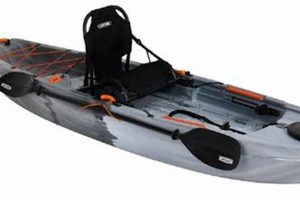
These inflatable vessels, designed specifically for angling, combine portability and affordability. A typical example features multiple air chambers for safety, rod holders, and storage compartments for tackle and gear. Often constructed from durable, puncture-resistant materials, they offer a practical entry point into kayak fishing.
The accessibility of this type of watercraft has significantly broadened participation in the sport of fishing. Their compact, deflated size allows for easy transport and storage, eliminating the need for roof racks or trailers. This portability opens up fishing opportunities in remote locations previously difficult to access with traditional, rigid kayaks. Furthermore, the relatively low cost compared to hard-shell kayaks makes the sport more accessible to a wider range of individuals.
This discussion will delve further into the specific features, advantages, and disadvantages of these inflatable fishing platforms, exploring various models, accessories, and safety considerations to provide a comprehensive understanding for anglers of all levels.
Tips for Inflatable Kayak Fishing
Proper preparation and technique enhance the inflatable kayak fishing experience. These tips offer guidance for maximizing safety and enjoyment on the water.
Tip 1: Inflate to the Recommended Pressure: Proper inflation ensures optimal performance and stability. Consult the manufacturer’s instructions for precise pressure recommendations and utilize a pressure gauge for accurate inflation.
Tip 2: Distribute Weight Evenly: Balanced weight distribution is crucial for stability and maneuverability. Position gear and equipment evenly throughout the kayak, avoiding overloading one area.
Tip 3: Practice Paddling and Maneuvering: Familiarize oneself with paddling techniques and maneuvering characteristics in calm water before venturing into more challenging conditions. This improves control and confidence on the water.
Tip 4: Wear a Personal Flotation Device (PFD): A PFD is essential safety equipment and should be worn at all times while on the water, regardless of swimming ability or perceived water conditions.
Tip 5: Check Weather Conditions: Prior to embarking on a fishing trip, thoroughly check weather forecasts and avoid going out in adverse conditions such as high winds, storms, or lightning.
Tip 6: Be Aware of Water Conditions and Hazards: Understand potential hazards such as currents, tides, and underwater obstructions. Consult local resources for information on water conditions and navigation hazards.
Tip 7: Carry Essential Safety Gear: A safety kit containing a whistle, first-aid supplies, a repair kit, and a communication device is crucial for preparedness in emergencies.
Adherence to these guidelines contributes to a safer and more successful inflatable kayak fishing experience, enabling anglers to focus on the enjoyment of the sport.
These practical tips, coupled with the information presented earlier, provide a comprehensive foundation for exploring the world of inflatable kayak fishing.
1. Inflatable Design

Inflatable design is fundamental to the Intex fishing kayak concept, directly influencing its portability, affordability, and overall user experience. This construction method, utilizing durable, puncture-resistant materials like PVC, allows the kayak to be deflated and packed into a compact size. This contrasts sharply with rigid kayaks, which require significant storage space and specialized transport solutions. The inflatable design’s impact on portability is transformative, enabling anglers to easily transport their kayaks in vehicles without roof racks or trailers, expanding access to remote fishing locations. This design characteristic also contributes to the lower price point of inflatable kayaks compared to their hard-shell counterparts, making them a more accessible option for many anglers.
The practical implications of the inflatable design extend beyond portability and affordability. The multiple air chambers typically found in these kayaks enhance safety by providing buoyancy even if one chamber is punctured. Furthermore, the inflatable design contributes to a more comfortable ride, particularly in choppy water, as the flexible material absorbs some of the impact from waves. However, this flexibility also necessitates careful consideration of weight distribution and paddling technique for optimal performance and stability. For instance, the Intex Seahawk 4, a popular model, demonstrates the effectiveness of this design with its multiple air chambers and spacious interior designed for stability and comfort on the water.
In summary, the inflatable design inherent to Intex fishing kayaks represents a significant departure from traditional kayak construction, prioritizing portability and accessibility without compromising functionality. While requiring attention to proper inflation and weight distribution, the advantages offered by this design, exemplified by models like the Challenger K1 and the Excursion Pro K2, have broadened participation in kayak fishing and reshaped the landscape of the sport.
2. Portability and Storage

Portability and storage are paramount considerations for kayak anglers, especially those with limited storage space or transportation options. Intex fishing kayaks address these concerns directly through their inflatable design, offering a significant advantage over traditional rigid kayaks. This design allows for compact storage and easy transport, opening up angling opportunities previously inaccessible with bulkier, less portable watercraft.
- Deflated Dimensions and Weight
Intex fishing kayaks deflate into compact packages, drastically reducing their size and making them easy to store in closets, car trunks, or even under a bed. Their lightweight nature further enhances portability, allowing for easy carrying and transport, even without specialized equipment like roof racks or trailers. For example, the Intex Excursion Pro K2, when deflated, can be packed into a manageable size weighing approximately 40 pounds. This ease of handling eliminates a significant barrier to entry for individuals lacking the space or infrastructure for traditional kayak storage.
- Inflation and Setup Time
While the inflation process adds a step compared to rigid kayaks, Intex designs emphasize efficiency. High-volume pumps and multiple air chambers facilitate relatively quick inflation times, typically ranging from 10 to 20 minutes depending on the model. This manageable setup time is a minor trade-off for the significant gains in portability and storage convenience. Moreover, the process itself is straightforward and easily mastered with practice.
- Transportation to Remote Locations
The compact, deflated form of these kayaks allows anglers to access remote fishing spots often unreachable with traditional kayaks. This portability extends the range of fishing opportunities, including smaller bodies of water, upstream areas, and locations accessible only by hiking or other non-vehicular means. This benefit significantly broadens the scope of potential fishing environments.
- Storage Versatility
The compact storage footprint of deflated Intex fishing kayaks provides versatility for individuals living in apartments, smaller homes, or those lacking dedicated storage spaces like garages or sheds. This eliminates the need for cumbersome storage solutions required for rigid kayaks, enhancing the overall convenience and practicality of kayak ownership.
The portability and storage advantages inherent in Intex fishing kayaks transform the accessibility of the sport. By removing the constraints of size and weight, these inflatable vessels empower anglers to explore a wider range of fishing environments with greater ease and convenience. The combination of compact storage, easy transport, and quick setup makes these kayaks a compelling option for both seasoned anglers and those new to the sport.
3. Affordability

Affordability distinguishes inflatable kayaks, particularly Intex models, within the broader kayaking market. The lower price point compared to traditional hard-shell kayaks stems from material and manufacturing processes. Inflatable kayaks utilize readily available, cost-effective materials like PVC, while hard-shell kayaks often involve more complex composite construction. This difference in manufacturing contributes significantly to the price disparity, making inflatable models an attractive entry point for budget-conscious anglers. For example, an Intex Excursion Pro K2, a tandem inflatable kayak, typically retails for a fraction of the cost of a comparable rigid two-person kayak. This price difference can represent significant savings, particularly for individuals new to the sport or those seeking a secondary vessel for specific fishing environments.
The affordability of Intex fishing kayaks extends beyond the initial purchase price. Maintenance costs are generally lower due to the durability and repairability of PVC. Minor punctures are easily patched with readily available repair kits, while more significant damage can often be professionally repaired at a lower cost than hard-shell repairs. This reduced maintenance burden further contributes to the overall affordability of these inflatable craft. Moreover, the compact storage footprint eliminates the need for expensive storage solutions like roof racks or dedicated kayak trailers, representing further cost savings compared to rigid kayak ownership. These combined factors contribute to a lower total cost of ownership, making inflatable kayaks a financially sustainable option for a broader range of individuals.
Lowering the financial barrier to entry has broadened participation in kayak fishing. The affordability of Intex fishing kayaks allows individuals previously priced out of the market to experience the sport. This increased accessibility diversifies the angling community and contributes to the growth of kayak fishing as a recreational activity. While acknowledging the performance differences between inflatable and rigid kayaks, the affordability factor significantly expands the opportunities for individuals to explore and engage with the sport, enriching the overall angling landscape.
4. Stability and Performance

Stability and performance are critical factors influencing the on-water experience with an inflatable fishing kayak. While these vessels offer advantages in portability and affordability, their inflatable design necessitates careful consideration of these performance characteristics. Stability, crucial for casting, fighting fish, and overall safety, is influenced by factors like kayak width, hull design, and weight distribution. Wider kayaks generally offer greater initial stability, while features like inflatable floors and high-pressure air chambers contribute to overall rigidity and reduced flex. Proper weight distribution plays a crucial role in maintaining balance and preventing tipping. Overloading or uneven distribution can compromise stability, particularly in challenging conditions like wind or current. For instance, the Intex Excursion Pro K2, with its wider beam and high-pressure air chambers, prioritizes stability, making it suitable for calmer waters and activities like recreational fishing. Conversely, narrower inflatable kayaks designed for speed and maneuverability might sacrifice some stability for increased performance in other areas.
Performance encompasses aspects like tracking (the ability to paddle straight), speed, and maneuverability. Hull design significantly influences these attributes. Inflatable kayaks with a more defined keel or tracking fin tend to track better, requiring less corrective paddling. However, this can compromise maneuverability in tight spaces or around obstacles. Kayak length also plays a role; longer kayaks generally track better and offer higher potential speeds, while shorter kayaks are more maneuverable. The choice of paddle further impacts performance. Longer paddles with larger blades generate more power but require greater effort, while shorter paddles are better suited for quick maneuvering. The Intex Seahawk 4, with its directional fin, demonstrates an emphasis on tracking, while models like the Challenger K1, being shorter and more compact, prioritize maneuverability for smaller waterways. Understanding these performance trade-offs allows anglers to select a kayak appropriate for their intended fishing environment and style.
Ultimately, the interplay of stability and performance determines an inflatable fishing kayak’s suitability for specific fishing applications. Anglers seeking a stable platform for stillwater fishing might prioritize a wider, more stable design, even if it sacrifices some speed or maneuverability. Conversely, those targeting moving water or requiring greater agility might opt for a narrower, more maneuverable kayak, accepting a slightly less stable platform. Careful consideration of these factors, along with a realistic assessment of individual skill level and intended use, ensures a safe and enjoyable fishing experience. Recognizing the limitations and advantages of inflatable kayak design concerning stability and performance empowers informed decision-making and maximizes on-water success.
5. Fishing-Specific Features

Fishing-specific features distinguish inflatable kayaks designed for angling from recreational models. These integrated elements enhance functionality and angler effectiveness on the water. Rod holders, often adjustable and strategically positioned, allow anglers to secure rods while paddling, preparing tackle, or landing fish. These holders free hands for other tasks, crucial for efficient angling. Integrated mounting points accommodate fish finders, GPS units, and other accessories, enhancing navigation and fish-finding capabilities. Storage compartments, including dedicated tackle boxes and dry bags, provide organized storage for essential gear, ensuring easy access and preventing equipment loss. Examples include the Intex Excursion Pro K2, which features adjustable rod holders and integrated accessory mounting points, and the Seahawk series, known for its spacious storage compartments designed to accommodate fishing gear.
The presence and design of these fishing-specific features directly impact angling success and overall enjoyment. Well-placed rod holders prevent rod loss and facilitate hands-free operation, crucial for managing lines and handling fish. Integrated mounting points enable anglers to utilize electronic devices effectively, enhancing situational awareness and fish-finding precision. Adequate and organized storage keeps essential gear readily accessible, minimizing disruptions and maximizing fishing time. The thoughtful integration of these features into inflatable kayak design transforms a general-purpose vessel into a specialized angling platform, improving efficiency, comfort, and overall fishing success. The absence or poor implementation of such features can hinder angling performance, highlighting their importance as a core component of the Intex fishing kayak concept.
Understanding the purpose and effective utilization of fishing-specific features maximizes the angling potential of these inflatable platforms. Proper rod holder placement minimizes line tangling and maximizes casting angles. Strategic mounting of electronic devices ensures optimal viewing angles and efficient operation. Effective organization of gear within dedicated storage compartments streamlines tackle management and minimizes time spent searching for essential items. By recognizing the practical significance of these features, anglers can leverage their functionality to enhance their overall fishing experience and improve on-water success. This understanding underscores the connection between design features and practical application, reinforcing the importance of informed equipment selection for targeted angling pursuits.
Frequently Asked Questions
This section addresses common inquiries regarding inflatable fishing kayaks, specifically those manufactured by Intex, providing concise and informative responses to facilitate informed decision-making.
Question 1: How durable are Intex fishing kayaks?
Intex fishing kayaks are constructed from durable, puncture-resistant PVC. While durable, care should be taken to avoid sharp objects and abrasive surfaces. Proper inflation and adherence to weight limits contribute to longevity.
Question 2: How long does it take to inflate and deflate an Intex fishing kayak?
Inflation time typically ranges from 10 to 20 minutes depending on the model and pump used. Deflation takes significantly less time, generally 5 to 10 minutes.
Question 3: What is the weight capacity of an Intex fishing kayak?
Weight capacity varies by model. It is crucial to consult manufacturer specifications to ensure the kayak is suitable for the intended load, including passengers and gear. Exceeding weight limits compromises stability and performance.
Question 4: Can Intex fishing kayaks be used in saltwater?
Yes, Intex fishing kayaks are designed for use in both freshwater and saltwater environments. Thorough rinsing with fresh water after saltwater use is recommended to prevent corrosion of metal components and prolong the lifespan of the kayak.
Question 5: What safety precautions should be taken when using an Intex fishing kayak?
Always wear a personal flotation device (PFD). Check weather conditions prior to embarking on any water excursion. Inform someone of your planned route and estimated return time. Carry essential safety gear, including a whistle, first-aid kit, and repair kit.
Question 6: How do I repair a puncture in an Intex fishing kayak?
Intex fishing kayaks typically include a repair kit containing patches and adhesive. Follow the manufacturer’s instructions for proper patch application. For larger punctures or complex repairs, professional repair services may be necessary.
Understanding these common concerns facilitates informed selection and safe operation of Intex fishing kayaks, maximizing enjoyment on the water.
The following section will explore various Intex fishing kayak models, outlining their specific features and highlighting key differences to assist in selecting the most suitable kayak for individual needs and preferences.
Conclusion
Inflatable fishing kayaks, notably those produced by Intex, represent a significant development in angling accessibility. Their portability, affordability, and fishing-specific features offer a compelling alternative to traditional rigid kayaks, particularly for anglers prioritizing convenience and budget-consciousness. While performance characteristics like stability and tracking may differ from hard-shell counterparts, understanding these nuances allows for informed selection and optimal usage. Key considerations include intended fishing environment, angler experience, and desired features like rod holders, storage capacity, and accessory mounting options. The inflatable design’s inherent portability opens access to remote fishing locations, expanding angling opportunities beyond the limitations of traditional kayak transport and storage. Furthermore, the lower cost of ownership makes kayak fishing accessible to a broader range of individuals, fostering growth and diversification within the sport.
The evolution of inflatable kayak technology continues to refine performance and expand angling possibilities. Further advancements in materials, design, and integrated features promise to enhance stability, durability, and on-water functionality. As technology progresses, inflatable fishing kayaks stand poised to play an increasingly prominent role in the future of angling, empowering more individuals to experience the sport and explore diverse aquatic environments.