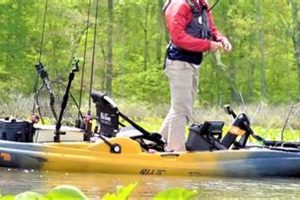
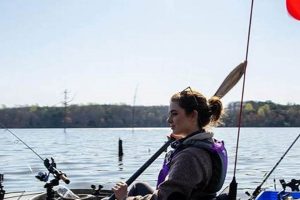
Angling from a kayak offers a unique approach to fly fishing, allowing access to shallow, secluded waters often unreachable by wading or larger boats. It combines the stealth and maneuverability of a kayak with the precision and finesse of fly fishing, creating an engaging and rewarding experience. Picture a quiet morning on a pristine lake, the gentle ripple of water against the hull as an angler casts a line, seeking trout or bass in the crystal-clear depths. This illustrates the essence of this specialized fishing style.
This method presents several advantages. Kayaks grant access to shallow water and tight spaces, expanding fishing opportunities. Their quiet movement minimizes disturbance, increasing the likelihood of attracting fish. Furthermore, kayaks provide a stable platform for casting and retrieving, offering greater control and accuracy compared to other small watercraft. While this combination of kayaking and fly fishing might seem like a recent innovation, its roots likely trace back to anglers adapting traditional fishing methods to improve their reach and efficiency in diverse aquatic environments.
Successfully integrating kayaking and fly fishing requires specialized equipment and techniques. Considerations include kayak selection and outfitting, essential gear and tackle, casting methods from a seated position, drift management strategies, fish landing techniques, and safety precautions. These elements contribute to a safe, enjoyable, and fruitful experience on the water.
Tips for Fly Fishing from a Kayak
Effective kayak fly fishing requires careful planning and execution. The following tips offer guidance for a successful and enjoyable experience.
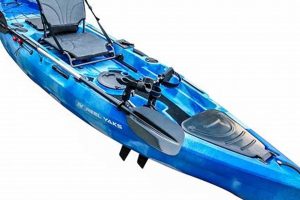
Tip 1: Choose the Right Kayak: A sit-on-top kayak is generally preferred for its stability and ease of entry and exit. Consider models designed for fishing, often equipped with rod holders, anchor trolleys, and gear storage.
Tip 2: Organize and Secure Gear: Keep essential equipment within easy reach. Utilize waterproof storage solutions for valuables and electronics. A well-organized kayak enhances efficiency and safety.
Tip 3: Practice Casting from a Seated Position: Refine casting techniques before venturing onto the water. A lower center of gravity requires adjustments to casting motion and rod angle.
Tip 4: Master Kayak Control: Learn basic paddling strokes and maneuvering techniques. Precise boat control is essential for maintaining position and approaching target areas effectively.
Tip 5: Understand Drift Management: Utilize wind and current to control drift. Anchor deployment and positioning are crucial for maintaining desired fishing locations.
Tip 6: Employ Appropriate Tackle and Flies: Select rods, lines, and flies suited to the target species and fishing environment. Shorter rods often offer advantages in confined spaces.
Tip 7: Prioritize Safety: Wear a personal flotation device (PFD) at all times. Carry a whistle, signaling device, and communication tools for emergencies. Check weather conditions before embarking.
Adhering to these guidelines enhances efficiency and enjoyment while minimizing risks. Preparation and thoughtful execution are key to a successful kayak fly fishing excursion.
By understanding the nuances of this specialized angling method, anglers can unlock new possibilities and deepen their connection with the aquatic environment.
1. Stable Kayak Platform

A stable kayak platform is fundamental to successful fly fishing from a kayak. The act of fly casting involves dynamic body movements and weight shifts, requiring a secure and balanced base. A stable platform minimizes unwanted kayak movement, allowing for controlled casts and accurate presentations. Without stability, casting becomes challenging, leading to decreased accuracy, tangled lines, and potential capsizing. Consider the scenario of presenting a delicate dry fly to a rising trout. A stable kayak allows the angler to maintain a precise casting position, delivering the fly gently and accurately. Conversely, an unstable platform disrupts the casting stroke, potentially spooking the fish.
Kayak stability influences not only casting but also other essential aspects of fly fishing. Fighting a fish requires leverage and balance, both enhanced by a stable platform. Hook setting, line management, and landing fish all become more manageable and efficient with a stable kayak. For instance, landing a larger fish alongside a kayak necessitates stability to control the fish and prevent capsizing. Similarly, changing flies or adjusting tackle requires a secure platform to maintain balance and avoid dropping equipment into the water.
Achieving kayak stability involves selecting an appropriate kayak design and understanding factors affecting stability. Wider kayaks generally offer greater initial stability. Sit-on-top kayaks provide inherent stability due to their lower center of gravity. Proper weight distribution within the kayak also plays a crucial role. Anglers should distribute gear evenly and avoid overloading the kayak. Finally, understanding water conditions and adjusting paddling techniques are essential for maintaining stability in varying environments. Recognizing the direct link between kayak stability and successful fly fishing enables anglers to make informed decisions regarding equipment and technique, ultimately enhancing their on-the-water experience.
2. Efficient Gear Storage
Efficient gear storage is crucial for successful fly fishing from a kayak. Limited space necessitates strategic organization to maximize efficiency and minimize interference with casting and maneuvering. A cluttered kayak impedes casting motions, hinders access to essential equipment, and increases the risk of tangles and lost gear. Consider a scenario where an angler hooks a fish. Fumbling for a net or pliers amidst a disorganized assortment of gear can lead to a lost fish and wasted opportunity. Conversely, readily accessible tools allow for efficient landing and release. Similarly, quickly locating and deploying a different fly pattern when fish are selective requires organized storage.
The practical significance of efficient gear storage extends beyond simple convenience. It contributes directly to safety by maintaining a clear deck and preventing entanglement hazards. A cluttered kayak increases the risk of tripping or losing balance, particularly in challenging conditions. Furthermore, organized storage facilitates rapid access to safety equipment such as a whistle, bilge pump, or first-aid kit in the event of an emergency. For instance, a swift response to a capsize requires immediate access to a PFD and other safety gear. In contrast, searching through a disorganized pile of equipment wastes valuable time in a critical situation.
Effective gear storage solutions often incorporate specialized kayak fishing accessories. These include waterproof storage compartments, tackle boxes designed for kayak use, and rod holders that secure rods while paddling or fishing. Utilizing these tools contributes to a streamlined and organized kayak, enhancing both efficiency and safety. Understanding the impact of efficient gear storage on the overall kayak fly fishing experience underscores the importance of thoughtful organization and preparation. It transforms a potentially frustrating outing into a streamlined and enjoyable pursuit, maximizing the angler’s focus on the task at hand – catching fish.
3. Modified Casting Techniques

Casting from a seated position in a kayak necessitates modifications to techniques commonly employed while wading or fishing from a boat. The lower center of gravity and confined space within a kayak restrict backcast space and require adjustments to casting arc and rod angle. Standard overhead casts, for instance, risk entanglement with the kayak or surrounding vegetation. Modified casting techniques, such as sidearm casts, underhand casts, and bow-and-arrow casts, become essential for effective line delivery in this specialized environment. These adaptations allow anglers to cast effectively within the confined space while maintaining accuracy and minimizing the risk of tangles.
The importance of modified casting techniques becomes evident when considering the dynamics of presenting a fly to a fish from a kayak. Imagine attempting a traditional backcast while seated low in a kayak surrounded by overhanging branches. The backcast is likely to snag, disrupting the presentation and potentially spooking the fish. A sidearm cast, however, allows the angler to deliver the fly accurately without interference. Similarly, presenting a fly beneath overhanging vegetation requires an underhand cast to avoid snagging the line. Mastering these adapted casting methods empowers anglers to effectively present flies in a variety of challenging situations encountered while kayak fishing.
The practical application of these modified techniques extends beyond simple line delivery. They contribute significantly to safety and efficiency. Controlled casts minimize the risk of hooking oneself or a fishing partner, particularly in the close quarters of a tandem kayak. Efficient casting reduces false casts, conserving energy and minimizing disturbance on the water, a crucial factor for stealthy approaches to wary fish. Ultimately, proficiency in modified casting techniques significantly enhances the overall kayak fly fishing experience, allowing anglers to maximize their opportunities and enjoy the unique challenges and rewards of this specialized angling method.
4. Precise Boat Control
Precise boat control is paramount when fly fishing from a kayak. It directly influences angling success by enabling precise positioning for optimal presentations, efficient drift management, and effective fish fighting techniques. Without skillful maneuvering, anglers struggle to maintain ideal casting angles, present flies naturally, and control fish during retrieval. This essential skill distinguishes proficient kayak anglers from those who merely combine a kayak with a fly rod.
- Positioning for Optimal Presentations
Precise boat control allows anglers to position the kayak upstream or upwind of target areas, ensuring flies drift naturally into feeding lanes. Consider a trout holding near a submerged log. Skillful maneuvering places the kayak upstream, enabling a drag-free drift that presents the fly naturally to the fish. Without this control, the fly line might drag across the water’s surface, alerting the fish and ruining the presentation. This facet of boat control directly impacts the effectiveness of each cast.
- Maintaining Desired Drift
Managing drift effectively is crucial for presenting flies naturally and covering water efficiently. Precise boat control allows anglers to adjust position and maintain the desired drift speed and direction, even in changing wind or current conditions. For example, subtle paddle strokes can counteract wind drift, keeping the kayak aligned with a productive seam or eddy. This control ensures the fly remains in the strike zone for an optimal duration, increasing the chances of enticing a fish.
- Fighting Fish Effectively
Once a fish is hooked, precise boat control becomes essential for managing the fight. Anglers must maneuver the kayak to avoid tangling the line in obstacles, maintain appropriate pressure on the fish, and eventually guide the fish towards the net. Imagine hooking a strong fish near submerged branches. Skillful maneuvering keeps the line clear of obstructions while applying consistent pressure, increasing the likelihood of landing the fish safely and efficiently. This control can be the difference between landing a trophy fish and losing it.
- Stealth and Approach
Stealth is often critical in fly fishing. Precise boat control allows for quiet and controlled approaches to target areas, minimizing disturbance and maximizing the chances of catching wary fish. Consider stalking bonefish on a shallow flat. Quiet paddling and precise maneuvering allow the angler to approach within casting range without spooking the fish. This subtle approach is often the key to success in clear, shallow water environments where fish are easily alerted by noise and movement.
These facets of precise boat control highlight its integral role in successful kayak fly fishing. Mastering these techniques elevates angling efficiency and enjoyment by maximizing opportunities to present flies effectively, manage fish successfully, and ultimately, experience the full potential of this specialized angling method. It is the foundation upon which a successful and rewarding kayak fly fishing experience is built.
5. Strategic Drift Management

Strategic drift management is integral to successful fly fishing from a kayak. It dictates fly presentation, influences fishing coverage, and impacts overall angling effectiveness. Drift refers to the kayak’s movement influenced by wind, current, or a combination thereof. Strategic management of this movement dictates how the fly interacts with the water, presenting opportunities or creating challenges. Understanding and utilizing drift effectively is fundamental to achieving a natural fly presentation and maximizing fishing coverage. A controlled drift allows the fly to move naturally through the water, mimicking the movement of aquatic insects and increasing the likelihood of enticing a strike. Conversely, an uncontrolled drift often results in unnatural drag, alerting fish and diminishing the chances of success.
Consider fishing a river for trout. Strategic drift management involves positioning the kayak upstream of a promising lie and allowing the current to carry the kayak and fly line downstream at a controlled pace. This approach ensures a drag-free drift, presenting the fly naturally to the waiting trout. Without proper drift management, the fly line might drag across the surface, creating an unnatural wake that spooks the fish. Similarly, when fishing stillwater for bass, wind becomes the primary influence on drift. Anglers must account for wind direction and speed to position the kayak for optimal fly presentation, utilizing controlled drifts to cover likely holding areas.
The significance of strategic drift management extends beyond individual casts. It encompasses broader fishing strategy by enabling efficient coverage of water and maximizing fishing time. A well-managed drift allows anglers to systematically cover a stretch of water, presenting the fly to multiple potential holding spots without unnecessary paddling or repositioning. Conversely, a poorly managed drift necessitates frequent adjustments, wasting valuable fishing time and potentially disturbing the water. Understanding the interplay between kayak positioning, wind, current, and fly presentation allows anglers to develop a strategic approach to drift management, increasing their efficiency and maximizing their opportunities for success. This comprehensive understanding elevates kayak fly fishing from a simple combination of equipment to a nuanced and rewarding angling method.
6. Essential Safety Precautions
Safety is paramount when fly fishing from a kayak. The inherent risks associated with on-water activities are compounded by the specialized equipment and techniques involved in this angling method. Understanding and implementing essential safety precautions is not merely advisable; it is crucial for ensuring a safe and enjoyable experience. Ignoring these precautions can transform a relaxing fishing trip into a hazardous situation. A comprehensive understanding of these safety considerations is as important as mastering casting techniques or selecting the right fly.
- Personal Flotation Device (PFD)
Wearing a properly fitted PFD is non-negotiable. A PFD provides essential buoyancy in the event of a capsize, significantly increasing the chances of survival. Cold water immersion can rapidly incapacitate even strong swimmers, making a PFD essential in any water temperature. Consider a scenario where an angler encounters unexpected rough water or a submerged obstacle. A PFD provides crucial flotation, allowing time for self-rescue or assistance from others. Without a PFD, the risk of drowning increases dramatically.
- Weather Awareness
Checking weather forecasts before embarking and remaining vigilant for changing conditions is vital. Sudden storms, strong winds, and lightning pose significant threats on open water. A seemingly calm morning can quickly deteriorate into hazardous conditions. Anglers should be prepared to return to shore promptly if weather conditions worsen. Ignoring weather warnings can lead to dangerous situations, especially on larger bodies of water. Staying informed about weather patterns is a fundamental aspect of responsible kayak fishing.
- Communication and Signaling Devices
Carrying a whistle, cell phone in a waterproof case, or a VHF radio allows communication in emergencies. A whistle can signal distress to nearby boaters or individuals on shore. A cell phone enables contact with emergency services if needed. Consider a situation where an angler sustains an injury or experiences equipment failure far from shore. A communication device can summon help, potentially averting a serious incident. Relying solely on shouting for assistance is often ineffective, particularly in windy conditions or on larger bodies of water.
- Awareness of Surroundings
Maintaining awareness of surroundings, including other boats, submerged obstacles, and changing water conditions, is crucial for avoiding accidents. Kayaks are small and relatively low in the water, making them less visible to larger vessels. Avoiding heavily trafficked areas and maintaining a safe distance from other boats minimizes the risk of collisions. Similarly, awareness of submerged rocks, logs, or other hazards prevents capsizing or equipment damage. Consider a scenario where a kayaker drifts unknowingly towards a submerged log. Awareness of the obstacle allows for timely avoidance, preventing a potential capsize. Maintaining situational awareness is essential for safe and enjoyable kayak fishing.
These essential safety precautions are integral components of responsible kayak fly fishing. They form a foundation for mitigating risks and ensuring an enjoyable experience. Prioritizing safety enhances not only personal well-being but also the overall enjoyment of this specialized angling method. By integrating these safety practices into every outing, anglers can focus on the rewarding aspects of kayak fly fishing, confident in their preparedness for potential challenges. This proactive approach to safety transforms kayak fly fishing from a potentially hazardous activity into a secure and fulfilling pursuit.
Frequently Asked Questions
This section addresses common inquiries regarding fly fishing from a kayak, providing concise and informative responses to clarify potential uncertainties and enhance understanding of this specialized angling method.
Question 1: What type of kayak is best suited for fly fishing?
Sit-on-top kayaks are generally preferred for their stability, ease of entry and exit, and self-bailing capabilities. Fishing-specific models often incorporate features such as rod holders, anchor trolleys, and gear storage compartments.
Question 2: What essential gear is required for kayak fly fishing?
Essential gear includes a properly fitted PFD, a paddle, a rod and reel suitable for fly fishing, appropriate flies and tackle, a landing net, and safety equipment such as a whistle and communication device. Additional accessories, such as an anchor trolley and rod holders, enhance efficiency.
Question 3: How does casting differ from a kayak compared to wading or fishing from a boat?
Casting from a kayak requires modifications due to the lower center of gravity and restricted space. Sidearm, underhand, and bow-and-arrow casts are often employed to avoid interference with the kayak or surrounding obstacles.
Question 4: What are the key safety considerations for kayak fly fishing?
Key safety considerations include wearing a PFD, checking weather conditions before embarking, carrying communication and signaling devices, maintaining awareness of surroundings, and informing someone of fishing plans.
Question 5: How does one manage drift effectively while fly fishing from a kayak?
Effective drift management involves understanding wind and current influences. Utilizing appropriate paddling techniques, anchor deployment, and positioning allows anglers to control drift speed and direction, optimizing fly presentation and coverage of target areas.
Question 6: What are the advantages of fly fishing from a kayak?
Advantages include access to shallow, secluded waters often unreachable by other means, stealthy approach capabilities, and a stable platform for casting and fighting fish. Kayaks offer maneuverability and a unique perspective on the aquatic environment.
Careful consideration of these frequently asked questions prepares anglers for the unique challenges and rewards of fly fishing from a kayak. Understanding these aspects enhances safety, improves efficiency, and contributes to a more enjoyable and successful experience on the water.
Further exploration of specific techniques and advanced strategies can deepen one’s understanding and proficiency in this specialized angling method.
Conclusion
This exploration of angling from a kayak has highlighted the nuanced interplay of specialized equipment, adapted techniques, and essential safety considerations. From the selection of a suitable kayak and efficient gear organization to the mastery of modified casting techniques and precise boat control, each element contributes significantly to a successful and safe experience. Strategic drift management and a comprehensive understanding of safety protocols further enhance angling effectiveness and mitigate potential risks. The advantages offered by this method, including access to secluded waters and a stealthy approach, are readily apparent when these factors are thoughtfully considered and implemented.
Anglers seeking to integrate kayaking and fly fishing are encouraged to embrace a comprehensive approach, emphasizing both skill development and responsible practices. The rewards of this unique angling method, connecting anglers with pristine environments and challenging them to refine their skills, are well worth the dedicated effort. As anglers continue to explore new waters and refine their techniques, the evolution of kayak fly fishing promises exciting advancements and a deeper appreciation for the dynamic intersection of human ingenuity and the natural world.