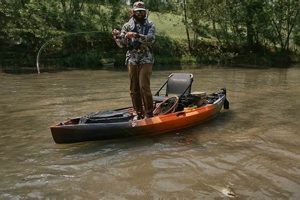
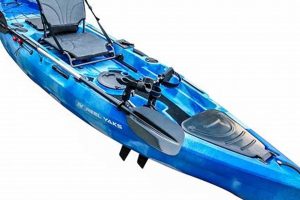
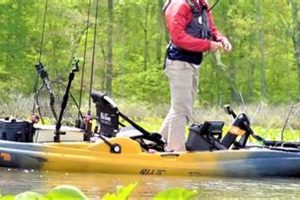
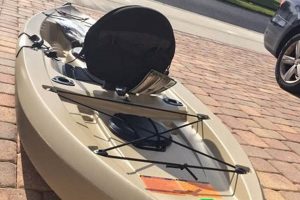
A kayak designed specifically for angling offers anglers a stable and mobile platform for accessing various fishing spots, often unreachable by larger boats. These specialized vessels typically feature integrated rod holders, storage compartments for tackle and gear, and sometimes even specialized seating and footrests for enhanced comfort and stability during casting and retrieval. For example, some models offer anchor trolleys or mounting plates for fish finders.
This approach to angling provides numerous advantages. The compact and maneuverable nature of these watercraft allows exploration of shallow waters, rivers, and other hard-to-reach areas teeming with fish. Furthermore, the quiet operation of a paddle-powered vessel minimizes disturbance to aquatic life, increasing the likelihood of a successful catch. Historically, kayaks have been utilized for fishing for centuries by various cultures, demonstrating the enduring effectiveness and adaptability of this method. Modern designs incorporate advanced materials and technologies to enhance performance, durability, and angler comfort.
This article will further explore the key features to consider when selecting a suitable watercraft for angling, including hull design, propulsion options, and essential accessories. It will also delve into various angling techniques from these vessels and offer guidance on maintaining and transporting such specialized equipment.
Tips for Kayak Fishing
Careful planning and preparation contribute significantly to a successful and enjoyable fishing experience from a kayak.
Tip 1: Prioritize Stability: Kayak stability is paramount, especially when casting or reeling in a fish. Wider kayaks generally offer greater stability than narrower models.
Tip 2: Select Appropriate Gear: Opt for shorter fishing rods (around 6-7 feet) designed for kayak fishing. These rods offer better control and maneuverability in the confined space of a kayak.
Tip 3: Organize Tackle Efficiently: Utilize tackle boxes or bags designed for kayak fishing. These systems maximize storage space and keep essential gear within easy reach.
Tip 4: Practice Safety First: Always wear a personal flotation device (PFD) and carry a whistle or other signaling device. Inform someone of the fishing location and estimated return time.
Tip 5: Consider Weather Conditions: Check the weather forecast before embarking on a fishing trip. Avoid paddling in strong winds, rough waters, or lightning storms.
Tip 6: Respect the Environment: Adhere to “catch and release” practices whenever possible. Dispose of fishing line and other waste responsibly to protect the aquatic environment.
Tip 7: Master Basic Paddling Techniques: Efficient paddling conserves energy and allows anglers to cover more water. Consider taking a kayaking lesson to improve paddling skills and maneuvering techniques.
By following these guidelines, anglers can enhance safety, improve fishing success, and minimize environmental impact while enjoying this rewarding activity.
These tips provide a foundational understanding of essential considerations for kayak fishing. The following section will discuss specific techniques and strategies for targeting various fish species.
1. Kayak Stability

Kayak stability forms the foundation of a successful fishing experience. A stable platform is crucial for casting accuracy, fighting fish, and overall safety, particularly when handling equipment like rods and reels. Understanding the factors influencing stability is essential for anglers seeking to maximize their performance and enjoyment on the water.
- Hull Design and Stability
Hull design significantly influences kayak stability. Wider, flatter hulls generally offer primary stability, making them resistant to initial tipping. However, they may feel less responsive to paddle strokes. Conversely, narrower, V-shaped hulls offer secondary stability they feel tippier initially but become more stable when leaned. This design is maneuverable but requires more experience to control. Choosing an appropriate hull design depends on the angler’s experience level and intended fishing environment. For example, a wider hull is suitable for calm lakes, while a narrower hull might be preferred for navigating rivers.
- Center of Gravity and Balance
Maintaining a low center of gravity is essential for stability. Distributing weight evenly within the kayak minimizes the risk of capsizing. Positioning heavier items lower in the kayak and avoiding sudden movements contributes significantly to balance. The addition of fishing gear, especially rods and tackle boxes, alters the center of gravity, requiring careful weight management and adjustment. Securing gear properly prevents shifting during movement and maintains balanced stability.
- Water Conditions and Stability
Water conditions significantly influence kayak stability. Calm lakes or slow-moving rivers provide a stable environment. Conversely, windy conditions, choppy water, or strong currents present challenges. Anglers must adapt their techniques and body positioning to maintain balance in dynamic conditions. Understanding how wind and waves affect kayak stability is crucial for safe and effective angling. For example, adjusting paddling technique or deploying a drift anchor can mitigate the destabilizing effects of currents.
- Impact of Fishing Activities on Stability
Fishing activities, such as casting, reeling, and landing fish, introduce dynamic forces that can compromise stability. Anglers must anticipate these shifts in balance and adjust their body position accordingly. Practicing techniques for maintaining stability while casting and fighting fish enhances safety and angling success. Using a landing net and keeping the rod tip low during the fight can minimize instability when bringing a fish onboard.
Considering these aspects of kayak stability enables anglers to choose appropriate equipment and develop techniques to enhance safety and effectiveness while fishing. A stable kayak provides a secure platform for casting, fighting fish, and navigating varying water conditions, ultimately maximizing the enjoyment and success of the angling experience.
2. Rod Holder Placement

Rod holder placement significantly impacts angling effectiveness and safety in a fishing rod kayak. Strategic positioning optimizes casting angles, retrieval efficiency, and fish fighting capability while minimizing interference with paddling and other onboard activities. Cause and effect relationships exist between holder placement and angler performance. Incorrect placement can lead to tangled lines, reduced casting accuracy, and difficulty maneuvering the kayak, directly impacting fishing success and safety.
As an integral component of a fishing rod kayak setup, rod holder placement deserves careful consideration. For example, placing rod holders too far forward can obstruct paddling strokes, while positioning them too far back may limit casting range and hinder hooksets. Anglers targeting specific species or employing specialized techniques often benefit from customized rod holder arrangements. A trolling angler might prefer holders angled towards the stern, allowing multiple lines to be set without tangling. Conversely, a fly fisherman might favor holders positioned within easy reach for quick rod access during casting.
Understanding the practical significance of rod holder placement enhances the overall fishing experience. Proper placement minimizes the risk of equipment entanglement, reduces angler fatigue, and maximizes fishing efficiency. This translates to increased opportunities for successful catches and a safer, more enjoyable time on the water. Challenges in optimizing rod holder placement can arise due to kayak design limitations or individual angling preferences. However, careful planning and experimentation can overcome these challenges, ultimately contributing to a more productive and rewarding fishing experience from a kayak.
3. Rod Length and Action
Rod length and action are critical factors influencing fishing success and enjoyment within the specialized context of a fishing rod kayak. Appropriate selection hinges on target species, fishing techniques, and the unique environment presented by kayak angling. Understanding the interplay between these elements optimizes casting performance, hook setting power, and fish-fighting control, essential for a productive and enjoyable experience.
- Rod Length Considerations
Shorter rods, typically between 6 and 7 feet, are generally preferred for kayak fishing. Their compact size enhances maneuverability within the confined space of a kayak, reducing the risk of entanglement with gear or the kayak itself. Longer rods, while offering greater casting distance, can be cumbersome and difficult to manage in a kayak environment. For example, a 7-foot medium-power rod offers a balance of casting control and fish-fighting strength suitable for a variety of species commonly targeted from kayaks.
- Rod Action and Performance
Rod action, the degree of bend along the rod’s length, plays a crucial role in casting accuracy and hook setting. Fast-action rods bend primarily in the tip section, providing greater sensitivity and quicker hooksets, ideal for techniques requiring precise presentations, such as jigging or topwater fishing. Slower-action rods bend throughout their length, offering greater casting distance and a more forgiving feel, suitable for fishing with live bait or larger, heavier lures. A moderate-action rod offers a versatile compromise between casting performance and fish-fighting control.
- Target Species and Rod Choice
Matching rod length and action to target species maximizes angling effectiveness. For smaller species like panfish or trout, shorter, lighter-action rods provide adequate sensitivity and control. Larger, more powerful species, such as bass or pike, require longer, heavier-action rods to handle their strength and size. Targeting specific species effectively requires careful selection of rod characteristics tailored to their behavior and habitat.
- Fishing Techniques and Rod Selection
Specific fishing techniques also influence rod choice. Trolling typically requires shorter, stouter rods with a moderate to slow action for handling heavier lures and battling larger fish. Casting or spinning techniques benefit from longer, faster-action rods for precise lure placement and effective hooksets. Matching rod characteristics to the chosen fishing technique optimizes performance and enhances angling success.
The careful consideration of rod length and action significantly contributes to a positive kayak fishing experience. By understanding the interplay between these factors and how they relate to target species and fishing techniques, anglers can optimize their equipment choices and enhance their chances of success on the water. Choosing appropriate gear tailored to the specific demands of kayak fishing enhances efficiency, control, and overall enjoyment of this unique angling experience.
4. Tackle Storage Solutions
Effective tackle storage is paramount in the confined environment of a fishing rod kayak. Efficient organization maximizes available space, streamlines access to essential gear, and minimizes clutter, contributing directly to a more productive and enjoyable fishing experience. Optimized storage solutions allow anglers to focus on fishing rather than searching for misplaced equipment, enhancing both efficiency and safety on the water.
- Integrated Tackle Storage Systems
Many fishing kayaks feature built-in storage compartments specifically designed for tackle boxes, trays, and other fishing essentials. These integrated systems often include waterproof hatches, recessed compartments, and strategically placed storage wells. For example, some kayaks offer dedicated compartments for storing fishing rods, reels, and even larger items like landing nets, ensuring gear remains secure and readily accessible. Such integrated systems maximize space utilization within the kayak, minimizing clutter and enhancing overall organization.
- Modular Tackle Boxes and Bags
Modular tackle boxes and bags offer customizable storage solutions for various lures, hooks, weights, and other small fishing accessories. These systems allow anglers to tailor their tackle selection to specific target species and fishing techniques. For instance, a modular system might include compartments for different lure types, allowing for quick and easy access during fishing. This adaptability ensures efficient organization and contributes to a more streamlined and productive fishing experience.
- Kayak-Specific Storage Accessories
A range of kayak-specific storage accessories further enhances organization and accessibility. These accessories include tackle crates, gear tracks, and mounting systems designed to integrate seamlessly with kayak layouts. For example, a tackle crate attached to a gear track provides quick access to frequently used items, while a mounted rod holder keeps rods secure and out of the way when not in use. Such specialized accessories maximize space efficiency and contribute to a safer and more organized cockpit environment.
- Dry Bags and Waterproof Containers
Protecting sensitive electronic devices, documents, and other essential items from water damage is crucial in a kayak fishing environment. Dry bags and waterproof containers offer secure storage solutions for these valuables. For example, storing a smartphone, wallet, or camera in a waterproof case ensures protection from splashes, rain, or accidental submersion. Maintaining dry storage contributes to peace of mind and safeguards essential equipment during fishing excursions.
Strategic tackle storage solutions in a fishing rod kayak contribute significantly to angling efficiency and enjoyment. By optimizing organization and accessibility, anglers can focus on the task at hand, maximizing fishing time and minimizing distractions. Effective storage solutions enhance safety by reducing clutter and ensuring essential gear remains readily available in various fishing scenarios. The integration of efficient storage systems contributes to a more streamlined and productive kayak fishing experience.
5. Kayak Propulsion (Paddle/Motor)

Kayak propulsion represents a critical consideration for anglers, impacting accessibility, fishing range, and overall experience. Choosing between paddle power and motorized propulsion involves weighing various factors related to fishing style, target species, and water conditions. Each method offers distinct advantages and disadvantages that directly influence fishing effectiveness and enjoyment within the specialized context of a fishing rod kayak.
- Paddle Propulsion
Paddle propulsion offers a stealthy and environmentally friendly approach to kayak fishing. The quiet operation minimizes disturbance to aquatic life, increasing the likelihood of attracting fish, particularly in shallow or heavily vegetated areas. Paddling provides anglers with direct control over speed and maneuverability, facilitating precise navigation through complex waterways. However, paddling requires physical exertion and can limit fishing range, particularly in larger bodies of water or against strong currents. This method suits anglers seeking a close connection with nature and prioritizing stealth over speed.
- Motorized Propulsion
Motorized kayaks, equipped with electric or gas-powered motors, significantly extend fishing range and reduce angler fatigue. Motors enable quick and efficient travel to distant fishing spots, maximizing time spent fishing rather than paddling. This advantage becomes particularly significant in larger lakes, reservoirs, or coastal areas. However, motors introduce noise and potential environmental impact, which can deter some fish species. Regulations regarding motorized watercraft may also restrict access to certain areas. Motorized propulsion aligns with anglers prioritizing range and speed over stealth and environmental considerations.
- Pedal-Powered Propulsion
Pedal-powered kayaks offer a hands-free fishing experience, allowing anglers to maintain constant speed and maneuverability while keeping their hands free for casting and reeling. This propulsion system combines elements of both paddle and motor propulsion, offering a balance between speed, stealth, and physical exertion. Pedal kayaks provide a stable platform for fishing, even in challenging conditions. However, they often carry a higher price tag compared to traditional paddle kayaks and may have draft limitations in very shallow waters.
- Choosing the Right Propulsion System
Selecting the appropriate propulsion system depends on individual fishing preferences, target species, and the specific characteristics of the fishing environment. Anglers fishing in small, quiet waters might prioritize the stealth and maneuverability of paddle propulsion. Those targeting pelagic species in larger bodies of water might favor the speed and range offered by motorized kayaks. Pedal drives provide a versatile option for hands-free fishing in various environments. Evaluating these factors helps anglers select the propulsion system best suited to their individual needs and fishing style.
Kayak propulsion directly influences the overall fishing experience from a fishing rod kayak. Considering factors such as fishing style, target species, water conditions, and personal preferences guides anglers toward the optimal propulsion method, enhancing efficiency, enjoyment, and overall success on the water. Choosing the right propulsion unlocks the full potential of a fishing rod kayak, transforming it into a versatile and effective fishing platform tailored to individual angling needs.
6. Safety Equipment Integration

Safety equipment integration is paramount when using a fishing rod kayak. The inherent risks associated with on-water activities necessitate careful consideration of safety precautions. Integrating essential safety gear enhances angler preparedness, mitigates potential hazards, and promotes a secure environment for a focused and enjoyable fishing experience. A comprehensive approach to safety enhances confidence and allows anglers to fully engage with the sport.
- Personal Flotation Devices (PFDs)
Wearing a properly fitted PFD is non-negotiable. PFDs provide essential buoyancy in the event of capsizing or accidental submersion, significantly increasing the chances of survival. Various PFD types exist, including inflatable and inherently buoyant models, each offering specific advantages for different kayaking styles and fishing environments. Selecting a comfortable and appropriately rated PFD is crucial for maximizing safety and ensuring unrestricted movement while fishing.
- Signaling Devices
Carrying signaling devices enables communication in emergencies. Whistles, air horns, and visual distress signals, such as flares or signal mirrors, can alert others to potential distress situations and facilitate rescue efforts. Understanding the proper use of these devices and ensuring their accessibility in critical situations is paramount for effective communication and timely assistance. Regularly checking the functionality of signaling devices is essential for maintaining preparedness.
- Communication Equipment
Carrying a waterproof VHF radio or a charged mobile phone in a waterproof case allows communication with shore or other boaters. Communicating planned fishing locations and estimated return times enhances safety by enabling others to initiate search and rescue efforts if necessary. Checking weather forecasts via communication devices before and during fishing trips provides valuable information about changing conditions and potential hazards.
- Navigation and Lighting
Navigation lights and a compass or GPS device are essential, especially when fishing in low-light conditions or unfamiliar waters. Navigation lights increase visibility to other boaters, reducing the risk of collisions. A compass or GPS assists with orientation and navigation, particularly in fog or during extended fishing trips. Carrying spare batteries or a portable power source for electronic navigation devices ensures continuous functionality.
Integrating these safety elements into a fishing rod kayak setup creates a secure foundation for enjoyable and responsible angling. Prioritizing safety enhances angler confidence and preparedness, allowing for a more focused and immersive fishing experience. A comprehensive approach to safety equipment fosters responsible angling practices and contributes to a positive and secure environment on the water.
Frequently Asked Questions
This section addresses common inquiries regarding fishing rod kayaks, providing concise and informative responses to facilitate informed decision-making and enhance understanding of this specialized angling platform.
Question 1: What are the key advantages of using a fishing rod kayak?
Fishing rod kayaks provide enhanced access to shallow waters and hard-to-reach fishing spots inaccessible to larger boats. Their compact size and maneuverability allow for stealthy approach, minimizing disturbance to fish. Specialized features like integrated rod holders and storage compartments enhance angling efficiency.
Question 2: How does one choose the right size fishing rod kayak?
Kayak size selection depends on angler weight, gear capacity requirements, and intended fishing environment. Longer kayaks offer greater speed and tracking, while shorter kayaks provide enhanced maneuverability in tight spaces. Weight capacity should accommodate angler weight, fishing gear, and potential catch.
Question 3: What are the essential safety precautions for kayak fishing?
Wearing a personal flotation device (PFD) is paramount. Carrying signaling devices (whistle, flare) enables communication in emergencies. Informing someone of the fishing location and estimated return time is crucial. Checking weather forecasts before embarking is essential for safety.
Question 4: What fishing techniques are best suited for kayak angling?
Kayak angling accommodates various techniques, including casting, trolling, jigging, and even fly fishing. Adapting techniques to the specific environment and target species maximizes effectiveness. Kayak maneuverability allows for precise lure presentation and exploration of diverse fishing locations.
Question 5: How does one maintain a fishing rod kayak?
Regular cleaning with mild soap and water prevents accumulation of dirt and grime. Proper storage in a shaded area protects the kayak from UV damage. Inspecting and addressing any damage promptly ensures longevity and optimal performance. Periodically checking and lubricating moving parts, such as rudder and pedal drive systems, maintains smooth operation.
Question 6: What are the typical costs associated with a fishing rod kayak setup?
Costs vary depending on kayak features, materials, and accessories. Entry-level models offer basic functionality at lower price points, while higher-end kayaks incorporate advanced features and materials at a premium. Factoring in essential accessories like paddles, PFDs, and rod holders provides a realistic estimate of the total investment.
Understanding these key aspects of fishing rod kayaks facilitates informed decisions regarding equipment selection, safety practices, and angling techniques, contributing to a more rewarding and successful on-water experience.
The following section delves into advanced techniques for optimizing fishing performance from a kayak, covering topics such as drift fishing, anchor positioning, and fish-fighting strategies.
Conclusion
This exploration of specialized fishing kayaks has highlighted their unique advantages for anglers. Key factors such as stability, rod holder placement, rod length and action, tackle storage solutions, propulsion choices, and safety equipment integration contribute significantly to optimized performance and a secure on-water experience. Understanding these elements empowers anglers to make informed decisions regarding equipment selection and utilization, ultimately maximizing fishing success and enjoyment.
The evolving landscape of kayak angling promises continued innovation in design and technology. As anglers seek enhanced versatility and performance, further development of specialized features and accessories will undoubtedly shape the future of this dynamic fishing discipline. Embracing responsible angling practices and prioritizing safety will remain essential for preserving the enjoyment and sustainability of this rewarding pursuit.